
Executive Overview
Against the sprawling, arid backdrop of Southern California’s Coachella and Imperial Valleys, a quiet revolution in environmental stewardship is taking root. At the heart of this movement is the Salton Sea Leadership Program (SSLP), a unique educational initiative designed to bridge the gap between local residents and hands-on ecological conservation.
Each year, the program handpicks a cohort of ten local participants for an intensive four-month journey. Rather than relying solely on traditional classroom instruction, the SSLP immerses its students in the field, facilitating direct mentorship and collaboration with leading researchers, engineers, and environmental organizations. The mission is clear: to demystify environmental science, foster profound community connections, and empower everyday residents to become active protectors of the fragile ecosystems shared by local wildlife, plants, and human populations.
The impact of this program extends far beyond the confines of a standard educational curriculum. As the SSLP prepares to launch its 2027 cohort, a look back at its alumni reveals a growing network of empowered conservationists. From conducting critical wildlife and avian telemetry surveys across the Pacific Northwest and the Sonoran Desert to spearheading grassroots community hiking movements and advocating for environmental policy at the State Capitol, SSLP graduates are proving that a traditional science background is not a prerequisite for making a monumental difference. This report explores the journeys of three distinct alumni—Kevin Manajerro, Amanda Bautista, and Ciara Taylor—whose lives have been fundamentally transformed by their time in the program, illustrating the profound ripple effects of grassroots environmental leadership.
Detailed Chronology: A Morning in the Field and the Journeys of SSLP Alumni
Tracking Desert Life: A 7:00 A.M. Start
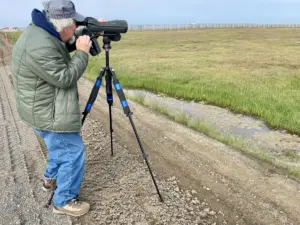
The desert heat is unforgiving, even early in the day. On a crisp October morning, thermometer readings had already touched 90 degrees by 7:00 a.m. as biologist Kevin Manajerro and researcher Melanie Davis unloaded field gear at a survey site overlooking the Salton Sea. Flanked by the Orocopia Mountains to the right and the Santa Rosa Mountains to the left, the landscape is both desolate and teeming with hidden life.
Following six strict transects—predetermined routes utilized for systematic ecological surveys—the team scoured the sandy terrain for tracks and scat. Their target: the Flat-tailed Horned Lizard (Phrynosoma mcallii), a diminutive reptile equipped with evolutionary camouflage adaptations designed to minimize its shadow against the blazing desert floor. The search yielded a moment of triumph when a specimen was spotted—the first documented sighting at this specific site since Manajerro began participating in the surveys.
Manajerro is a proud 2026 alumnus of the SSLP. His path to this demanding biological fieldwork is a testament to the program’s unique networking pipeline. Having originally met Davis when she served as a guest speaker for the SSLP, Manajerro later crossed paths with Dr. Lynn Sweet of the University of California, Riverside (UCR) Center for Conservation Biology while working at an outdoor retailer. These connections culminated in a position as a lab assistant in Dr. Sweet’s lab, where Manajerro now earns college credit through the College of the Desert’s Work Experience Program. Today, he assists with vital wildlife surveys across the Coachella Valley, including ongoing monitoring efforts at the Coachella Valley Wildlife Refuge.
Avian Research and Community Belonging
Further expanding the legacy of the program’s alumni network is Amanda Bautista, a standout graduate of the 2025 cohort. Bautista entered the SSLP with an already rich background in volunteering for Audubon bird surveys. For her program capstone project, she developed the very first Salton Sea bird guide—a practical resource that catalyzed her career trajectory.
Following her time in the SSLP, Bautista’s fieldwork expanded dramatically. She traveled to the Pacific Northwest Research Station, where she conducted intensive woodpecker telemetry surveys to map critical nesting season habitats. Her fieldwork also included trapping and monitoring small mammals, such as flying squirrels, to assess forest ecosystem health.
Thanks to the SSLP’s robust post-graduation engagement—which includes continuous professional development and job search assistance—Bautista was subsequently hired as a seasonal survey technician for the University of Idaho’s Yuma Ridgway’s Rail research project at the Sonny Bono Salton Sea National Wildlife Refuge. In this role, she recorded morphological measurements and gathered biological samples to analyze selenium accumulation in the threatened rails.
Reflecting on her field experiences, Bautista noted the striking auditory contrast between her assignments: "In Arizona, the bird sounds were really quiet, I can hear [the Rails] splashing in the water. At the Salton Sea it’s so loud with all the birds and biodiversity." This sensory observation underscores a fundamental truth reinforced by the Leadership Program: the Salton Sea remains an irreplaceable biological oasis.
Beyond her technical contributions, Bautista speaks of the SSLP in deeply personal terms. In a field historically underrepresented by women in certain scientific sectors, she describes her cohort as “a family.”
"It gave me a safe place to be a part of, and now it has become a big part of my life," Bautista shared. "I can count on my SSLP people to make me feel better being in the same field and being a woman in the field." Today, Bautista works professionally as an environmental biologist for a consulting firm, conducting pre-construction surveys for reptiles, birds, and small mammals to ensure that commercial and residential developments comply with stringent environmental regulations.
Grassroots Advocacy and Design Thinking
For 2025 alumna Ciara Taylor, the journey into conservation began not with microscopes and test tubes, but with community organizing and design thinking. Known affectionately as a pillar of community engagement in the Coachella Valley, Taylor first intersected with the environmental sphere at the Salton Sea Bird Festival in January 2025.
During her time as an SSLP student, Taylor acted as a vital organizational anchor for her cohort, keeping field trips moving smoothly and offering unwavering peer support. Recognizing a gap in accessible outdoor recreation, she partnered with fellow nature advocate Judy Gill to launch PS Take a Hike, a community hiking club designed to dismantle barriers to outdoor access.
"The program was a stepping stone to access the community and learn about things that are completely out of my wheelhouse," Taylor explained. Lacking a traditional science background, she utilized her expertise in design to shape an interactive capstone project. By applying a design-thinking framework, she explored innovative ways to build public awareness and address complex, multi-faceted environmental issues through collaborative, cross-disciplinary lenses.
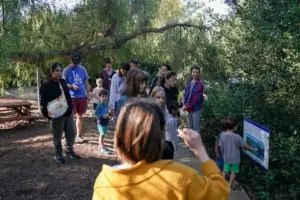
Building upon the momentum of PS Take a Hike, Taylor and Gill organized the inaugural Take a Hike Fest at Francis Stevens Park in Palm Springs. Designed as a free community celebration of hiking culture, healthy living, and conservation, the festival united numerous regional nonprofits—including Audubon California—alongside outdoor clubs across the Coachella Valley. The event served as the anchor for an entire week of on-trail programming aimed at inspiring local residents to reclaim and appreciate their natural public lands.
Supporting Context & Metrics: The Ecological Significance of the Salton Sea
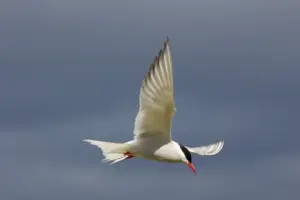
To fully appreciate the urgency and relevance of the Salton Sea Leadership Program, one must examine the ecological weight of the region it serves. The Salton Sea and its surrounding environments are recognized as a globally designated Important Bird Area (IBA). Situated along the critical Pacific Flyway, this inland body of water functions as a vital biological rest stop and staging ground for more than 300 species of migratory and resident birds.
Despite environmental challenges facing the region—including receding shorelines, escalating salinity, and airborne dust concerns—the ecosystem remains remarkably resilient, supporting an immense density of avian, reptilian, and mammalian life. However, preserving this fragile balance requires a dedicated workforce of local advocates, researchers, and field technicians who understand the nuances of desert ecology.
The SSLP directly addresses this workforce deficit by democratizing access to environmental education. Over its first two operational years, the program has graduated 22 alumni who have gone on to multiply their impact across Southern California and beyond. Program metrics and ongoing tracking reveal a diverse array of post-graduation achievements:
- Community Education: Alumni have taken the lead in hosting Spanish-language bird walks, ensuring that historically underserved local populations are included in conservation conversations.
- Indigenous Partnerships: Graduates are actively involved in developing and implementing new, Indigenous-led nature-based programming that honors traditional ecological knowledge.
- Academic Advancement: Several participants have completed UC California Naturalist certifications, while others have successfully transferred to four-year universities to pursue formal degrees in biological sciences and ecology.
- Legislative Advocacy: Demonstrating a commitment to systemic change, SSLP alumni recently traveled to the California State Capitol in Sacramento to actively lobby lawmakers for increased protections for regional avian species and their dwindling habitats.
Official Statements and Perspectives
The success of the Salton Sea Leadership Program lies in its intentional fusion of professional mentorship and grassroots accessibility. Guest speakers and program facilitators frequently emphasize that conservation is not an exclusive club reserved only for academic elites.
Melanie Davis, a prominent researcher and recurring guest speaker for the SSLP, has made it her mission to challenge traditional paradigms. During her annual presentations focusing on her work with the endemic Salvia greata (Orocopia Sage), Davis actively encourages program participants to pursue careers in conservation regardless of their prior educational or professional backgrounds. Her philosophy champions the idea that diverse perspectives—whether rooted in design, retail, community organizing, or fine arts—are precisely what modern ecological problem-solving requires.
Participants themselves echo this sentiment. Reflecting on the multi-disciplinary nature of the cohorts, Amanda Bautista noted how the network provides indispensable emotional and professional reinforcement:
"It gave me a safe place to be a part of, and now it has become a big part of my life. I can count on my SSLP people to make me feel better being in the same field and being a woman in the field."
Ciara Taylor reinforced this communal ethos, describing the curriculum as an empowering bridge to unfamiliar domains:
"The program was a stepping stone to access the community and learn about things that are completely out of my wheelhouse."
Future Outlook: The 2027 Cohort and Beyond
As the environmental pressures facing Southern California’s desert ecosystems continue to evolve, the need for informed, locally rooted leadership has never been more acute. The Salton Sea Leadership Program stands as a proven model of how targeted educational investments can transform everyday community members into frontline conservation leaders.
Following the triumphs of its first waves of alumni—who are now surveying endangered reptiles, trapping small mammals for federal research stations, monitoring threatened bird populations, and organizing community-wide outdoor festivals—the program is poised for expansion.
The Salton Sea Leadership Program will officially return with its 2027 cohort. The application window is scheduled to open this coming November, welcoming any local residents of the Coachella and Imperial Valleys who are eager to build community, network directly with working science professionals, and deepen their understanding of Audubon California’s vital conservation initiatives at the Salton Sea.
For regional residents looking to turn a passion for nature into tangible, real-world impact, the SSLP offers a proven pathway.
Interested applicants and community members can visit the Audubon California Salton Sea Leadership Program portal to learn more about upcoming application deadlines, program requirements, and ways to stay involved in regional conservation efforts.