
Special Report by Ellie Cook, Fort Myers Beach Anchor Steward
Executive Overview
Nestled within the shifting sands of the southernmost tip of Fort Myers Beach lies a vibrant, high-stakes metropolis. Far removed from the concrete jungles that dominate much of Florida’s coastline, this miniature city operates entirely on instinct, ancient rhythms, and a sophisticated network of non-verbal signals. On any given day, this protected sanctuary bustles with activity—from frantic aerial defense maneuvers to meticulous nest-building—only to shift abruptly into quiet tranquility as the midday heat crests.
This location is home to a seasonal nesting colony of vulnerable sea and shorebirds, serving as a living laboratory for coastal ecology. For conservationists, ornithologists, and local stewards, observing this micro-city offers profound insights into how nature speaks. It communicates not through human syntax, but through calls, sudden movements, flashes of color, subtle scents, and behavioral cues that are far too frequently overlooked by beachgoers.
Recent field observations by Anchor Stewards and local Audubon volunteers reveal that this nesting ground is much more than a seasonal recreational backdrop; it is a complex, interdependent network of relationships. Every organism—from microscopic life hidden between grains of quartz to apex avian predators circling above—plays a vital role in maintaining the ecological balance of the Gulf Coast.
However, this delicate urban ecosystem faces mounting anthropogenic pressures. As coastal development expands, recreational beach usage intensifies, and climate-driven vulnerabilities threaten shorelines, the survival of these colonial nesters hinges on a fundamental question: Are humans willing to pause, observe, and truly listen to what the coast is trying to tell us? This report examines the intricate dynamics of the Fort Myers Beach seabird colony, detailing daily behavioral choreographies, ecological metrics, conservation challenges, and the collaborative frameworks necessary to protect these irreplaceable avian habitats.
Detailed Chronology: A Morning in the Avian Metropolis
To understand the rhythm of the Fort Myers Beach nesting colony, one must observe it unfold in real-time. Field logs compiled by local stewards provide a granular, chronological look at how the colony wakes, interacts, and defends its territory during peak nesting season.
06:15 AM – The First Light and Territorial Claims
As the sun breaks over the horizon, casting a golden hue across the Gulf of Mexico, the colony transitions from nocturnal quiet to a cacophony of sound. The morning watch begins beneath the canopy of a weathered coastal palm tree, equipped with 8×42 binoculars and a weatherproof field notebook.
Almost immediately, the quiet is pierced by the sharp, resonant alarm of an American Oystercatcher (Haematopus palliatus). Standing tall on its bright pink legs and flashing its unmistakable crimson bill, the oystercatcher sounds an alert. Within seconds, two neighboring oystercatchers rush to its side, reinforcing territorial boundaries. This is not random noise; it is the opening salvo of the morning dialogue—a declaration of space, resource ownership, and readiness.
07:30 AM – Foraging Dynamics and Inter-Species Coordination
By mid-morning, the tide begins to recede, exposing damp intertidal flats teeming with invertebrate life. A pair of Wilson’s Plovers (Charadrius wilsonia), with their distinct, thick bills designed for crushing prey, dart purposefully toward a colony of fiddler crabs (Uca pugilator) emerging from newly exposed burrows. Their movements are synchronized, rapid, and calculated—a masterclass in precision foraging.
Nearby, a Least Tern (Sternula antillarum), North America’s smallest breeding tern, launches vertically into the air from a shallow scrape in the sand. Its high-pitched, metallic chatter triggers a chain reaction. Within moments, a dozen other Least Terns join the ascent, forming an aggressive defensive cloud.
Their target is an Osprey (Pandion haliaetus) cruising lazily overhead, searching for surface-swimming fish. The Terns do not speak the Osprey’s language, yet the message conveyed through their synchronized dives, sharp banking turns, and escalating screams is universally understood: Stay away from our eggs and chicks. The Osprey adjusts its trajectory, veering away from the posted sanctuary boundaries. The crisis resolves as quickly as it began, leaving behind a profound sense of coordinated community defense.
10:45 AM – The Midday Lull and Ecosystem Interdependence
As the tropical sun climbs higher, the frantic energy of the morning softens. Adult birds settle over their well-camouflaged scrapes to shade delicate eggs from thermal stress. This quiet period offers an opportunity to analyze the invisible architecture holding the ecosystem together.
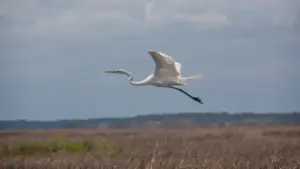
The beach here is a web of direct dependencies. The microscopic organisms dwelling in the interstitial spaces between sand grains feed small ghost crabs and insects; these invertebrates, in turn, provide essential protein for growing shorebird chicks. Native coastal vegetation, such as sea oats (Uniola paniculata) and beach sunflower (Helianthus debilis), anchor the shifting dunes, providing critical shelter against wind and storm surges. When a Black Skimmer (Rynchops niger) skims the shallows for schooling fish, or a Great Egret (Ardea alba) stalks the wrack line, they are participating in a multi-layered biological economy where no single species can exist in isolation.
01:30 PM – Natural Cycles and Mortality
As the afternoon sea breeze picks up, sweeping white-capped waves against the shore, the acoustic landscape shifts again. A chorus of low, barking calls erupts from a raft of Black Skimmers resting near the shoreline. Moments later, a Great Egret glides in with slow, deliberate wingbeats, announcing its touchdown with a raspy croak.
Just before taking a step forward to adjust observational equipment, a sobering sight interrupts the field notebook entry: the bleached, skeletal remains of a Laughing Gull (Leucophaeus atricilla). What was once a dynamic, vocal creature is now slowly weathering back into the very quartz and shell fragments that sustained it throughout its life cycle. This natural marker serves as a quiet reminder of the ultimate ecological truth of the shoreline: every living creature is built from borrowed matter, destined to return to the earth to fuel the next generation of coastal life.
Supporting Context & Metrics: The State of Gulf Coast Shorebirds
To contextualize the observations on Fort Myers Beach, it is necessary to examine the broader ecological metrics governing seabird populations along the Florida Gulf Coast and the systemic threats they face.
Population Metrics and Vulnerability Indices
Florida’s beaches support globally significant populations of ground-nesting seabirds and shorebirds, including:
- Least Terns: Listed as a State Threatened species by the Florida Fish and Wildlife Conservation Commission (FWC) due to habitat loss and human disturbance.
- Black Skimmers: Also classified as State Threatened, experiencing steep nesting declines across urbanized coastal zones over the past three decades.
- American Oystercatchers & Wilson’s Plovers: Highly vulnerable coastal-dependent species whose ground nests are easily compromised by high tides, predators, and foot traffic.
According to long-term avian monitoring data compiled across Southwest Florida:
- Nesting Success Rates: Urbanized or heavily recreated beaches experience up to a 65% lower nesting success rate compared to actively stewarded and posted sanctuary zones.
- Disturbance Frequency: Studies show that ground-nesting birds on unprotected beaches are flushed from their nests an average of 12 to 18 times per hour during peak tourism weekends, leaving vulnerable eggs and chicks exposed to fatal solar radiation and avian predators like fish crows and gulls.
The Human Footprint: Recreation Versus Conservation
Fort Myers Beach is a premier tourist destination, drawing millions of visitors annually. However, the collision between high-density coastal recreation and fragile wildlife habitat creates a constant management crisis.
- The Leash Law Challenge: Unrestrained dogs are among the primary sources of artificial stress for nesting colonies. Even a well-intentioned pet can flush a colony, causing mass panic and exposing eggs to extreme heat.
- Marine Debris and Entanglement: Discarded fishing line, plastics, and microplastics infiltrate the nesting environment, frequently resulting in adult mortality or chick entrapment.
- Post-Storm Recovery: Following major hurricane events—such as Hurricane Ian, which profoundly reshaped the topography of Fort Myers Beach—coastal habitats undergo severe compression. As new sand is deposited and dunes rebuild, nesting birds are forced into narrower, highly concentrated strips of beach, heightening the urgency for rigorous protective stewarding.
Official Statements & Perspectives
Protecting these avian populations requires a coordinated effort among municipal leaders, wildlife biologists, non-profit organizations, and local volunteers. Key stakeholders weigh in on the importance of community-based conservation and listening to the signals of the natural world.
Ellie Cook, Fort Myers Beach Anchor Steward and Field Observer:
"Nature does not shout; it is a steady knock on the door of our awareness. When we sit quietly on the sand and observe the choreography of the oystercatchers, plovers, and terns, we realize that humans are not separate from this web of communication. Conservation succeeds when individuals with different strengths come together in service of something greater than themselves. The planet has always been speaking. The question isn’t whether nature is communicating—it’s whether we’re willing to listen."
Audubon Florida Coastal Conservation Biologist (Statement on Colony Dynamics):
"Colonial nesting birds are the ultimate indicators of coastal health. When Least Terns and Black Skimmers successfully raise chicks on a busy beach like Fort Myers Beach, it proves that human communities and wildlife can coexist, provided there is mutual respect for established boundaries. Our network of volunteers, biologists, educators, and donors operates much like the ecosystem itself: no single role can accomplish the mission alone. Every voice matters in safeguarding our shared shoreline."
Local Municipal Wildlife Management Representative:
"Post-storm recovery on Fort Myers Beach presented unprecedented challenges for local wildlife habitats. As our infrastructure rebuilds, our natural infrastructure—the dunes, the vegetation, and the shorebird populations—must be equally prioritized. Public compliance with posted sanctuary fencing and seasonal leash laws is not just about following rules; it is about preserving the living heartbeat of our coastline."
Future Outlook: The Path Forward for Coastal Stewardship
As Fort Myers Beach continues its long-term recovery and adaptation in a changing climate, the future of its seabird colonies depends upon proactive, science-based management and heightened public engagement. Several key initiatives define the path forward:
1. Expansion of Volunteer Steward Networks
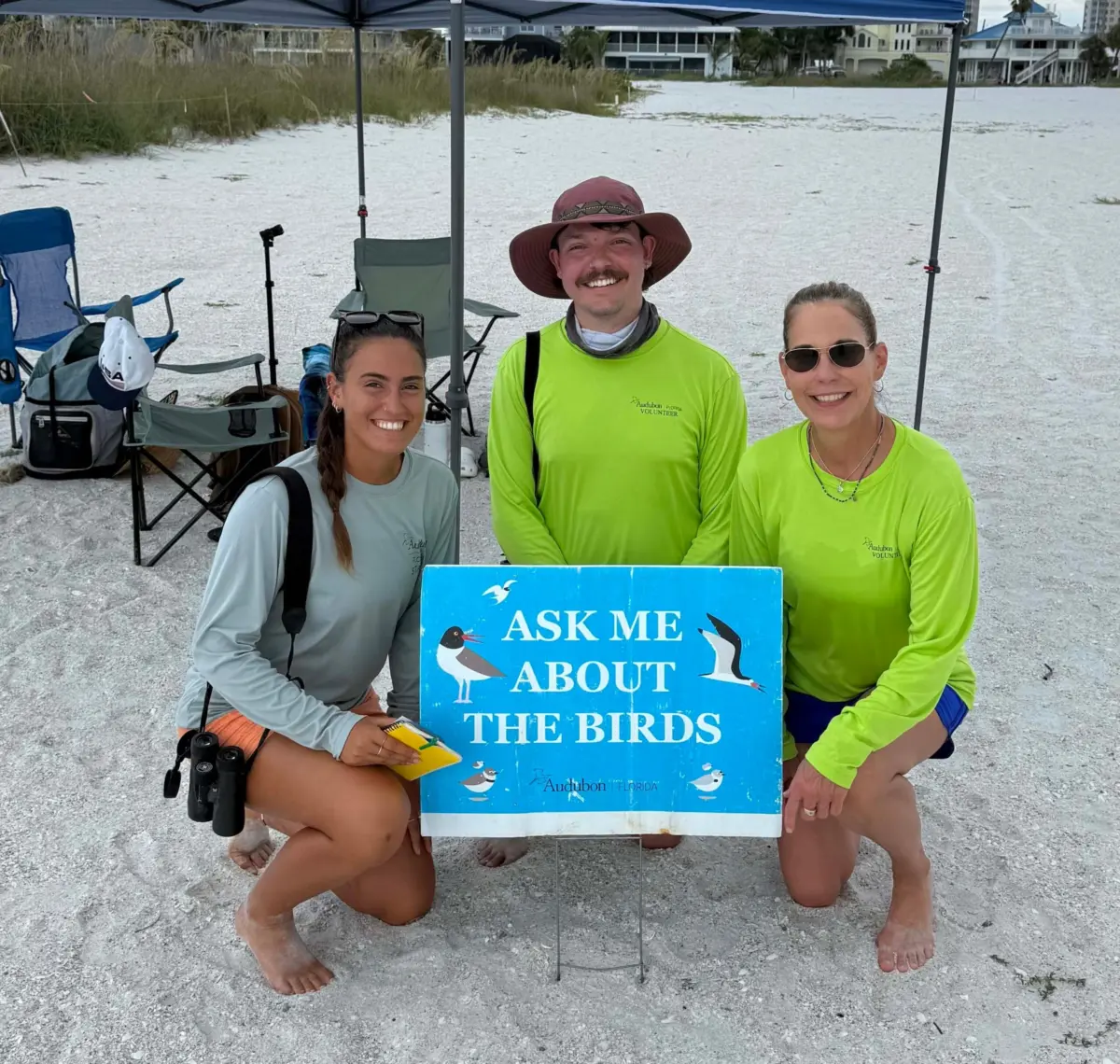
Programs like the Audubon Anchor Steward initiative are vital. By placing trained observers on the beach to educate the public, interpret bird behavior, and monitor active nesting sites, communities can drastically reduce human-wildlife conflicts. Expanding recruitment, training, and public outreach will ensure that every nesting season is backed by a robust human defense network.
2. Enhanced Habitat Signage and Seasonal Zoning
Proactive seasonal roping and clear, educational signage are proven tools in minimizing accidental human intrusion into nesting colonies. Establishing temporary, well-defined sanctuaries during critical breeding months (typically March through August) gives ground-nesters the physical space required to complete their reproductive cycles without disruption.
3. Climate Resilience and Dune Restoration
Integrating shorebird conservation into broader coastal engineering projects is essential. Beach nourishment and dune restoration initiatives must account for the micro-topography required by ground-nesting species. Preserving shell rakes, native vegetation patches, and natural wrack lines ensures that birds have the physical materials necessary for successful scrapes and foraging.
4. Fostering a Culture of Listening
Ultimately, the survival of the Fort Myers Beach avian metropolis relies on a cultural shift in how humans perceive the shoreline. The beach is not merely an open-air recreational resort; it is a dynamic, living ecosystem filled with active communication channels.
When visitors learn to decode the alarm call of an oystercatcher, respect the defensive swoop of a Least Tern, and recognize their own role within the coastal food web, conservation transforms from a regulatory burden into a shared community value. The birds have spent millennia maintaining their side of the conversation. Through education, stewardship, and attentive listening, humans can finally learn to respond in kind.