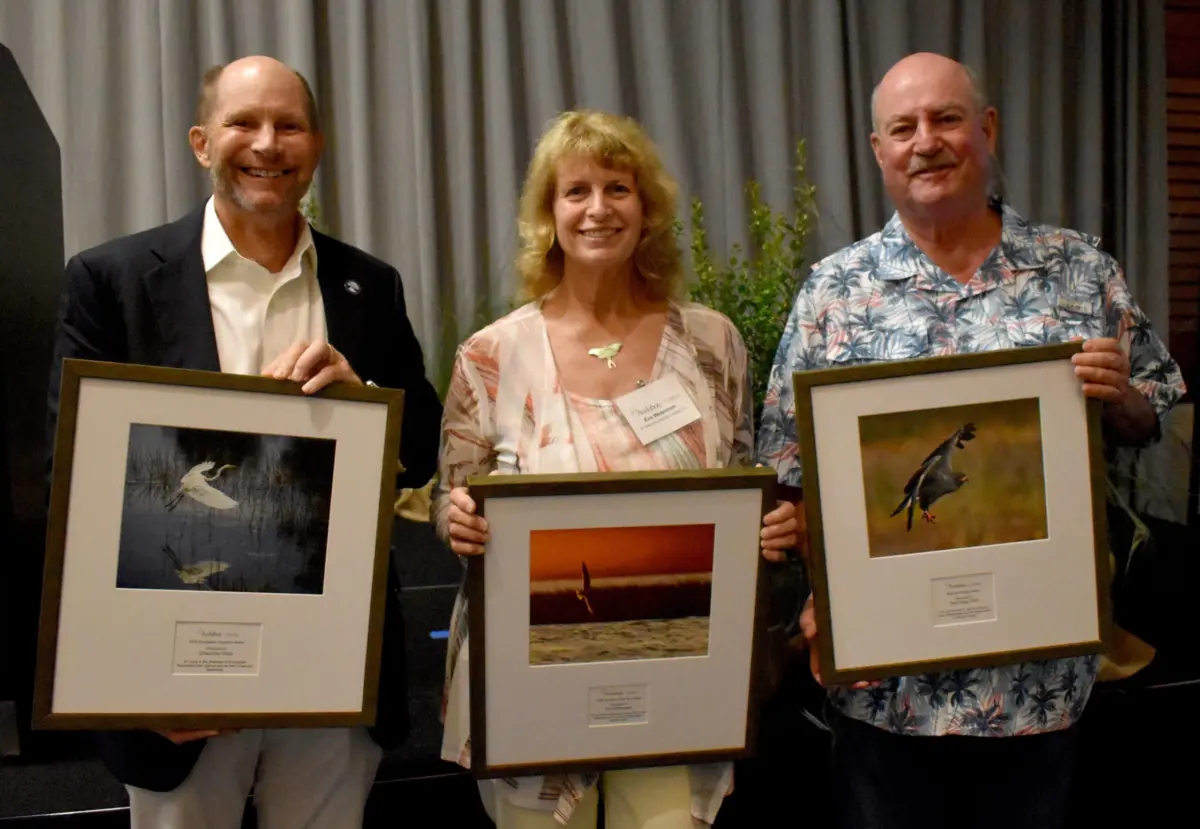

TALLAHASSEE, FL — Against a backdrop of mounting ecological pressures and shifting legislative landscapes, Audubon Florida convened its stakeholders, scientists, grassroots advocates, and civic leaders for its landmark Annual Assembly. Hosted at the TradeWinds Resort in St. Pete Beach, the three-day gathering ran from October 15 to October 17, 2026. Under the resonant theme “Protecting What Connects Us — Water, Wildlife, and Community,” the conference served as both a retrospective celebration of the organization’s regional wins and a tactical war council for upcoming conservation battles.
The pinnacle of the Assembly was the presentation of statewide honors, recognizing seven extraordinary individuals and organizations whose dedication, courage, and philanthropy have shaped the trajectory of Florida’s environmental movement. From the sun-baked shorelines of the Tampa Bay region to the expansive sawgrass prairies of the Everglades, this year’s honorees embody the multi-disciplinary ethos required to safeguard Florida’s natural heritage for generations to come.
Executive Overview
For decades, Audubon Florida has operated as a foundational pillar of environmental advocacy, mobilizing a robust network of chapters and volunteers to protect native species and the critical habitats they depend upon. The 2026 Assembly arrived at a crucial inflection point for the Sunshine State. As rapid population growth, municipal sprawl, and water-management challenges continue to threaten delicate ecosystems, the imperative for cross-sector collaboration has never been more urgent.
This year’s awardees reflect the diverse coalition necessary to confront these complex challenges. The roster includes frontline coastal stewards, bipartisan political leaders willing to challenge opaque ballot measures, visionary philanthropic institutions, veteran wetland scientists, public water administrators, and local law enforcement officers. Together, their stories underscore a central truth of modern conservation: protecting Florida’s environment is not a partisan talking point, but an existential imperative that underpins the state’s economic prosperity and civic quality of life.
Detailed Chronology: The Three-Day Assembly Experience
Day One: Setting the Stage and Honoring Grassroots Dedication
The Assembly commenced with opening plenary sessions that examined the inextricable links between clean water systems, resilient wildlife populations, and thriving human communities. Discussions focused heavily on regional vulnerabilities, particularly how climate shifts and coastal development are squeezing native shorebird populations.
The evening festivities kicked off with the presentation of the Volunteer of the Year Award, spotlighting the indispensable engine of grassroots conservation: the individual volunteer.
- Eve Waterman – Volunteer of the Year: Waterman has become a legendary figure within the Audubon coastal team across the Tampa Bay region. Exhibiting a breathtaking work ethic, Waterman’s typical routine involves managing a grueling morning shift at Ft. De Soto Park to steward fragile populations of Wilson’s Plovers, Least Terns, and American Oystercatchers. Following that, she transitions directly to an evening shift at Redington to safeguard vulnerable colonies of Black Skimmers. Averaging upwards of 50 shifts annually, her donated labor translates to roughly $2,500 in direct economic value to Audubon Florida each year—though her operational value to field biologists is truly immeasurable. In addition to her boots-on-the-ground stewardship, Waterman serves as the Treasurer of the St. Pete Audubon Chapter, proving that grassroots commitment extends seamlessly from sandy shores to organizational boardrooms.
Day Two: Political Courage and Transformative Philanthropy
The second day of the Assembly shifted its focus toward systemic advocacy, structural governance, and financial partnerships capable of scaling conservation efforts to meet state-level challenges.
-
State Senator Jeff Brandes and U.S. Representative Al Lawson, Jr. – The Teddy Roosevelt Award: Named after America’s foremost conservation president, this award honors exceptional leadership and personal resolve in defense of Florida’s environment. This year’s joint recipients earned the accolade through an extraordinary act of bipartisan legal courage. When the Florida Legislature rushed through a secretive, three-day special session in June to place Amendment 3 on the November ballot, former State Senator Jeff Brandes (a Republican) and former U.S. Congressman Al Lawson, Jr. (a Democrat) recognized an immediate threat to local governance and democratic transparency.
The text of Amendment 3 threatened to cripple municipal and county budgets, forcing drastic cuts to essential public services—including parks, libraries, and urban planning initiatives designed to curb sprawling development. Furthermore, the ballot language was heavily veiled in partisan rhetoric, designed to obscure its true impacts from everyday voters. Crossing traditional political divides, Brandes and Lawson filed a joint legal challenge. They forcefully argued that ballot measures are no place for political spin and that citizens deserve clear, impartial language when deciding the state’s future. Despite a vigorous and well-funded legal defense mounted by the state Attorney General’s office, the plaintiffs prevailed, forcing a rewriting of the deceptive amendment language. Their victory stands as a masterclass in protecting voter integrity and reaffirming that environmental and civic protection transcends partisan lines.
-
Collier Community Foundation – The Distinguished Philanthropist Award: Recognizing organizations that act as primary catalysts for ecological work, Audubon honored the Collier Community Foundation for its long-standing, transformative partnership with the Corkscrew Swamp Sanctuary. Eileen Connolly-Keesler accepted the award on behalf of the Foundation, which has provided sustained financial backing for critical hydrologic research, advanced land stewardship science, and educational programming.
Most notably, the Foundation cemented its legacy with an extraordinary $100,000 gift to Audubon’s capital campaign in 2025. This transformational investment funded major infrastructural enhancements on the Corkscrew campus, positioning the sanctuary as a premier regional center for environmental education and ecological research. The Foundation’s partnership exemplifies a profound, long-term commitment to safeguarding Southwest Florida’s natural water resources.
Day Three: Science, State Infrastructure, and Law Enforcement
The final day of the Assembly bridged the gap between hard science, regional water management, and public safety enforcement, culminating in celebrations of veteran service and community protection.
-
Paul Gray, PhD – The Guy Bradley Award: Named in honor of the pioneering warden who gave his life protecting Florida’s wading birds from plume hunters, the Guy Bradley Award recognizes relentless, frontline stewardship. Audubon selected recently retired Audubon Everglades Science Coordinator Paul Gray, PhD, for this prestigious honor, celebrating a distinguished 31-year career with the organization.
Dr. Gray has long served as the embodiment of Audubon’s scientific ethos: rigorous, collaborative, solutions-oriented, and intersectional. Navigating some of the most contentious water and wildlife policy battles in modern Florida history, Gray understood that scientific data alone was insufficient; durable solutions required deep human relationships. He forged unlikely alliances between cattle ranchers, state and federal agency bureaucrats, academic scientists, and private landowners—often individuals starting from diametrically opposed viewpoints. By building enduring trust and credibility, Gray successfully steered difficult, high-stakes conservation initiatives forward.
-
Chauncey Goss – The Everglades Champion Award: Honoring bold, sustained action on behalf of America’s Everglades, this year’s award was presented to Chauncey Goss. Serving as Chairman of the South Florida Water Management District (SFWMD) Governing Board since 2019, Goss has steered the agency through its most active era of restoration construction and project completion in history.
Under Goss’s steady governance, the SFWMD accelerated strategic investments in water quality improvements, vast water-storage facilities, and the mitigation of damaging discharges from Lake Okeechobee. Key milestones achieved during his tenure include significantly expanded water-quality monitoring networks across the Northern Everglades and Lake Okeechobee; the completion of the monumental Everglades Agricultural Area (EAA) Reservoir Stormwater Treatment Area; the finalization of the baseline Everglades Restoration Strategies construction phase; tangible construction progress on the Western Everglades Restoration Project; and the structural completion of the Picayune Strand Restoration Project. Furthermore, Goss’s leadership was instrumental in brokering critical state-federal partnership agreements that accelerated construction timelines across multiple regional projects.
-
Sgt. David Estes, Cpl. Robert Kirkland, and Cpl. Jerrod Carver – Law Enforcement Officer of the Year Award: Protecting expansive, ecologically sensitive tracts requires dedicated law enforcement partners who view conservation as a moral obligation rather than a routine job. Audubon recognized three members of the Collier County Sheriff’s Office Agriculture Unit for their exceptional service.
As Audubon’s frontline defense against illegal trespassing, poaching, and security breaches, the Ag Unit has become an indispensable ally for Sanctuary staff. Their rapid response times, tactical professionalism, and intimate familiarity with the rugged terrain of the Corkscrew Swamp Sanctuary allow field staff to de-escalate sensitive situations safely. Beyond emergency response, the routine presence of the Ag Unit acts as a powerful deterrent against environmental crimes. Their unwavering commitment to collaborating with conservation personnel has profoundly strengthened the safety of Sanctuary wildlife, habitats, and visitors alike.
Supporting Context & Metrics: The Scale of Conservation in Florida
To fully appreciate the gravity of the awards presented at the 2026 Assembly, one must examine the vast operational scale of Audubon Florida’s ongoing initiatives.
- Economic and Volunteer Leverage: Volunteer contributions remain the lifeblood of regional chapters. As demonstrated by Eve Waterman’s staggering output of over 50 field shifts per year, grassroots monitoring directly offsets administrative and operational costs while providing field biologists with the real-time demographic data needed to manage threatened shorebird populations.
- The Everglades Restoration Engine: The milestones achieved under SFWMD Chairman Chauncey Goss represent billions of dollars in public infrastructure investment. The EAA Reservoir and its associated Stormwater Treatment Areas are projected to scrub millions of gallons of nutrient-laden water before it flows southward, directly mitigating the toxic algal blooms that have historically plagued Florida’s coastal estuaries.
- Private-Public Philanthropy: The $100,000 capital contribution from the Collier Community Foundation highlights a growing trend in modern conservation: leveraging philanthropic capital to match and accelerate federal and state grants. At Corkscrew Swamp Sanctuary, these funds directly support hydrologic monitoring wells that track the drying and wetting cycles of the Western Everglades watershed—data vital for mitigating wildfire risks and preserving ancient cypress forests.
Official Statements and Institutional Vision
Throughout the three-day Assembly, organizational leaders repeatedly emphasized that the challenges facing Florida’s environment cannot be solved in isolation.
"The challenges we face in Florida—from the health of our water supply to the survival of our native bird populations—are fundamentally interconnected with the well-being of our human communities," noted leadership during the opening plenaries. "When we honor individuals like Eve Waterman, Dr. Paul Gray, or the bipartisan pairing of Senator Brandes and Representative Lawson, we are celebrating a shared recognition that Florida’s natural beauty is our most precious common denominator."
The overarching message of the Assembly was clear: while political headwinds and developmental pressures remain formidable, the resilience of Florida’s environmental coalition is stronger than ever. By uniting grassroots activists, veteran scientists, bipartisan legal defenders, visionary philanthropists, and dedicated public servants, Audubon Florida continues to forge a resilient path forward.
Future Outlook: Looking Ahead to 2027 and Beyond
As the 2026 Audubon Assembly drew to a close, attendees left St. Pete Beach equipped with new strategic frameworks, regional data sets, and a renewed sense of institutional purpose. The upcoming year will bring fresh trials, including ongoing defense of local land-use planning, continued advocacy for accelerated Everglades restoration timelines, and the expansion of community science initiatives across vulnerable coastal zones.
The 2026 event was made possible through the generous financial underwriting of several premier corporate and foundational sponsors, including the Florida Power & Light Company, Ferber Company, Live Wildly Foundation, Lykes Brothers, Inc., RiverGlades Family Offices, Kitson & Partners, and Vortex Optics. Their continued investment ensures that Audubon Florida can maintain its vital role as the leading voice for the state’s birds, wildlife, and natural ecosystems.
For comprehensive documentation of the Assembly sessions, award video archives, and future strategic updates, stakeholders and the public are encouraged to visit Audubon.org/Florida/Assembly.