
Executive Overview
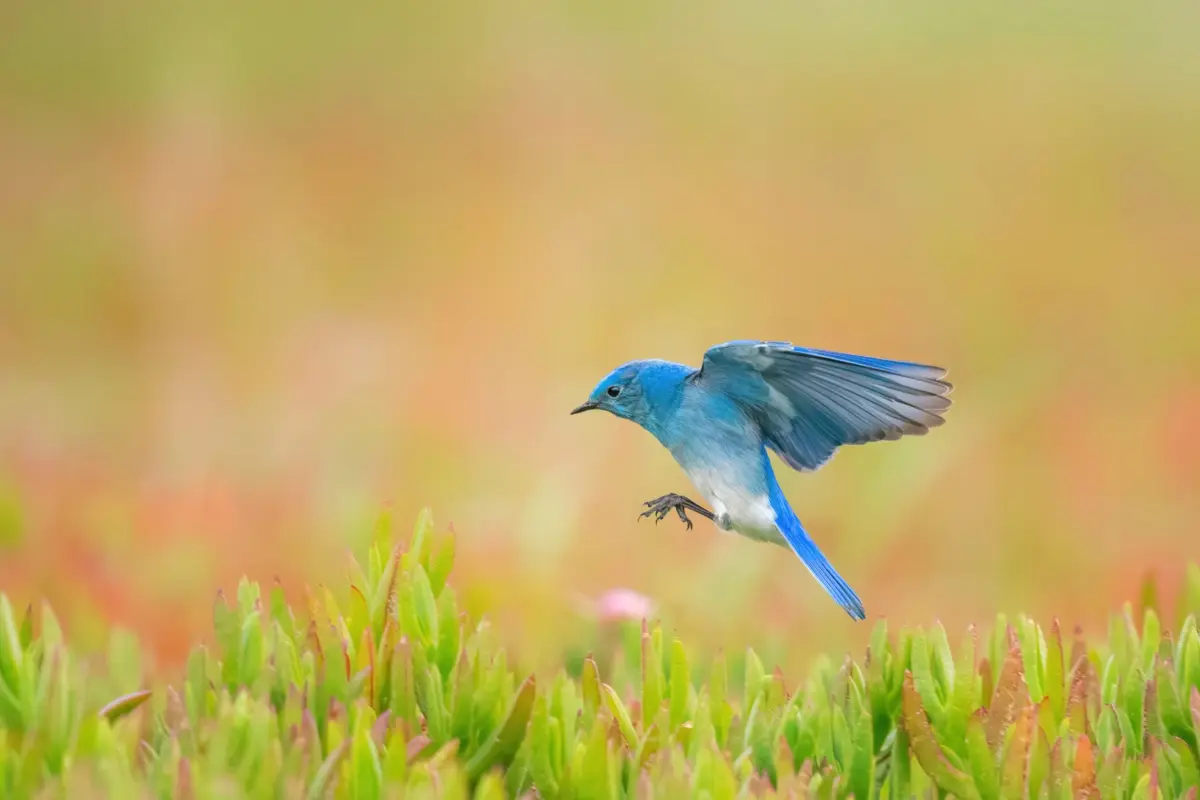
In the high-altitude deserts, arid montane landscapes, and windswept shrub-steppes of the American West, a flash of brilliant azure often pierces the muted earthy tones of the terrain. This arresting visual is the calling card of Sialia currucoides—the Mountain Bluebird. Celebrated for its trademarked sky-blue, full-body coloring, delicate yet resilient morphology, and complex social structures, this spunky songbird occupies a unique ecological niche across western North America. From the jagged peaks of Northern Colorado to the sprawling Joshua Tree forests of western Arizona, the Mountain Bluebird serves as both an indicator of environmental health and a premier "spark bird" capable of igniting a lifelong passion for ornithology in observers of all ages.
While other bluebird species, such as the Eastern and Western Bluebirds, sport richer rust-orange breasts, the Mountain Bluebird’s ethereal, monochromatic turquoise-to-sky-blue plumage (in males) and subtly nuanced gray-and-blue tones (in females) set them apart. Beyond their aesthetic appeal, these birds are resilient survivors capable of weathering freezing winter temperatures through strategic flocking behavior, opportunistic foraging, and remarkable physiological adaptations. This comprehensive report examines the natural history, ecological roles, behavioral intricacies, and conservation importance of the Mountain Bluebird across its dynamic western range.
Detailed Chronology
To fully understand the life history and seasonal rhythms of the Mountain Bluebird, one must trace its annual cycle across contrasting landscapes, from breeding grounds in high-elevation montane zones to wintering areas in low-desert valleys.
Spring and Early Summer: The Breeding and Nesting Phase
As winter recedes and the high country begins to thaw, Mountain Bluebirds embark on their annual migration back to breeding grounds that can reach elevations of over 10,000 feet. This period, spanning from April through July, is characterized by intense territorial establishment and reproductive efforts.
- Site Selection and Cavity Nesting: Mountain Bluebirds are secondary cavity nesters. Lacking the specialized bills required to excavate their own holes, they rely heavily on natural tree hollows, abandoned woodpecker nests, or anthropogenic structures such as bluebird nesting boxes.
- Courtship and Egg Laying: Males arrive on breeding territories first, performing elaborate display flights and singing soft, warbling notes to attract females. Once a pair bond is formed, the female constructs a neat, cup-shaped nest out of fine grasses, rootlets, and pine needles. She typically lays a clutch of four to six pale blue, unspotted eggs.
- Rearing the Young: Incubation lasts roughly two weeks, performed entirely by the female while the male actively provisions her with food. Once hatched, both parents engage in a relentless cycle of hunting to feed the voracious nestlings, which consume vast quantities of high-protein insects.
Late Summer and Autumn: Dispersal and Dietary Shifts
By late August and September, the breeding season concludes, and juvenile birds have fledged and matured. During this transitional shoulder season, Mountain Bluebirds undergo significant behavioral and ecological shifts:
- Flocking Dynamics: Family groups begin to coalesce into larger nomadic flocks. These aggregations move across meadows and open woodlands, taking advantage of late-season insect hatches before shifting toward a heavily frugivorous diet.
- Altitudinal Migration: Rather than migrating hundreds of miles south, many Mountain Bluebirds practice altitudinal migration. They simply descend from the snow-locked alpine zones into sheltered foothill valleys, arid shrub-steppes, and agricultural fields where ambient temperatures are milder and food remains accessible.
Winter: Survival Strategies in the Cold Desert
Winter presents the ultimate test for the Mountain Bluebird, particularly in northern reaches of its range like Northern Colorado, Wyoming, and Montana.
- The Snowfall Phenomenon: A fresh blanket of snow transforms the landscape, burying ground-dwelling insects and forcing the birds to rely almost exclusively on winter-hardy berries, such as juniper, mistletoe, and sumac.
- Communal Vigilance: To combat harsh weather and avian predators—such as merlins and sharp-shinned hawks—wintering birds form expansive flocks. These gatherings utilize cooperative lookout systems, where designated sentinels scan for threats while others forage. This communal strategy significantly increases individual survival rates during periods of scarce resources.
Supporting Context & Metrics
To appreciate the ecological standing of the Mountain Bluebird, it is valuable to examine its morphological traits, dietary shifts, geographic distribution, and behavioral metrics through empirical observation and ornithological data.
Morphological Adaptations and Morphology
The physical design of Sialia currucoides is a masterclass in evolutionary adaptation to open, windy environments:
[Morphological Trait]        [Physical Characteristic]          [Ecological Purpose]
--------------------------------------------------------------------------------------------------
Feet & Toes                  Anisodactyl arrangement            Allows secure perching on ultra-
                                                                thin flora (reeds, twigs, cacti)
Plumage (Male)               Full-body sky-blue                 Maximizes visibility across wide,
                                                                open breeding territories
Plumage (Female)             Cryptic gray with blue tail        Provides camouflage while incubating
                                                                eggs in exposed cavities
Wings                        Long, pointed primaries            Optimized for sustained, buoyant
                                                                flight and hovering over prey
The Mountain Bluebird’s ability to perch delicately on narrow reeds, thin twigs, or the crown of a Joshua Tree in western Arizona is facilitated by its lightweight frame and specialized grip. This morphological agility enables them to harvest seeds and glean insects from flora that would buckle under the weight of heavier birds.
Dietary Composition Across Seasons
The nutritional intake of the Mountain Bluebird shifts dramatically in response to seasonal availability:
- Insectivorous Phase (Spring/Summer): Up to 80–90% of the breeding season diet consists of invertebrates. Beetles, grasshoppers, caterpillars, ants, and flying insects are captured via ground-swooping or mid-air hawking. This high-protein diet is essential for egg production and nestling growth.
- Frugivorous Phase (Fall/Winter): As temperatures drop and insect populations plummet, the diet flips. Berries and wild fruits become the primary energy source. Their consumption of fleshy fruits also plays a vital role in seed dispersal across arid montane corridors.
Geographic Range and Habitat Diversity
The Mountain Bluebird’s range extends from the western edge of the Great Plains across the Rocky Mountain chain to the Pacific coast ranges, stretching from central Alaska down into northern Mexico.
- Habitat Preferences: Unlike Eastern Bluebirds that favor forest edges and suburban orchards, Mountain Bluebirds prefer wide-open spaces. They thrive in alpine meadows, shortgrass prairies, sagebrush deserts, burned-over timberlands, and high-altitude agricultural fields ranging from sea level up to 12,000 feet.
Official Statements & Expert Perspectives
Ornithologists, wildlife conservationists, and regional field naturalists have long emphasized the ecological significance of cavity-nesting species and their role in environmental monitoring.
Dr. Elena Vance, a prominent avian ecologist specializing in western montane ecosystems, notes:
"The Mountain Bluebird is an exceptional bio-indicator for western environments. Because they depend entirely on natural cavities or nest boxes for reproduction, their population stability reflects the health of mature forest fragments and snags that are often targeted for removal or lost to catastrophic wildfires. When we protect habitat for the Mountain Bluebird, we inadvertently safeguard dozens of other cavity-nesting mammals, insects, and birds."
Furthermore, conservation educators highlight the accessibility of the species for public engagement. Field naturalists working within the American Southwest frequently point to the bird’s striking visual contrast against desert backgrounds as a gateway to broader environmental stewardship.
A statement released by regional Audubon habitat coordinators underscores this educational value:
"In the arid Southwest, where subtle coloration often helps desert wildlife blend into the background, the vibrant turquoise of the Mountain Bluebird stands out as a natural wonder. It serves as an ideal ‘spark bird’—an avian ambassador that effortlessly draws children, families, and novice birders into observing local wildlife, understanding migration patterns, and appreciating the delicate balance of desert and montane biomes."
Future Outlook
As the American West faces compounding environmental pressures, the future of the Mountain Bluebird depends heavily on proactive conservation, habitat management, and climate resilience initiatives.
Climate Change and Altitudinal Shifts
Rising global temperatures and shifting precipitation patterns are altering western montane ecosystems. As snowpacks melt earlier and droughts intensify, the timing of insect hatches and plant fruiting periods can become misaligned with avian breeding cycles. Additionally, prolonged droughts in the Southwest may stress arid shrub-lands, reducing the availability of winter food sources like native berries.
Habitat Loss and Competition for Nest Sites
Urban expansion, agricultural intensification, and aggressive fire-suppression policies have historically reduced the availability of dead trees (snags) necessary for natural cavity nesting. Furthermore, Mountain Bluebirds frequently face intense competition for nesting boxes and natural cavities from non-native species such as the European Starling and the House Sparrow. Both introduced species are aggressive and often outcompete native bluebirds, leading to localized nesting failures.
Conservation Strategies and Citizen Science
Mitigating these future threats requires a multi-pronged approach:
- Nest Box Programs: Expanding regional bluebird trail networks—where volunteers install, monitor, and maintain predator-proof nest boxes—has proven exceptionally successful in bolstering local populations.
- Habitat Preservation: Protecting mature snags in managed forests and preserving native shrub-steppe corridors ensures that foraging grounds and nesting sites remain intact.
- Public Engagement: Encouraging citizen science participation through platforms like eBird and local Audubon chapters helps researchers track long-term population trends, migration timing, and range expansions or contractions in real time.
By combining rigorous scientific monitoring with community-driven conservation, the Mountain Bluebird will continue to flash its brilliant azure across the western landscape for generations to come, reminding observers of the fragile yet resilient beauty inherent in the high mountain air and arid deserts of North America.