
Executive Overview
In an era of rapid metropolitan expansion and unprecedented environmental shifts, the intersection of urban design and wildlife conservation has never been more critical. On September 29, 2026, at the Nina Mason Pulliam Rio Salado Audubon Center in South Phoenix, a transformative partnership was officially unveiled to the public. Audubon Southwest and the City of Phoenix formally launched Bird-Friendly PHX, a groundbreaking civic initiative designed to reshape how the desert metropolis interacts with its avian inhabitants.
This ambitious campaign is rooted in a fundamental, scientifically backed philosophy: a city that is healthy, safe, and hospitable for birds is inherently a healthier, more sustainable environment for human residents. Phoenix sits squarely within the Pacific Flyway, a vital aerial corridor utilized by millions of migratory birds navigating the arduous journey between breeding grounds and wintering habitats. However, the glittering expanse of the modern desert city presents a gauntlet of artificial hazards, ranging from disorienting nighttime illumination to invisible architectural glass and vanishing native ecosystems.
Bird-Friendly PHX seeks to dismantle these urban barriers not through heavy-handed regulation, but by mobilizing civic pride and empowering everyday residents. By inviting Phoenicians to take actionable, accessible steps at the residential and neighborhood levels, the initiative bridges the gap between large-scale municipal conservation and individual stewardship. Supported by city leadership, environmental scientists, and community organizers, the program redefines what it means to live in harmony with nature in an arid urban ecosystem. This report provides an exhaustive examination of the launch event, the ecological challenges facing desert avifauna, the metrics of urban conservation, the official perspectives driving the policy, and the long-term outlook for a truly bird-friendly Phoenix.
Detailed Chronology of the Launch Event
The path toward Bird-Friendly PHX has been years in the making, born out of localized conservation efforts, growing public awareness regarding light pollution and building collisions, and a deepening institutional commitment to sustainability by municipal authorities. The culmination of these efforts occurred under the late-September Arizona sun at the Nina Mason Pulliam Rio Salado Audubon Center, an architectural and ecological jewel nestled along the revitalized Salt River ecosystem.
The Gathering at Rio Salado
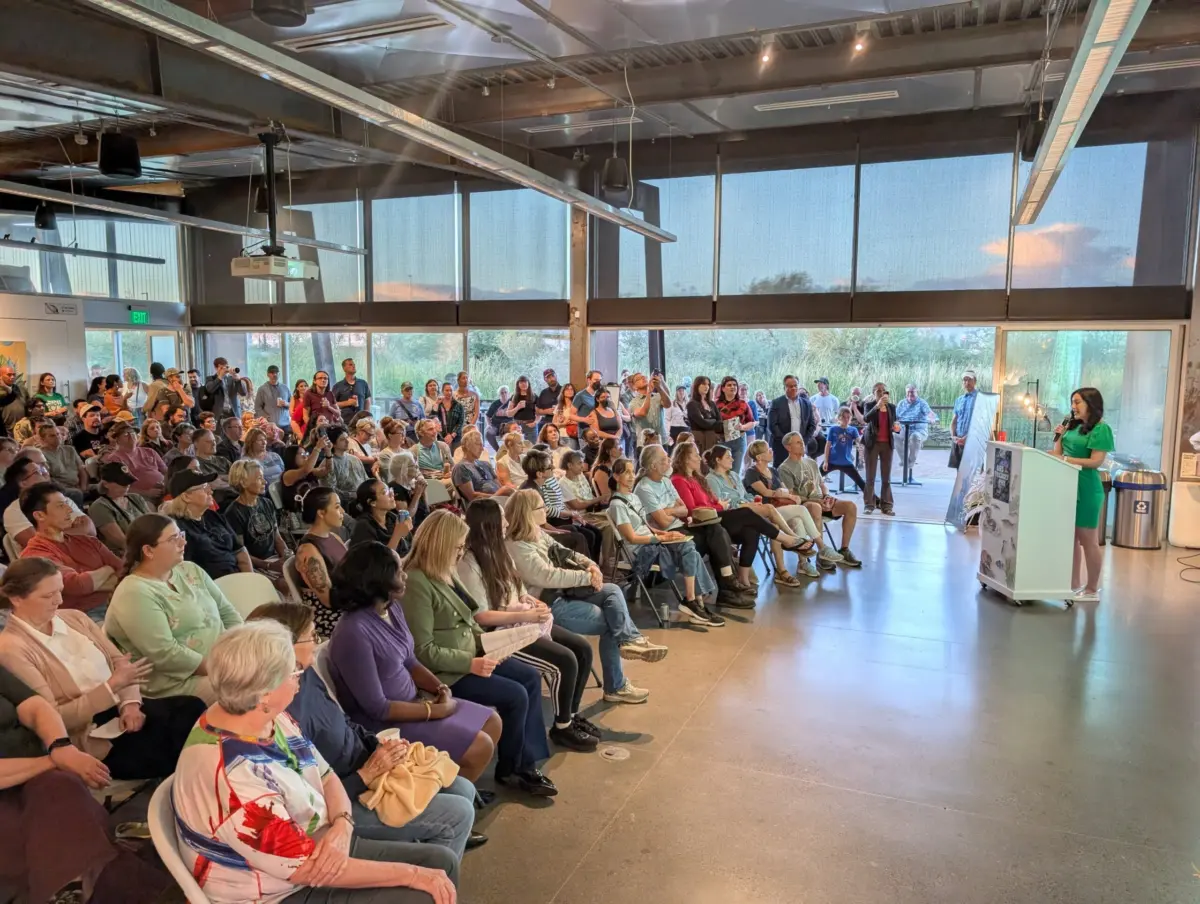
The morning of September 29, 2026, drew a diverse coalition of conservationists, urban planners, local residents, and civic leaders to the Audubon Center. The venue itself served as a living testament to the viability of urban habitat restoration, offering a lush riparian contrast to the surrounding urban grid. Erika Flores, Audubon Communications and Marketing Director for the Southwest and Rockies, opened the proceedings. In her welcoming remarks, Flores emphasized the interconnectedness of urban living and natural systems, framing the desert not as a barren landscape to be conquered, but as a vibrant, breathing ecosystem shared by human and non-human residents alike.
Cinematic Insights: Birds on the Move: Desert Rivers
A central highlight of the launch event was the public screening of the acclaimed Audubon documentary, Birds on the Move: Desert Rivers. The film offers a sweeping, visually arresting exploration of the Pacific Flyway as it intersects with the American Southwest. It highlights the indispensable role that desert waterways—such as the Salt and Gila Rivers—play as ecological lifelines for migratory species.
Viewers were taken on a visual journey following tiny songbirds, majestic raptors, and resilient desert waterbirds as they track ancient migration routes across inhospitable terrain. The documentary exposed the stark realities these animals face when they encounter sprawling metropolitan developments like Phoenix. The film’s striking cinematography and poignant narrative set an emotional and intellectual tone for the morning, grounding the subsequent policy announcements in urgent ecological reality.
Keynote Voices and Policy Unveiling
Following the documentary, a panel of prominent municipal and environmental leaders took the stage to officially unveil the Bird-Friendly PHX initiative.
- Phoenix Mayor Kate Gallego addressed the crowd, highlighting the city’s ongoing leadership in sustainability, climate resilience, and urban conservation. Mayor Gallego underscored that protecting local and migratory wildlife is a core component of Phoenix’s broader strategy to combat urban heat island effects and enhance the quality of life for all residents.
- Tricia Balluff, City of Phoenix Environmental Program Manager, provided technical insights into how municipal infrastructure can adapt to support local biodiversity. Balluff discussed ongoing municipal initiatives aimed at reducing energy consumption, improving waste management, and greening public spaces in ways that directly benefit urban wildlife.
- Haley Paul, Audubon Southwest Senior Policy Director, delivered a compelling address connecting grassroots action to systemic policy change. Paul outlined the specific mechanics of the Bird-Friendly PHX pledge, detailing how cumulative individual choices can radically alter the ecological footprint of Phoenix neighborhoods.
The event concluded with an interactive workshop session, where attendees learned how to identify native desert plants, assess their home windows for collision risks, and implement safe outdoor lighting practices.
Supporting Context & Metrics: The Ecological Realities of Phoenix
To fully appreciate the necessity of Bird-Friendly PHX, one must examine the unique ecological pressures that characterize the Phoenix metropolitan area. Located in the heart of the Sonoran Desert, Phoenix is an extreme environment defined by high temperatures, low precipitation, and intense solar radiation. Despite these harsh conditions, the region boasts remarkable avian biodiversity, serving as a permanent home to iconic species such as the Cactus Wren, Gila Woodpecker, and Verdin, while hosting hundreds of migratory species seasonally.
The Pacific Flyway and Urban Oases
During spring and autumn migrations, the sky above Arizona becomes a bustling aerial highway. Birds navigating this route rely heavily on "stopover sites"—patches of green space, urban parks, and river corridors where they can rest, forage for insects, and replenish depleted fat reserves. However, as the Phoenix metropolitan sprawl expands outward, these natural stopover sites are increasingly fragmented by asphalt, concrete, and high-density development.
Urban areas function as ecological traps. From high above, the nocturnal glow of streetlights, commercial signage, and illuminated office towers creates a disorienting beacon. Migratory birds, which navigate primarily by the stars and the Earth’s magnetic field, are routinely lured off course by artificial light at night (ALAN). Drawn into the urban core, these birds circle buildings for hours, expending critical metabolic energy that they desperately need to complete their journeys.
The Architectural Threat: Glass and Lights
Once trapped within the urban matrix, birds face two primary physical hazards:
- Window Collisions: Clear and reflective glass is entirely invisible to birds. Reflected trees, sky, and open spaces trick birds into believing they are flying through open habitat rather than toward a solid barrier. According to national estimates compiled by conservation scientists, hundreds of millions of birds die annually in North America from building collisions, with low-rise residential and commercial structures accounting for a staggering percentage of these mortalities.
- Exhaustion and Predation: Birds grounded by exhaustion from light disorientation or window strikes face a barrage of urban hazards, including vehicular traffic, domestic cats, and a lack of secure cover from predators.
The Power of Native Habitat
Conversely, urban environments can be engineered to support wildlife without sacrificing human utility. The strategic integration of native Sonoran Desert flora—such as Palo Verde, Ironwood, and various species of columnar cacti and native shrubs—provides vital ecological services. Native plants harbor the specific insect populations that local and migratory birds require for sustenance, while offering dense structural cover for nesting and evading predators.
Official Statements and Leadership Perspectives
The launch of Bird-Friendly PHX brought together a unified front of municipal administration and conservation advocacy. The statements delivered during the September 29 event encapsulate the strategic vision driving the campaign.
"Phoenix is a leader in sustainability and climate action, and protecting our wildlife is an essential part of creating a resilient city. Through our partnership with Audubon Southwest, we are empowering residents to take simple, meaningful steps that make our neighborhoods safer for birds and healthier for our communities as a whole."
— Kate Gallego, Mayor of Phoenix
Mayor Gallego’s perspective frames conservation not as an economic burden, but as an indispensable pillar of municipal health. By integrating wildlife protection into the city’s broader environmental framework, Phoenix positions itself as a forward-thinking municipality capable of balancing rapid growth with ecological stewardship.
"Cities like Phoenix are critical resting points for millions of birds journeying along the Pacific Flyway. By making small adjustments to our homes and businesses—such as turning off unnecessary outdoor lights at night and making windows visible to birds—we can dramatically reduce urban hazards and ensure these magnificent creatures complete their journeys safely."
— Haley Paul, Audubon Southwest Senior Policy Director
Haley Paul’s emphasis on actionable mitigation highlights the pragmatic core of the Bird-Friendly PHX campaign. The initiative avoids overly complex bureaucratic hurdles, focusing instead on direct, accessible interventions that any property owner can execute.
"Environmental stewardship begins at the grassroots level. The City of Phoenix is proud to collaborate with Audubon Southwest to provide our residents with the tools and education they need to transform their properties into safe havens for local and migratory birds."
— Tricia Balluff, City of Phoenix Environmental Program Manager
Tricia Balluff’s remarks underscore the logistical bridge between city policy and neighborhood action. Municipal programs often struggle to reach individual homeowners; this partnership provides a direct conduit for environmental education and community engagement.
Future Outlook: Building a Co-Habitable Metropolis
As Bird-Friendly PHX moves from its inaugural launch phase into active community implementation, its long-term success will be measured by the breadth of its adoption and the measurable recovery of urban avian populations.
The Pledge and Community Mobilization
At the heart of the campaign is the Bird-Friendly PHX pledge, hosted online via Audubon’s engagement portal. Residents are encouraged to commit to a series of foundational practices designed to mitigate urban hazards:
- Lighting Mitigation: Turning off non-essential outdoor lighting during peak migration windows (typically spring and autumn) and shielding necessary exterior lights downward to prevent light trespass.
- Window Treatment: Applying UV-reflective decals, external screens, or patterned films to residential and commercial windows to break up reflections and prevent fatal strikes.
- Native Landscaping: Replacing water-intensive turf lawns with native Sonoran Desert plants that support local insect life and provide secure nesting sites.
- Responsible Pet Ownership: Keeping domestic cats indoors or supervised in catios to protect vulnerable ground-foraging birds.
Scaling Up: From Homes to Commercial Corridors
While residential participation is vital, the long-term vision for Bird-Friendly PHX encompasses commercial real estate, municipal architecture, and urban planning standards. Future phases of the initiative are expected to encourage commercial building managers to adopt "Lights Out" policies during migration seasons and to retrofit existing glass facades with bird-safe architectural film.
Furthermore, municipal parks and riparian restoration projects—such as the ongoing revitalization of the Rio Salado ecosystem—will continue to serve as core ecological anchors. By linking private residential conservation efforts with public open-space management, Phoenix is creating a contiguous network of urban habitat.
A Shared Destiny
The ultimate message of Bird-Friendly PHX transcends avian conservation. Birds are sensitive bio-indicators; their health and presence reflect the overall condition of the urban ecosystem. Mitigating light pollution reduces energy waste and lowers municipal carbon emissions. Planting native flora reduces urban water consumption in an arid climate and mitigates the dangerous urban heat island effect. Making buildings safer for birds often aligns with energy-efficient architectural design.
In essence, Bird-Friendly PHX demonstrates that human-centric urban design and wildlife conservation are not mutually exclusive pursuits. By rallying behind a shared vision of a thriving desert city, the residents and leaders of Phoenix are proving that metropolitan growth and ecological preservation can—and must—go hand in hand.