
Executive Overview
Positive reinforcement is universally lauded as the gold standard of modern canine training. On paper, the mechanics appear remarkably straightforward: a dog executes a desired behavior, and the handler immediately follows through with a reward to reinforce that action. Yet, in practice, the execution is fraught with human error.
Renowned animal behaviorist and author Dr. Patricia McConnell highlights a pervasive yet frequently overlooked phenomenon in canine education: the accidental "poisoning of the cue." This occurs when well-intentioned human gestures—such as a vigorous pat on the head, an abrupt collar grab following a successful recall, or an immediate nail-trimming session after a "lie down" command—are perceived by the dog not as rewards, but as subtle punishments.
This comprehensive report examines the complex mechanics of positive reinforcement, the psychology behind poisoned cues, and the critical importance of developing advanced observational skills. Additionally, this feature explores McConnell’s upcoming literary projects, extensive autumn tour schedules, and a glimpse into rural farm life alongside her ongoing advocacy for ethical animal welfare standards.

Detailed Chronology: The Evolution of Training Insights and Upcoming Milestones
The current discourse surrounding canine communication stems from decades of behavioral observation, notably codified in foundational texts like The Puppy Primer. As McConnell prepares a thoroughly updated edition of the book slated for release in October, she is spending July re-evaluating core concepts of human-canine interaction.
The progression of canine behavior science over the past several decades has shifted from dominant, coercive models to highly nuanced, cooperative frameworks. However, even within positive reinforcement circles, practitioners frequently miss the subtle physical cues dogs display when human affection crosses the line into discomfort.
To contextualize these behavioral updates, McConnell has announced a busy late-summer and autumn itinerary for 2026, engaging directly with readers, trainers, and canine enthusiasts across the United States:

- July 25, 2026: Author visit and public presentation at the Minocqua Public Library in Minocqua, Wisconsin (1:00 PM – 3:00 PM CT).
- September 15, 2026: A collaborative online discussion featuring McConnell and Cat Warren during the annual Fall "Bark Fest," hosted by animal behavior experts Zazie Todd and Kristi Benson.
- September 17, 2026: Public reading and community discussion at the Hildebrand Memorial Library in Boscobel, Wisconsin (6:00 PM CT).
- September 24, 2026: Evening author event at Barnes & Noble in Madison, Wisconsin (7:00 PM CT).
- October 7–10, 2026: Participation in the CANIS Conference in Schaumburg, Illinois. Highlights include hosting an intimate Story Circle for CANIS+ attendees on October 8th, followed by a panel discussion focused on animal welfare and professional ethics from 4:30 PM to 5:00 PM.
- October 15–18, 2026: A featured presentation at the 25th Anniversary Celebration of the Wisconsin Book Festival in Madison, Wisconsin.
- November 14, 2026: An afternoon keynote address for the Janesville-Beloit Kennel Club in Janesville, Wisconsin, focusing on her latest novel and behavioral science.
Due to the intensive schedule surrounding the revision of The Puppy Primer, the finalization of her new novel Away To Me, and the management of her Wisconsin farm, McConnell has adjusted her publication cadence for the summer months, moving from a bi-weekly post to a tri-weekly schedule.
Supporting Context and Metrics: Understanding the "Poisoned Cue"
In behavioral psychology, a "cue" is a stimulus that signals a specific behavior will yield a specific consequence. A "poisoned cue" occurs when a previously positive or neutral cue becomes associated with aversive, unpleasant, or conflicting experiences.
The Head-Pat Paradox
As McConnell notes in an excerpt from The Puppy Primer:

"A word to the wise: Dogs aren’t as fond of receiving head pats as we are of giving them. In every puppy class you can watch owners pat-pat-patting the top of their recently recalled dogs’ heads, believing that they are reinforcing their dogs for coming. However, if you watch for it, you can see the dogs ducking down and turning their heads away as if they didn’t like it."
While certain breeds—most notably Golden Retrievers, whose enthusiastic tolerance for physical contact is legendary—may accept heavy-handed petting, most dogs interpret a downward vertical hand movement toward the crown of the head as threatening or mildly aversive. When a handler calls a dog, rewards them with an unwanted head pat, and repeats this pattern, the reliability of the "come" command steadily degrades. The dog learns that compliance results in an interaction they wish to avoid.
Common Pitfalls in Everyday Training
- The Abrupt Collar Grab: Calling a dog to come, only to immediately seize their collar upon arrival—often signaling the end of off-leash freedom or the start of an unpleasant procedure (like a bath or nail trim).
- The Deceptive Sit: Asking a dog to sit, then slapping the top of their head in a misguided display of affection. (Handlers are frequently encouraged to try patting their own heads in a similar manner to understand the sensation).
- The Bait-and-Switch Down: Asking a dog to lie down, only to transition immediately into a stressful grooming or medical task without providing a genuine reward or release.
The Observational Challenge
To combat poisoned cues, trainers must refine their observational skills. A true reinforcement must elicit authentic positive emotional responses. Handlers are encouraged to look for:

- Loose, fluid body language.
- A tail wag originating from the shoulders back rather than just a stiff tail tip.
- Soft eyes and forward, relaxed attention.
Conversely, indicators of aversion include turning the head away, lowering the posture, going stiff, closing the mouth tightly, or attempting to retreat from the handler.
Official Statements and Expert Insights
Reflecting on the collaborative process behind her novel Away To Me, McConnell emphasizes the value of cross-disciplinary expertise in animal literature. During a recent farm gathering, McConnell hosted Colleen Michelson, a real-life detective and crime scene investigator who provided crucial guidance on law enforcement protocols featured in the book.
Furthermore, McConnell credits retired professional photographer Steve Dahlgren—renowned for his exceptional work capturing both human subjects and animals—with producing the defining author portrait used for her latest publication.

Addressing the broader implications of animal ethics, McConnell’s upcoming engagement at the CANIS Conference underscores her commitment to raising welfare standards across the animal training industry. Her scheduled panel appearance will directly tackle the ethical responsibilities of trainers, researchers, and authors in promoting humane, scientifically sound methodologies.
Future Outlook: Farm Life, Literary Releases, and Summer Reflections
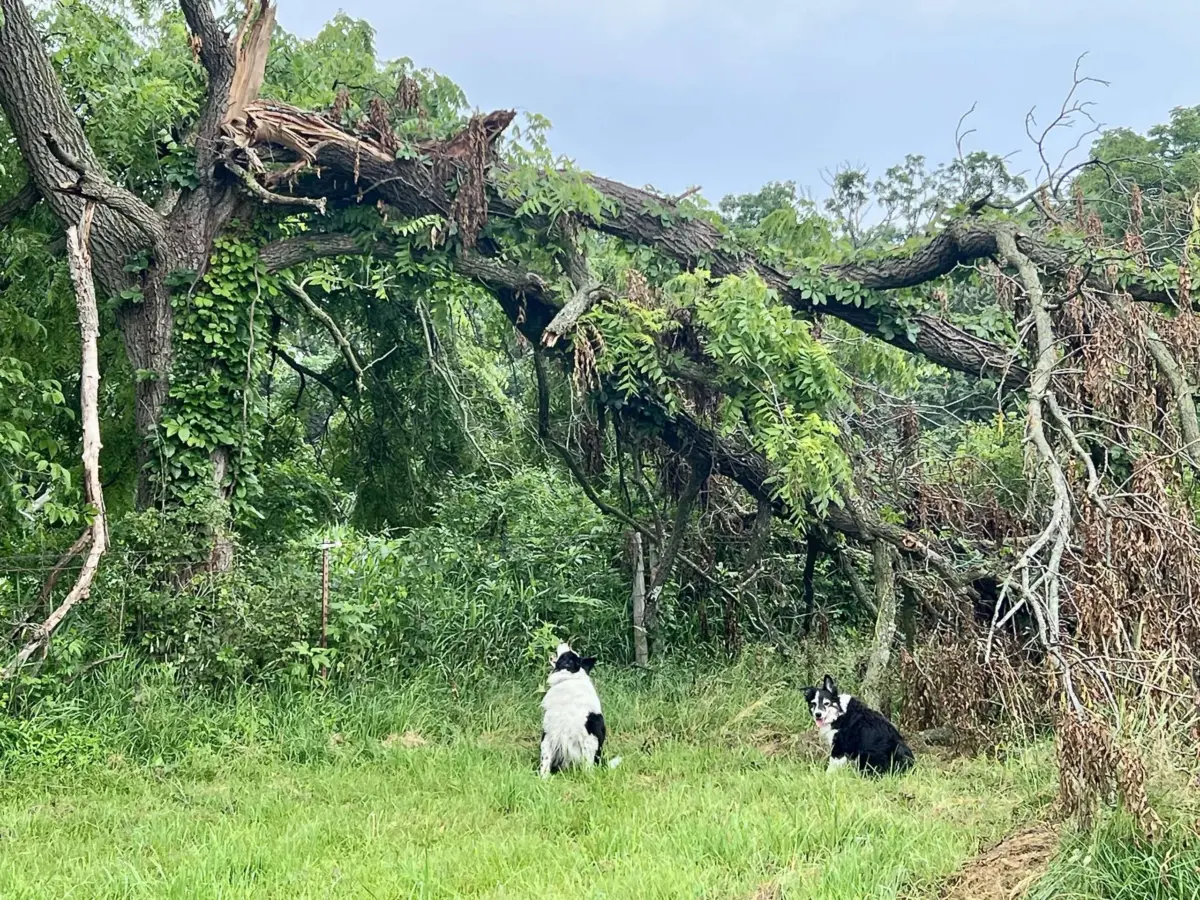
As the summer season progresses on the McConnell-Roper farm in Wisconsin, daily life reflects a balance of rigorous academic writing, literary promotion, and rural maintenance. Following a severe 70-mph windstorm that necessitated extensive chainsaw work by her husband, Jim, the property has required significant clean-up, punctuated by professional arboricultural interventions—much to the silent approval of the farm’s resident dog, Skip, who frequently serves as a humorous reminder of common training pitfalls (such as the dog’s name itself acting as a frequently poisoned cue).
With day lilies blooming across the landscape and the writing of Away To Me complete, the upcoming months promise a vibrant intersection of literary celebration and canine education. Readers and enthusiasts are encouraged to monitor McConnell’s official events page for real-time updates regarding her autumn book tour appearances, library talks, and conference schedules. Through continued self-reflection, heightened observation, and a commitment to positive reinforcement free of hidden aversives, handlers can build stronger, more trusting relationships with their canine companions.