
Executive Overview
The governance of the multi-billion-dollar commercial pet food industry relies on a complex web of advisory bodies, federal oversight, and state-level enforcement. At the center of this regulatory matrix is the Association of American Feed Control Officials (AAFCO). Though technically a private organization lacking direct statutory enforcement power, AAFCO plays a pivotal role in shaping animal feed and pet food regulations across the United States. Its members—comprising state agricultural officials and representatives from the U.S. Food and Drug Administration (FDA)—draft model laws, define ingredients, and establish nutritional profiles that state legislatures subsequently adopt into law.
At AAFCO’s recent bi-annual proceedings in San Diego, California, committee debates exposed persistent tensions between commercial interests, regulatory enforcement, and consumer protection. Key developments during the multi-day conference highlighted systemic vulnerabilities across the feed supply chain:
- Ingredient Definition Controversies: Debates within the Ingredient Definitions Committee over ash content minimums revealed how slight modifications to technical definitions could erode distinctions between low-grade rendered materials and higher-grade meat meals.
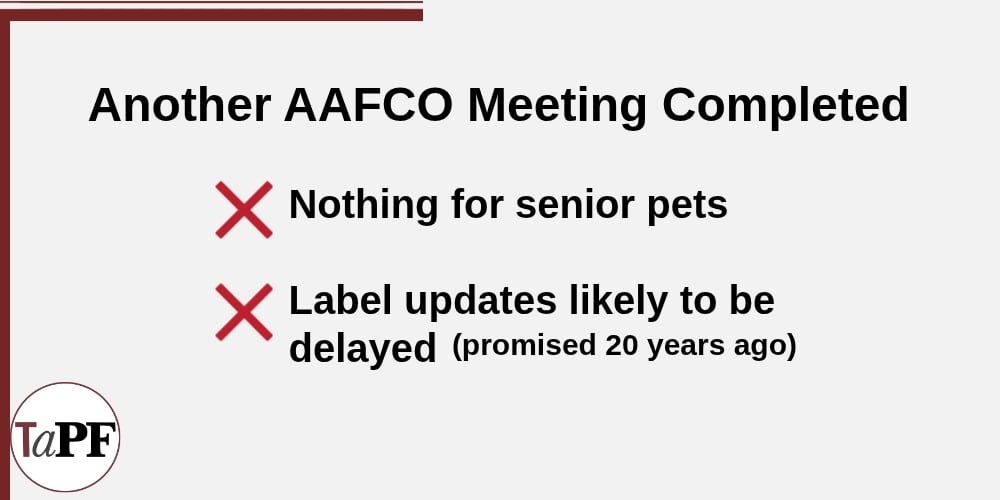
- Chronic Labeling Modernization Delays: Nearly two decades after Congress mandated updated pet food labeling standards under the Food and Drug Administration Amendments Act (FDAAA) of 2007, industry stakeholders are raising technical objections regarding dietary fiber testing to potentially delay implementation beyond the currently targeted 2030 deadline.
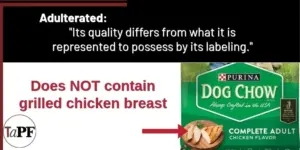
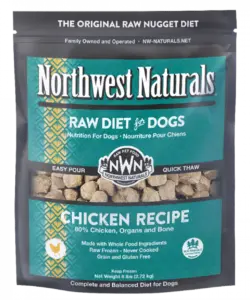
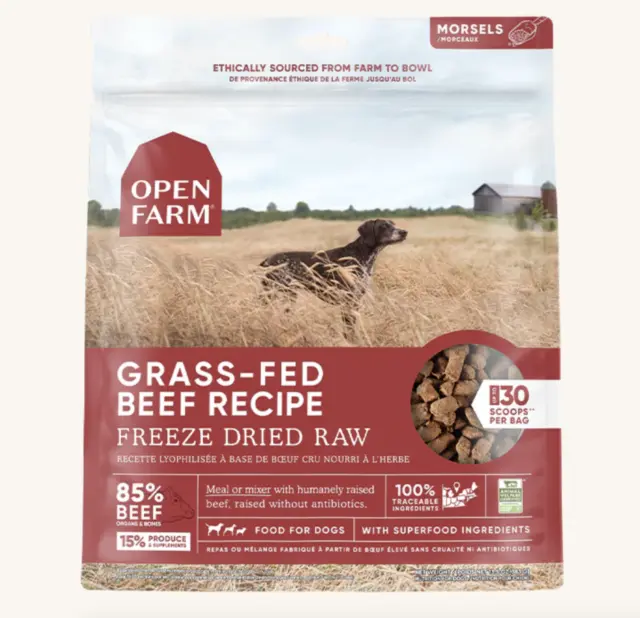
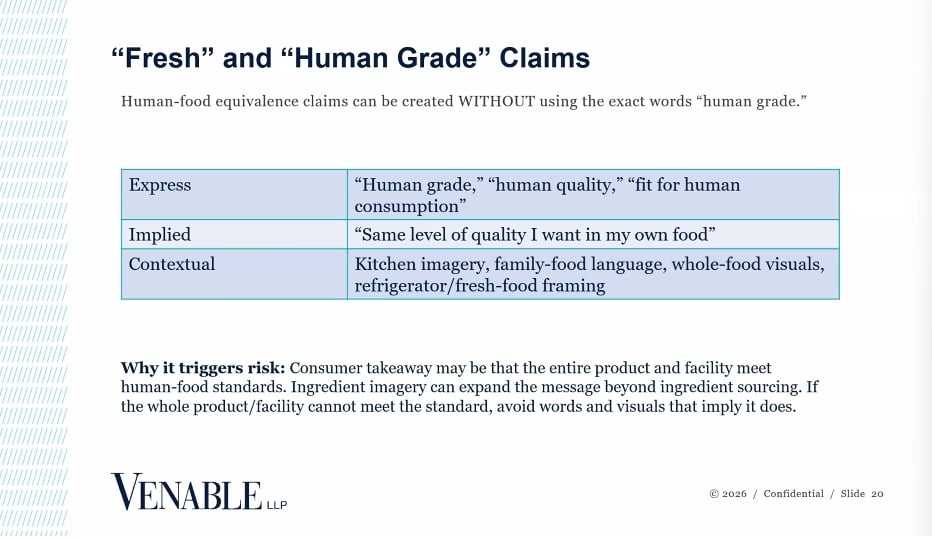
- Litigation Risks Over Deceptive Marketing: Legal experts warned manufacturers that utilizing lavish "ingredient imagery"—such as prime cuts of grilled meat on packaging containing lower-grade rendered meal—exposes the industry to severe class-action litigation risks.
- Regulatory Inaction on Senior Pet Diets: Despite official admissions from the FDA that senior pets risk nutritional deficiencies due to lower caloric intake and unstandardized "senior" formulas, neither regulatory bodies nor industry stakeholders introduced enforceable nutritional standards for aging pets.
The following analysis provides a comprehensive account of these proceedings, examining the historical context, regulatory mechanics, and supply chain implications shaping the commercial pet food landscape.
Detailed Chronology of Key Committee Proceedings
                          CHRONOLOGY OF PROCEEDINGS & LABELING TIMELINE

  2007                    2009                   2023                   2026                   2030
  │                       │                      │                      │                      │
  ├─ Congress passes      ├─ Original statutory  ├─ AAFCO completes     ├─ San Diego Meeting:  └─ Target date for
  │  FDAAA mandating      │  deadline for label  │  Pet Food Label      │  Industry cites lab  │  PFLM implementation
  │  pet food label       │  updates missed by   │  Modernization       │  testing challenges  │  (now facing potential
  │  modernization.       │  regulators.         │  guidelines (PFLM).  │  to request delay.   │  further delays).
1. Ingredient Definitions Committee: The Ash Threshold and Rendered Meal Ambiguity
The proceedings of the Ingredient Definitions Committee featured a significant debate concerning ingredient definition 9.41: Meat and Bone Meal (MBM). The central point of contention was whether to retain or excise a single, crucial sentence specifying minimum ash content thresholds.
The official definition under evaluation reads as follows:
"9.41 Meat and Bone Meal is the rendered product from mammal tissues, including bones, exclusive of any added blood, hair, hoof, horn, hide trimmings, manure, stomach and rumen contents, except in such amounts as may occur unavoidably in good processing practices. It shall not contain extraneous materials not provided for in this definition. It is a source of protein in animal diets. The total ash content for the product should contain a minimum of 28% ash. It shall not contain more than 12% pepsin indigestible residue and not more than 9% of the crude protein in the product shall be pepsin indigestible. The label shall include guarantees for minimum crude protein, minimum crude fat, minimum Phosphorus (P) and minimum and maximum Calcium (Ca). If the product bears a name descriptive of its kind, composition, or origin, it must correspond thereto."
During committee discussions, several stakeholders advocated for eliminating the 28% minimum ash requirement. Opponents of the amendment countered that removing this parameter would effectively collapse the technical distinction between "Meat and Bone Meal" and standard "Meat Meal." Because ash serves as a direct analytical proxy for bone content, the 28% floor ensures that products with lower mineral density cannot be arbitrarily reclassified. Stripping this requirement would allow ingredient suppliers to label standard Meat Meal as Meat and Bone Meal—or vice versa—at will, complicating quality control and supply chain transparency.
The operational distinction between these ingredients carries significant safety and quality implications:
| Feature / Standard | Meat Meal (e.g., Beef Meal) | Meat and Bone Meal (MBM) |
|---|---|---|
| Primary Composition | Rendered mammal tissue (bones excluded or minimized) | Rendered mammal tissue including bones |
| Ash Content Requirement | Lower relative ash ceiling; no 28% minimum floor | Minimum 28% total ash content |
| Raw Material Sourcing | Generally sourced from designated slaughterhouse trimmings | May include whole carcasses, dead, diseased, or 4D animals |
| Pentobarbital Risk Level | Low to Moderate | High (Historically flagged by FDA CVM surveys) |
| Consumer Perception | Marketed as concentrated, high-quality protein | Recognized as low-cost, low-grade rendered ingredient |
The wording "exclusive of any added blood, hair, hoof, horn, hide trimmings, manure…" remains a point of critique among consumer advocates. The phrasing explicitly prohibits the intentional addition of extraneous waste materials post-processing, yet permits their presence if derived from the original animal carcasses processed during rendering.
Furthermore, rendered ingredients like MBM have historically been linked to pentobarbital contamination—the chemical agent utilized in veterinary euthanasia. FDA Center for Veterinary Medicine (CVM) investigations confirmed that rendered ingredients sourced from non-slaughter animals (4D livestock: dead, dying, diseased, or disabled) represent a primary vector for pentobarbital entering the commercial pet food supply.
2. Current Issues and Outreach Committee: Label Modernization and Testing Obstacles
The Current Issues and Outreach Committee addressed ongoing public education initiatives, briefly referencing consumer outreach campaigns targeted for late 2026 and early 2027. However, the committee’s focus quickly shifted to the operational challenges surrounding the Pet Food Label Modernization (PFLM) initiative, specifically the mandate requiring quantitative dietary fiber disclosures on retail packaging.
                  PET FOOD LABEL MODERNIZATION (PFLM) HISTORY

  [2007] Congressional Mandate (FDAAA)
    └─► FDA required to update pet food labeling within 2 years.

  [2009] Missed Deadline
    └─► FDA delegates label modernization framework development to AAFCO.

  [2023] Guideline Finalization
    └─► AAFCO completes PFLM framework; sets a 7-year implementation window.

  [2026] San Diego Proceedings
    └─► Industry cites laboratory assay limitations for dietary fiber.

  [2030] Targeted Enforcement
    └─► Implementation threatened by potential industry-requested extensions.
During the session, committee leaders presented technical data illustrating that standardized analytical laboratory methods for quantifying dietary fiber yield inconsistent results when applied to high-moisture matrices, such as wet canned foods, fresh diets, and raw frozen formulations.
Following this presentation, industry representatives queried whether AAFCO would consider delaying the dietary fiber disclosure mandate beyond the established 2030 deadline. Consumer advocacy groups countered that industry stakeholders have had ample time to address analytical methodology since the initial passage of the federal legislation, characterizing the technical objections as a strategic attempt to postpone regulatory compliance.
3. Pet Food Committee: Deceptive Marketing and Senior Pet Nutrition Gaps
The Pet Food Committee session focused on two major regulatory challenges: legal exposure surrounding product packaging and unstandardized dietary formulations for aging companion animals.
Deceptive Packaging Imagery and Legal Vulnerability
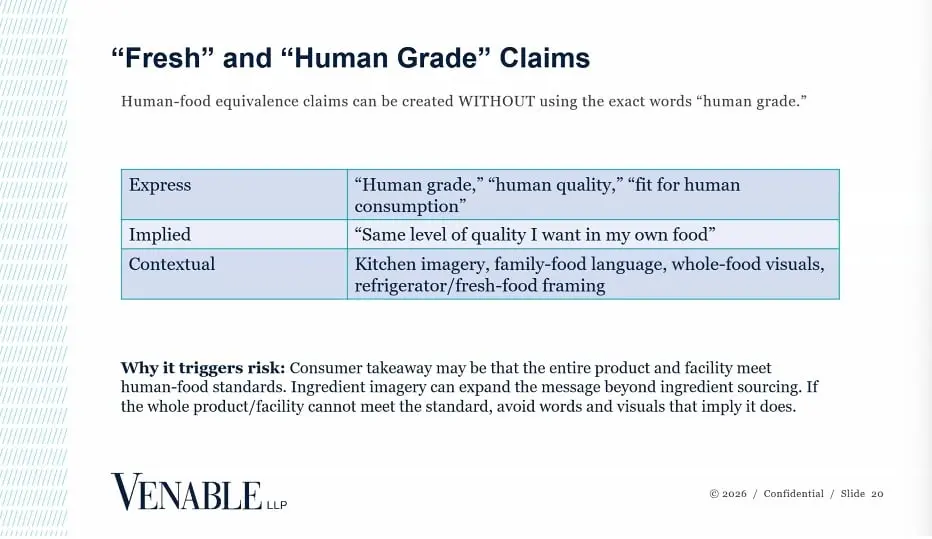
Todd Harrison, a partner at the law firm Venable LLP specializing in regulatory compliance, delivered a presentation analyzing legal exposure tied to product packaging. Harrison cautioned manufacturers that using stylized images of prime human-grade ingredients—such as whole roasted chicken breasts, filet mignon, or fresh garden vegetables—on packaging containing low-grade rendered meals or agricultural by-products creates significant legal risk.
                      TYPICAL MARKETING VS. REALITY MATRIX

  FRONT-OF-PACKAGE GRAPHICS                     ACTUAL INGREDIENT PANEL
  ┌─────────────────────────────────────────┐   ┌─────────────────────────────────────────┐
  │ • Photographs of grilled steak          │   │ • Meat and Bone Meal (9.41)             │
  │ • Intact, farm-fresh vegetables         │ VS│ • Animal Digest / Rendered Fat          │
  │ • Human-grade culinary presentation     │   │ • Wheat middlings & cereal by-products  │
  └─────────────────────────────────────────┘   └─────────────────────────────────────────┘
Harrison noted that plaintiff attorneys are increasingly leveraging state consumer protection statutes to challenge these discrepancies. If a product’s primary protein source consists of rendered Meat and Bone Meal, utilizing visual representations of intact, prime cuts of meat on retail packaging or digital marketing assets can be classified as materially misleading to reasonable consumers.
Regulatory Inaction on Senior Pet Diets
The committee also reviewed findings regarding specialized "Senior" pet diets. An FDA representative acknowledged that because older pets typically exhibit lower metabolic rates and decreased physical activity, pet owners are frequently advised by veterinarians to reduce daily food portions. However, because neither the FDA nor AAFCO has established an official Nutritional Profile for senior pets, reducing portion sizes of standard adult maintenance diets can lead to micronutrient deficiencies.
Despite acknowledging this nutritional risk, neither the FDA nor AAFCO introduced binding regulatory definitions or mandatory nutritional profiles for senior formulations. Consequently, manufacturers remain free to market standard adult maintenance formulas as specialized "Senior" diets without meeting specific regulatory standards for aging animals.
Supporting Context, Metrics & Historical Background
The regulatory framework governing modern pet food in the United States emerged from major safety failures and subsequent legislative action. Understanding this context requires examining historical regulatory actions and analytical metrics.
1. The 2007 Legislative Mandate and Regulatory Delegation
In 2007, widespread contamination of pet food with melamine and cyanuric acid led to thousands of companion animal illnesses and deaths across North America. In response, Congress enacted the Food and Drug Administration Amendments Act (FDAAA) of 2007. Section 1002 of the Act directed the Secretary of Health and Human Services to establish:
- Updated ingredient labeling standards for pet food.
- Nutritional and processing standards for pet food ingredients.
- Updated standards for user-friendly labeling, including dietary guidance.
Congress established a statutory deadline of September 2009 for the completion of these rules. However, the FDA deferred the technical development of these labeling frameworks to AAFCO. AAFCO spent over a decade drafting the Pet Food Label Modernization (PFLM) guidelines, completing them in July 2023. The organization then established a six-year implementation window, deferring full enforcement until 2030—twenty-one years past the original statutory deadline set by Congress.
                         THE PET FOOD REGULATORY MATRIX

             ┌─────────────────────────────────────────────────┐
             │            CONGRESSIONAL MANDATE                │
             │   Food & Drug Administration Amendments Act    │
             └────────────────────────┬────────────────────────┘
                                      │
                                      ▼
             ┌─────────────────────────────────────────────────┐
             │              U.S. FDA (FEDERAL)                 │
             │   Sets safety baseline; delegates model rule    │
             │   development to advisory bodies.               │
             └────────────────────────┬────────────────────────┘
                                      │
                                      ▼
             ┌─────────────────────────────────────────────────┐
             │                AAFCO (ADVISORY)                 │
             │   Private body of state/federal regulators;     │
             │   establishes model laws & definitions.         │
             └────────────────────────┬────────────────────────┘
                                      │
                                      ▼
             ┌─────────────────────────────────────────────────┐
             │             STATE DEPT. OF AGRIC.               │
             │   Enacts AAFCO model laws into state code;      │
             │   executes local inspections and enforcement.   │
             └─────────────────────────────────────────────────┘
2. FDA Pentobarbital Contamination Surveys
The issue of rendered ingredients containing chemical contaminants is documented in official FDA CVM research. During historical analytical surveys investigating pentobarbital residues in commercial dog food, FDA scientists utilized gas chromatography-mass spectrometry (GC-MS) to analyze sample matrices.
The FDA’s analytical findings demonstrated a strong statistical correlation between specific rendered ingredient categories and the presence of pentobarbital:
- High-Risk Ingredients Identified: Meat and Bone Meal (MBM), Beef and Bone Meal (BBM), Animal Fat (AF), and Animal Digest (AD).
- Source Determination: The FDA concluded that these rendered ingredients were derived from animal sources that included euthanized livestock and non-slaughtered carcasses, as commercially slaughtered animals destined for human food channels are not legally subjected to barbiturate euthanasia.
Official Statements & Industry Perspectives
The debates in San Diego reflect divergent priorities among consumer advocates, legal scholars, and regulatory authorities.

Consumer Advocacy Perspective
Susan Thixton, founder of TruthaboutPetFood.com and representative for the Association for Truth in Pet Food, criticized the regulatory process for favoring commercial interests over safety and transparency:
"Their open discussion about these two ingredients confirms industry and regulatory are well aware both are commonly sourced from the absolute worst quality of raw materials—dead, decomposing animals. Their discussion confirmed they only care about the words defining an ingredient, not the actual ingredient—whether it is legal or not, and whether it is quality nutrition or not."
Addressing the proposed delays to the Pet Food Label Modernization effort, Thixton added:
"You [AAFCO] have had years to work out the details of this. Why is this just coming to light now? … This is a way for industry to delay the pet food label updates that were promised to pet owners almost 20 years ago."
Legal and Compliance Warnings
Todd Harrison, regulatory partner at Venable LLP, warned manufacturers against aggressive marketing tactics that outpace ingredient quality:
"Pet food manufacturers take a legal risk when ‘ingredient imagery’ on labels or websites is not reflective of what the pet food is actually made from. Misleading visual representations of prime meats create direct exposure to litigation under state deceptive trade practices statutes."
Regulatory and State Enforcement Position
During committee proceedings, state regulatory officials noted that adopting AAFCO’s modernized labeling guidelines into individual state codes presents significant administrative and legal challenges. Because state administrative procedure acts require independent rulemaking processes, uniform adoption across all 50 states remains difficult to achieve, creating potential compliance inconsistencies for national manufacturers and international exporters.
Future Outlook
The outcomes of the San Diego meeting highlight several emerging regulatory, legal, and operational challenges that will shape the pet food industry over the coming decade:

                            EMERGING INDUSTRY CHALLENGES

  ┌───────────────────────┐   ┌───────────────────────┐   ┌───────────────────────┐
  │  LITIGATION RISKS     │   │ JURISDICTIONAL GAAPS  │   │ NUTRITIONAL EXCLUSION │
  │ Class-action suits    │   │ Friction between      │   │ Lack of official      │
  │ target deceptive      │   │ state administrative  │   │ nutrient profiles     │
  │ packaging graphics.   │   │ codes & AAFCO rules.  │   │ for senior pets.      │
  └───────────┬───────────┘   └───────────┬───────────┘   └───────────┬───────────┘
              │                           │                           │
              └───────────────────────────┼───────────────────────────┘
                                          │
                                          ▼
                              FUTURE REGULATORY LANDSCAPE
1. Increased Class-Action Litigation
As public awareness of ingredient definitions expands, manufacturers utilizing deceptive imagery on products containing rendered meals face growing class-action exposure. Plaintiffs’ bars are increasingly targeting consumer-packaged goods companies for discrepancies between front-of-package imagery and back-of-package ingredient panels.
2. State-Level Regulatory Fragmentation
Because AAFCO lacks direct regulatory authority, its model definitions must be individually adopted by state legislatures or departments of agriculture. As state regulators express hesitation over adopting PFLM updates—and as international trade partners reject non-conforming labeling standards—the risk of a fragmented regulatory landscape increases.
3. Senior Pet Nutrition Policy Deficits
The absence of a standardized nutritional profile for senior pets leaves a significant gap in pet food safety policy. As companion animals live longer due to advances in veterinary care, consumer demand for targeted nutritional standards will continue to grow, putting pressure on regulators to establish formal guidelines.
4. Upcoming Regulatory Proceedings
The next formal proceedings for the Association of American Feed Control Officials are scheduled for January in Orlando, Florida. Key agenda items are expected to include unresolved dietary fiber assay methodologies, ongoing discussions surrounding ingredient definition amendments, and state-level adoption progress for the Pet Food Label Modernization framework.