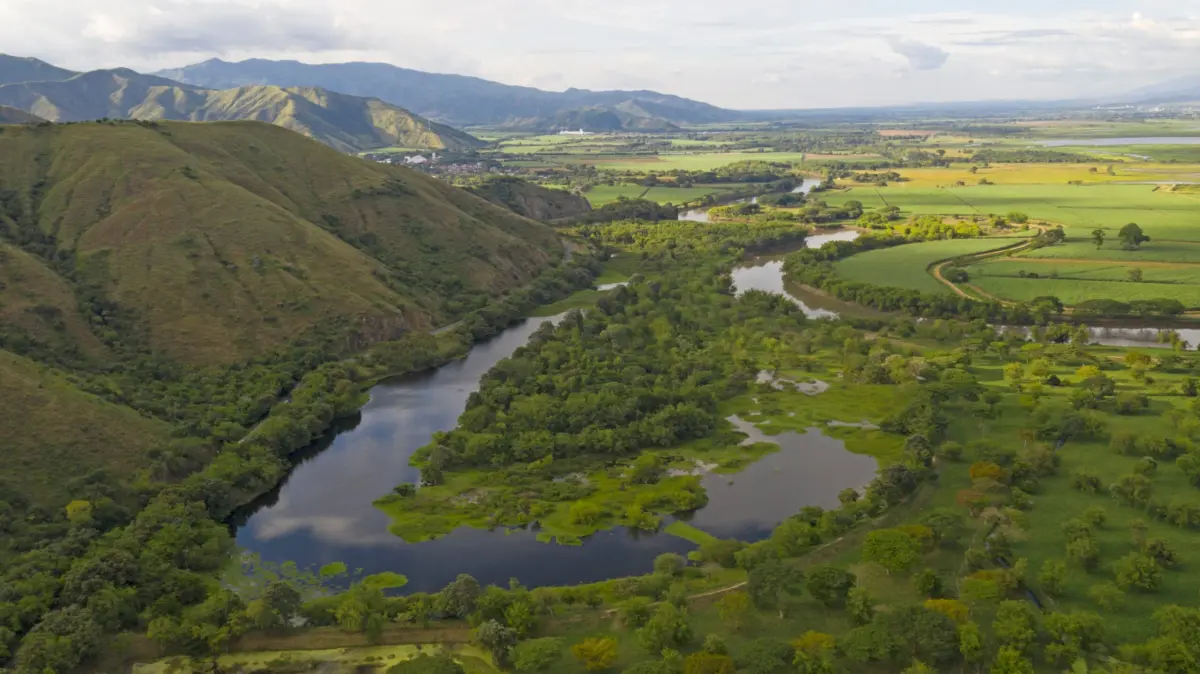

In the lush, topographically dramatic landscapes of Colombia’s Cauca Valley, a quiet revolution is taking shape across mountain peaks, high-altitude wetlands, meandering rivers, and expansive agricultural plains. Over the past half-decade, the National Audubon Society, working alongside an intricate coalition of international conservation heavyweights, local communities, agricultural syndicates, academic institutions, and governmental agencies, has transformed the region into a living laboratory for 21st-century conservation.
At the heart of this transformation is a deceptively simple yet profoundly ambitious thesis: conservation works best not when it walls off nature from humanity, but when science, protected zones, productive working lands, local stewardship, sustainable finance, and forward-thinking public policy are guided by a single, migratory indicator—birds.
Home to more than 900 bird species—ranging from glittering Andean endemics to the remarkable Lesser Yellowlegs, which traverses the hemisphere between South America and the North American boreal forests—the Cauca Valley represents one of the most critical biodiversity strongholds in the Neotropics. Yet, as recent field assessments reveal, the true triumph of Audubon’s five-year "Blueprint Landscape" initiative is not any single, isolated conservation milestone. Rather, it is the systemic reconnection of the landscape itself.
By dissolving the traditional boundaries that have long separated protected wilderness from agricultural production and human habitation, the initiative has forged a functional ecological network. In this integrated landscape, sugarcane fields double as wildlife corridors, cattle ranches double as water regulators, local communities serve as high-tech acoustic monitors, and public policies enshrine nature-based economies. As this comprehensive report details, the Cauca Valley model is no longer just a regional experiment; it is rapidly emerging as a scalable blueprint for the entire Americas.
Detailed Chronology: Five Years of Milestones in the Cauca Valley
The realization of the Cauca Valley Blueprint was neither accidental nor instantaneous. It is the result of a meticulously planned, multi-phase chronological rollout that systematically bridged the gaps between science, industry, and civil society.
Phase One: Laying the Groundwork and Establishing Sanctuaries (Years 1–2)
The journey began several years ago when Audubon formally designated the Cauca Valley as a primary Blueprint Landscape. Recognizing that traditional fortress conservation—protecting land by excluding people—was insufficient in a heavily populated and economically vital valley, planners looked to umbrella initiatives capable of scaling impact rapidly.
Enter Conserva Aves, one of the most ambitious bird conservation frameworks ever launched in Latin America and the Caribbean. Conceived through a high-level partnership between Audubon, BirdLife International, American Bird Conservancy, Birds Canada, RedLAC, local environmental funds, and dozens of national organizations, the initiative was built to accelerate the creation, expansion, and long-term management of local protected areas.
Supported by critical funding from entities like the Bezos Earth Fund and the Government of Canada, the early years of the initiative yielded immediate terrestrial victories in the Cauca Valley. Out of 17 locally supported conservation projects prioritized in the sub-region, two major Regional Integrated Management Districts (RIMDs)—Alto Calima and Atuncela—were formally established, safeguarding 19,435 hectares of critical habitat. Crucially, these declarations were not top-down decrees; each site was anchored by a dedicated local organization, ensuring grassroots stewardship from day one.
Phase Two: Technological Innovation and Agricultural Integration (Years 2–3)
With core sanctuaries established, the initiative confronted its next major challenge: the vast agricultural matrix occupying the valley floor. Agriculture consumes over 70% of the region’s water and blankets the lands between remaining forest patches. Recognizing that farms could either act as ecological barriers or biological bridges, Audubon chose to engage agricultural producers directly rather than work around them.
In partnership with Asocaña (the National Association of Sustainable Sugar Cane Mills and Growers of Colombia), the initiative co-developed the first Bird-Friendly Best Management Practices Manual for Colombia’s sugarcane sector. This framework began influencing management practices across nearly 240,000 hectares of commercial sugarcane.
Simultaneously, the project deployed cutting-edge technology to monitor the efficacy of these working landscapes. Through Escucha Aves, local communities began installing autonomous acoustic recorders in forests and farms. Powered by artificial intelligence, these devices parse thousands of hours of soundscapes to identify bird species with remarkable precision. This technological leap democratized science, giving local populations the tools to monitor biodiversity health independently while slashing the costs of traditional ecological surveys.
Phase Three: Scaling Sustainable Production and Human Capital (Years 3–4)
As the agricultural and technological frameworks matured, the initiative expanded outward into the surrounding mountain watersheds, where cattle ranching exerts heavy pressure on water tables and forests.
Collaborating with Fondo Agua por la Vida y la Sostenibilidad, CIPAV, Fedegán, and The Nature Conservancy, Audubon helped cattle ranchers transition toward silvopastoral systems—integrating trees, shrubs, and forages into pastures. This structural shift not only restored bird habitats and regulated vital water supplies, but also increased long-term farm productivity and family incomes. This model recently received a major international boost from the UK’s Global Centre on Biodiversity for Climate (GCBC), enabling its expansion into new watersheds.
Concurrently, human capacity building accelerated. Over 200 local residents were trained as specialized birding guides, transforming local perception of birds from ambient wildlife into valuable economic assets. Furthermore, Audubon integrated specialized bird conservation curricula into more than five local schools, complemented by student exchange programs with counterparts in Connecticut and Ohio to foster cross-cultural environmental literacy.
Phase Four: Public Policy, Cultural Integration, and National Scaling (Years 4–5)
In its most recent phase, the Cauca Valley initiative successfully bridged local successes with national policy frameworks. Working closely with the Colombian National Ornithological Network (RNOA), the Humboldt Institute, and the Ministry of Environment, Audubon helped facilitate and finance the development of Colombia’s National Bird Strategy 2030 (ENCA 2030), mobilizing over 2,000 stakeholders to embed bird conservation into national planning.
Regionally, the departmental government capitalized on this momentum by passing a landmark ordinance formally recognizing birdwatching tourism as a strategic engine of regional development. Culturally, birds became celebrities—most notably Cholao, a tagged Lesser Yellowlegs tracked via satellite transmitters across its epic migration between Colombia and the North American boreal forest, capturing public imagination and cementing the valley’s identity as a nexus of hemispheric conservation.
Supporting Context & Metrics: Data Behind the Blueprint
To understand the sheer scale of the Cauca Valley intervention, one must examine the quantitative metrics and structural contexts that underpin the initiative’s qualitative successes:
- Biodiversity Abundance: The Cauca Valley hosts over 900 recorded bird species, representing an extraordinary concentration of avian life that includes vulnerable Andean endemics and critical long-distance migratory shorebirds.
- Hemispheric Reach of Conserva Aves: Across nine countries, Conserva Aves has advanced nearly 180 locally led conservation projects, protecting more than 3 million hectares of critical habitat for over 1,600 bird species.
- Local Land Protection: In the Cauca Valley specifically, the initiative supports 17 local protected areas, anchored by the foundational establishment of the Alto Calima and Atuncela RIMDs, which jointly safeguard 19,435 hectares.
- Industrial Agricultural Footprint: The collaboration with Asocaña has integrated Bird-Friendly Best Management Practices across nearly 240,000 hectares of sugarcane cultivation, demonstrating that industrial agriculture can coexist with biodiversity.
- Community Empowerment: More than 200 local birding guides have been professionally trained, creating sustainable alternative livelihoods linked directly to the preservation of natural forests and wetlands.
- National Policy Integration: The development of ENCA 2030 engaged over 2,000 cross-sector participants—spanning government agencies, academic institutions, Indigenous communities, civil society, and private enterprises—to mainstream avian conservation into Colombia’s socioeconomic development.
Official Perspectives: Voices from the Ground
The success of the Cauca Valley Blueprint is rooted in deep cross-sectoral collaboration. While specific executive statements from the recent field assessments emphasize the philosophical cohesion of the project, leaders from various stakeholder groups have repeatedly underscored the transformative nature of this work:
"The biggest result isn’t any single conservation success. It’s the landscape itself, starting to function as one connected system. Birds move across mountains, forests, farms, wetlands, and rivers. People live and work within that same mosaic of connected landscapes."
— Field Assessment Observations, Audubon Conservation Leadership
The integration of scientific rigor with industrial cooperation has been equally vital, particularly through partnerships with agro-industrial associations like Asocaña and academic institutions such as Universidad Icesi. By utilizing metrics like the Bird Friendliness Index (BFI), scientists and agriculturalists have found a common language:
"Conservation works best when science, protected areas, productive lands, local communities, finance, and public policy all move in the same direction led by birds… The beauty of connection in conservation is that it is not linear. There is no single path."
Furthermore, the involvement of international funding bodies—such as the Bezos Earth Fund, the Government of Canada, and the UK’s Global Centre on Biodiversity for Climate—reflects global confidence in this decentralized, community-driven architecture. By ensuring that local organizations remain the long-term stewards of their own landscapes, the initiative guarantees permanence that external actors alone could never achieve.
Future Outlook: Scaling the Blueprint Across the Americas
As the Cauca Valley initiative looks toward the horizon, its trajectory points toward deeper institutionalization, cultural embedding, and hemispheric replication. The transition from localized conservation projects to systemic regional planning offers a clear roadmap for the future.
Next year, the region will once again step onto the international stage by supporting the Colombia BirdFair, which will simultaneously host the II World BirdFair and the South American BirdFair. This convergence highlights how far the local ecotourism economy has advanced, turning what was once a quiet rural pastime into a vibrant international hub for bird conservation.
Culturally, the transformation is visibly manifesting in towns and cities across the valley. Colorful bird murals—depicting everything from endemic tanagers to migratory shorebirds like the Lesser Yellowlegs—now brighten schools, public buildings, and neighborhood walls. These artistic installations serve as daily reminders that wildlife preservation is not confined to remote national parks, but is an integral part of the cultural identity of the people who share the land.
Ultimately, the Cauca Valley Blueprint has proven that conservation is not a linear endeavor. By harmonizing protected areas with working agricultural lands, marrying high-tech acoustic monitoring with local ecological knowledge, and aligning grassroots economic incentives with national public policies, Audubon and its partners have forged a resilient model for the planet. As these connections continue to take flight, the Cauca Valley stands ready to guide the future of biodiversity preservation across the Americas.