
Executive Overview
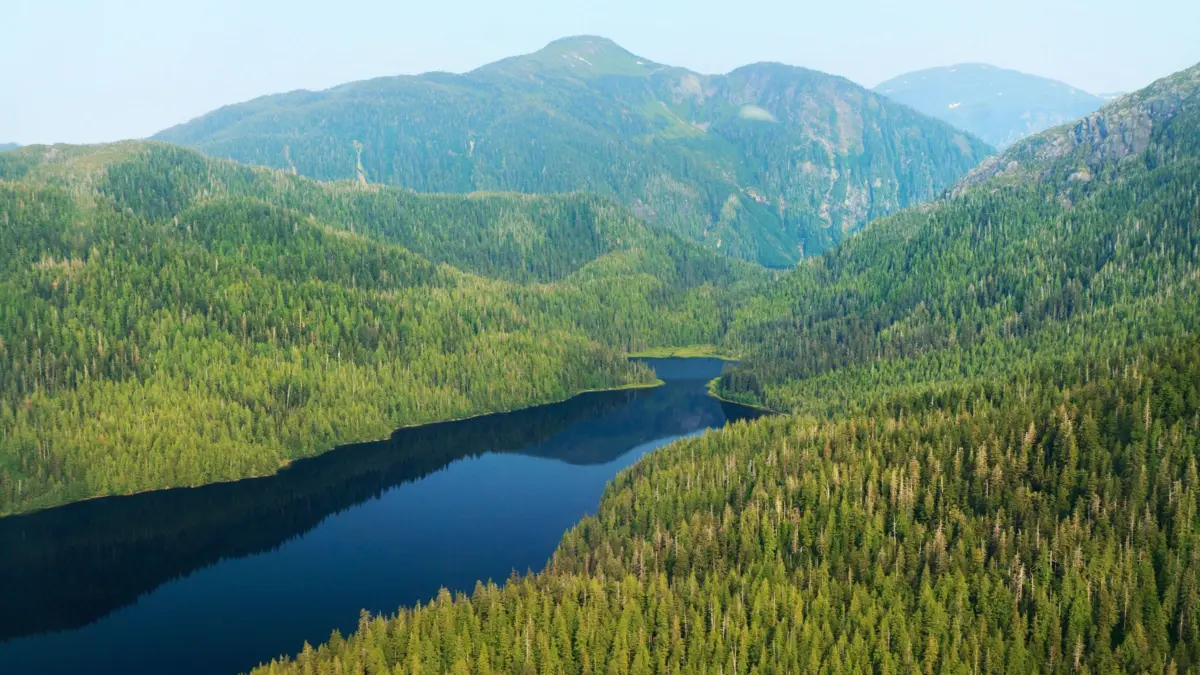
Spanning nearly 17 million acres across the mist-shrouded islands, deep fjords, intricate waterways, and jagged mountains of Southeast Alaska, the Tongass National Forest is a landscape of superlatives. It is not merely the largest national forest in the United States; it is the largest intact temperate rainforest left on Earth. As the ancestral and contemporary homeland of the Tlingit, Haida, and Tsimshian peoples, the Tongass represents a seamless continuity of indigenous culture, deep-rooted tradition, and ecological harmony that has endured for millennia.
Yet, this globally significant ecosystem now stands at a historic crossroads. For more than two decades, the Roadless Rule has served as an institutional bulwark, shielding millions of acres of pristine wild national forests from the fragmentation of new road construction and commercial timber harvesting. Today, that regulatory shield is gravely imperiled.
The U.S. Forest Service has advanced a sweeping proposal to repeal the Roadless Rule, threatening to strip critical conservation protections from 44 million acres of undeveloped forestland nationwide—roughly one-third of the entire National Forest System. Because the single largest concentration of roadless areas resides within the Tongass, Alaska’s magnificent coastal rainforest bears the brunt of this policy shift.
If enacted, the rollback threatens to unravel the ecological integrity of America’s premier "Climate Forest," a region holding over 20% of all carbon stored in the U.S. national forest system. It risks destabilizing a thriving regional economy driven by commercial fishing, tourism, and subsistence ways of life, while jeopardizing critical habitats for hundreds of species of birds, mammals, and fish. As the public comment window races toward its October 6, 2026 deadline, scientists, conservationists, indigenous leaders, and local business owners are mobilizing in an unprecedented defense of America’s last great wild forest.
Detailed Chronology: The Roadless Rule and the Tongass Conflict
To understand the gravity of the current threat to the Tongass National Forest, one must trace the winding, contentious history of the Roadless Rule and its unique intersection with Southeast Alaska.
Origins and Implementation (2001)
Promulgated in January 2001 after one of the most extensive public-involvement campaigns in the history of federal rulemaking—drawing more than 1.6 million public comments—the Roadless Rule was designed to protect inventoried roadless areas (IRAs) within the National Forest System. The regulation placed a general prohibition on new road construction and commercial timber harvesting in these pristine tracts, while carving out vital exemptions for active forest management, wildfire risk mitigation, community safety, and the maintenance of healthy wildlife habitats.
Two Decades of Legal and Political Ping-Pong
From its inception, the Roadless Rule became a focal point of intense political and legal battles, particularly regarding its application to the Tongass. Because timber extraction had long dominated the socio-political landscape of Southeast Alaska—backed by historical federal subsidies and regional industrial infrastructure—the application of the Roadless Rule to the Tongass was fiercely contested.
- 2003: The Bush administration exempted the Tongass National Forest from the Roadless Rule, a decision swiftly challenged in federal court by a coalition of conservation and Native tribal groups.
- 2011: A federal district court struck down the exemption, reinstating Roadless Rule protections across the Tongass.
- 2020: The Trump administration finalized a full exemption for the Tongass, removing Roadless Rule protections from 9.2 million acres of forestland. This move ignited a firestorm of controversy, drawing sharp rebukes from scientists and economists who argued the decision ignored the forest’s irreplaceable climate and economic value.
- 2023: Following a comprehensive review ordered by the Biden administration, the U.S. Forest Service initiated rulemaking to restore the 2001 Roadless Rule protections to the Tongass, acknowledging the overwhelming public support for conservation and the escalating imperatives of climate change mitigation.
The 2026 National Repeal Proposal
The regulatory landscape shifted dramatically once again. On August 20, 2026, the U.S. Forest Service published a Draft Environmental Impact Statement (DEIS) alongside a Proposed Rule aimed at repealing the Roadless Rule on a national scale. This sweeping initiative threatens to strip protections from 44 million acres of undeveloped forestland across the United States.
The publication of the DEIS initiated a compressed 30-day public comment period, setting a hard deadline of October 6, 2026. This lightning-fast timeline has alarmed conservation organizations, who argue that the truncated review window stifles adequate public participation on a decision of such monumental generational consequence. Simultaneously, the Tongass Land and Resource Management Plan—the foundational blueprint guiding local conservation, recreation, and management—is undergoing its own separate revision process, with public comment opportunities scheduled for early 2027. Together, these concurrent administrative maneuvers have thrust the future of America’s Amazon into intense national focus.
Supporting Context & Metrics: Why the Tongass Matters
The urgency surrounding the defense of the Tongass is anchored in hard ecological science and economic realities. The forest is not merely a collection of trees; it is a highly integrated, self-sustaining biosphere whose value scales globally.
America’s Climate Forest and Carbon Sink
Often dubbed the "Lungs of North America" or "America’s Amazon," the Tongass possesses an extraordinary capacity to sequester and store atmospheric carbon, playing an indispensable role in global climate stabilization.
Dr. John Schoen, former senior scientist at Audubon Alaska, emphasizes the sheer magnitude of this asset:
"The Tongass holds more than 20% of all carbon stored in national forests in the U.S., and the largest trees store more above-ground carbon than other forests."
According to technical assessments by the U.S. Forest Service, the Tongass contains an estimated 70 tons of aboveground carbon per acre. When accounting for the deep, undisturbed organic soils, root systems, and peatlands intrinsic to old-growth temperate rainforests, the total carbon store climbs exponentially. Repealing roadless protections opens these carbon-dense vaults to potential industrial logging, risking the release of massive quantities of greenhouse gases into the atmosphere precisely when global emissions reductions are most critical.
A Global Stronghold for Avian Biodiversity
Beyond its climatic functions, the Tongass is a sanctuary for wildlife, serving as a global stronghold for birds. The forest supports approximately 350 bird species—representing an astonishing 40% of all bird species found across North America.
- Marbled Murrelets and Bald Eagles: The Tongass harbors the world’s highest density of nesting Marbled Murrelets (a secretive seabird dependent on old-growth canopies) and Bald Eagles.
- Migratory Stopovers: Each spring, hundreds of thousands of migrating shorebirds converge on the Tongass’s tidal flats and estuaries, refueling during their arduous journeys north to Arctic breeding grounds.
- Endemic Subspecies: Rare and unique subspecies, such as the Queen Charlotte Goshawk and the Prince of Wales Spruce Grouse, depend entirely on the mature and old-growth forest structures that characterize the Tongass landscape.
Complete Ecosystems and Intact Watersheds
For its more than 400 species of fish and wildlife, the true miracle of the Tongass lies not just in its scale, but in its holistic wholeness. Dr. Schoen describes the forest as "a complete ecosystem," noting that "The Tongass represents the only public lands left in the United States, if not the world, that still has intact watersheds" encompassing the full, unbroken diversity of old-growth forests and all their ecological components.
This ecological intactness fosters complex, interdependent natural relationships: salmon swim upstream to feed coastal brown bears; bears transport marine-derived nitrogen and phosphorus deep into the forest interior via their waste; and ancient, root-bound trees stabilize stream banks, filtering water and maintaining the cool, clear gravel beds required by future generations of fish. Fragmenting this network with logging roads severs these vital nutrient loops, leading to cascading declines in biodiversity.
Economic Vitality: Fisheries, Tourism, and the Blue Economy
For generations, critics of the Roadless Rule have framed environmental protections as an impediment to economic progress in Southeast Alaska. However, modern economic data paints a radically different picture—one where the health of the forest and the health of the regional economy are inextricably linked.
The pristine waterways of the Tongass sustain some of the most productive wild salmon fisheries on the planet. These runs support indigenous subsistence harvests, commercial fishing fleets, and a thriving sport-fishing industry. Combined, wild salmon contribute approximately $1 billion annually to the Southeast Alaska economy.
When factoring in the booming ecotourism, adventure travel, and outdoor recreation sectors, the natural assets of the Tongass form the absolute bedrock of the regional economy. Together, the seafood and tourism industries account for roughly one-quarter of the entire labor force in Southeast Alaska. Industrial logging, by contrast, employs a fraction of the workforce while degrading the permanent natural capital upon which the sustainable blue economy relies.
Official Statements & Expert Perspectives
As the October 6 deadline approaches, conservation leaders, indigenous representatives, and scientific experts have issued impassioned appeals highlighting the irreversible stakes of the Forest Service’s proposal.
Dr. John Schoen’s evaluation underscores the irreplaceable nature of the Tongass’s old-growth architecture:
"When you log an ancient, multi-layered temperate rainforest, you aren’t just harvesting timber; you are resetting an ecological clock that takes centuries to wind back up. The carbon is released, the nutrient transport systems mediated by wildlife are broken, and the genetic lineages of endemic species are fractured."
Environmental advocates from organizations such as Audubon Alaska and Earthjustice have unified under the banner of science-based advocacy, stressing that the Roadless Rule was instituted precisely because historical management resulted in unsustainable forest fragmentation, excessive road-maintenance liabilities, and degraded aquatic habitats.
Local community leaders and commercial fishing associations have likewise raised alarms, pointing out that federal subsidies for timber roads and large-scale logging operations in roadless areas directly undermine the sustainable industries that have proven resilient over the long term. Their message to Washington is unequivocal: sacrificing the ecological integrity of the Tongass for short-term timber yields is an economic and environmental miscalculation.
Future Outlook: What Lies Ahead for America’s Wild Forests
The unfolding debate over the Roadless Rule and the future of the Tongass National Forest carries profound implications that extend far beyond the borders of Alaska. It serves as a litmus test for federal conservation policy, climate commitments, and the management ethos of public lands in the 21st century.
Immediate Action: The October 6 Deadline
With the public comment period for the Proposed Rule and Draft Environmental Impact Statement closing on October 6, 2026, conservation groups and civic organizations have launched nationwide campaigns urging citizens to make their voices heard. The sheer volume and substantive quality of public comments submitted during this window will legally compel the U.S. Forest Service to address complex ecological, economic, and climatic concerns in its final decision-making process.
The 2027 Forest Plan Revision
Compounding the immediate urgency of the Roadless Rule repeal is the ongoing revision of the Tongass Land and Resource Management Plan. Originally approved in 1997 and subsequently amended in 2008 and 2016, this overarching blueprint dictates long-term directives for recreation, conservation, ecological restoration, and timber zoning across the forest. With formal public comment opportunities for the land management plan scheduled to open in early 2027, stakeholders will have a second vital venue to shape how the Tongass is managed on the ground, regardless of the national outcome on roadless protections.
A Legacy on the Line
Ultimately, the fate of the Tongass National Forest transcends partisan politics and regional disputes. As the planet confronts accelerating climate disruption, the preservation of large, intact, carbon-dense ecosystems is an existential necessity. The ancient Sitka spruce, western hemlock, and yellow-cedar trees of Southeast Alaska—standing tall above pristine salmon streams and sheltering rare wildlife—represent a living heritage that cannot be replaced once destroyed.
Whether the federal government chooses to uphold the Roadless Rule or press forward with a repeal that opens millions of acres of wild forest to fragmentation will define the conservation legacy of this era. For the Lungs of North America, the coming weeks will determine whether its ancient canopies continue to breathe life into the continent, or whether they succumb to the blade of industrial development.