
Executive Overview
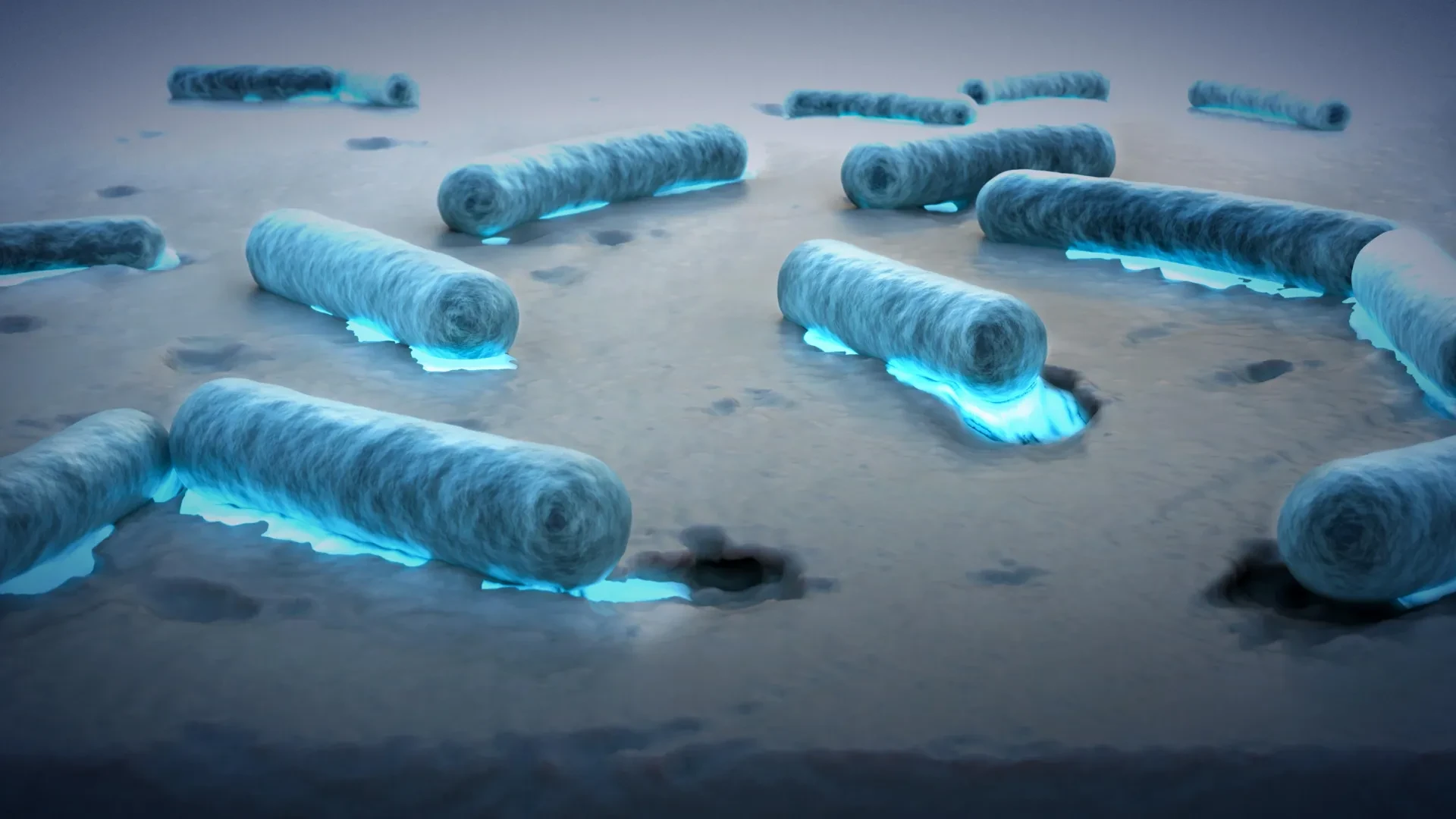
In the crushing, pitch-black abyss far beneath the ocean’s surface, an unprecedented evolutionary drama is unfolding. A landmark global study conducted by researchers at the King Abdullah University of Science and Technology (KAUST) has revealed the widespread presence of marine bacteria capable of digesting synthetic plastic. Driven by necessity in a carbon-poor environment, these deep-sea microorganisms have co-evolved alongside humanity’s relentless debris, developing specialized enzymes that target polyethylene terephthalate (PET)—the stubborn polymer ubiquitous in modern consumer goods like beverage bottles and synthetic textiles.
At the core of this monumental discovery is the identification of a distinct structural signature known as the M5 motif. Acting as a molecular fingerprint, this motif distinguishes active PET-degrading enzymes (PETases) from inactive structural look-alikes. According to the KAUST research team, functional M5-bearing PETases are not isolated anomalies; they are globally distributed, present in nearly 80 percent of the world’s marine environments, stretching from sunlit surface gyres choked with floating debris to frigid, nutrient-starved depths nearly two kilometers below.
While this planetary-scale biological adaptation underscores the astonishing resilience and ingenuity of natural selection, the study’s authors issue a stern warning. The discovery of oceanic plastic-eaters is not a silver bullet for the global waste crisis. The natural degradation rates remain far too sluggish to mitigate the millions of metric tons of anthropogenic plastic entering the marine ecosystem annually. However, by decoding how marine microbes successfully harness these hydrocarbon-degrading tools, scientists have unlocked a powerful new blueprint. These natural blueprints can be optimized in land-based laboratories, offering revolutionary pathways for industrial plastic recycling, municipal waste treatment, and a circular green economy.
Detailed Chronology: From Japanese Recycling Plants to the Global Abyss
To understand the magnitude of the KAUST discovery, one must trace the timeline of humanity’s awakening to biological plastic degradation—a scientific narrative that has accelerated dramatically over the past decade.
2016: The Paradigm Shift
For generations, the scientific consensus regarded synthetic polymers—particularly PET—as virtually indestructible by natural biological agents. Because plastics are entirely anthropogenic inventions engineered for durability, nature simply had not had enough time to devise metabolic pathways to break them down.
That fundamental assumption was shattered in 2016 when a team of Japanese researchers published a groundbreaking study detailing Ideonella sakaiensis. Discovered outside a plastic bottle recycling facility in Osaka, this novel bacterium demonstrated the astonishing ability to subsist almost entirely on PET. By secreting a specialized enzyme known as PETase, the organism successfully cleaved the strong chemical bonds holding the plastic polymer together, dismantling the material into its core chemical monomers to use as a carbon and energy source.
While Ideonella sakaiensis proved that biological degradation of plastic was chemically possible, it left a profound lingering question in the global scientific community: Was this an isolated terrestrial mutation born out of a localized contamination zone, or had the world’s vast oceans—the ultimate global sink for human waste—spawned similar microbial adaptations independently?
The Years of Accumulation
In the years following the Japanese discovery, oceanic plastic pollution escalated into a planetary crisis. Millions of tons of discarded packaging, fishing gear, and microplastics drifted into coastal estuaries, rode massive oceanic conveyor belts, and eventually sank into the deep-sea benthos. As plastic particles fragmented into microscopic debris, they permeated every marine trophic level, creating a novel ecological niche entirely composed of synthetic petrochemicals.
The KAUST Global Ocean Metagenomic Survey
Recognizing the urgent need to map the ecological consequences of this synthetic invasion, a team of researchers at KAUST—led by marine ecologist Carlos Duarte and senior bioinformatics researcher Intikhab Alam—embarked on a massive, unprecedented metagenomic undertaking.
Utilizing advanced computational modeling, machine learning algorithms, high-throughput genetic screening, and rigorous laboratory assays, the team set out to scour global genetic databases derived from oceanic water and sediment samples. Rather than attempting to culture every single marine microbe—a notoriously difficult task, as the vast majority of deep-sea bacteria refuse to grow in laboratory settings—the researchers analyzed the environmental DNA (eDNA) floating freely in the water column.
By filtering and sequencing genetic material collected from more than 400 distinct marine sampling sites across every major ocean basin, the KAUST team mapped the global distribution of putative plastic-degrading genes. Their findings confirmed that marine microorganisms across the planet had independently optimized their enzymatic machinery to exploit this abundant, novel carbon source.
Supporting Context & Metrics: The Scale of the Discovery
The numbers behind the KAUST study paint a vivid picture of a pervasive ecological phenomenon. The research was not based on a handful of anomalous samples; it represents a comprehensive, planet-wide census of microbial metabolic potential.
- 400+ Ocean Samples: The dataset encompassed genetic material gathered from diverse marine ecosystems worldwide, spanning tropical surface waters, polar gyres, coastal shelves, and the abyssal depths.
- 80% Global Prevalence: Functional PETases containing the critical M5 motif were detected in nearly 80 percent of all marine waters tested during the global survey.
- The Abyssal Niche: M5-PETase genes were found not only in high-concentration surface pollution zones but also at depths reaching nearly two kilometers below the surface, where traditional organic carbon is critically scarce.
- The M5 Fingerprint: Through structural bioinformatics, the researchers isolated the M5 motif as the definitive structural validator. Enzymes possessing this specific sequence layout efficiently cleaved PET in laboratory trials, while homologous proteins lacking the motif remained inert.
The Evolutionary Mechanics: Carbon Scarcity and Synthetic Selection
Why would deep-sea microbes evolve the capacity to digest complex synthetic polymers? The answer lies in the harsh realities of the deep pelagic zone.
Far removed from the photosynthetic surface waters where marine snow (organic detritus) rains down, the deep ocean is an extreme environment characterized by extreme oligotrophy—a severe scarcity of available carbon and energy. In this biological desert, microbes are locked in a relentless evolutionary competition for any available substrate.
When anthropogenic debris began raining down from the surface—transported by currents and ballast-weighted by biofilms—it introduced an entirely untapped, energy-dense reservoir of carbon. Microbes that happened to possess ancestral hydrocarbon-degrading enzymes (such as cutinases or lipases) experienced minor, fortuitous structural mutations. Over generations, natural selection favored those variants that could most efficiently dock with and cleave the ester bonds of PET polymers.
The M5 motif emerged as the evolutionary master-key. It provides the precise structural conformation required for the enzyme’s active site to bind effectively with the rigid crystalline regions of PET plastic, unlocking an otherwise inaccessible banquet of synthetic carbon.
Official Statements and Expert Analysis
The implications of this study extend far beyond marine biology, touching upon industrial engineering, environmental policy, and biotechnology. The study’s principal investigators emphasize both the fascination of the evolutionary process and the sobering reality of the oceanic crisis.
"The M5 motif acts like a fingerprint that tells us when a PETase is likely to be functional, able to break down PET plastic," explains Carlos Duarte, marine ecologist and co-leader of the KAUST study.
"Its discovery helps us understand how these enzymes evolved from other hydrocarbon-degrading enzymes. In the ocean, where carbon is scarce, microbes seem to have fine-tuned these enzymes to make use of this new, human-made carbon source: plastic."
Despite the elegance of this evolutionary adaptation, Duarte issues a sharp cautionary note to policymakers and the public, warning against any illusion that nature will simply "clean up" human mess-making on its own.
"By the time plastics reach the deep sea, the risks to marine life and human consumers have already been inflicted," Duarte warns.
The biological degradation of plastic in cold, high-pressure oceanic waters is an agonizingly slow process. While microbes are consuming the plastic, the rate of microbial breakdown is exponentially outpaced by the massive, unrelenting tonnage of industrial plastic waste continuously pumped into the hydrological cycle. The ocean is adapting, but it is drowning while it does so.
Speaking on the ecological dynamics of the deep benthos, Intikhab Alam, senior bioinformatics researcher and co-leader of the study, highlighted the competitive advantage conferred by this metabolic shift:
"In nutrient-poor deep-sea environments, the ability to snack on synthetic carbon may confer a crucial survival advantage. This discovery highlights a growing evolutionary response: microorganisms are adapting to human pollution on a planetary scale."
Future Outlook: Turning Deep-Sea Discovery into Real-World Solutions
While the natural environment cannot rely on oceanic microbes to digest the entirety of the world’s plastic pollution in situ, the genetic blueprints discovered in the abyss hold immense promise for terrestrial waste management. The true value of the KAUST study lies in its translation potential for biotechnology.
Engineering the Next Generation of Industrial Enzymes
Current industrial recycling methods for PET—such as mechanical shredding and melting—often degrade the quality of the polymer, resulting in down-cycled products with limited lifespans. Chemical recycling, while more effective, requires high temperatures and harsh chemical reagents.
Biological recycling (biocatalysis), utilizing engineered enzymes to break PET down back to its pristine constituent monomers (terephthalic acid and ethylene glycol), offers a clean, low-energy alternative. These monomers can then be repolymerized into virgin-quality plastic indefinitely, achieving a true circular economy.
However, laboratory-designed PETases have historically struggled to maintain structural stability and catalytic efficiency under real-world industrial conditions. This is where the KAUST discovery changes the paradigm.
"The range of PET-degrading enzymes spontaneously evolved in the deep sea provides models to be optimized in the lab for use in efficiently degrading plastics in treatment plants and, eventually, at home," Duarte states.
By analyzing the structural architecture of M5-PETases—which evolved to function under extreme environmental stresses such as high hydrostatic pressure, variable temperatures, and low nutrient availability—protein engineers gain a natural template for robustness.
Roadmap for Synthetic Biology
Armed with the M5 motif as a screening tool and structural blueprint, synthetic biologists can now:
- Mine Metagenomic Databases: Rapidly screen global environmental DNA datasets for novel, high-performance enzyme variants without the need for laborious trial-and-error cultivation.
- Rational Protein Design: Use directed evolution and machine learning to graft the stability-conferring traits of deep-sea M5 motifs onto fast-acting industrial enzymes.
- Scale Biorecycling Facilities: Deploy engineered bacterial consortia or immobilized enzyme reactors in municipal waste-treatment facilities, capable of dissolving unsorted plastic waste streams in hours rather than centuries.
Conclusion
The revelation that deep-sea bacteria are feeding on humanity’s synthetic detritus is a profound testament to the adaptability of life on Earth. It demonstrates that evolution spares no niche—not even one paved with polyethylene terephthalate. Yet, this evolutionary milestone must serve as a double-edged wake-up call. It is a sobering reminder of the absolute ubiquity of human pollution, marking the geological strata of our oceans with synthetic footprints.
At the same time, by decoding the molecular strategies that marine microbes use to survive this synthetic onslaught, science has acquired invaluable tools. In the race to save our ecosystems from drowning in plastic, humanity’s most unexpected allies may well be the microscopic extremophiles of the deep sea, pointing the way toward a truly sustainable, biologically mediated future.