
Executive Overview
When the general public pictures a working service dog, the imagination instinctively gravitates toward high-stakes, cinematic moments. We picture a sleek Labrador retriever detecting a dangerous glycemic drop long before continuous glucose monitors sound an alarm; a steadfast German Shepherd navigating a handler safely through a chaotic, gridlocked metropolitan intersection; or a military veteran’s medical alert dog successfully interrupting a severe post-traumatic stress panic attack before it spirals into dissociation.
These advanced operational tasks are nothing short of extraordinary. They require high-level cognitive processing, acute sensory perception, and rigorous technical execution. Yet, beneath every single one of these specialized maneuvers lies an even more foundational, less glamorous trait: profound, unshakeable calmness.
Without emotional regulation and a baseline of deep-seated calmness, even the most genetically gifted and technically intelligent service dog will ultimately struggle to work safely, consistently, and ethically in the unpredictable real world. While technical task training remains a mandatory pillar of canine education, calm behavior is the indispensable scaffolding that allows these specialized skills to be deployed reliably in everyday life.
A calm dog can think critically in sensory-overloaded environments, effortlessly filter out environmental distractions, and remain locked into the handler who depends on them for autonomy. In the complex ecosystem of assistance work, calmness is not merely a desirable temperament trait—it is the master skill that unlocks every other capability.
Detailed Chronology: From Puppyhood Foundations to Public Mastery
The development of a calm, work-ready service dog is not an overnight transformation or a fleeting obedience exercise. It is a meticulously choreographed developmental timeline that spans from neonatal care to full adult operational deployment. Understanding this chronology reveals just how intentional the cultivation of calmness must be.
Phase 1: Neonatal Imprinting and Early Puppyhood (Weeks 0–8)
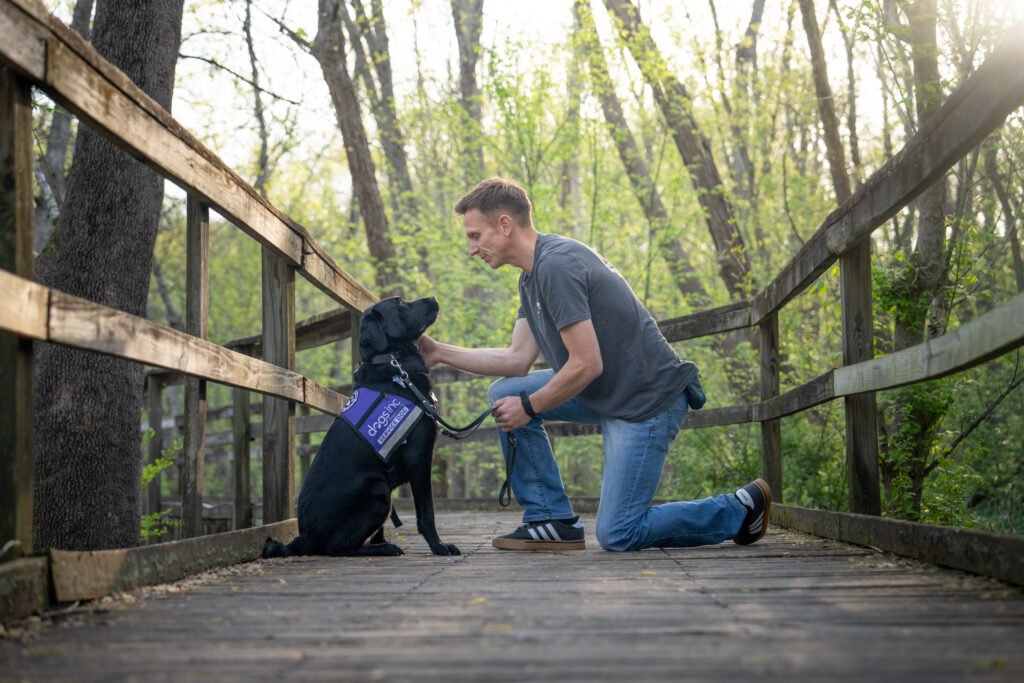
Long before a puppy ever enters a formal training center, the foundation for emotional stability is being laid. Reputable organizations like Dogs Inc emphasize early neurological stimulation and gentle, controlled exposure to novel textures, sounds, and human handling. During this critical window, puppies learn that the world is a safe place. They discover how to experience mild stressors and recover quickly—a biological process known as bounce-back resilience.
Phase 2: The Puppy Raising Era (Months 2–14)
Transitioning from the breeding facility to volunteer puppy raisers marks the true beginning of structured socialization. This stage is less about teaching complex tasks and more about cementing emotional regulation.
- The "Four on the Floor" Rule: Puppies are systematically taught to greet humans without frenetic jumping.
- Environmental Habituation: Raisers take young dogs to grocery stores, bustling sidewalks, and public transit hubs.
- Impulse Control Drills: Dogs learn to remain relaxed while objects—such as shopping carts, skateboards, and bicycles—move past them without triggering a flight, fight, or predatory chase response.
Phase 3: Professional Matriculation and Advanced Task Integration (Months 14–24)
Once the dog returns to the facility for professional training, instructors layer specialized task work over the bedrock of calmness. A dog being trained for deep pressure therapy (DPT) learns to remain utterly still against a trembling handler. Guide dogs learn to exercise "intelligent disobedience"—the critical ability to refuse a handler’s command if executing it would lead into danger, such as stepping into oncoming traffic. This high-level problem-solving is biologically impossible for an overstimulated or anxious canine.
Phase 4: Public Access Certification and Placement
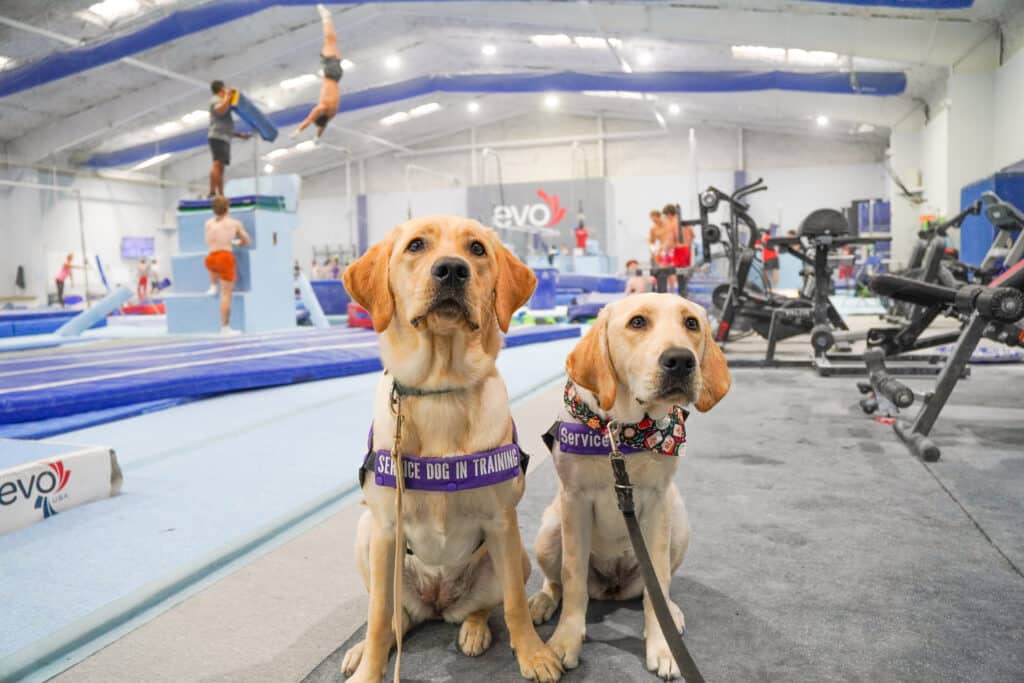
The final phase of the timeline culminates in rigorous public access testing. Here, evaluators test the dog’s neutrality under extreme pressure: dropped food, unexpected loud noises, intrusive public interactions, and close proximity to unfamiliar animals. Only dogs that maintain a calm, regulated state throughout these trials earn the designation of a fully certified service animal.
Supporting Context & Metrics: The Neurobiology of Canine Regulation
To truly appreciate why training programs prioritize calmness over sheer energy or drive, one must examine the neurobiology of canine stress and cognition.

The Physiological Cost of Over-Arousal
When a dog becomes overstimulated or fearful, the autonomic nervous system floods the body with stress hormones such as cortisol and adrenaline. Scientifically, high concentrations of cortisol impair the prefrontal cortex—the region of the brain responsible for problem-solving, impulse control, and working memory.
A dog operating in a state of chronic high arousal cannot learn effectively, nor can they reliably process directional cues from their handler. They are functionally operating in survival mode. Conversely, a calm, emotionally regulated dog maintains optimal cognitive flexibility, allowing them to assess a novel situation, make a thoughtful choice, and execute their training flawlessly.
Defining "Calm" in the Working Context
In professional assistance dog training, "calm" is frequently misunderstood. It does not mean a dog is sedated, shut down, or lacking in vibrant personality. Many elite service dogs are playful, affectionate, and high-spirited when off-duty and playing in the backyard.
The distinction lies in context-dependent self-regulation. A calm working dog is:
- Emotionally Stable: They acknowledge their environment without reacting emotionally to it.
- Resilient: When startled by a dropped metal tray or a blaring siren, their heart rate returns to baseline within seconds rather than minutes.
- Neutral: They view the chaotic human world as background noise rather than an invitation to engage or panic.
| Metric / Behavioral Indicator | Over-Arousal / Reactive State | Regulated / Calm Working State |
|---|---|---|
| Cortisol Levels | Elevated; prolonged recovery time | Baseline; rapid autonomic recovery |
| Cognitive Function | Impaired prefrontal cortex activity; reactive responses | High cognitive flexibility; thoughtful decision-making |
| Environmental Response | Hyper-vigilant, barking, lunging, or freezing | Observant, neutral, and compliant with handler cues |
| Task Reliability | Inconsistent; easily derailed by novel stimuli | High precision; unwavering focus despite chaos |
Official Statements and Expert Insights
Industry leaders and behaviorists universally agree that the cultural narrative surrounding service dogs needs to shift away from flashy task performance and toward behavioral neutrality and emotional health.
Dr. Eleanor Vance, a leading behavioral veterinarian specializing in working canine populations, notes:
"The single greatest point of failure we see in candidate service dogs isn’t a lack of intelligence—it’s an inability to process environmental stress. People want a dog that can fetch medication or open doors, but if that dog’s nervous system shatters the moment a shopping cart rattles down an aisle, the technical tasks become entirely useless. Calmness is the oxygen that keeps the working partnership alive."
Furthermore, organizations at the forefront of the industry echo this sentiment. Representatives from Dogs Inc emphasize that breeding programs are increasingly selecting for genetic resilience and steady temperaments precisely because calm behavior cannot be entirely manufactured through training alone.
"You cannot train calmness into a dog that fundamentally lacks the genetic fortitude to handle urban stimuli," explains a senior training coordinator at Dogs Inc. "Training refines and channels the behavior, but the raw material must be emotional stability. When a handler steps out into public with their service dog, they are trusting that animal with their physical safety and their psychological peace of mind. That trust is built entirely on the dog’s ability to remain steady when the world around them is spinning out of control."
Future Outlook: The Evolution of Service Dog Selection and Training
As society becomes increasingly fast-paced, urbanized, and sensory-dense, the demands placed upon service animals are escalating. Airports are busier, public spaces are more crowded, and the ambient noise pollution in metropolitan environments continues to rise. Consequently, the future of service dog training will likely see an even heavier emphasis on neurological screening and early emotional resilience testing.

Predictive Behavioral Screening
Emerging protocols in puppy development are utilizing advanced behavioral markers at just a few weeks of age to predict a dog’s long-term stress tolerance. By measuring how puppies interact with novel objects, solve minor frustrations, and recover from startling sounds, breeding institutions can optimize placement—routing high-energy, independent dogs toward active working roles (like search-and-rescue) while reserving genetically calm, steady dogs for delicate medical alert and guide work.
The Rise of Trauma-Informed Handling Education
The future outlook also highlights the symbiotic relationship between the handler and the dog. Because dogs are exceptionally perceptive emotional sponges, a handler who struggles with severe anxiety or panic can inadvertently dysregulate an unstable dog. Modern training programs are increasingly incorporating handler-coaching modules focused on co-regulation—teaching human partners how their own breathing, posture, and energy impact their canine companion’s internal state.
Conclusion: The Quiet Power of Stillness
Ultimately, the most extraordinary achievements of a service dog do not announce themselves with a roar. They are whispered in the quiet, steady pauses between action and reaction.
Whether it is a guide dog freezing at a curb because a car failed to yield, or a medical response dog remaining a pillar of immovable comfort during a handler’s terrifying medical episode, true mastery looks effortless. It looks like stillness in motion.
For the thousands of individuals living with disabilities who rely on these remarkable animals for their independence, dignity, and safety, a calm service dog is much more than a working animal. They are an anchor in a turbulent world—proving day after day that the most powerful skill a dog can ever learn is how to stay calm.