
WISCONSIN — In an era defined by intensifying ecological pressures and an accelerating biodiversity crisis, a quiet revolution is taking root across America’s heartland. On August 19, 2026, the National Audubon Society officially announced a major conservation milestone in Wisconsin: seven distinct family farms and ranches have been newly certified as "Audubon Certified Bird-Friendly Land." This designation, earned through Audubon’s rigorous Conservation Ranching program, bridges the historically disparate worlds of intensive agricultural production and dedicated wildlife preservation.
North America’s grasslands represent one of the continent’s most endangered biomes. Yet, they are also the economic lifeblood for thousands of rural families who raise livestock and cultivate the earth. The newly certified Wisconsin operations—Bouressa Family Farm (New London), Prairie Pastured Beef (Rudolph), Kerstiens Family Farm (Stitzer), Kieckhoefer Family Farm (New Richmond), Willow Creek Ranch (Coon Valley), Riemer Family Farm (Brodhead), and Sedge Wood Farms (Cornell)—demonstrate that economic viability and ecological stewardship are not mutually exclusive. Instead, when guided by peer-reviewed science and regenerative agriculture principles, they can be mutually reinforcing.
By adopting tailored Habitat Management Plans and submitting to rigorous, independent third-party audits, these producers are proving that working lands can serve as vital sanctuaries for vulnerable wildlife. At the same time, they are unlocking access to a growing consumer market that values sustainability, transparency, and ethical land management. This milestone marks not just an endpoint of administrative certification, but the beginning of a long-term collaborative framework designed to halt the alarming decline of grassland birds while sustaining rural economies.
Detailed Chronology: From Concept to Conservation Milestone
The journey toward this landmark announcement has been forged through years of targeted ecological intervention, community engagement, and cross-sector partnerships.
Laying the Groundwork: The 2024 Launch
The formal foundation for this milestone was established in 2024, when the National Audubon Society officially rolled out its Conservation Ranching initiative across Wisconsin. Recognizing the state’s unique mix of Driftless Area topography, central grassland conservation zones, and northern working lands, Audubon ecologists set out to recruit forward-thinking livestock producers. The goal was simple yet ambitious: to transform standard grazing practices into strategic tools for habitat restoration.
Unlike traditional conservation models that often rely on setting land aside from production entirely, the Audubon approach relies on working lands. Producers partner directly with grassland ecologists to design management systems that leverage livestock behavior to mimic the historic ecological disturbances once driven by native herbivores, such as American bison.
Building the Network (2024–2026)
Over the subsequent two years, participating farms underwent a meticulous evaluation process. Achieving Audubon Certified Bird-Friendly Land status is no small feat. It requires:
- The development of a customized Habitat Management Plan tailored to the specific geography, soil types, and operational goals of each farm.
- Implementation of complex rotational grazing systems designed to create a "mosaic" of structural habitat variation.
- Rigorous adherence to animal health, welfare, and environmental sustainability standards.
- Successful completion of an independent third-party audit verifying compliance with all program criteria.
By mid-2026, these rigorous efforts culminated in the certification of the seven Wisconsin operations, integrating them into a national network of 157 farms and ranches managing 4.5 million acres nationwide.
Supporting Context & Metrics: The Crisis Facing Grassland Birds
To understand the profound significance of Wisconsin’s newly certified acreage, one must examine the broader ecological crisis confronting North American avifauna.
The Staggering Decline of Terrestrial Species
According to long-term ecological monitoring data, grassland birds have experienced the steepest and most persistent population declines of any terrestrial bird group in North America since 1970. This catastrophic drop is primarily driven by habitat loss, agricultural intensification, urban sprawl, and the degradation of native prairies and pastures through overgrazing, woody encroachment, and the suppression of natural fire regimes.
For species that rely entirely on open landscapes—such as the Bobolink, Eastern Meadowlark, Upland Sandpiper, Grasshopper Sparrow, and the endangered Greater Prairie-Chicken—the loss of functional habitat has pushed populations to historical lows.
Scale and Scope of the Audubon Program
Nationwide, the Audubon Conservation Ranching program now spans 4.5 million acres across 157 operations. This vast network acts as an ecological safety net, providing high-quality nesting, foraging, and brooding grounds across diverse ecoregions.
In Wisconsin, the program’s footprint is strategically distributed across the state’s most critical ecological zones:
- The Driftless Area: Characterized by steep limestone bluffs, cold-water trout streams, and remnant oak savannas.
- Central Wisconsin: Home to critical conservation areas historically supporting Greater Prairie-Chicken populations.
- Western and Southern Agricultural Corridors: Productive farming regions where integration of rotational grazing and bird-friendly haying provides vital refuges amidst row-crop dominance.
Bringing Conservation Beyond the Farm Gate
A cornerstone of the Audubon Conservation Ranching model is its ability to connect ecological stewardship with consumer purchasing power. Farms that achieve certification are authorized to use the Audubon Certified Bird-Friendly Land seal on qualifying beef products.
Market research indicates that modern consumers increasingly seek out food products that align with their personal values regarding animal welfare, environmental protection, and climate resilience. However, many Americans remain disconnected from the realities of grassland ecosystems. The bird-friendly seal serves as a vital connective tissue, allowing shoppers to vote with their wallets. Every time a consumer purchases certified beef, they actively support the farmers and ranchers who manage their lands to foster biodiversity, protect watersheds, and sequester carbon in healthy grassland soils.
Profile of the Seven Certified Wisconsin Operations
Each of the seven newly certified operations brings a unique geographical perspective and operational model to the Wisconsin initiative, demonstrating the versatility of bird-friendly ranching principles.
1. Bouressa Family Farm — New London
- The Steward: Rachel Bouressa
- The Land: 365 acres
- Operational Focus: Transitioned from a former family dairy farm into a grass-based cattle ranch supporting a cow-calf and grass-finishing operation.
- Ecological Impact: Bouressa is actively working to reconnect grasslands that have been historically fragmented by tree rows while restoring previously drained wetlands. These actions create vital habitat diversity for species such as the Eastern Meadowlark, Bobolink, Grasshopper Sparrow, and Dickcissel.
2. Kerstiens Family Farm — Stitzer
- The Steward: Casey Kerstiens
- The Land: Located in Wisconsin’s ecologically rich Driftless Area.
- Operational Focus: A specialized cattle operation featuring permanent streams winding through pastures and remnant oak savannas.
- Ecological Impact: Kerstiens utilizes a targeted seasonal grazing approach. Cattle utilize home pastures for spring calving before being moved to other pastures, allowing grasses to recover for the remainder of the growing season. This creates a structural mix of short and tall vegetation favored by the Upland Sandpiper, Bobolink, and Grasshopper Sparrow. Additional conservation work includes managing invasive eastern red cedar and multiflora rose, protecting riparian buffer zones, and deploying prescribed fire to improve forage quality and bird habitat.
3. Prairie Pastured Beef — Rudolph
- The Steward: Carl Flaig
- The Land: Approximately 500 acres within the Central Wisconsin Grassland Conservation Area.
- Operational Focus: Situated in one of the state’s most critical landscapes for grassland birds, immediately adjacent to active Greater Prairie-Chicken leks (breeding grounds).
- Ecological Impact: Flaig coordinates his cattle grazing strategies to actively manage adjacent Wisconsin Department of Natural Resources (DNR) grasslands for Greater Prairie-Chicken preservation. His management emphasizes maintaining varied grassland structures, suppressing woody plant encroachment, and supporting declining populations of Greater Prairie-Chicken, Short-eared Owl, Upland Sandpiper, Bobolink, and Grasshopper Sparrow.
4. Kieckhoefer Family Farm — New Richmond
- The Steward: David Kieckhoefer (Fourth-generation rancher)
- The Land: 385 acres within Wisconsin’s Western Prairie Habitat Restoration Area.
- Operational Focus: Operates in close proximity to a broader network of publicly managed wetland and grassland reserves.
- Ecological Impact: Audubon bird surveys have already documented high densities of priority grassland species on the property. Kieckhoefer is expanding on this ecological foundation through advanced rotational grazing, bird-friendly haying schedules, woody vegetation control, oak savanna restoration, and the establishment of native warm-season grasses.
5. Willow Creek Ranch — Coon Valley
- The Steward: Rod Ofte
- The Land: 168 acres located in the historic Coon Creek Watershed within the Driftless Area.
- Operational Focus: A diverse landscape featuring cold-water streams supporting brook and brown trout, transitioning from open pastures to remnant oak savannas and hardwood forests.
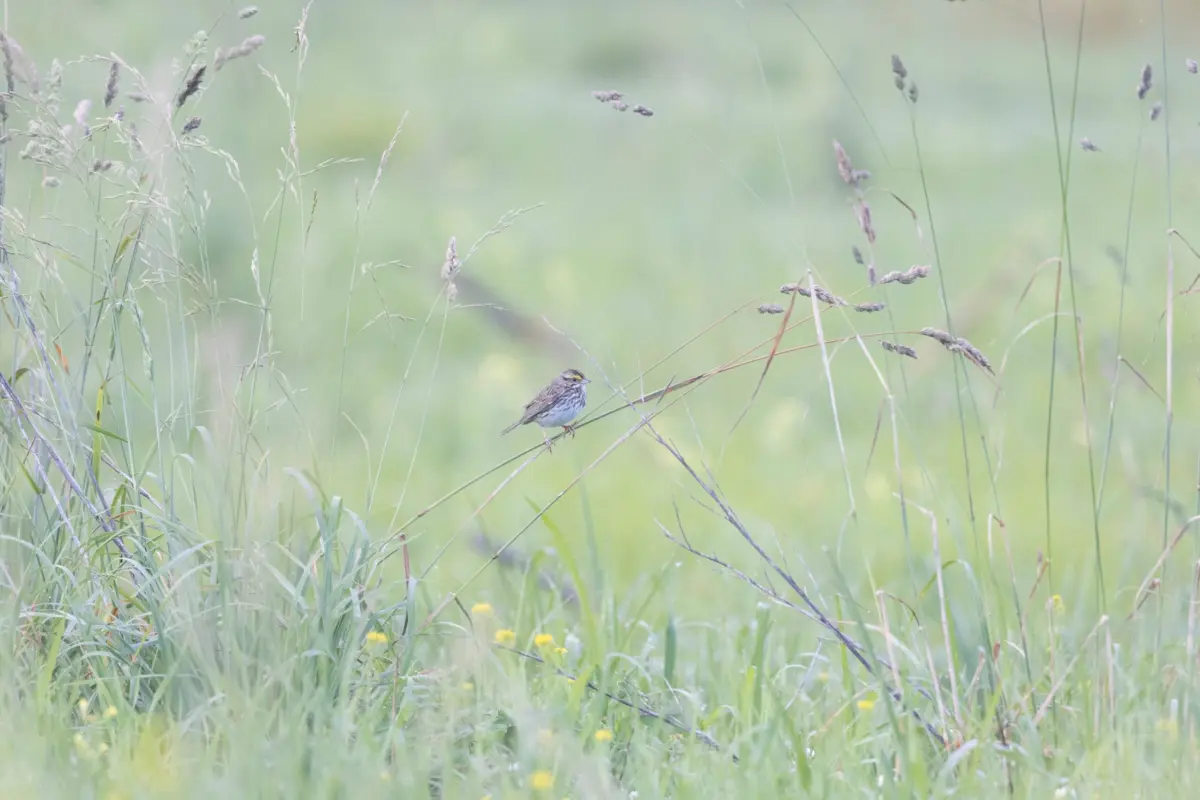
- Ecological Impact: Ofte employs rotational grazing to cultivate diverse vegetative structures for Bobolinks, Eastern Meadowlarks, Grasshopper Sparrows, and Savannah Sparrows. Mechanical removal of invasive species and prescribed fire are also utilized to restore oak savanna habitats specifically targeting the recovery of the Red-headed Woodpecker.
6. Riemer Family Farm — Brodhead
- The Stewards: Bryce and Jen Riemer and family
- The Land: 160 acres of pasture managed alongside approximately 300 acres of organic crops in southern Wisconsin.
- Operational Focus: A grass-finished beef operation integrated with diverse organic crop production.
- Ecological Impact: The Riemers use rotational grazing to generate the heterogeneous vegetation heights required by Upland Sandpipers, Bobolinks, and Grasshopper Sparrows. Furthermore, the farm participates in a nutrient-reduction initiative with the City of Brodhead, employing delayed haying and pasture cutting practices that complement its broader bird-friendly management goals.
7. Sedge Wood Farms — Cornell
- The Steward: Ashly Steinke (Audubon Grassland Ecologist)
- Operational Focus: Managed as a family-run Audubon Certified Bird-Friendly Land operation that simultaneously serves as an active regional demonstration site for the program.
- Ecological Impact: Acts as a living laboratory showing that well-managed grazing can simultaneously support healthy bird populations, productive cattle, and the livelihoods of rural landowners.
Official Statements & Collaborative Partnerships
The success of the Audubon Conservation Ranching program in Wisconsin is rooted in deep partnerships across state and federal agencies, non-profit conservation groups, and agricultural extension networks.
Perspectives from the Ground
"Certification recognizes what these farmers and ranchers are accomplishing on the ground, but it’s also the beginning of a long-term partnership," noted Ashly Steinke, Audubon Grassland Ecologist in Wisconsin and steward of Sedge Wood Farms. "Every one of these farms is different, and that’s the strength of working directly with producers to find ways that good grazing management can create the variety of habitat grassland birds need. Healthy grasslands can support birds, cattle, and the people who make their living from the land."
A Robust Coalition of Support
The Wisconsin initiative’s rapid progress and rigorous framework are backed by a broad coalition of organizations committed to rural sustainability and wildlife conservation. Key program partners include:
- Driftless Area Land Conservancy
- Golden Sands Resource Conservation & Development
- GrassWorks / Grassland 2.0
- National Fish and Wildlife Foundation
- Natural Resources Conservation Service (NRCS)
- Natural Resources Foundation of Wisconsin
- Sand County Foundation
- U.S. Fish and Wildlife Service (USFWS)
- Wisconsin Department of Natural Resources (DNR)
This multidisciplinary backing ensures that participating producers have access to top-tier technical assistance, scientific monitoring data, and financial incentives necessary to sustain long-term habitat improvements.
Future Outlook: Scaling Up Bird-Friendly Agriculture
As the seven newly certified Wisconsin farms join the national ranks of Audubon Certified Bird-Friendly Land, the horizon for grassland conservation in the Upper Midwest looks increasingly hopeful, yet demanding of continued effort.
The Road Ahead
Looking forward, the National Audubon Society aims to expand the footprint of the Conservation Ranching program across Wisconsin and neighboring states. By recruiting additional livestock producers, the program seeks to stitch together fragmented habitat corridors, enabling migratory bird species to find secure stepping stones across intensive agricultural zones.
The ultimate vision of the program is systemic: to normalize regenerative, bird-friendly livestock management as a standard agricultural practice rather than an isolated niche. By proving that ecological health enhances soil water retention, forage resilience, and economic profitability, Audubon and its partners are reshaping the future of American agriculture.
How Consumers Can Participate
The ultimate catalyst for this ongoing transition lies in the marketplace. As consumers increasingly demand transparency, ethical sourcing, and environmental responsibility, purchasing beef bearing the Audubon Certified Bird-Friendly Land seal transforms everyday grocery shopping into a direct act of conservation.
Through these collaborative partnerships between scientists, ranchers, and everyday citizens, America’s working grasslands can be safeguarded—ensuring that the vibrant songs of meadowlarks and bobolinks continue to echo across the hills and prairies of Wisconsin for generations to come.