
Executive Overview
For conscientious pet owners, the automotive transport of a beloved animal is fraught with a hidden, high-stakes variable: safety. While human passengers are protected by decades of rigorous federal automotive safety standards, crumple zones, advanced airbag deployment systems, and crash-tested restraint infrastructure, the canine travel market has historically existed in a regulatory Wild West.
The quest to find an ideal vehicle bed for Chloe—a 15-pound dog requiring enough physical space to comfortably sprawl during extended road trips, yet structurally sound enough to withstand the devastating physics of a high-speed collision—highlights a profound industry shortfall. Years ago, this search led to the adoption of PetEgo’s Pet Tube, a popular collapsible enclosure that initially appeared to solve the perennial dilemma of combining canine comfort with spatial freedom. However, this perceived solution collapsed under empirical scrutiny when the product was subjected to formal crash testing and failed miserably.
The failure of the Pet Tube forced a return to the drawing board, prompting a deep-dive investigation into the broader landscape of pet automotive safety products. In recent years, independent safety watchdogs, most notably the Center for Pet Safety (CPS), have begun applying rigorous, child-car-seat-style crash testing methodologies to pet travel carriers and harnesses. The results of these evaluations have been sobering. The products that successfully pass these strict evaluations—such as the Pet Ego Jet Set Forma Frame Carrier with ISOFIX-Latch Connection and the Sleepypod Mobile Pet Bed—tend to be engineered with restrictive spatial geometries tailored almost exclusively for ultra-small pets.
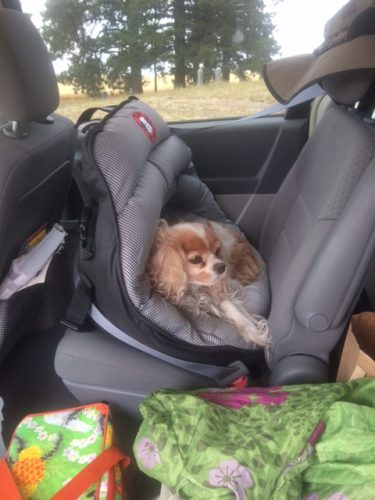
For owners of dogs weighing between 15 and 45 pounds—a demographic frequently categorized as "larger small dogs"—the market presents a frustrating dichotomy: products that offer certified safety are too cramped for comfort, while spacious beds often lack certified structural integrity. This investigative report chronicles a month-long real-world evaluation of an alternative solution suggested by consumer communities: the AirPupSaver. Operating on an innovative pneumatic impact-absorption design reminiscent of a baseball mitt, the AirPupSaver series (specifically the AirPupSaver 25 and AirPupSaver 45) presents a compelling case study in balancing canine comfort, spatial ergonomics, and vehicular crash safety.
Detailed Chronology of the Search for Vehicular Canine Safety
The journey toward securing optimal vehicular protection for Chloe serves as a microcosm of the trials faced by pet owners navigating an unregulated consumer safety market.
Phase I: The Illusion of the Pet Tube
Years prior to the current evaluation, the primary objective was straightforward: locate a soft-sided, spacious car bed where Chloe could stretch out comfortably during long transit hours. The PetEgo Pet Tube appeared to fit these criteria perfectly. It offered an elongated, tunnel-like environment that permitted stretching while containing the animal within the back seat footprint.
The illusion of safety was shattered upon the release of empirical crash-test data demonstrating the product’s catastrophic structural failure under dynamic impact loads. When subjected to simulated crash forces, the Pet Tube failed to maintain its integrity, underscoring a terrifying reality: many aesthetic, consumer-friendly pet products are little more than fabric boxes that offer zero protection during a sudden deceleration event.
Phase II: Confronting the Market Deficit
Following the realization that the Pet Tube was functionally unsafe, attention turned to the elite tier of crash-tested products identified in the Center for Pet Safety’s 2015 carrier studies. The findings exposed a severe design limitation:
- Pet Ego Jet Set Forma Frame Carrier: While undeniably handsome and well-constructed, this carrier featured sparse mesh paneling, severely limiting ventilation and outward visibility—critical factors for preventing travel anxiety during long road trips. Furthermore, its maximum dimensions (22 inches long, 10 inches wide, and 13 inches tall) were aggressively marketed for dogs up to 22 pounds. Dimensional analysis proved this sizing claim unrealistic; while slightly longer and taller than Chloe’s preferred SturdiBag, it was two inches narrower in the body. A 15-pound dog would find this exceedingly cramped on a multi-hour journey.
- Sleepypod Mobile Pet Bed: Hailed widely as a magnificent piece of engineering, the Sleepypod line boasts exceptional ventilation and robust safety ratings when paired with the PPRS Handilock. Yet, the largest iteration available—the "Sleepypod Medium"—measures 13 inches in height and 17 inches in exterior round diameter. Accounting for internal padding and structural walls, the usable internal space is significantly reduced, rendering it uncomfortably snug for any dog exceeding 15 pounds. For owners of pets under 10 pounds, the Sleepypod remains an unreserved recommendation; for larger small dogs, it is a non-starter.
Phase III: The AirPupSaver Discovery and Empirical Field Testing
Faced with a dead end among CPS-certified products, consumer reports from fellow travelers pointed toward an uncertified yet independently crash-tested alternative: the AirPupSaver. Intrigued by its unique design philosophy, two units were acquired for empirical testing: the AirPupSaver 25 (engineered for dogs up to 25 pounds) and the AirPupSaver 45 (engineered for dogs up to 45 pounds).
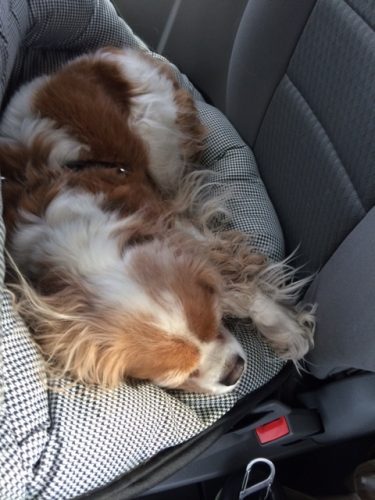
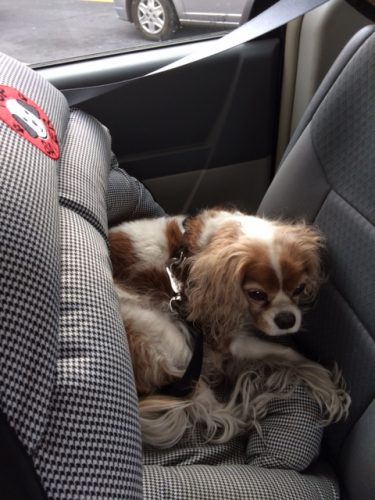
Over a rigorous one-month testing period encompassing both extended interstate road trips and routine urban errand runs in a Chrysler Town & Country minivan and a station wagon, the units were evaluated across multiple operational parameters: ease of installation, daily usability, spatial ergonomics, structural integrity, and canine behavioral adaptation.
Supporting Context, Design Mechanics, & Metrics
To fully understand the AirPupSaver, one must examine its distinct architectural philosophy. Unlike rigid plastic shell carriers or fabric zip-up tubes, the AirPupSaver functions on a pneumatic principle akin to a catcher’s baseball mitt.
Pneumatic Impact Absorption Architecture
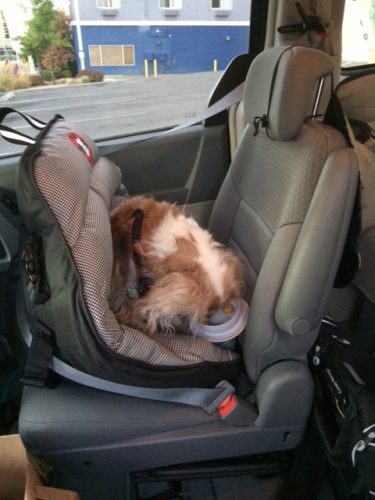
The pet rests within the "palm" of the mitt, tethered securely via a heavy-duty harness and strap assembly. The elevated, cushioned "fingers" of the mitt act as a dynamic barrier designed to catch and cradle the animal should forward kinetic energy hurl them toward the front of the vehicle during a sudden collision or abrupt stop.
To achieve its structural height and shock-absorbing capacity, the bed utilizes a series of internal air chambers integrated into the "fingers" section. These chambers are inflated using a provided manual air pump. This pneumatic design serves a dual purpose:
- It provides a highly compliant, cushy impact zone that decelerates the pet progressively upon trauma.
- It generates vertical lift for the upper containment structure, keeping overhead tether straps elevated out of the animal’s immediate airspace.
Comparative Sizing Metrics: Model 25 vs. Model 45
The evaluation of both size variants provided critical data regarding spatial efficiency and vehicle integration:
| Metric / Parameter | AirPupSaver 25 | AirPupSaver 45 |
|---|---|---|
| Target Weight Capacity | Up to 25 lbs | Up to 45 lbs |
| Ideal Canine Subject | 15-lb dogs (e.g., Chloe) | Larger small / medium dogs |
| Overhead Strap Configuration | Utilizes vehicle seatbelt only | Vehicle seatbelt + 2 top tether straps |
| Installation Complexity | Moderate (Minivan rear seat) | High/Beastlier (Station wagon rear seat) |
| Spatial Footprint | Compact; matches pet size | Large; consumes substantial cabin space |
| Portability / Flexibility | Difficult to relocate frequently | Highly permanent once installed |
The Mechanics of Installation
Installing the AirPupSaver systems is a non-trivial engineering exercise that demands patience and adherence to physical geometry.
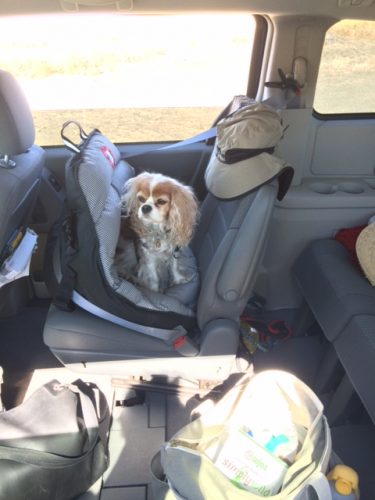
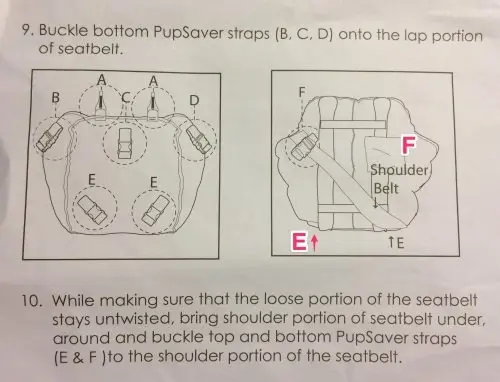
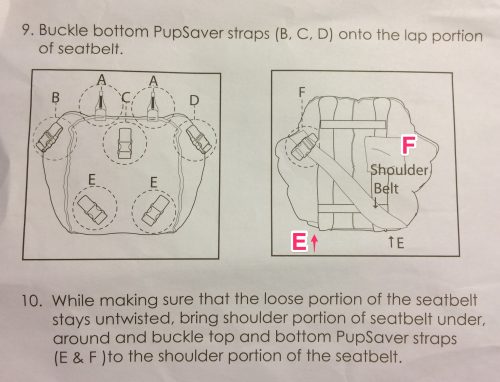
- The AirPupSaver 25: Secured via lower ISOFIX/latch hooks attaching to the vehicle’s seat anchor bars. The vehicle’s shoulder and lap seatbelt threads through designated plastic routing clips on the shoulders of the bed, secured tightly against the vehicle wall with a heavy-duty mechanical seatbelt clamp. This clamp provides the precise micro-play required by dynamic safety systems while preventing the belt from pulling the upper structure inward. Notably, the Model 25 dispenses with top overhead tether straps.
- The AirPupSaver 45: Incorporates the foundational lower latch clips and seatbelt routing system of the Model 25, but supplements this infrastructure with two additional overhead tether straps. These straps extend from the upper handle/spine of the bed, stretch backward over the rear vehicle seatback, and anchor securely to the top tether anchor points located on the back of the passenger seat.
Official Statements, Safety Caveats, & Operational Challenges
While the AirPupSaver successfully restores psychological peace of mind to drivers haunted by crash-test footage of lesser products, the real-world operational audit reveals several friction points that prospective buyers must consider.
1. The Permanence Problem
Unlike collapsible fabric tubes that can be unclipped and tossed effortlessly into a trunk or flattened like a pancake for hotel transit, the AirPupSaver is decidedly permanent. Due to the complex, fiddly nature of routing seatbelts, attaching lower anchors, and clamping heavy-duty hardware, owners will actively seek to avoid re-installing the unit. It is not a product designed to be moved between vehicles on a whim, nor can it share a front passenger seat with a human spouse without major logistical friction.
2. Ergonomics and Urban Street Safety
Placing a dog into the internal harness requires roughly 30 seconds of fine motor engagement—a stark contrast to simply tossing an animal into a zip-top tube. In densely populated urban environments (such as Seattle, where street-side parking exposes drivers to passing traffic), leaning entirely into a vehicle’s back seat while the lower half of the body remains exposed to passing cars presents a distinct vulnerability. A practical workaround discovered during field testing involves the owner climbing entirely into the vehicle’s rear cabin to manage the harness closure safely.
3. Pneumatic Maintenance
The structural integrity of the upper "fingers" relies entirely on pneumatic pressure within the internal air chambers. If these chambers experience deflation, the upper mitt structure folds inward like a soft taco—a phenomenon highly disconcerting to a resting pet. Consequently, maintaining the manual air pump inside the vehicle glovebox for routine pressure checks and top-offs is mandatory. Furthermore, consumer feedback notes that the factory-provided air pump is of modest build quality and could benefit from an aftermarket upgrade.
4. Harness Sizing Discrepancies
A critical safety warning emerged regarding the included harness accessory. While marketed as a complete kit, buyers must verify whether a harness is bundled with their specific purchase window (as manufacturer packaging policies have varied over production runs). Crucially, the included XS-sized harness runs exceptionally large. A 15-pound dog like Chloe pushed the absolute minimum adjustment limits of the XS strap architecture. Owners of smaller toy breeds will need to source an independent, heavy-duty crash-tested safety harness featuring a rear-blade attachment point (such as the Solvit small safety harness). Under no circumstances should a standard walking collar or a front-clip chest harness be substituted in an automotive safety application.
Future Outlook and Industry Recommendations
The evolution of canine automotive safety is at a critical crossroads. As pet humanization trends drive higher standards of care, consumers are no longer willing to accept aesthetic travel accessories that prioritize convenience over empirical survivability.
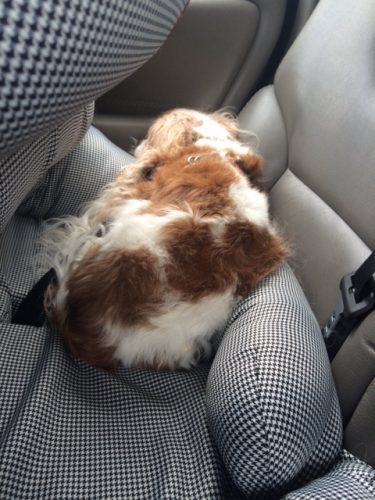
The AirPupSaver represents an ingenious bridge technology—utilizing pneumatic energy absorption to solve the spatial constraints of the "larger small dog" market. However, the future of the industry must move toward standardized, universally compatible, and easily transferable safety systems that do not require complex, semi-permanent mechanical installations.
For pet parents navigating this complex market today, the recommendations derived from extensive field testing are clear:
- For Dogs Under 10 Pounds: Invest immediately in the Center for Pet Safety-certified Sleepypod Mobile Pet Bed. It represents the gold standard of certified impact protection and spatial ergonomics for toy breeds.
- For Dogs 10 to 15 Pounds: The AirPupSaver 25 offers an outstanding balance of spacious comfort, ventilation, and believable crash protection, provided the owner is willing to commit to its stationary installation profile and procure a properly fitted heavy-duty rear-clip harness.
- For Dogs 15 to 25+ Pounds: While the AirPupSaver 45 provides expansive physical dimensions, its bulky footprint, challenging multi-strap installation, and restricted driver visibility make the Model 25 the superior choice for dogs within the overlapping weight thresholds who do not utilize excess spatial volume.
Ultimately, vehicular pet safety requires vigilance, empirical scrutiny beyond manufacturer marketing claims, and a willingness to prioritize engineering reality over aesthetic convenience. By embracing rigorous safety solutions like the AirPupSaver, owners can reclaim peace of mind on the open road, ensuring that furry companions travel with the protection they rightfully deserve.