In bustling supermarkets, quiet corporate offices, high-traffic airport terminals, and crowded public transit hubs, the modern landscape is increasingly shared by a remarkable group of working professionals: service dogs. To the untrained eye, these canine companions often appear effortlessly calm, friendly, and approachable. Their composure in high-stress environments is a testament to rigorous breeding, extensive socialization, and specialized, long-term training. Consequently, a natural human impulse arises—an irresistible urge to offer a quick stroke, utter a term of endearment like "good boy," or make eye contact.
However, beneath this veneer of casual public coexistence lies a vital operational boundary. While public affection stems from a place of deep appreciation for animals, interacting with a working service dog poses hidden risks to the safety, focus, and overall well-being of both the animal and its handler. Understanding the nuances of service dog etiquette is not merely a matter of polite manners; it is a critical component of public safety and accessibility compliance.
This in-depth investigative report explores the operational realities of service dog teams, examines the legal and functional definitions that separate working animals from pets, identifies common behavioral pitfalls exhibited by well-meaning bystanders, and outlines best practices for children, business owners, and the general public. By respecting the workspace of a service dog team, society upholds the independence, dignity, and safety of individuals living with disabilities.
Detailed Chronology: The Evolution of Service Animal Integration and Public Interaction
To fully understand modern service dog etiquette, one must examine how assistance animals evolved from specialized, highly isolated tools into integrated components of everyday public life. The journey of the service dog is characterized by milestones in legislation, training methodologies, and public education.
The Mid-20th Century: The Foundation of Guide Work
The modern service dog movement traces its roots primarily to the aftermath of World War I, when specialized organizations were established in Europe to train guide dogs for blinded veterans. In the United States, this movement gained national prominence in the late 1920s and 1930s with the founding of pioneering institutions. During this era, the public visibility of assistance dogs was exceedingly rare. A dog in a public establishment was viewed as an anomaly—or a health code violation—requiring intense, localized public education simply to gain entry to restaurants or public transport.
The Americans with Disabilities Act (ADA) of 1990
A monumental shift occurred with the passage of the Americans with Disabilities Act (ADA) in the United States. For the first time, federal legislation formally codified the rights of individuals with disabilities to be accompanied by service animals in virtually all areas where the general public is permitted. This legal framework expanded the definition of service animals far beyond visual impairment, encompassing mobility support, medical alert capabilities (such as for diabetes or cardiac conditions), and psychiatric assistance dogs aiding individuals with post-traumatic stress disorder (PTSD).
As legal protections expanded, so did the presence of service dogs in mainstream commerce and social spaces. With increased visibility came an inevitable consequence: increased public contact. The transition of service dogs from strictly regulated, highly visible guide harness setups (such as traditional white-handle guide dog harnesses) to diverse vests, capes, and varied tasks created a gray area in the public consciousness. Bystanders began to view service dogs less as immutable medical equipment and more as friendly, public-access pets.
The Contemporary Era: Balancing Accessibility and Public Education
Today, organizations such as Dogs Inc and other institutional leaders face a dual challenge: ensuring that handlers retain their federally protected rights to public access, and educating an increasingly urbanized, pet-loving public on the strict behavioral boundaries required to maintain a working partnership. The modern chronology of service dog etiquette is marked by a shift from reactive confrontation (such as handlers having to constantly scold strangers) to proactive public awareness campaigns championing the mantra: "Talk to the person, not the dog."
Supporting Context & Metrics: Defining the Working Partnership
To appreciate why casual petting or distraction is dangerous, one must first dissect what separates a service dog from an emotional support animal (ESA), a therapy dog, or a standard family pet.
Legal Definitions under the ADA
Under Title II and Title III of the ADA, a service dog is strictly defined as a dog that is individually trained to do work or perform tasks for the benefit of an individual with a disability, including a physical, sensory, intellectual, or mental disability.
Service Dogs: Must perform specific, active tasks directly related to the handler’s disability. Examples include pulling a wheelchair, retrieving dropped medication, alerting to an impending seizure or drop in blood sugar, guiding individuals who are blind or low vision, or performing room-searches for individuals with severe PTSD.
Emotional Support Animals (ESAs): Provide comfort simply through their presence. Under the ADA, ESAs are not classified as service animals and do not possess the same public access rights.
Therapy Dogs: Are trained to provide psychological or physiological therapy to multiple individuals in clinical settings, schools, or disaster areas, but they do not possess public access rights under the ADA when accompanying a single handler in normal commerce.
The Cognitive Load of a Working Service Dog
Scientific evaluations of working canine behavior reveal that maintaining focus in a public environment requires immense cognitive energy. Unlike pet dogs—who are permitted to sniff, greet strangers, and explore their surroundings—a service dog operates under a rigorous behavioral protocol.
When a service dog accompanies its handler through a bustling grocery store or airport terminal, it is continuously processing environmental data:
Scanning for spatial obstacles to protect the handler’s mobility.
Monitoring the handler’s physiological state for subtle scent changes or behavioral cues indicating a medical crisis.
Filtering out auditory and visual distractions, including dropped items, crying children, flashing lights, and the scent of food.
When an uneducated bystander approaches, makes high-pitched noises, whistles, or reaches out to pet the dog, they abruptly break this cognitive loop. The dog is forced to choose between its ingrained desire to engage with a human and its strict operational training. Even a split-second distraction can cause a service dog to miss a crucial environmental cue, potentially compromising the handler’s physical safety.
Official Statements and Expert Perspectives
Industry leaders, accessibility advocates, and service dog training organizations maintain a unified stance on public interaction. Their official directives emphasize that respect for the handler’s autonomy and the dog’s workspace is paramount.
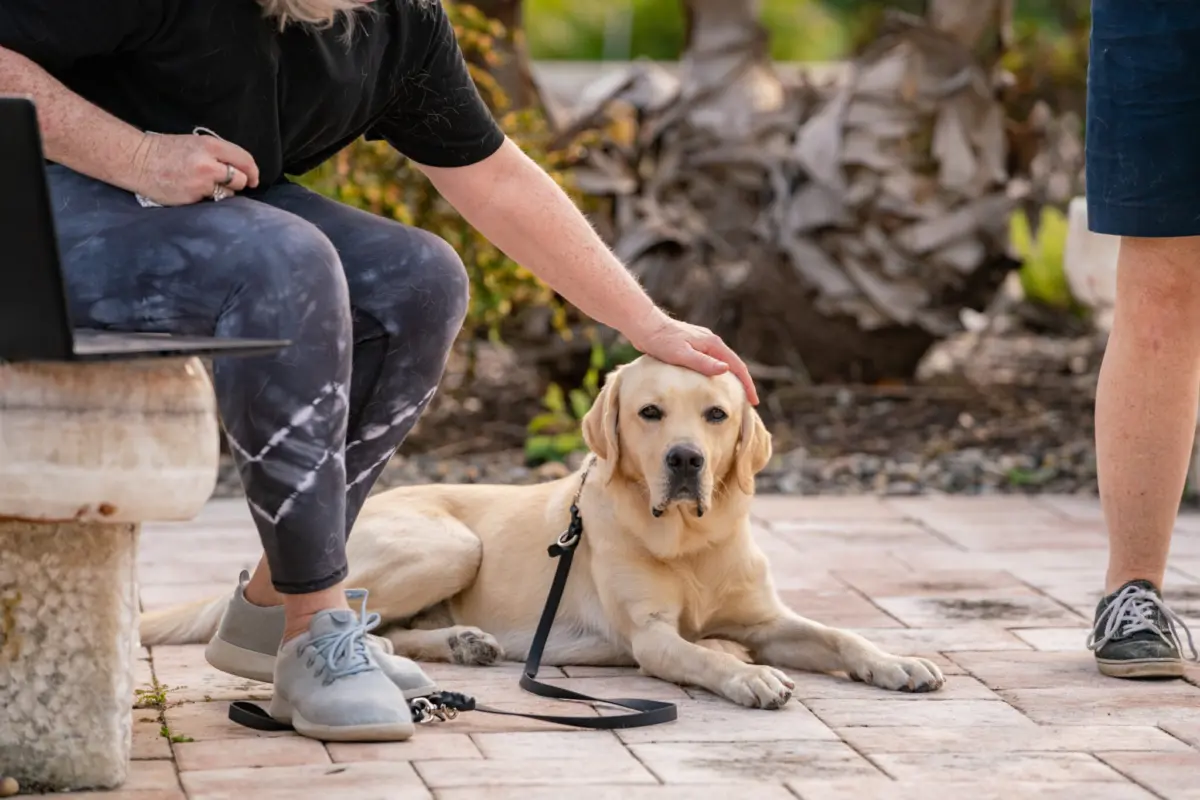
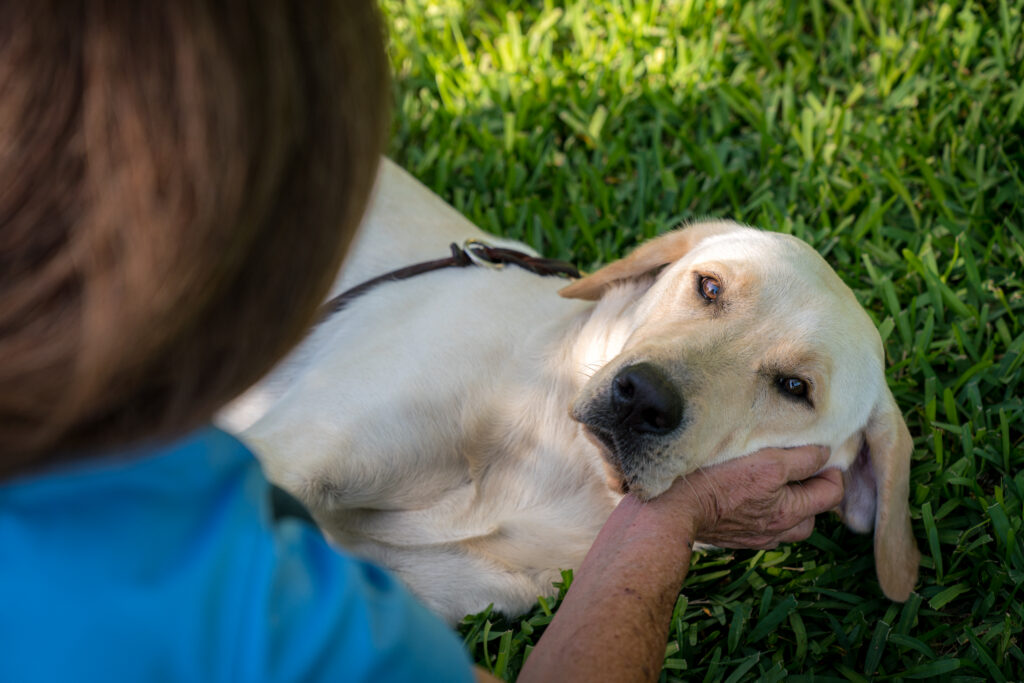
"When people see a service dog in public, they often notice how calm, focused, and friendly the dog appears. It’s only natural to want to say hello, offer a quick pet, or tell the dog they’re a ‘good boy.’ But while the intention is kind, the best way to interact with a working service dog is usually not to interact at all."
— Accessibility Advocates & Institutional Trainers
Experts frequently highlight the emotional and psychological toll that constant public interference places on handlers. Many individuals with hidden disabilities—such as veterans with PTSD or individuals with neurological conditions—rely on their service dogs to maintain a calm, unobtrusive presence in public spaces. When well-meaning strangers crowd the dog, it draws unwanted attention to the handler, triggering anxiety, violating personal space, and forcing the handler to repeatedly educate the public when they are simply trying to complete daily errands.
Furthermore, training organizations stress that permission to interact must always be explicitly granted by the handler.
"The answer is simple: always ask first. While many people wonder, ‘Can you pet a service dog?’ the decision belongs to the person working with the dog. Some individuals may allow interaction when their dog is off duty or taking a break. Others may decline because they need their dog focused at all times. Every service dog team is different."
Future Outlook: Building a Culture of Accessibility and Awareness
As societies grow more conscious of inclusion, diversity, and accessibility, the future of service dog integration relies heavily on early education and systemic corporate awareness.
Educational Initiatives in Schools
Embedding service dog etiquette into primary education is one of the most effective ways to shift cultural norms. Children possess a natural affinity for animals, making public encounters an ideal teachable moment for empathy and respect. By teaching children to admire a working dog quietly from a distance and to understand the concept of "working animals versus pets," educators can foster a generation of adults who instinctively respect accessibility boundaries.
Corporate and Public Venue Training
Businesses, hospitality groups, healthcare facilities, and transportation networks are increasingly updating their staff training protocols regarding service animals. Beyond understanding the legal limits of what questions staff are permitted to ask under the ADA (i.e., 1. Is the dog a service animal required because of a disability? and 2. What work or task has the dog been trained to perform?), progressive organizations are training frontline employees to treat service dog teams with seamless normality. The future standard of customer service in these spaces involves welcoming the human handler with standard hospitality while actively ignoring the dog, allowing the team to navigate the premises unhindered.
Technological and Social Shifts
As urban spaces densify and the utilization of specialized assistance animals expands to meet diverse medical and psychological needs, public spaces will require heightened ambient awareness. Campaigns led by organizations like Dogs Inc continue to bridge the gap between public affection for canines and the sobering realities of disability support.
Summary: A Little Respect Goes a Long Way
The question—Can you pet a service dog?—carries a straightforward answer: Usually, the answer is no, unless you have asked permission and received an explicit invitation to interact.
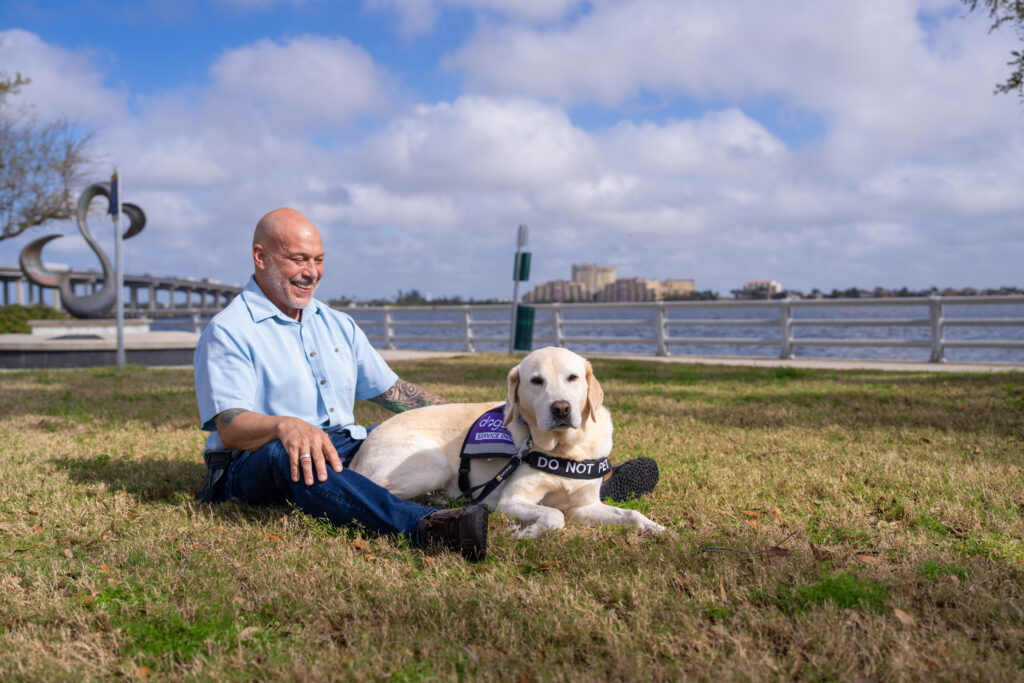
When you encounter a service dog team in your community, remember that you are looking at a highly specialized working partnership. The dog is performing an essential, often life-supporting job that demands uninterrupted concentration. By giving the team physical space, avoiding vocal or physical distractions, addressing the human rather than the animal, and respecting boundaries, you contribute to a safer, more inclusive society.
Ultimately, respecting a service dog’s workspace is an act of profound respect for the independence, dignity, and freedom of the individual holding the leash.