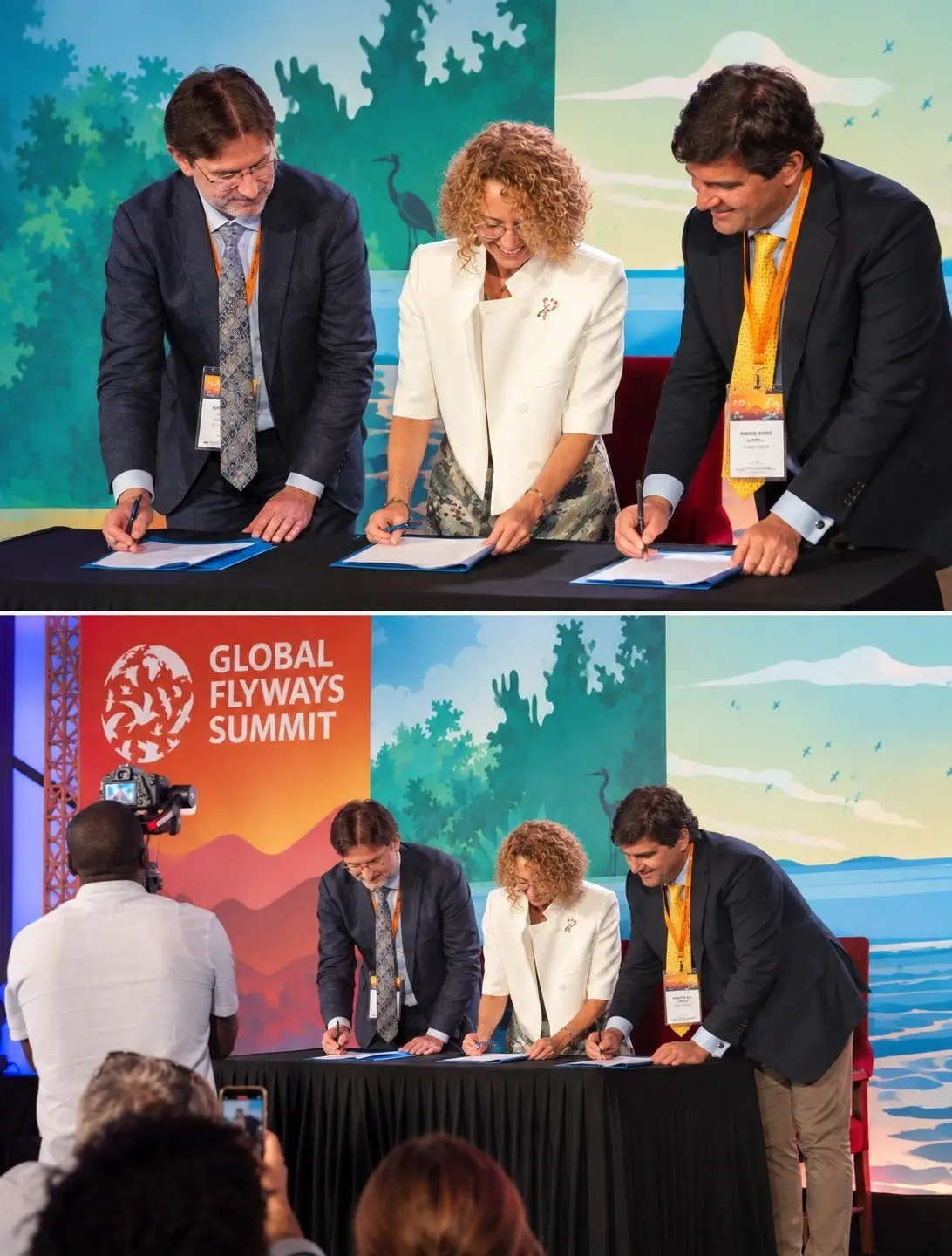

Nairobi, Kenya — In a landmark development for global environmental finance and biodiversity conservation, three major institutions have officially unveiled a pioneering mechanism designed to channel capital directly into the preservation of migratory bird corridors across the Americas. Announced on September 11, 2026, the Flyways Nature Bond Framework represents a sophisticated fusion of rigorous avian science, sustainable development finance, and macro-economic strategy.
Developed collaboratively by BirdLife International, the National Audubon Society, and CAF – Development Bank of Latin America and the Caribbean, this innovative framework establishes science-based criteria to evaluate and finance nature-based solutions and bird-friendly infrastructure. By bridging the historically distinct worlds of ecological conservation and international banking, the initiative aims to reverse alarming downward trends in hemispheric biodiversity while simultaneously fortifying human communities against the compounding shocks of climate change.
Executive Overview: A Paradigm Shift in Green Finance
The degradation of natural habitats across the Americas has reached a critical juncture. For decades, traditional conservation finance has relied heavily on philanthropic donations, government grants, and localized environmental funds—resources that, while invaluable, are frequently insufficient to match the scale of industrial-era ecological disruption. The Flyways Nature Bond Framework shatters this paradigm by integrating ecological metrics directly into the structured finance mechanisms of multilateral development banks.
At its core, the framework serves as a rigorous, standardized screening and evaluation tool. It provides CAF with science-based environmental eligibility criteria to assess prospective projects throughout Latin America and the Caribbean for potential future financing. These projects are not evaluated solely on their traditional financial returns or standard infrastructure metrics; instead, they are rigorously scrutinized through the lens of ecological connectivity, habitat restoration, and avian resilience.
This initiative is a cornerstone of the Americas Flyways Initiative (AFI), a sweeping hemispherically unified partnership that convenes conservation science, international finance, and sustainable development policy. The overarching mission of the AFI is ambitious yet precise: to contribute to the protection of 10% of the populations of representative migratory bird species across the Americas by the year 2050.
By translating complex ornithological data into actionable financial parameters, the Flyways Nature Bond Framework ensures that capital flows toward projects that yield maximum ecological dividends. It guarantees that investments in natural infrastructure—such as the restoration of wetlands, mangroves, and native forests—are recognized not merely as environmental amenities, but as essential, high-yielding assets crucial for regional economic and ecological stability.
Detailed Chronology: The Genesis of the Americas Flyways Initiative and the Nature Bond
The realization of the Flyways Nature Bond Framework did not happen overnight. It is the culmination of years of strategic alignment, scientific synthesis, and institutional negotiation among key stakeholders committed to halting the silent crisis unfolding in the skies of the Western Hemisphere.
Phase One: Recognizing Hemispheric Interdependence (2020–2023)
For generations, conservation efforts remained stubbornly myopic, focusing on isolated breeding grounds or wintering sites without acknowledging the perilous journeys undertaken by migratory birds twice a year. Recognizing that a threat in a South American wintering ground directly impacts breeding populations in North America—and vice versa—environmental leaders began advocating for a unified, continental approach.
During this foundational period, BirdLife International, the National Audubon Society, and CAF began laying the groundwork for what would become the Americas Flyways Initiative (AFI). Recognizing that ecological degradation in Latin America and the Caribbean was outpacing traditional funding mechanisms, the partners sought a way to mobilize institutional capital at scale.
Phase Two: Institutionalizing the Alliance and Scientific Integration (2024–2025)
The formalization of the AFI united CAF’s vast financial architecture with the unparalleled ornithological databases of BirdLife International and the National Audubon Society. Experts spent months harmonizing ecological data with development bank lending criteria.
During this phase, scientists mapped critical migratory corridors—known as flyways—identifying spatial overlaps between high-biodiversity zones and areas vulnerable to infrastructure development, agricultural expansion, and climate change. Simultaneously, financial experts at CAF drafted mechanisms to issue specialized green bonds and sustainability-linked financial instruments capable of backing large-scale ecological restoration.
Phase Three: Finalization and Global Unveiling (September 2026)
Culminating in the September 11, 2026 announcement in Nairobi, Kenya, the partners finalized the Flyways Nature Bond Framework. By launching the framework, the coalition provided the market with a replicable, science-backed methodology for structuring green bonds that prioritize avian conservation. The framework established definitive operational guidelines for project selection, risk management, and long-term impact monitoring, setting a new benchmark for multilateral environmental investment.
Supporting Context & Metrics: The Looming Crisis in the Flyways
To understand the urgent necessity of the Flyways Nature Bond Framework, one must examine the staggering statistics defining the current ecological crisis across the Americas. Migratory birds act as the planet’s ecological indicators; their decline signals profound systemic failures in the health of global ecosystems.
The Scale of the Decline
The data compiled by conservation scientists paint a sobering picture of hemispheric biodiversity loss:
- The Vulnerable Majority: Across the migration routes of the Americas, 289 species—representing nearly half (50%) of all migratory birds in the hemisphere—are currently in structural decline.
- The Breeding Ground Deficit: In the United States and Canada alone, breeding populations of migratory birds have plummeted by nearly 2.5 billion individuals since 1970.
- Latin American and Caribbean Pressures: Compounding this northern crisis, an additional 460 bird species are classified as threatened throughout Latin America and the Caribbean, squeezed by deforestation, land conversion, and illegal wildlife trade.
The Telecoupled Nature of Migration
Migratory species operate on a continental scale, rendering them uniquely vulnerable to fragmented governance and localized environmental mismanagement. Because these birds traverse thousands of miles, crossing multiple national borders, a disruption or habitat loss encountered in a wintering wetland in South America can precipitate a catastrophic breeding failure in a boreal forest in North America.
This phenomenon—known in conservation science as telecoupling—means that ecological health is deeply interconnected. Traditional, localized conservation projects often fail because they address only a fraction of a migratory bird’s annual lifecycle. The Flyways Nature Bond Framework directly addresses this systemic vulnerability by prioritizing projects that secure critical nodes along entire flyway corridors.
Beyond Birds: Ecosystem Services and Climate Resilience
While avian conservation serves as the primary metric and catalyst for the framework, the ecological architecture supported by these nature bonds delivers sweeping co-benefits for human populations. The exact same geographic spaces that sustain migratory birds—wetlands, coastal mangroves, native grasslands, and primary forests—provide vital ecosystem services to human communities.
These natural infrastructure assets play an indispensable role in climate change mitigation and adaptation by:
- Mitigating Extreme Weather: Restoring wetlands and coastal zones significantly reduces the devastating impacts of storm surges, coastal erosion, and inland flooding.
- Carbon Sequestration: Preserving mature forests and peatlands locks away massive quantities of atmospheric carbon, directly supporting national and global net-zero commitments.
- Securing Water Resources: Healthy upstream watersheds regulate hydrological cycles, ensuring consistent, clean water supplies for urban centers and agricultural irrigation.
- Supporting Local Livelihoods: Sustainable ecosystem management underpins eco-tourism, artisanal fisheries, and sustainable forestry, bolstering rural economies.
- Strengthening Climate Resilience: Natural buffers provide cost-effective, self-sustaining defense mechanisms against escalating climate volatility compared to carbon-heavy "gray" infrastructure.
Official Statements: Perspectives from Leadership
The historic launch of the Flyways Nature Bond Framework elicited strong commitments from the executive leadership steering the Americas Flyways Initiative. Their remarks underscore the multidisciplinary nature of the challenge and the innovative spirit required to solve it.
Sergio Díaz-Granados, Executive President of CAF, emphasized the institutional transformation represented by the framework:
"The development of the Flyways Nature Bond Framework represents an important step in CAF’s efforts to integrate biodiversity considerations into development financing in Latin America and the Caribbean. The Framework creates a coherent basis for identifying projects that could benefit migratory birds, their habitats, and ecosystems."
Highlighting the interconnected geography of hemispheric conservation, Martin Harper, CEO of BirdLife International, noted:
"Flyways are not simply migration routes for birds: they connect critical sites, landscapes, biodiversity, and the people who depend on them across the hemisphere. As part of BirdLife’s Global Flyways Program, the Americas Flyways Initiative brings BirdLife’s robust science and our network of national partners in the Americas to the Flyways Nature Bond Framework, more systematically integrating migratory bird and biodiversity conservation into project selection and evaluation."
Connecting avian biology directly to institutional finance, Dr. Elizabeth Gray, CEO of the National Audubon Society, added:
"Birds show us where nature needs the most investment. The Flyways Nature Bond Framework incorporates Audubon’s science into funding decisions, helping to identify projects with the potential to strengthen the ecosystems shared by birds and people. This is conservation driven by birds and a new, promising model of sustainable development in the Americas."
Future Outlook: Implementation, Scaling, and Accountability
As the ink dries on the initial launch agreements, the true test of the Flyways Nature Bond Framework will lie in its operational execution on the ground. The coming years will see CAF, BirdLife International, and the National Audubon Society transition from framework design to active project pipeline development, bond issuance, and rigorous field monitoring.
Key Operational Pillars Moving Forward:
- Rigorous Screening and Integration: CAF’s project evaluation teams will systematically apply the framework’s science-based criteria to potential infrastructure and conservation loans, ensuring that every funded initiative meets stringent biodiversity benchmarks.
- Geographic Targeting: Focus will initially center on high-priority bottleneck sites and critical stopover habitats identified through BirdLife’s and Audubon’s comprehensive spatial datasets.
- Impact Monitoring and Adaptive Management: Funded projects will undergo continuous ecological monitoring to track population recoveries, habitat restoration success, and community socio-economic metrics, ensuring complete transparency and accountability for investors.
- Mobilizing Private Capital: By demonstrating that environmental restoration can be packaged into credible, risk-mitigated financial products, the framework aims to attract institutional investors, pension funds, and private wealth into the Latin American and Caribbean green bond market.
A Beacon for Global Conservation
The Flyways Nature Bond Framework arrives at a critical juncture in planetary history. As biodiversity loss and climate change accelerate in tandem, traditional, siloed approaches to environmental protection are no longer sufficient. By successfully marrying the rigor of avian science with the immense liquidity of multilateral development finance, CAF, BirdLife International, and the National Audubon Society have forged a blueprint for the future.
If scaled effectively over the coming decades, the initiative will not only safeguard a significant percentage of the Americas’ migratory bird populations for future generations, but it will also prove that protecting nature is the smartest investment humanity can make in its own collective survival.