
Executive Overview
In a discovery that upends traditional models of ancient human-animal interaction, an international team of researchers has unearthed ancient grey wolf remains on a remote, tiny island in the Baltic Sea. The location of the find—a windswept, isolated limestone outcrop where no native land mammals could ever have arrived independently—points to an astonishing conclusion: prehistoric humans deliberately captured, transported, and maintained apex predators by boat thousands of years ago.
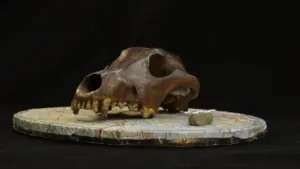
Published in the prestigious journal Proceedings of the National Academy of Sciences (PNAS), the study was spearheaded by a multidisciplinary collective of scientists from the Francis Crick Institute, Stockholm University, the University of Aberdeen, and the University of East Anglia. By analyzing canid bones recovered from the Stora Förvar cave on the Swedish island of Stora Karlsö, the research team recovered DNA and chemical signatures dating back between 3,000 and 5,000 years.
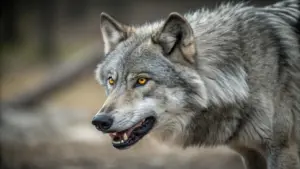
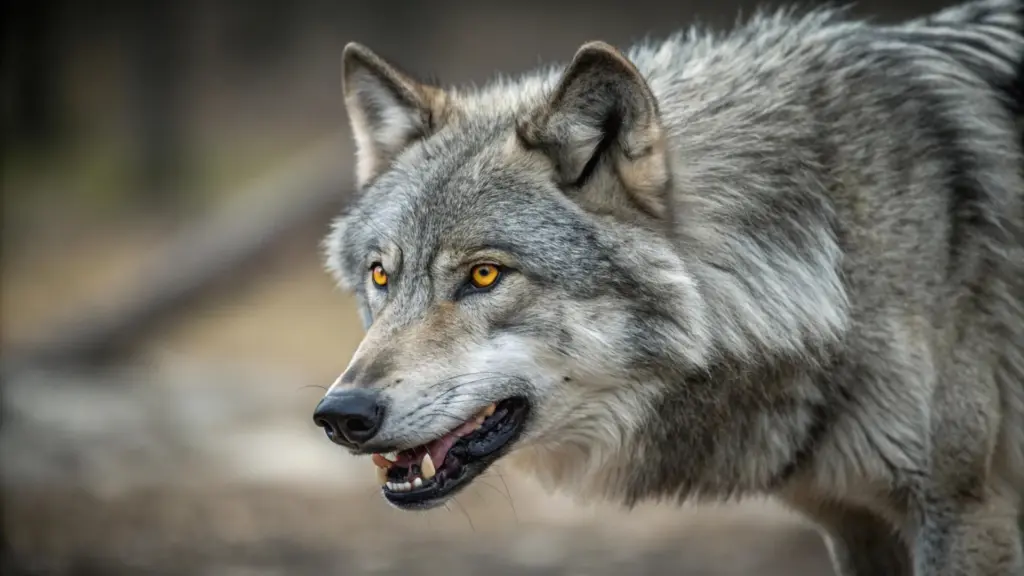
To the initial surprise of the archaeologists, genetic profiling confirmed that the bones did not belong to early domestic dogs, nor were they hybrids. They were pure grey wolves (Canis lupus). Yet, their physical stature, dietary markers, and genomic profiles reveal an intimate, unprecedented relationship with the Neolithic and Bronze Age maritime communities that inhabited the island.
The wolves subsisted almost entirely on a marine diet identical to that of their human neighbors—seals and fish—strongly indicating they were fed directly by people. Furthermore, evidence of a severely healed bone fracture in one specimen suggests that an injured wolf, incapable of hunting independently in the wild, was sustained and cared for by humans over an extended period.
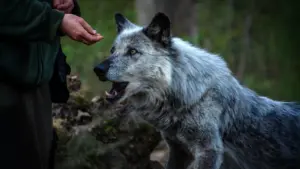
This provocative evidence challenges the conventional dichotomy of prehistoric human-wolf relations, which traditionally casts wolves as competitors, dangerous threats, or game to be hunted, with only domestic dogs serving as companions. Instead, the Stora Karlsö findings suggest that prehistoric societies occasionally experimented with the close management, captivity, and integration of wild wolves into human settlements—a complex chapter of animal husbandry that leaves us to rethink the very roots of canine domestication.
Detailed Chronology: Unearthing the Secrets of Stora Karlsö
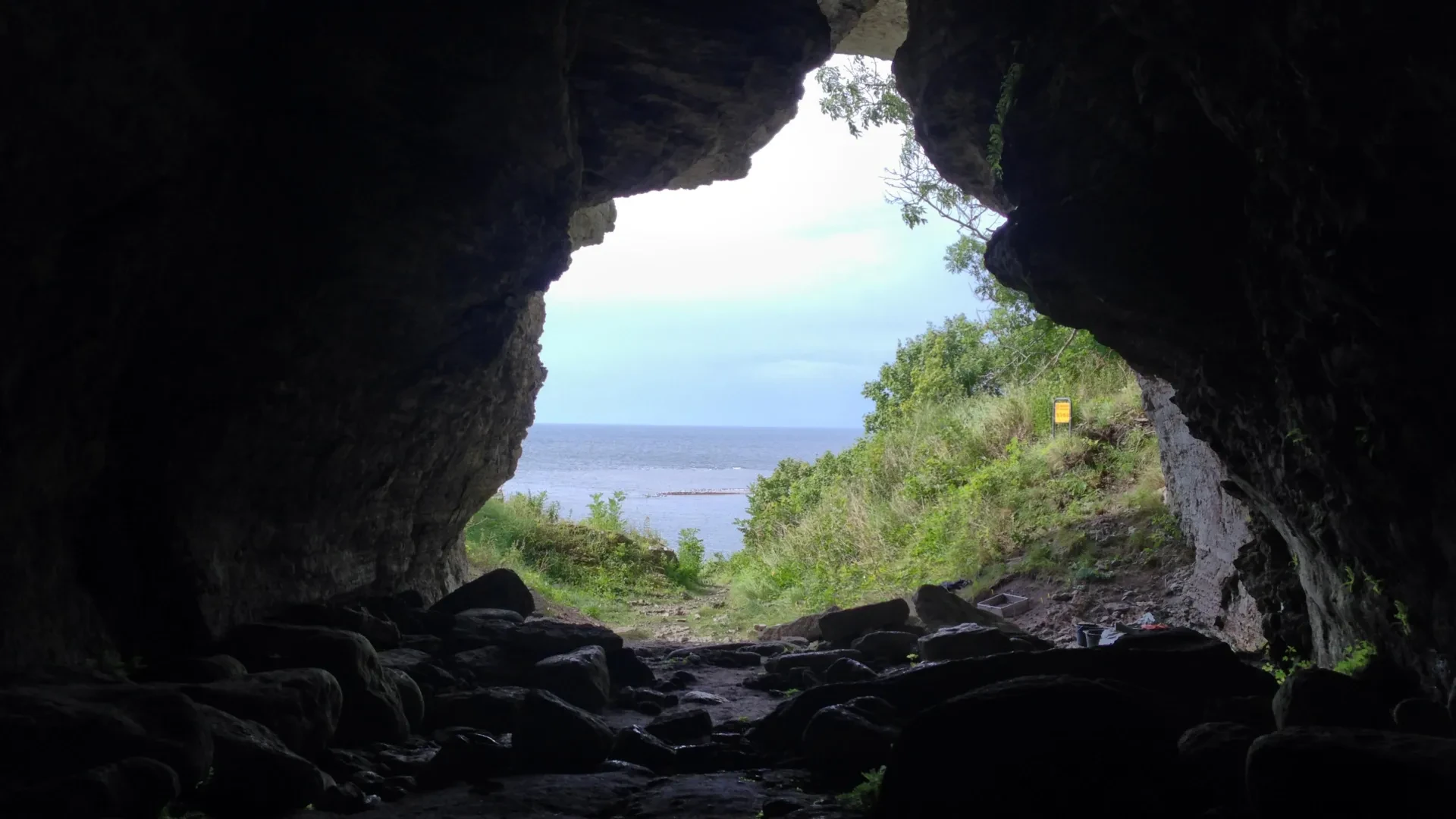
The narrative of this discovery begins deep within the stratigraphy of the Stora Förvar cave, a well-known archaeological site situated on Stora Karlsö, a small island measuring a mere 2.5 square kilometers off the western coast of Gotland, Sweden. For decades, archaeologists have understood that Stora Förvar was intensively utilized during the Stone and Bronze Ages. The cave served as a seasonal basecamp for specialized maritime foragers—communities of Neolithic seal hunters and fishermen who braved the open waters of the Baltic Sea to harvest marine mammals.
Because Stora Karlsö is separated from the mainland by deep, frigid waters and has never possessed a native population of terrestrial land mammals, any large animal discovered in its ancient strata requires an explanation involving human agency. Wolves cannot swim across miles of open Baltic waters, nor could they cross ice sheets reliably enough to establish a permanent population on such a minute speck of land without leaving broader ecological traces. Consequently, the presence of canid remains in the cave’s lower and middle layers has long intrigued researchers.
The Excavation and Initial Confusion
During historical excavations of the Stora Förvar cave, several canid skeletal elements were recovered and subsequently housed in museum collections, preserved alongside thousands of seal bones, fish vertebrae, and human artifacts. However, distinguishing morphologically between ancient wolves and large primitive dogs based solely on bone fragments has always been notoriously difficult.
To resolve the true identity of these animals, the modern research team extracted DNA from two distinct canid bones recovered from layers dating between 3,000 and 5,000 years ago—spanning the late Neolithic transition into the Bronze Age. Utilizing state-of-the-art ancient genomics, the scientists successfully sequenced the mitochondrial and nuclear DNA of the specimens.
The genetic results were unequivocal: the animals were not early dogs, nor were they interbred with domestic stock. They were morphologically distinct, pure Eurasian grey wolves.
This confirmation transformed a curious zooarchaeological puzzle into a historical enigma. How did pure, wild apex predators come to inhabit a tiny island accessible only by seafaring vessels, living side-by-side with human hunter-gatherers?
The Bronze Age Patient: Evidence of Direct Care
Among the most compelling pieces of chronological evidence uncovered by the team is a Bronze Age wolf specimen bearing the unmistakable hallmarks of severe physical trauma. Osteological examination of the animal’s limb bones revealed a catastrophic fracture that had healed over time.
In a natural wilderness setting, such an injury would be a death sentence for a wild wolf. An animal unable to run, pounce, or coordinate with a pack to bring down large, agile prey would quickly starve to death or succumb to exposure and predators. Yet, this particular wolf survived long enough for the bone to knit back together—albeit with significant structural impairment.
The survival of this injured wolf provides a smoking gun for human intervention. It strongly suggests that the animal was either confined within a managed space (such as a pen or enclosure) or provided with a steady supply of food by humans who had a vested interest in keeping the animal alive. This deliberate provisioning and care point away from casual tolerance and toward active, purposeful animal management.
Supporting Context & Metrics: Genetics, Diets, and Island Biogeography
To fully grasp the magnitude of the Stora Karlsö discovery, scientists had to integrate multiple independent scientific methodologies, combining zooarchaeology, stable isotope analysis, and paleogenomics.
Genomic Bottlenecks and Reduced Diversity
When Dr. Anders Bergström and his colleagues at the University of East Anglia examined the nuclear genome of the wolf with the most complete preservation, they encountered an anomaly that immediately drew comparisons to domesticated lineages.
- Unprecedented Low Diversity: The Stora Karlsö wolf displayed genetic diversity levels lower than any ancient wolf genome sequenced to date.
- Population Bottlenecks: Such drastically reduced diversity is typically characteristic of isolated island populations experiencing severe inbreeding, or of organisms that have undergone intensive artificial selection and population bottlenecks through human domestication.
While natural isolation on a tiny 2.5-square-kilometer island could theoretically induce a genetic bottleneck over generations, the combination of this restricted gene pool with archaeological indicators of human control paints a more nuanced picture. These wolves were genetically trapped—both by the geography of the island and potentially by human enclosures.
Stable Isotope Analysis: Sharing the Human Menu
How did these wolves survive on an island utterly devoid of the large ungulates—such as deer, elk, and wild boars—that form the staple diet of mainland grey wolves?
The answer was found by examining the chemical composition of the wolves’ bones through stable isotope analysis. By measuring carbon and nitrogen isotopes preserved in the collagen of the canid remains, researchers were able to reconstruct the animals’ diets over the course of their lives.
The results revealed a startling dietary profile:
- Marine-Dominated Diets: The isotopic signatures indicated that the wolves subsisted almost entirely on marine resources, specifically ringed and grey seals, alongside marine fish.
- Dietary Parallels: This marine-heavy diet matched the isotopic signatures recovered from the human inhabitants of the Stora Förvar cave and contemporary coastal archaeological sites in the region.
In essence, the wolves were eating the exact same food scraps and hunted resources that the human seal hunters were bringing back to their seasonal camp. Whether scavenging from butchery sites left outside tents or being deliberately fed scraps by the human settlement, these wolves were fundamentally integrated into the anthropogenic food web of the island.
Official Statements and Expert Perspectives
The publication of these findings has sent ripples through the fields of evolutionary biology, archaeology, and paleogenomics, prompting leading researchers to reflect on the fluidity of prehistoric human-animal boundaries.
Dr. Linus Girdland-Flink of the University of Aberdeen, a lead author of the study, emphasized the sheer unexpectedness of the discovery during press briefings:
"The discovery of these wolves on a remote island is completely unexpected. Not only did they have ancestry indistinguishable from other Eurasian wolves, but they seemed to be living alongside humans, eating their food, and in a place they could have only have reached by boat. This paints a complex picture of the relationship between humans and wolves in the past."
Pontus Skoglund, senior author of the study and head of the Ancient Genomics Laboratory at the Francis Crick Institute, underscored how the find challenges our preconceived notions of domestication pathways:
"It was a complete surprise to see that it was a wolf and not a dog. This is a provocative case that raises the possibility that in certain environments, humans were able to keep wolves in their settlements, and found value in doing so."
Dr. Anders Bergström, co-lead author from the University of East Anglia, highlighted the implications of the genomic data:
"The genetic data is fascinating. We found that the wolf with the most complete genome had low genetic diversity, lower than any other ancient wolf we’ve seen. This is similar to what you see in isolated or bottlenecked populations, or in domesticated organisms. While we can’t rule out that these wolves had low genetic diversity for natural reasons, it suggests that humans were interacting with and managing wolves in ways we hadn’t previously considered."
Adding a crucial osteoarchaeological perspective, Jan Storå, Professor of Osteoarchaeology at Stockholm University, pointed out the power of combining traditional artifact analysis with cutting-edge biomolecular techniques:
"The combination of data has revealed new and very unexpected perspectives on Stone Age and Bronze Age human-animal interactions in general and specifically concerning wolves and also dogs. The relationship between humans and wolves in prehistory was far more varied than once thought."
Future Outlook: Rewriting the History of Canid Domestication
For decades, the narrative surrounding the origin of the domestic dog has followed a relatively linear, albeit debated, trajectory. Traditional models suggest that during the Late Pleistocene or early Holocene, ancestral wolves began scavenging around hunter-gatherer camps, leading to a self-domestication process where the boldest, least aggressive animals gradually integrated into human society, eventually morphing into Canis familiaris.
The Stora Karlsö discovery complicates this neat narrative by proving that human-wolf relationships during the Neolithic and Bronze Ages were not restricted to this single, linear evolutionary track. Instead, prehistoric humans across various environmental niches appear to have engaged in opportunistic, flexible, and sometimes short-lived experiments in capturing and managing wild wolves.
Key Questions for Future Research
The findings raise several profound questions that the scientific community is now racing to answer:
- What was the utility of captive wolves? Why would ancient seal hunters transport and maintain apex predators on a remote island? Hypotheses range from the keeping of animal companions or status symbols, to the utilization of wolf pelts, teeth, and ceremonial offerings, or even auxiliary help in hunting or territorial defense around seasonal encampments.
- Were these isolated experiments widespread? Stora Karlsö offers exceptional preservation and a unique insular geography that made detection possible. Are there similar, unrecognized instances of prehistoric wolf management hidden within mainland archaeological sites across Eurasia?
- Did these populations leave a genetic legacy? While the Stora Karlsö wolves showed no admixture with dogs, researchers are keen to investigate whether similar interactions in other regions occasionally contributed minor genetic inputs into early regional dog populations, or if these captive wolf lineages ultimately died out without issue.
Conclusion
The ancient wolves of Stora Karlsö stand as silent testaments to a forgotten chapter of human history—a time when our ancestors navigated the frigid waters of the Baltic Sea not only with fishing gear and harpoons, but with formidable wild predators sharing their boats and their hearths. As genomics and archaeology continue to push back the boundaries of what we can recover from fragmentary bones, we are reminded that the ancient world was far stranger, more dynamic, and far more intimately interconnected than our modern categories suggest.