
Executive Overview
For generations, the vast spectrum of canine forms—from the towering, long-legged Greyhound to the compact, flat-faced French Bulldog—has been attributed to the intensive, selective breeding practices of the Victorian era. Modern kennel clubs and nineteenth-century pet enthusiasts were long credited with sculpting the domestic dog into the remarkable mosaic of shapes and sizes we see today. However, a sweeping, decade-long archaeological study published in the journal Science is turning this conventional narrative on its head.
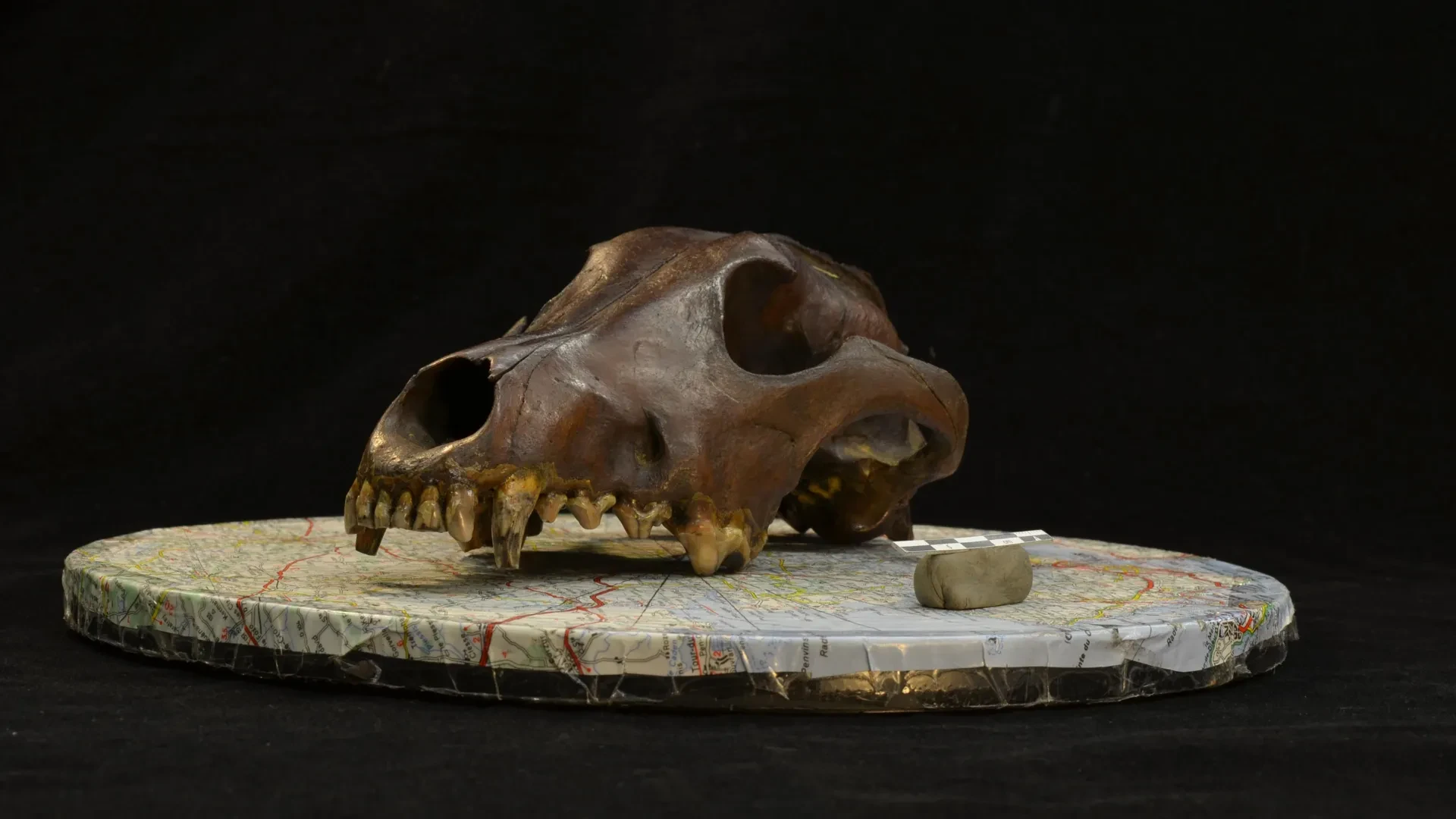
By analyzing hundreds of ancient canid skulls spanning a staggering 50,000 years, an international team of researchers has conclusively demonstrated that the physical diversity of dogs is not a recent human invention. Instead, clear, distinct signs of variance in both size and skull shape emerged at least 11,000 years ago, during the Mesolithic and Neolithic periods.
This groundbreaking research—led by scientists at the University of Exeter and the French CNRS, in collaboration with more than 40 institutions worldwide—serves as the most comprehensive analysis of dog skulls ever undertaken. The findings suggest that early dogs were adapting and diversifying rapidly, long before the rise of modern breeds, entirely driven by their deepening, symbiotic relationship with human communities. By the dawn of human agriculture and settled village life, dogs had already achieved half of the total morphological variation seen in today’s global canine population.
This report examines the intricate methodology behind the study, the chronological timeline of early canine evolution, the socio-cultural forces that drove their rapid diversification, and the profound implications this research holds for our understanding of human-animal coevolution.
Detailed Chronology: Tracking the Evolution of the Canid Skull
To understand how early dogs diverged from their wolf ancestors and began taking on distinct shapes, researchers had to look far back into the archaeological record. The project, which commenced in 2014, relied on advanced geometric morphometrics—a sophisticated technique involving high-resolution 3D digital models of canine skulls. This method allows scientists to quantify minute differences in size, proportion, and form with unprecedented precision.
[50,000 Years Ago] ---> [Pleistocene Era] ----> [11,000 Years Ago] -------> [8,700 - 9,700 BP] ---------> [7,700 - 8,200 BP] ------> [Neolithic Era]
  (Global Canid        (No clear signs of         (Oldest confirmed         (First detectable          (Size variance &       (Canine diversity
   Skull Analysis)      domestication found)       domestic dog: Veretye)    reduction in skull size)   shape variation surge)  reaches 50% of today's)
The Pleistocene Mystery: The Elusive Origins
The earliest phase of the research examined specimens dating back to the Pleistocene epoch. Surprisingly, none of the Late Pleistocene canid specimens analyzed—including several long-held candidates previously championed by researchers as "proto-dogs"—exhibited skull features consistent with true domestication.
According to Professor Greger Larson, a senior author of the study from the University of Oxford, this underscores just how complex and hidden the very earliest stages of domestication truly are. "The earliest phases of dog domestication are still hidden from view, and the first dogs continue to elude us," Larson noted. "The exact geographic and temporal ignition point of when wolves first began transforming into dogs remains one of archaeology’s most tantalizing unsolved mysteries."
The Mesolithic Milestone: Veretye and the First True Dogs
While the absolute inception point remains obscure, the study successfully mapped the subsequent explosion of physical variation once dogs firmly established themselves in human society.
The oldest confirmed domestic dog identified in the dataset originated from the Russian Mesolithic site of Veretye, dating back approximately 11,000 years. Following this discovery, researchers identified early domestic dogs in the Americas (dating to roughly 8,500 years ago) and Asia (dating to approximately 7,500 years ago), all categorized based on distinct anatomical shifts in skull morphology intimately linked to the domestication process.
The Neolithic Expansion: A Burst of Morphological Innovation
As human societies transitioned from nomadic hunter-gatherer bands to settled agricultural communities during the Neolithic period, the physical transformation of the dog accelerated dramatically.
Dr. Allowen Evin, a co-lead author from the CNRS stationed at the Institute of Evolutionary Sciences in Montpellier, France, mapped the precise chronological markers of this shift:
- 9,700 to 8,700 Years Ago: The first statistically detectable reduction in overall skull size occurs across the canine population.
- 8,200 Years Ago Onwards: Greater variability in overall skull shape begins to emerge across regional archaeological sites.
- 7,700 Years Ago: A measurable increase in size variance takes hold, indicating that dogs were no longer clustering around a single, uniform body type.
By the time these prehistoric societies were establishing permanent settlements, canine diversity was already twice that of Pleistocene canids, capturing an astonishing 50 percent of the total morphological range observed in modern dogs today. While modern breeding has pushed extremes—such as the brachycephalic (short-faced) geometry of modern Bulldogs or the dolichocephalic (long-faced) skull of Borzois—the foundational architectural blueprint for distinct dog types was forged in the prehistoric crucible of early human settlement.
Supporting Context and Metrics: The Science of 3D Morphometrics
To fully appreciate the weight of these findings, one must examine the sheer scale and technical rigor of the study published in Science. The research team assembled a dataset comprising 643 canid skulls, pulling from both modern and archaeological archives.
Scope and Composition of the Dataset
The analyzed specimens formed a representative cross-section of the canid family tree, including:
- Modern recognized purebred dogs representing diverse global lineages.
- Free-ranging village and street dogs from various geographic regions.
- Ancient archaeological dog remains spanning multiple continents.
- Wild wolf specimens representing the ancestral baseline.
The Methodology: Geometric Morphometrics
Traditional osteology often relied on linear measurements—such as taking a single caliper measurement of a skull’s length or width. In contrast, this study deployed geometric morphometrics, a digital cartography of bone structure.
Researchers placed dozens of three-dimensional coordinate points (landmarks) across critical junctures of each skull—including the snout, the cranium, the jaw joint, and the dental arcade. High-resolution 3D surface scanning converted these physical bones into digital point clouds. Advanced statistical software then stripped away scale to analyze pure shape configurations. This allowed scientists to track subtle deformations and evolutionary trends across millennia without bias from absolute body size differences.
Official Statements and Academic Insights
The implications of this research extend far beyond evolutionary biology, offering profound insights into the nature of the human-animal bond.
"These results highlight the deep history of our relationship with dogs. Diversity among dogs isn’t just a product of Victorian breeders, but instead a legacy of thousands of years of coevolution with human societies."
— Dr. Carly Ameen, Co-Lead Author, Department of Archaeology and History, University of Exeter
Dr. Ameen’s perspective reframes dogs not merely as passive recipients of human care, but as active participants in human history. As humans specialized their labor, settling into agricultural, pastoral, and complex tribal networks, they required specialized assistance from their canine companions. A dog guarding a grain silo required a very different physical build and temperament than a dog flushing game through dense European underbrush or herding livestock across high-altitude steppes.
"The earliest phases of dog domestication are still hidden from view, and the first dogs continue to elude us. But what we can now show with confidence is that once dogs emerged, they diversified rapidly. Their early variation reflects both natural ecological pressures and the profound impact of living alongside humans."
— Professor Greger Larson, Senior Author, University of Oxford
Professor Larson emphasizes that while the genesis point remains elusive, the trajectory of the dog once it entered the human sphere was one of explosive, adaptive radiation. Natural selection operating within human-modified environments—coupled with early, informal human selection for tractability, size, and utility—created an evolutionary engine unlike any other seen in the animal kingdom.
Future Outlook: Rethinking the Evolutionary Timeline
This landmark study opens exciting new avenues for paleolithic and archaeological research. By establishing that complex morphological variance was already well underway by the Mesolithic and Neolithic periods, researchers can now ask more targeted questions about how specific cultural shifts influenced animal evolution.
Next Steps in Canid Archaeology
- Ancient DNA Integration: Future studies aim to pair genomic sequencing with geometric morphometrics. By extracting ancient DNA from these same skulls, scientists hope to trace the genetic mutations responsible for the physical transformations observed in the fossil record.
- Global Expansion of the Database: While the current dataset is expansive, researchers are eager to uncover and analyze archaeological canid remains from underrepresented regions, particularly Africa, South America, and Southeast Asia.
- Reassessing Human Migration Models: Because dogs accompanied humans across continents, mapping the evolution of their skull shapes can help corroborate or refine existing anthropological models of human migration and trade route expansion.
Acknowledgments of Support
The international scope of this project required substantial financial and institutional backing. The research was made possible through grants and funding from several prestigious bodies, including:
- The Natural Environment Research Council (UK)
- The Arts and Humanities Research Council (UK)
- The European Research Council
- The Social Sciences and Humanities Research Council of Canada
- The Russian Academy of Sciences
- The Fyssen Foundation
Conclusion
The image of the dog sitting by the prehistoric campfire is an enduring symbol of human history. This new research proves that the connection forged around those ancient hearths was powerful enough to physically reshape the animal kingdom’s most adaptable carnivore. Long before kennel clubs drafted their first breed standards, our ancestors and their canine companions were already laying the groundwork for the astonishing array of shapes, sizes, and spirits that continue to enrich human lives today.