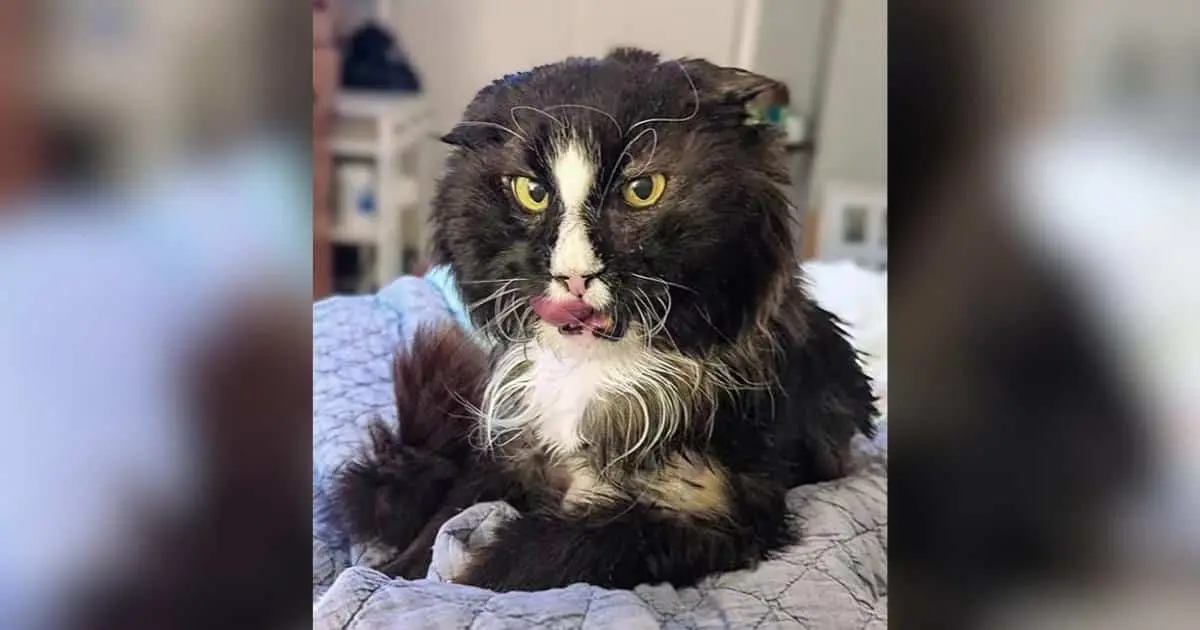
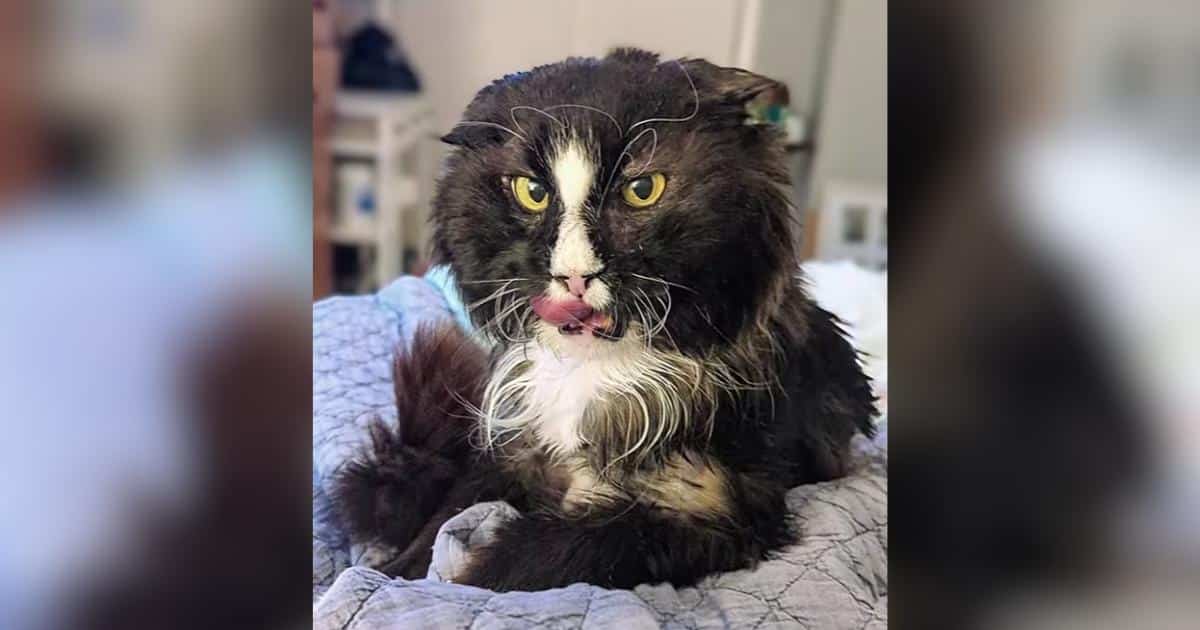
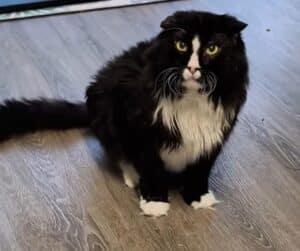
The journey of animal rescue is frequently defined by moments of profound resilience, yet few stories capture the depth of emotional recovery quite like that of Panda, a senior feline whose life took a devastating turn following the passing of his elderly owner. Thrust from the comforts of a domestic environment into the unforgiving realities of outdoor survival, Panda spent years navigating the hazards of the streets, learning that self-reliance and emotional detachment were the only guarantees of safety.
By the time he was safely rescued and brought into the care of Billy the Kitten Rescue at approximately 13 years of age, Panda’s worldview was shaped by suspicion, fear, and survival instincts. Initially presenting as a defensive, withdrawn animal hiding behind bathroom fixtures, Panda’s exterior masked a deeply affectionate nature that had simply been buried under layers of trauma and uncertainty.
Through the dedicated intervention of a foster caregiver who prioritized time, space, and quiet consistency over forced socialization, Panda underwent a remarkable metamorphosis. Within days, the guarded stray transformed into an affectionate companion affectionately dubbed the "gentle giant."
Beyond a heartwarming rescue anecdote, Panda’s case serves as a vital case study in animal welfare, illuminating the specific medical, psychological, and behavioral needs of senior rescue pets. It challenges prevailing misconceptions regarding the adoptability and temperament of older animals, emphasizing that defensive behaviors in shelter pets are rarely indicative of their true character, but rather a temporary shield against a world they have learned not to trust.
Detailed Chronology: From Domestic Comfort to Wilderness Survival and Redemption
The Loss of a Sanctuary
For the first chapter of his life, Panda knew the predictable rhythms of an indoor feline companion. He had a designated sleeping area, regular meals, and the reassuring presence of an elderly owner whose hands offered safety and affection. In the feline world, such stability establishes a foundational baseline of trust.
However, the fragile security of domestic life was shattered when his owner passed away. In the wake of this tragedy, Panda’s support system vanished entirely. Without an estate plan or family intervention to secure his immediate transition into another home, the senior cat found himself abandoned to the elements. For an indoor cat accustomed to climate-controlled rooms and human care, the sudden shift to outdoor survival represents an existential shock.
Years on the Margins
Forced to forage for food, evade predators, and endure extreme weather conditions, Panda adapted in the only way possible: by shutting down his emotional reliance on humans. Over the course of several years, every human interaction became a potential threat rather than a source of comfort.
Feline behaviorists note that cats living rough develop hyper-vigilance. Their nervous systems remain in a constant state of fight-or-flight. By the time rescue volunteers finally located, trapped, and secured Panda, he was at least 13 years old—a geriatric milestone in feline terms—and bore the cumulative psychological scars of a hardened street existence.
Entering the Rescue System
Brought into the facilities of Billy the Kitten Rescue, Panda transitioned from the physical dangers of the outdoors to the structured, sterile environment of a rescue organization. While safe from starvation and exposure, the shelter environment can be intensely stressful for an aging cat. Recognizing his acute vulnerability, rescue coordinators placed Panda with an experienced foster caregiver equipped to handle the delicate rehabilitation of a semi-feral senior cat.
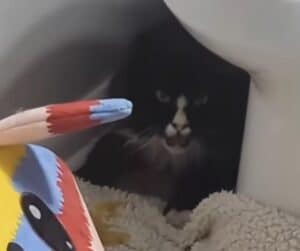
Upon arrival at his foster home, Panda immediately retreated into a defensive posture. Seeking out the most confined, secure vantage point available, he wedged himself behind the toilet. In this cramped sanctuary, he could monitor every sound and movement while maintaining an impenetrable physical barrier between himself and his new caregiver.
The Turning Point of Compassion
A less experienced handler might have attempted to coax Panda out through force, treats, or persistent petting, inadvertently reinforcing the cat’s fear that humans disregard boundaries. Instead, the foster caregiver exercised strategic restraint. By respecting Panda’s need for distance and allowing him to decompress entirely at his own pace, the caregiver laid the psychological groundwork for trust.
Within days, this patient approach yielded dramatic results. Realizing that no demands were being made upon him, Panda began to lower his emotional defenses. The breakthrough occurred when he permitted his caregiver to brush his matted fur—an intimate grooming ritual that requires immense vulnerability from a cat. From that moment forward, the defensive facade dissolved, revealing an extraordinarily sweet, affectionate disposition that had been locked away for years.
Supporting Context & Metrics: The Plight of Senior Pets in Rescue Systems
Panda’s story brings to light broader systemic challenges within animal welfare, particularly concerning senior pets and the physiological realities of aging in rescue environments.
The Senior Pet Demographic
According to data from animal welfare organizations across North America, older animals—defined generally as dogs and cats aged seven years and older—face disproportionately lower adoption rates compared to kittens and puppies. Shelters frequently report that senior pets experience lengthier stays, which can exacerbate stress-induced medical conditions and behavioral withdrawal.
Metric / Category
General Shelter Population
Senior Pet Subgroup (Ages 10+)
Average Length of Stay
2 to 6 weeks
2 to 4 months (often significantly longer)
Adoption Rate
High (frequently >60% for young animals)
Low to Moderate (frequently <30% without targeted rescue placement)
Primary Surrender Factors
Housing restrictions, behavioral issues, cost
Owner death, financial distress, medical burden
Behavioral Presentation
Varies widely by age and socialization
Often high stress, withdrawal, or defensive masking
Geriatric Feline Health Considerations
Caring for a 13-year-old cat like Panda involves navigating complex medical management. Aging felines frequently experience:
Degenerative Joint Disease (Osteoarthritis): Chronic inflammation of the joints limits mobility, making high jumps impossible and necessitating easily accessible litter boxes, bedding, and food stations.
Respiratory Sensitivities: History of coughing or upper respiratory vulnerabilities requires vigilant environmental control (dust-free litter, clean air) and sometimes pharmaceutical intervention.
Cognitive Dysfunction Syndrome (CDS): Similar to canine or human dementia, senior cats may exhibit confusion, increased vocalization, or spatial disorientation, requiring calm, predictable routines.
Despite these medical responsibilities, animal welfare advocates stress that the rewards of senior pet ownership far outweigh the logistical hurdles. Older animals generally possess calmer temperaments, are fully litter-trained, and offer an immediate, profound sense of gratitude to adopters who provide them with a peaceful twilight chapter.
Official Statements and Perspectives
Insights from Animal Welfare Professionals
Rescue coordinators and behavior specialists emphasize that Panda’s behavioral trajectory is a textbook example of environmental masking.
"When an animal arrives at a shelter or foster home acting defensive, hissing, or hiding, the public often mislabels them as ‘aggressive’ or ‘grumpy,’" notes a senior intake coordinator familiar with geriatric feline rehabilitation. "In reality, what we are witnessing is a trauma response. These animals are operating from a survival blueprint written over months or years of hardship. When we provide time, predictability, and unconditional patience, we aren’t just changing their environment—we are rewriting their understanding of the world."
The Foster Caregiver’s Philosophy
The success of Panda’s rehabilitation underscores the irreplaceable value of foster networks in modern animal rescue. Foster homes provide a decompression chamber that high-turnover shelters simply cannot replicate.
Speaking on the methodology used with Panda, his foster caregiver emphasized the importance of listening to the animal’s non-verbal cues: "Panda didn’t need us to shower him with overwhelming attention on day one. He needed us to prove, silently and consistently, that his boundaries would be respected. Once he realized that nobody was going to force him out of his comfort zone, he made the brave choice to step out on his own terms. From that moment on, his true personality—that of a total gentle giant—shone right through."
Future Outlook: A New Chapter for the "Gentle Giant"
As Panda continues to thrive in his foster environment, his daily life bears little resemblance to the harsh winters and uncertain scavenging days he endured outdoors. Armed with ongoing medical management for his arthritis and historical respiratory care, he enjoys the simple, profound luxuries of warm bedding, nutritious meals, and the gentle touch of a human hand that he once feared he would never experience again.
Implications for the Animal Rescue Community
Panda’s narrative serves as an enduring advocacy piece for senior animal adoption. It challenges prospective pet parents to look past the initial wariness of shelter animals and consider the transformative impact of opening a home to an older pet.
As rescue organizations continue to battle capacity constraints and rising intakes of aging animals displaced by owner mortality or economic hardship, stories like Panda’s light the path forward. They prove that with adequate medical support, empathetic handling, and boundless patience, even the most guarded street survivor can find their way back to love.
For Panda, the transition from a terrified cat hiding behind a bathroom fixture to a cherished, relaxed companion is complete. He no longer needs to look over his shoulder for the next threat; his final years are securely anchored in warmth, dignity, and peace.