
September 15, 2025
By Staff Investigators & Science Desk
Executive Overview
In the upper echelons of academic research, a peculiar hierarchy governs prestige: theoretical physics outranks experimental engineering; abstract literature trumps accessible non-fiction; and fieldwork tracking elusive, endangered wildlife in remote ecosystems carries infinitely more cultural cachet than working with domestic animals in human backyards. Nowhere is this bias more pronounced—or more emotionally charged—than in the field of animal behavior.
In this special feature, we explore a thought-provoking critique originally raised by renowned applied animal behaviorist Dr. Patricia McConnell. Decades after earning the prestigious Allee Award for "Best Student Paper" at the 1988 Animal Behavior Society (ABS) Annual Meeting, McConnell found herself on the receiving end of an academic slight: dismissed by a peer who weaponized her career choice of working with domestic dogs as a sign of professional descent.
This article investigates the systemic undervaluation of applied science, the psychological underpinnings of the "familiarity breeds contempt" phenomenon, and the stark cultural contradiction defining modern humanity’s relationship with Canis lupus familiaris. While billions of dollars and profound emotional energy are invested in domestic dogs globally, the professional study of these ubiquitous companions often fights an uphill battle against academic snobbery. Yet, as recent rural vignettes from sheepdog trials to backyard pastures remind us, the bond between human and dog remains one of the most vital, unmediated connections in the natural world.

Detailed Chronology: From Academic Glory to the Stigma of the "Pet"
To understand the friction between theoretical ethology and applied canine behavior, it is helpful to trace the trajectory of academic validation through a historical lens.
- 1988 — The Peak of Recognition: At the Animal Behavior Society Annual Meeting, a young researcher presents groundbreaking findings, securing the highly competitive and coveted Allee Award for "Best Student Paper." At this juncture, the academic pathway points toward traditional, laboratory-bound, or exotic-field research tracks.
- The Intervening Years — Transition to Application: Rather than pursuing academic isolation or tracking rare mammals in foreign landscapes, the laureate pivots toward applied animal behavior. Recognizing a desperate societal need for scientifically grounded interventions, the focus shifts toward helping families understand, manage, and rehabilitate everyday domestic dogs—often stepping in as a last resort before euthanasia.
- A Decade Later — The Conference Hallway Incident: During an informal gathering at a subsequent ABS conference, a casual conversation turns to the career paths of past Allee Award winners. A colleague compares the award to football’s "Heisman curse"—a phenomenon where early athletic brilliance fails to translate into sustained professional prestige. Pointing directly at the past winner, the colleague remarks aloud: "Just look at Trisha, for example. What has she done since?"
- The Turning Point of Reflection: Stunned into silence by the implication that choosing to work with domestic dogs equates to professional failure, the researcher absorbs a potent lesson in scientific elitism. Rather than defending the profound impact of applied behavioral science on human-animal welfare, the moment crystallizes a lifelong observation: in academia, proximity to the common breeds contempt.
- Present Day — Re-evaluating the Companion Animal: Decades later, the stigma persists within certain institutional bubbles, even as societal investment in dogs reaches an all-time high. The academic discomfort surrounding companion animals is dragged into the open, prompting a broader conversation about how Western culture processes deep interspecies affection.
Supporting Context & Metrics: Rarity Versus Ubiquity
Why are domestic dogs subjected to a subtle devaluation within scientific and intellectual hierarchies? The answer lies in a complex interplay of human psychology, economic statistics, and cultural bias.
The Psychology of Familiarity
The adage "familiarity breeds contempt" possesses genuine empirical backing. Social psychologists have long noted that human beings are naturally wired to chase novelty. Seminal research from institutions like Harvard University indicates that as people become increasingly familiar with one another—or with specific stimuli—the initial rush of novelty fades, sometimes breeding a subconscious devaluation of that subject.
Apply this to the animal kingdom:

- Studying a Maned Wolf (Chrysocyon brachyurus) in the remote grasslands of Argentina is inherently exotic. With an estimated wild population hovering around just 17,000 individuals across South America, the maned wolf is rare, mysterious, and distant. Rarity directly correlates with perceived academic value—much like the economic disparity between rare diamonds and abundant quartz.
- Conversely, Canis lupus familiaris is everywhere. According to data from the American Veterinary Medical Association (AVMA), approximately 90 million dogs resided in roughly 45% of American households. Zooming out globally, American pet dogs represent only a fraction of a massive worldwide population. Estimates suggest there are upwards of 900 million dogs spread across American suburbia, rural African villages, and urban centers like Mexico City.
Because dogs are woven into the fabric of daily human existence, they suffer from overexposure. To the theoretical purist, working with an animal found sleeping on a living room rug lacks the rugged romanticism of tracking wildlife across uncharted terrain.
The Problem with "Pet"
Language matters deeply within professional communities. The word "pet" carries historical baggage; etymological records reveal it was occasionally deployed as a derogatory descriptor for a spoiled, unruly child.
In response to this linguistic degradation, modern applied animal behaviorists, trainers, and ethologists increasingly advocate for terms like "companion dogs." Elevating the nomenclature is more than mere semantics—it is a deliberate effort to reclaim dignity for a species that acts as an emotional anchor for millions of people.
Official Statements & Expert Perspectives
The profound dichotomy between intellectual snobbery and emotional reality has long been captured by writers, scientists, and cultural figures who recognize the unique value dogs bring to human existence.

The Scientific Dilemma
Applied science is rarely afforded the same pedestal as theoretical or experimental breakthroughs. Critics argue that applied practitioners merely recycle past discoveries to solve mundane, everyday problems rather than forging entirely new intellectual frontiers.
However, defenders of applied behavior point out that translating abstract ethological principles—such as proving the superior efficacy of positive reinforcement over punishment—into tangible behavioral changes inside a suburban household requires an acute, sophisticated mastery of science. Saving a family companion from behavioral euthanasia is a high-stakes intervention, even if it lacks the sleek aesthetic of a laboratory white paper.
Cultural Icons on the Canine Bond
Across centuries, humanity’s greatest thinkers, writers, and leaders have openly embraced their deep attachments to dogs, flatly rejecting the notion that companion animals are trivial:
- Caroline Knapp, in her seminal work Pack of Two: The Intricate Bond Between People and Dogs, captured the ineffable nature of the relationship:
"It’s about attachment that’s mutual and unambiguous and exceptionally private and it’s about a kind of connection that’s virtually unknowable in human relationships because it’s essentially wordless."

- Gertrude Stein, reflecting on her dog Basket, famously noted how observing the animal drink water taught her structural lessons about prose: paragraphs are emotional, while sentences are not.
- Mary Oliver observed the compounding nature of canine joy: "Because of a dog’s joyfulness, our own is increased. It is no small gift."
- Helen Humphreys, in And a Dog Called Fig, emphasized the restorative power of the daily routine: "The dog walk is not to be underestimated as a source for creativity and life-giving energy."
- Historical Figures: From Alexander the Great—who famously founded an entire city named Peritas to honor his beloved hound—to Winston Churchill, whose poodles (including Rufus II, noted for having breath "like a flamethrower") sat at the family dining table served by personal butlers, history proves that intense interspecies devotion transcends social status.
Future Outlook: Bridging the Gap Between Science and Affection
As we look toward the future of ethology, human-animal studies, and veterinary medicine, the cultural conversation around companion animals is shifting. The central paradox—that we adore our dogs as literal family members while simultaneously marginalizing the cultural and academic weight of studying them—demands critical examination.
- Challenging Academic Elitism: As applied sciences demonstrate their direct, measurable impacts on public health, mental wellness, and community safety, the institutional walls dividing "pure" theory from "applied" practice are slowly beginning to crumble.
- Re-evaluating Human-Animal Studies (HAS): Universities are increasingly funding departments dedicated to anthrozoology, recognizing that understanding how humans interact with the most ubiquitous domestic animal on Earth provides vital insights into human psychology, sociology, and evolution.
- Embracing the Mundane: Ultimately, the future of canine behavioral science relies on honoring the ordinary. While tracking rare wolves in distant lands will always hold romantic appeal, the true crucible of human empathy is tested daily in our kitchens, living rooms, and backyard pastures—where millions of companion dogs quietly teach us what it means to be human.
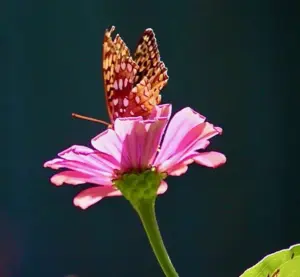
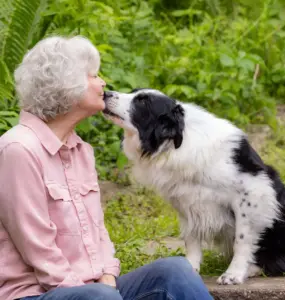
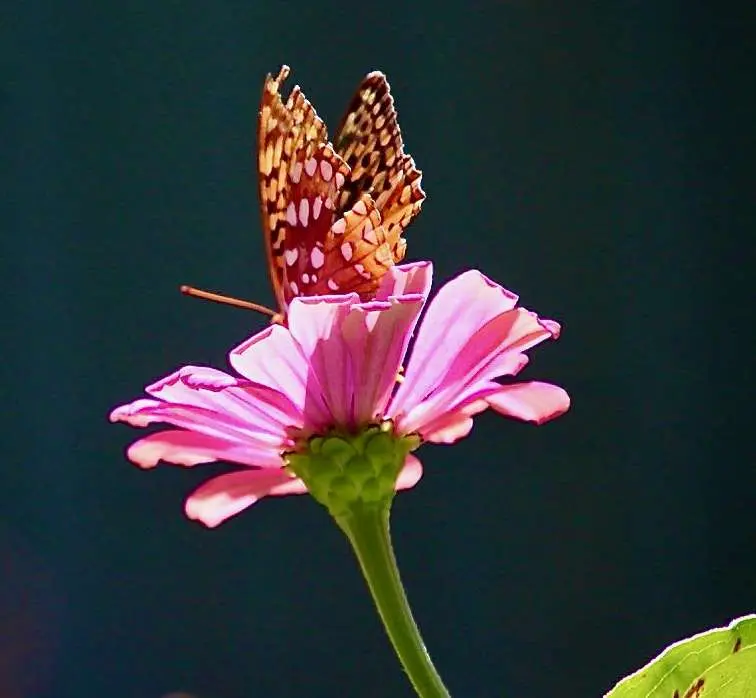
Meanwhile, far away from the sterile debates of conference halls, life on the farm continues unabated. Whether it is sheepdog trials intersecting with impromptu weddings on the green, blended families of humans and working collies sharing shade under ancient walnut trees, or battered fritillary butterflies feeding on late-summer zinnias, the natural world moves forward. It operates not on academic hierarchies, but on direct, unpretentious connections—reminding us why we fell in love with dogs in the first place.