
Executive Overview
When the general public envisions a service dog at work, the mind naturally gravitates toward the cinematic, high-stakes moments: a medical alert canine detecting a perilous shift in blood chemistry before modern biometrics can register the anomaly; a meticulously trained guide dog safely steering its handler across a chaotic, high-traffic intersection; or a military veteran’s assistance dog interrupting a dissociative panic episode before it completely spirals.
These advanced tasks are extraordinary feats of canine cognition and technical instruction. Yet, beneath every medical alert, every navigational command, and every therapeutic grounding technique lies a foundational psychological asset that is rarely celebrated, though it remains utterly indispensable: calmness.
Without emotional regulation and baseline calmness, even the smartest, most procedurally gifted service dog will ultimately struggle to function safely, consistently, and ethically in the unpredictable real world. While technical task training commands the spotlight, it is the quiet, steady demeanor of a regulated dog that permits these complex skills to manifest reliably in everyday environments. A calm dog can think critically within a sensory-overloaded transit hub, dismiss sudden distractions, and remain tethered to the handler who depends on them for daily survival.
This comprehensive examination explores the mechanics of calm service dog training, drawing upon organizational insights from premier institutions like Dogs Inc. It deconstructs what "calmness" actually means in an operational working dog, why neutrality is the cornerstone of public access, how emotional stability is systematically cultivated from puppyhood, and why this invisible skillset ultimately transforms the independence of individuals living with disabilities.
Detailed Chronology: The Lifecycle of a Calm Service Dog
The cultivation of canine calmness is not a sporadic intervention applied during adolescence; rather, it is a meticulously engineered, life-spanning chronology. From the whelps in the nursery to the seasoned veteran guiding its handler through a bustling airport terminal, emotional regulation is systematically built step-by-step.
Phase 1: The Puppyhood Foundation (Birth to 6 Months)
Long before a future service dog ever learns to retrieve dropped car keys, open heavy doors, or apply deep pressure therapy, its emotional foundation is quietly taking shape. At organizations such as Dogs Inc, puppy raisers introduce neonatal and juvenile dogs to structured environments designed to foster resilience.
During this crucial developmental window, puppies are safely exposed to novel sounds, shifting textures, strange human silhouettes, and varied physical environments. Crucially, this exposure is curated to prevent sensory flooding. Trainers utilize positive reinforcement to reward "four on the floor" behaviors, reinforcing self-settling and teaching young dogs that calm breathing and a quiet demeanor yield the highest rewards. Simple milestones—such as sitting patiently beside a shopping cart or maintaining composure while a vacuum cleaner runs nearby—form the building blocks of lifelong emotional stability.
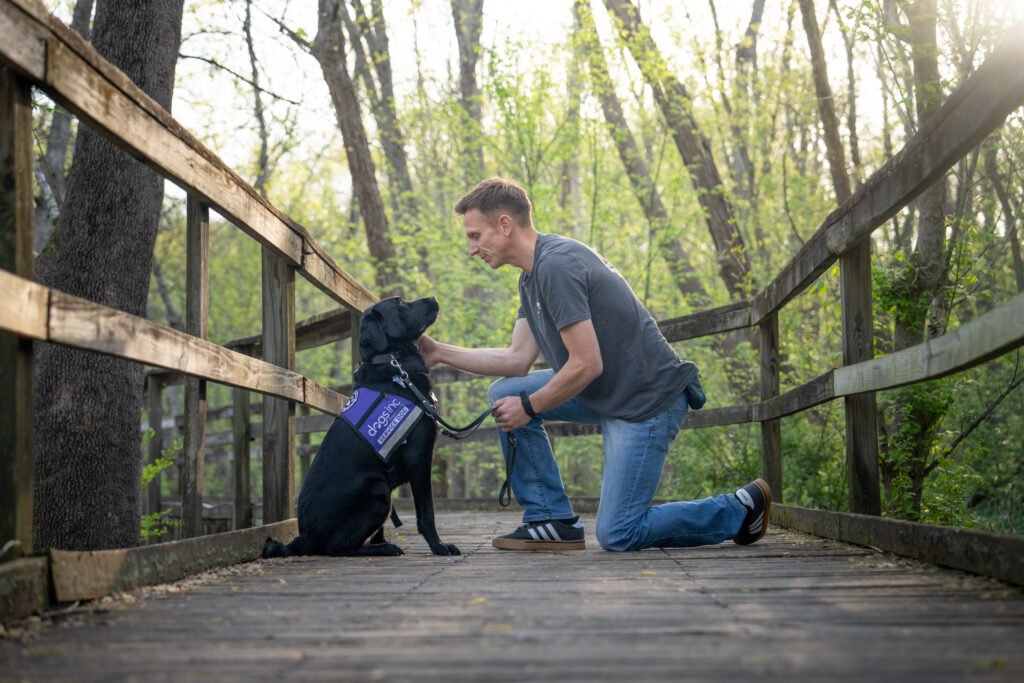
Phase 2: Adolescent Exposure and Distraction Training (6 to 18 Months)
As dogs transition into adolescence, their environmental awareness expands, and hormonal shifts can test their baseline focus. This phase of the chronology focuses heavily on systematic desensitization and counter-conditioning.
Professional instructors and puppy raisers systematically transition the dog into increasingly complex public spheres: busy sidewalks, grocery store aisles, university campuses, and transit stations. The training curriculum introduces high-value distractions—dropped food, chaotic crowds, squealing children, and passing animals—in a controlled manner. Instead of allowing the dog to become overstimulated or reactive, handlers guide the animal to pause, assess the environment, and respond appropriately to a cue. This period transforms raw impulse control into reliable, working focus.
Phase 3: Advanced Public Access and Task Integration (18 to 24 Months)
Once emotional regulation has become an internalized habit, dogs enter the rigorous phase of specialized task training paired with public access testing preparation. Here, the dog learns to seamlessly merge its technical duties (such as medication reminders or guide work) with absolute environmental neutrality.
The dog must demonstrate the ability to work under high-stress conditions for extended periods without showing signs of fatigue, stress, or reactivity. It is during this phase that the true value of calmness shines: a calm dog can process an unexpected loud noise in a hospital corridor, recover its emotional equilibrium in less than a second, and immediately return its focus to monitoring its handler’s vital signs or physical safety.
Defining "Calm" in the Context of Working Canines
To the uninitiated, a "calm" dog might simply look like an animal that sleeps peacefully on a living room rug. In the lexicon of professional service dog training, however, calmness is an active, dynamic state of emotional regulation.
A calm working dog is not "shut down"—a clinical term used to describe a frightened animal that has surrendered its agency out of learned helplessness. On the contrary, a regulated service dog is emotionally stable, highly analytical, and fully engaged with its environment, yet entirely unburdened by emotional reactivity.
[Environmental Stimulus] ---> [Cognitive Pause] ---> [Regulated Assessment] ---> [Appropriate Working Response]When an unregulated dog encounters a sudden loud noise or a dense crowd, its sympathetic nervous system triggers a "fight, flight, or freeze" response, flooding the body with cortisol and adrenaline. This biochemical surge instantly impairs cognitive processing, making learning, cue compliance, and thoughtful decision-making nearly impossible.

Conversely, a properly trained service dog acknowledges the stimulus without absorbing its emotional weight. If a cart crashes to the floor in a grocery store aisle, a calm service dog may flick its ears toward the sound, mentally catalog the event as non-threatening, and instantly pivot its attention back to the handler. This emotional resilience ensures that the dog remains an anchor of security rather than an additional liability in a crisis.
Supporting Context & Metrics: The Science of Focus and Neutrality
The necessity of calmness is directly tethered to canine neurology and behavioral psychology. Research into working animal cognition consistently demonstrates that stress hormones significantly degrade working memory and instrumental conditioning.
The Neurological Toll of Overstimulation
When a dog experiences chronic overstimulation or anxiety in public spaces, its prefrontal cortex—the seat of executive function, impulse control, and decision-making—effectively goes offline, ceding control to the amygdala. For a service animal tasked with monitoring a handler’s glycemic index, predicting a cardiac episode, or guiding a visually impaired individual across a six-lane thoroughfare, an offline prefrontal cortex represents a catastrophic safety failure.
By prioritizing emotional regulation, training programs ensure that the dog maintains cognitive clarity even amid sensory storms. This neurological stability translates to measurable operational outcomes:
- Task Accuracy: Dogs with high emotional stability display a significantly lower error rate during complex, multi-step medical alerts.
- Public Access Longevity: Regulated service dogs enjoy longer, healthier working careers because they do not suffer from the chronic occupational burnout associated with stress-reactive animals.
- Handler Confidence Metrics: Clinical surveys of assistance dog handlers consistently reveal that the psychological comfort of knowing their animal is unfazed by public chaos reduces overall handler anxiety, directly improving their community mobility and social integration.
The Mandate of Public Neutrality
A critical component of this calm baseline is public neutrality. In environments such as hospitals, airports, federal buildings, and restaurants, a service dog must be utterly unremarkable to the general public.
Neutrality dictates that the dog does not solicit affection from strangers, react to passing dogs, or show undue interest in ambient environmental stimuli. While pet dogs are naturally inclined to investigate every novel sight and smell, a service dog is conditioned to view the human world as background scenery. This stoic professionalism protects the dignity and safety of the handler, ensuring that the team draws attention only when executing a life-saving medical task.
Official Statements and Industry Insights
Industry leaders continually emphasize that temperament and emotional baseline outweigh raw intelligence when selecting candidates for assistance work.
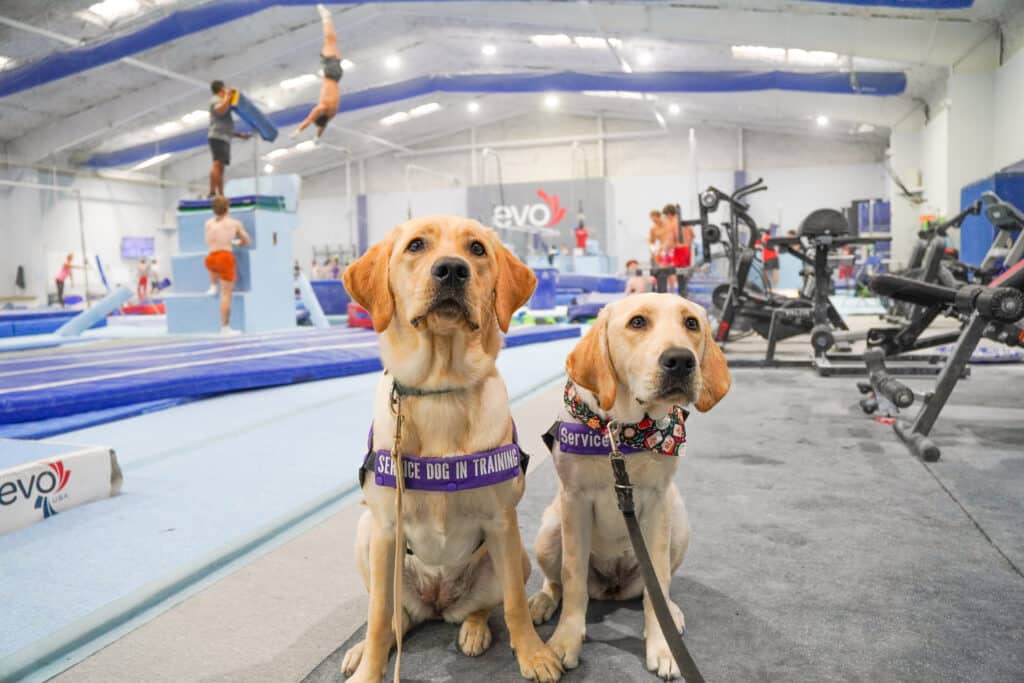
A senior training instructor at Dogs Inc notes:
"People often bring us brilliant dogs that can learn complex mechanical tasks in a matter of minutes. But if that dog cannot regulate its internal emotional state when a siren wails or a crowd surges, it cannot be a service dog. Calmness is the oxygen of our training program. Without it, every other skill suffocates."
Animal behaviorists working within the assistance dog sector echo this sentiment, pointing out that public misconceptions often conflate "calm" with "boring."
"A common myth is that calm service dogs lack personality," explains an institutional behavior specialist. "When our dogs are off-duty, they are playful, joyful, affectionate, and full of life. The distinction lies in their environmental situational awareness. They possess an internal switch that allows them to pivot from joyful pet to focused professional the moment their working harness or vest is secured."
Furthermore, organizations draw a sharp legal and operational line between service dogs and emotional support animals (ESAs). While ESAs provide comfort simply through their presence and do not require specialized public access training, fully trained service dogs must undergo thousands of hours of exposure, impulse control work, and task instruction. That rigorous vetting ensures they can navigate the most demanding spaces on earth without compromising public health, safety, or their own psychological wellbeing.
Future Outlook: The Evolution of Calm-Centric Training
As the demand for service dogs continues to outpace supply, the methodology of breeding and selecting candidates is undergoing a technological and scientific renaissance. The future of service dog training increasingly relies on early behavioral profiling, quantitative temperament testing, and epigenetic research aimed at identifying genetic markers for stress resilience and emotional recovery.
Innovations in Puppy Evaluation
Modern breeding programs are moving beyond subjective observations, utilizing data-driven puppy evaluation protocols during the first eight weeks of life. By measuring how quickly a neonate or puppy recovers its heart rate and emotional baseline after encountering a novel acoustic or tactile startle, trainers can predict with high accuracy which puppies possess the innate calm resilience required for advanced assistance work.

Expanding Access Through Educated Handling
Looking ahead, the philosophy of calm training is also expanding to empower the handlers themselves. Modern service dog organizations place immense emphasis on handler education, teaching recipients how to maintain their own emotional regulation. Because dogs are deeply intuitive creatures that mirror human physiological states (such as heart rate variability and cortisol spikes), a handler’s anxiety can inadvertently destabilize an otherwise calm dog. Future training paradigms focus heavily on dyadic mindfulness—teaching both human and canine partners how to cultivate shared serenity in high-stress environments.
Conclusion
The most profound achievements in the service dog world rarely make headlines for their theatricality. They happen quietly, beneath the surface of everyday public life:
- A micro-pause before an impulsive reaction.
- A steady, grounded anchor maintained during a sudden sensory overload in a crowded transit station.
- A silent, unshakeable presence standing watch while a handler navigates a moment of profound vulnerability.
Calmness may not always look dramatic, but it is the invisible architecture that makes everything else possible. It is forged through meticulous breeding, early developmental structure, relentless positive reinforcement, and thousands of hours of patient, real-world practice.
For individuals living with physical disabilities, medical conditions, or psychological trauma, this calm partnership is transformative. It replaces fear with freedom, isolation with community, and uncertainty with absolute trust. In the demanding realm of service dog work, calmness is not merely a desirable trait—it is the ultimate lifeline.