
Executive Overview
Long before a puppy learns to sit, heel on a leash, or navigate complex urban landscapes to guide a visually impaired handler, an extraordinary transformation is already underway behind the scenes. In the quiet, highly specialized environment of a breeding and training facility like Dogs Inc, a puppy’s life begins with a deliberate, science-backed approach to neonatal care.
While newborns spend their earliest days completely dependent on their mothers and littermates—blind, deaf, and unable to regulate their own body temperatures—their brains and nervous systems are experiencing a period of hyper-growth. To capitalize on this critical window, organizations utilize a targeted practice known as Early Neurological Stimulation (ENS). Far from formal training, ENS introduces mild, controlled physical and thermal challenges designed to stimulate the developing neurological system.
This comprehensive report explores the science of early puppy development, the precise mechanisms of Early Neurological Stimulation, the distinct phases of canine maturation from the neonatal stage through adolescence, and how these foundational weeks forge the unflinching resilience required of modern guide and service dogs.
Detailed Chronology: From Neonatal Vulnerability to Adolescent Independence
The developmental arc of a working dog is a sequential journey where each phase builds meticulously upon the last. Understanding how a puppy transforms from a helpless neonate into a focused, confident service animal requires examining canine growth chronologically.

1. The Neonatal Stage (Birth to 2 Weeks)
During the first fortnight of life, puppies exist in a sensory-limited world. They cannot see or hear, and their daily routine consists almost exclusively of nursing, sleeping, and seeking the warmth of their dam and littermates. Despite their apparent fragility, neurogenesis is occurring at a blistering pace.
It is precisely during this vulnerable window—typically from days three to sixteen—that Early Neurological Stimulation is applied. Because puppies cannot yet process complex sights or sounds, ENS protocols focus on tactile and thermal stimuli. These brief, gentle daily handling exercises are designed to optimize stress-recovery pathways, priming the cardiovascular and neurological systems for future resilience.
2. The Transitional Stage (2 to 4 Weeks)
As puppies cross the two-week threshold, a profound sensory awakening occurs. Their eyes and ears unseal, allowing them to perceive light, shadow, and ambient sounds for the first time. Around the three-to-four-week mark, motor skills improve dramatically as they begin to wobble, stand, and take their first steps.
This stage also marks the eruption of deciduous (baby) teeth, signaling the physiological shift from exclusive nursing toward soft gruel and, eventually, solid food. Social interactions expand rapidly as puppies begin engaging playfully with their littermates, learning fundamental canine communication and rudimentary bite inhibition under the watchful eye of the mother.

3. The Socialization Period (3 to 12 Weeks)
Often considered the most critical psychological window in a dog’s life, the socialization period bridges the gap between pure instinct and environmental adaptation. By week three, puppies are ready to process environmental stimuli in a meaningful way.
- Weeks 3 to 8: Puppies absorb information like sponges. Organizations and puppy raisers introduce novel sounds, safe textures, gentle human handling, and varied environments. This is also when puppies begin short, positive reinforcement training sessions for basic cues around three months of age.
- Weeks 8 to 12: By eight weeks old, many puppies transition to their permanent puppy raisers. Exposure must expand systematically. Meeting diverse people, exploring unfamiliar surfaces, and encountering other animals build psychological elasticity.
By the time a puppy reaches twelve weeks of age, structured exposure helps insulate them against fear-based anxieties and defensive aggressions, laying the cornerstone for a friendly, stable adult temperament.
4. The Juvenile and Adolescent Stages (6 to 18+ Months)
Development does not plateau after puppyhood; rather, it evolves into new challenges. The adolescent stage can manifest as early as six months of age. Much like human teenagers, young dogs during this phase may test boundaries, experience hormonal shifts, and display a temporary regression in listening skills.
- Reproductive Maturity: Most dogs reach sexual maturity between six and twelve months. Females undergo their first heat cycle, while males experience hormone-driven behavioral shifts. Organizations manage these milestones carefully to ensure focus remains on training.
- Fear Periods: Throughout juvenile development, puppies typically navigate an average of four distinct "fear periods," during which ordinary objects or sounds may suddenly provoke a cautious or startled reaction. Handlers must navigate these phases with immense patience and positive reinforcement, ensuring that temporary apprehensions do not harden into lifelong phobias.
- Advanced Integration: Crate training solidifies household routine and independence. Formal puppy kindergarten or specialized advanced classes—often recommended around sixteen weeks and onward—hone obedience, impulse control, and task-specific competencies.
Supporting Context & Metrics: The Science of ENS and Environmental Enrichment
To truly appreciate the rigor behind modern service dog breeding, one must examine the empirical framework supporting Early Neurological Stimulation. Originally developed for military canine programs (frequently referred to as the "Bio Sensor" program or the "Super Dog" concept), ENS is predicated on the theory that early, measured stress can stimulate the endocrine system and improve stress tolerance later in life.

The Five ENS Exercises
The protocol consists of five gentle exercises, each lasting approximately three to five seconds per puppy, performed once daily. Because neonates are fragile, these movements must be executed with strict adherence to established veterinary guidelines:
- Tactical Stimulation (Between the Toes): Using a cotton swab, the handler gently tickles the pad of one foot between the toes for 3–5 seconds. This stimulates neurological pathways associated with touch and reflex.
- Head Erect: The puppy is held perpendicularly, pointing straight up (head above tail), allowing gravity to shift fluid within the inner ear and stimulate balance systems.
- Head Down: The puppy is held in a downward vertical position (head pointed toward the ground), again engaging the vestibular system with a mild orientation shift.
- Supine Position: The puppy is gently placed on its back, resting in the palm of the handler’s hand, allowing a brief feeling of disorientation and vulnerability in a secure environment.
- Thermal Stimulation: A damp towel that has been cooled in a refrigerator is placed on a flat surface, and the puppy is placed upon it for a few seconds. The mild thermal shift stimulates metabolic and circulatory responses.
Quantifying the Benefits
Proponents and working dog organizations point to five primary physiological and psychological advantages associated with consistent ENS protocols:
- Improved Cardiovascular Performance: Enhanced heart rate efficiency and output under physical exertion.
- Stronger Heartbeats: Measurable increases in cardiac reserve.
- Adrenal Gland Optimization: A more balanced hormonal response to acute stressors.
- Greater Tolerance to Stress: An enhanced baseline capacity to recover quickly from startling or novel experiences.
- Resistant Immune System: Anecdotal and observational data suggest improved overall resilience during early growth phases.
Despite these impressive metrics, experts emphasize that ENS is not a magic bullet. Genetics, maternal care, optimal nutrition, veterinary healthcare, socialization, and lifelong positive reinforcement training are all inextricably linked components of a successful canine development program.
Official Statements & Industry Perspectives
Organizations dedicated to breeding and training elite working dogs view neonatal care as the foundation of public safety and client independence. Industry leaders stress that the production of a reliable guide or service animal requires a seamless continuum of care from birth to graduation.

"Long before a puppy is ever tasked with navigating a crowded crosswalk or anchoring against a mobility-impaired handler, their capacity for that work is being forged at a cellular and neurological level," explains a lead canine development coordinator at Dogs Inc. "Early Neurological Stimulation gives us a vital head start, but it is merely the opening chapter of an extensive, lifelong educational commitment."
Animal behaviorists and veterinary researchers echo this sentiment, noting that public perception often oversimplifies dog training as an activity that begins at six months of age. In reality, the critical wiring of the brain occurs weeks prior.
"People often ask when training starts," notes a prominent canine behavioral researcher. "Scientifically speaking, training begins the moment the puppy is born through how it experiences its environment. If we neglect the neonatal and transitional windows, we are playing catch-up for the rest of the dog’s life. Programs that integrate ENS and structured socialization provide their dogs with an undeniable psychological armor."
Future Outlook: The Next Generation of Guide and Service Dogs
As veterinary science, behavioral genomics, and animal husbandry continue to evolve, the future of service dog breeding points toward even greater precision and personalized developmental tracking.
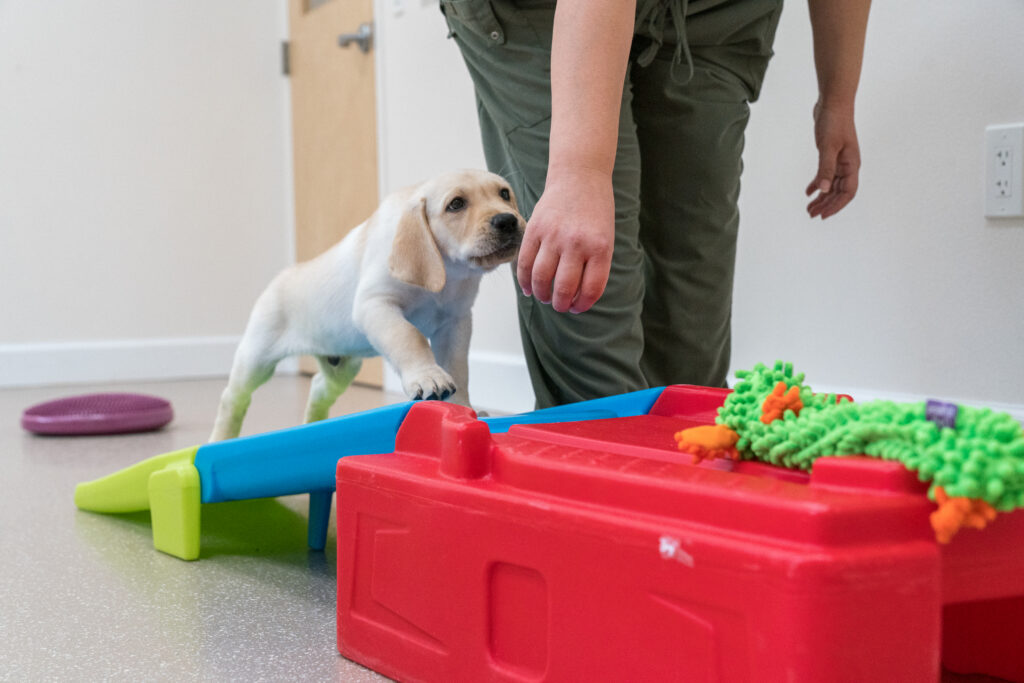
Advanced data collection methods are beginning to allow organizations to track behavioral markers from the neonatal stage through the final placement test. By correlating early ENS responsiveness and socialization milestones with eventual success rates in the field, breeding programs can continually refine their protocols. This data-driven approach ensures that every puppy produced has the highest possible probability of passing rigorous certification standards.
Furthermore, as societal reliance on service animals expands to encompass diverse psychological, medical, and physical disabilities—ranging from PTSD mitigation to severe mobility support—the demand for emotionally resilient, rock-steady dogs has never been higher. The baseline requirements for these dogs are exacting: they must remain serene amid blaring sirens, dense crowds, erratic pedestrian behavior, and unpredictable environmental hazards.
Organizations like Dogs Inc remain at the vanguard of this mission. By honoring every stage of a puppy’s development—starting with the delicate tactile exercises of the neonatal stage, progressing through the adventurous explorations of socialization, and culminating in advanced task-oriented training—they ensure that tomorrow’s life-changing partners are given the absolute best start possible.
Ultimately, a guide dog’s journey from a tiny, blind newborn to a confident, dignified working partner is a testament to the power of deliberate, science-backed care. Through meticulous planning, compassionate handling, and an unwavering commitment to excellence, these organizations prove that shaping a remarkable dog truly does begin on day one.