
Executive Overview
Long before a puppy learns to sit politely, walk calmly on a loose leash, or navigate a crowded intersection to guide someone safely through the world, an immense amount of foundational work is happening entirely behind the scenes. In the specialized arena of assistance dog breeding and training, excellence does not begin when a puppy enters formal instruction at one or two years of age. Instead, it is cultivated from the very first moments of life.
At organizations like Dogs Inc, preparing future guide and service dogs is an intricate, multi-year science. It starts in the neonatal whelping box, weeks before puppies can even open their eyes or hear the world around them. During these critical opening weeks, a puppy’s brain and nervous system undergo explosive growth. The early experiences, handling protocols, and sensory inputs they receive lay the neurological groundwork for how they will learn, adapt, and interact with complex environments later in life.
One of the cornerstone science-based practices utilized during this fragile initial phase is Early Neurological Stimulation (ENS). While ENS is just one small piece of a much larger puzzle, it exemplifies the deeply thoughtful, deliberate approach required to support optimal health and emotional resilience from day one. This report investigates the developmental milestones, physiological mechanisms, and structured protocols that transform vulnerable newborn pups into confident, life-changing canine partners.
Detailed Chronology: From the Neonatal Whelping Box to Adolescent Maturity
The journey of a service dog candidate follows a precise, highly coordinated biological and behavioral timeline. Understanding how a puppy develops requires examining each distinct life stage and the specific interventions appropriate for it.
1. The Neonatal Stage (Birth to 2 Weeks)
During the neonatal phase, newborn puppies are completely dependent on their mother and littermates. At this stage, they spend the vast majority of their time sleeping and nursing. Their eyes are tightly sealed, their ear canals are closed, and they lack the ability to regulate their own body temperature.

Despite appearing fragile and inactive, their brains and nervous systems are hard at work. This is the exclusive window for Early Neurological Stimulation (ENS). Because puppies cannot yet process complex sights or sounds, ENS introduces mild, tactile, and thermal challenges designed to stimulate the neurological system safely. These brief daily exercises are executed following strict, established protocols by trained handlers to ensure low stress and maximum physiological benefit.
2. The Transitional Stage (2 to 4 Weeks)
As puppies cross the threshold into the transitional stage, dramatic sensory and physical changes occur. By week two to three, their eyes and ears begin to open, fundamentally shifting how they perceive the environment.
Around four weeks of age, puppies achieve significant motor milestones: they begin actively walking, attempting their first barks, and interacting playfully with their littermates. Their primary teeth begin to erupt, marking the biological transition from exclusive nursing toward soft weaning diets and, eventually, solid food. Time spent with the mother and littermates during this window is vital for learning early social cues and acquiring foundational bite inhibition.
3. The Socialization Period (3 to 12 Weeks)
The socialization window is arguably the most critical period in a puppy’s psychological development. Starting around three weeks and extending through three months of age, young puppies experience a rapid expansion of curiosity and cognitive capacity.
During this stage, puppies must be thoughtfully and systematically exposed to a wide array of stimuli: different people, novel surfaces, unusual sounds, and varied environments. By twelve weeks of age, well-managed exposure helps build robust confidence, prevents fear-based behaviors, and wards off adult anxiety or aggression.

Concurrently, structured learning begins. By three months of age, puppies are fully capable of grasping basic obedience cues in short, positive-reinforcement training sessions. Introducing crate training at this stage also fosters healthy independence and establishes predictable daily routines.
4. The Juvenile and Adolescent Stages (6 Months to 12 Months)
As puppies transition into older puppies and adolescents, they enter a phase comparable to human teenagers. Around six months of age, adolescents frequently begin testing boundaries and questioning established rules.
Simultaneously, they pass through vital physiological gates. Most puppies reach reproductive maturity between six and 12 months. For female dogs, this period often involves the onset of the first heat cycle, while young males experience surges in hormone-driven behaviors. Throughout these adolescent shifts, puppies also navigate a series of natural fear periods—typically averaging four distinct developmental phases where they may show sudden hesitation toward familiar or unfamiliar objects. Thoughtful, positive reinforcement during these sensitive windows ensures that temporary hesitation does not harden into permanent fear.
Supporting Context & Metrics: Decoding Early Neurological Stimulation (ENS)
To appreciate why organizations like Dogs Inc invest heavily in neonatal protocols, one must examine the specific mechanics and documented rationale behind Early Neurological Stimulation.
What is ENS?
Originally developed for military canine programs and later adopted by elite guide and service dog organizations, ENS consists of a series of five distinct, gentle handling exercises performed daily from day three through day sixteen of a puppy’s life. Each exercise lasts only three to five seconds per puppy.

The exercises involve:
- Tactile Stimulation: Holding the puppy gently in one hand and tickling the pad of one foot using a Q-tip.
- Head Erect: Holding the puppy perpendicular to the ground, with its head pointing straight up.
- Head Down: Holding the puppy firmly with its head pointed downward toward the ground.
- Supine Position: Holding the puppy on its back with its muzzle facing the ceiling.
- Thermal Stimulation: Placing the puppy on a damp, cool towel for a brief, controlled duration.
Physiological Impacts
These exercises place brief, mild physical stressors on the neonatal nervous system. Rather than causing distress, this controlled stimulation triggers biological responses that accelerate neurological development. Scientific observations and decades of breeding data indicate that ENS can yield measurable physiological improvements, including:
- Improved cardiovascular performance (heart rate efficiency).
- Enhanced adrenal gland function.
- Greater tolerance to psychological and physical stress.
- Enhanced disease resistance and immune system resilience.
ENS vs. Environmental Socialization: A Critical Distinction
A common misconception among puppy raisers is that ENS and socialization are interchangeable terms. In reality, they serve entirely different purposes at entirely different life stages.
| Feature | Early Neurological Stimulation (ENS) | Socialization Period |
|---|---|---|
| Timeframe | Neonatal stage (Days 3 through 16) | 3 weeks to 12 weeks of age |
| Primary Focus | Neurological system, stress tolerance, cardiovascular health | Emotional confidence, environmental adaptation, social skills |
| Nature of Input | Brief, tactile, and thermal physiological challenges | Active multi-sensory exposure (people, sounds, places, surfaces) |
| Executor | Specially trained handlers following strict protocols | Puppy parents, trainers, and socializers |
While ENS primes the nervous system at a cellular and foundational level, socialization teaches the puppy how to interpret and comfortably navigate the external world. Both are essential, but neither can replace the other.
Official Statements and Industry Insights
The philosophy of early intervention is championed by leading animal behaviorists, veterinarians, and operational directors within the assistance dog community.

"Long before a puppy learns to sit, walk on a leash, or one day guide someone through the world, a lot is already happening behind the scenes," explains the canine development team at Dogs Inc. "During those first few weeks of life, puppies are growing and changing in remarkable ways. Though their eyes and ears haven’t opened yet, their brains and nervous systems are hard at work."
Industry experts emphasize that early childhood interventions do not aim to manufacture a "perfect" or robotic dog. Canine temperament is a complex mosaic shaped by genetics, maternal care, individual health, environmental enrichment, and ongoing training.
"Early puppy development isn’t about creating perfect dogs," notes program literature from Dogs Inc. "It’s about providing thoughtful experiences that support healthy growth, emotional maturity, and future learning for most dogs. ENS is just one small chapter in the much bigger story of puppy development."
Working dog organizations stress that precision matters. Because neonates are profoundly delicate, protocols like ENS must be executed by trained personnel who understand canine physiology. Misapplied handling can easily cross the line from beneficial stimulation into harmful over-stimulation.
Future Outlook: Preparing Dogs for Life-Changing Roles
The ultimate objective of these meticulous early protocols is singular: preparing a dog to handle the extraordinary demands of being a guide or service animal.
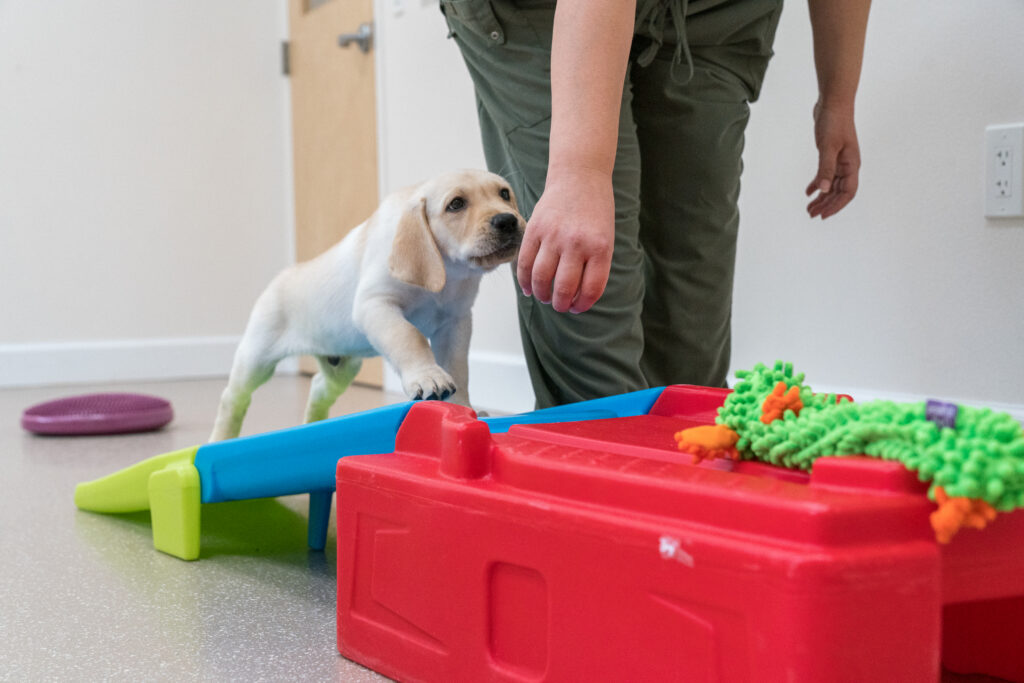
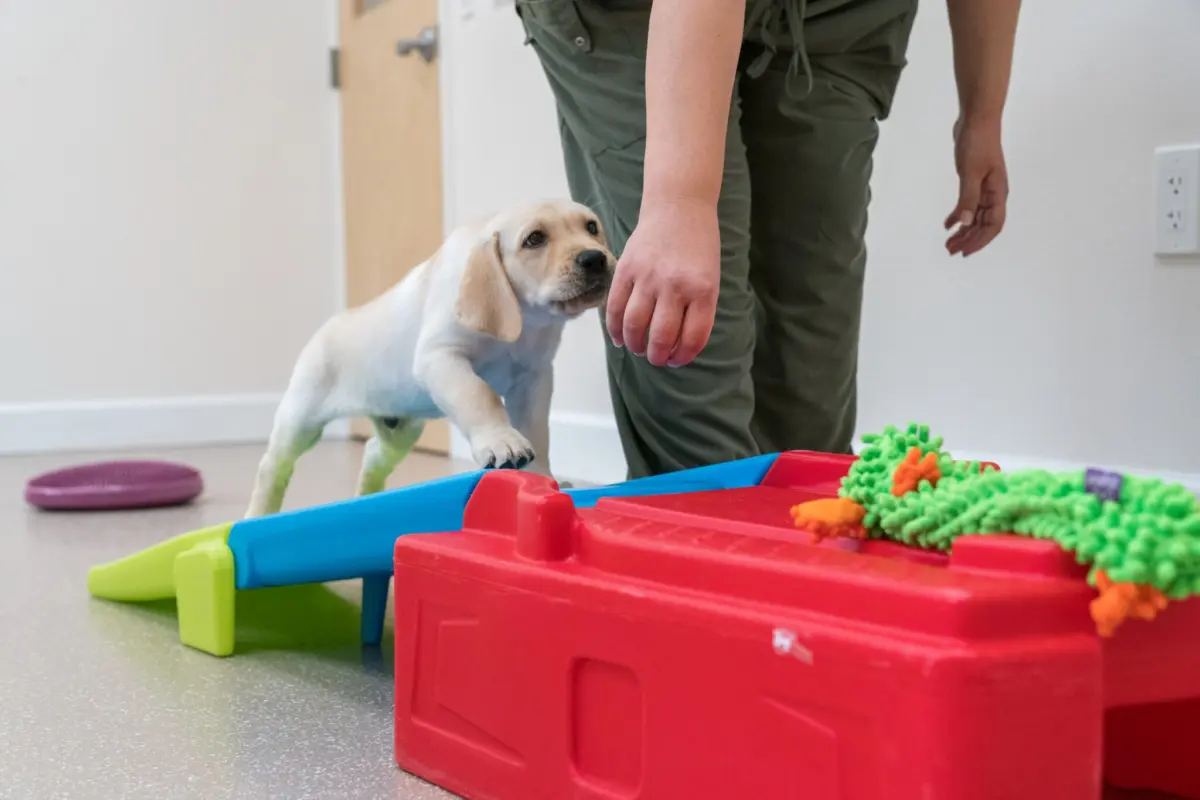
Guide and service dogs do not simply need advanced obedience; they require an exceptional psychological constitution. They must navigate unpredictable urban environments, remain unfazed by sudden loud noises, adjust instantly to chaotic public transit, and maintain absolute focus alongside handlers who depend on them for physical independence and safety.
These high-level capabilities cannot be forged overnight. They are the direct result of a continuous, cumulative trajectory that begins in the whelping box. By combining early neurological stimulation, carefully structured socialization windows, positive reinforcement training, and lifelong health management, organizations like Dogs Inc build a sturdy bridge from a puppy’s first breath to its eventual graduation as a life-changing partner.
As breeding science and behavioral research continue to evolve, the standard of care for neonatal and adolescent puppies will only sharpen. For the future recipients of these extraordinary animals, this rigorous attention to early development means receiving a companion equipped with the confidence, calm demeanor, and resilience needed to change a life from day one.