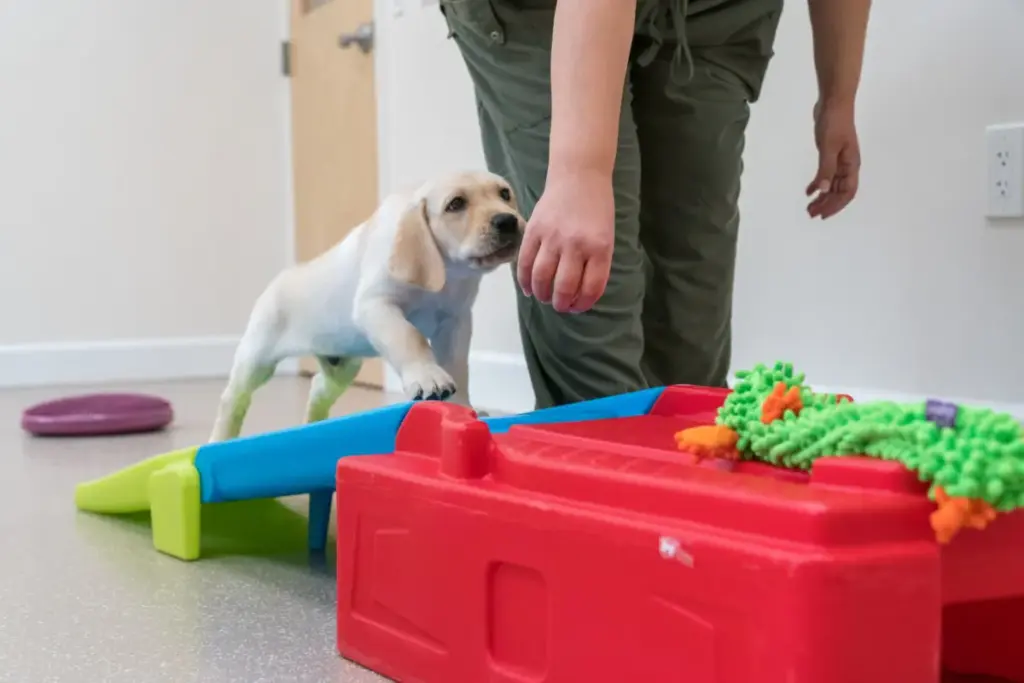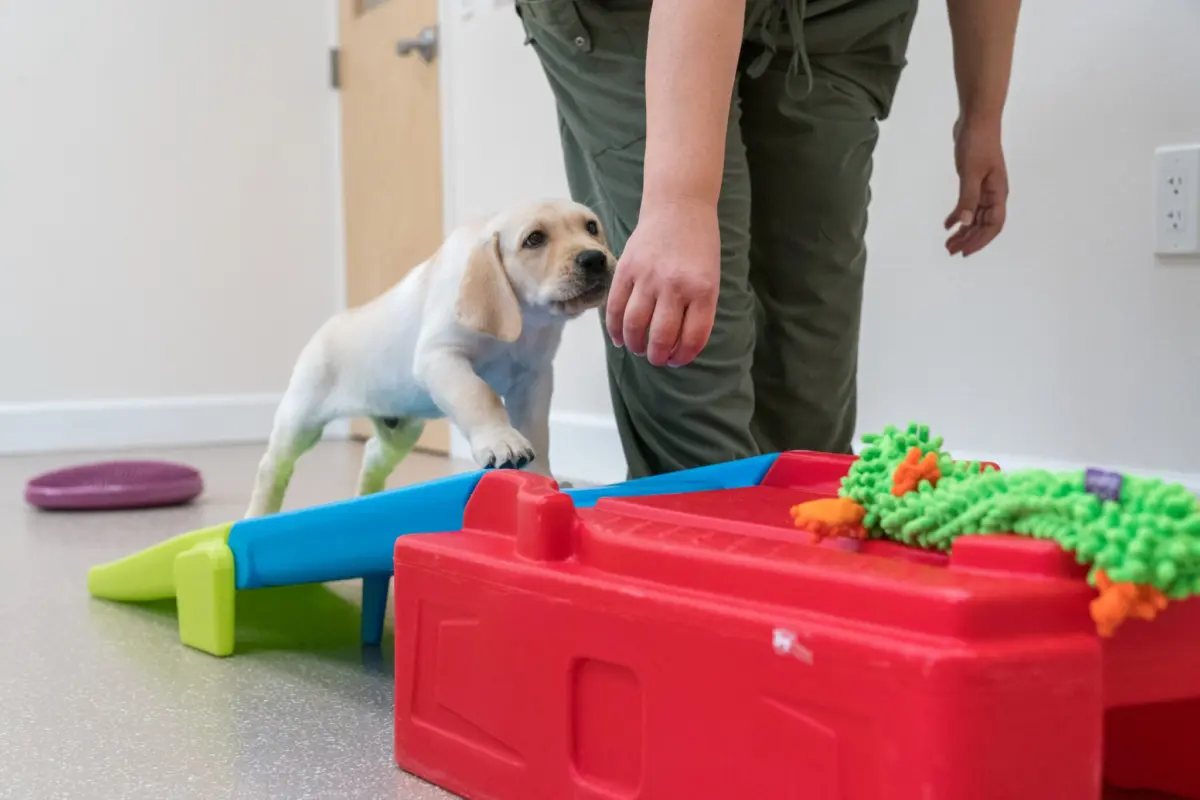

Long before a puppy takes its first clumsy step on a leash, learns to sit on command, or undergoes the rigorous training required to guide an individual through a complex world, an intricate sequence of neurological milestones is already unfolding behind the scenes. At organizations like Dogs Inc, the preparation of future guide dogs and service dogs begins not in the formal training yard, but in the quiet, delicate environment of the neonatal nursery.
In these opening weeks of life, a puppy’s brain and nervous system are developing at an explosive pace. Utilizing science-based protocols such as Early Neurological Stimulation (ENS), breeders and puppy development specialists lay the physiological groundwork that will eventually define how these dogs handle stress, adapt to unfamiliar environments, and partner with humans. This comprehensive look explores how early intervention, developmental milestones, and progressive socialization shape ordinary puppies into extraordinary life-changing companions.
Executive Overview
The journey of a guide or service dog is a marathon of physiological and psychological development, requiring absolute precision from day one. Modern canine science emphasizes that a puppy’s capacity to learn, cope, and excel is heavily influenced by the inputs it receives during its earliest life stages.
At Dogs Inc, a holistic philosophy governs every stage of a dog’s upbringing. While formal training and structured socialization occur later in life, the foundational architecture of the canine brain is shaped during the neonatal and transitional periods. Early Neurological Stimulation (ENS)—a protocol originally developed for military canine programs—forms a core component of this early strategy. By introducing brief, mild physiological challenges during a precise window of infancy, specialists aim to enhance cardiovascular performance, improve stress tolerance, and optimize adrenal gland function.
However, experts stress that ENS is merely the first chapter in a long, carefully orchestrated narrative. True service dog development requires a seamless continuum: moving from neonatal stimulation to transitional milestones, through the critical socialization window, and into adolescence and formal advanced training. By understanding how these developmental stages interconnect, canine rearing organizations can better equip dogs to meet the demanding, unpredictable environments of the modern world.

Detailed Chronology: From Neonatal Roots to Adolescent Maturity
To appreciate the gravity of early puppy development, one must examine the chronological stages that transform a helpless newborn into a confident, working adult dog. Canine maturation is a continuous arc divided into distinct behavioral and physiological epochs.
The Neonatal Stage (Birth to 2 Weeks)
During the neonatal stage, newborn puppies are entirely dependent on their mother and littermates. At this juncture, their eyes and ears are tightly sealed, and they are incapable of regulating their own body temperature. Most of their time is spent alternating between nursing and deep sleep.
Despite their apparent vulnerability, immense neurodevelopmental activity is occurring. This is the exclusive window for Early Neurological Stimulation (ENS). Because the neonatal nervous system is plastic and rapidly forming, the introduction of mild, non-damaging stressors helps stimulate neurological pathways. These brief exercises are strictly regulated, lasting only a few seconds per maneuver, and are designed to avoid overwhelming the puppy’s delicate system while eliciting favorable physiological responses.
The Transitional Stage (2 to 4 Weeks)
As puppies cross into the transitional stage, profound sensory awakenings take place. Their eyes and ears open, permanently altering their perception of the environment. Around four weeks of age, puppies begin to walk, wag their tails, and voice rudimentary barks.
Simultaneously, their primary teeth begin to erupt, signaling a nutritional shift from exclusive nursing to weaning toward soft foods and eventually solid diets. This period introduces the first glimmers of environmental awareness, setting the stage for direct interactions with littermates and handlers.

The Socialization Window (3 to 12 Weeks)
Often considered the most critical psychological phase in a dog’s life, the socialization period bridges early infancy and late puppyhood. By three weeks, puppies can begin learning basic cues in short, positive reinforcement-based training sessions.
As they progress toward the eight-week mark—a common milestone for transitioning to volunteer puppy raisers—they rapidly build positive associations with novel stimuli. By week twelve, puppies should have encountered a wide spectrum of people, sounds, surfaces, and environments. This structured exposure builds resilience, curbs anxiety, and prevents the onset of fear-based aggression in adult dogs.
Behavioral specialists note that puppies typically pass through an average of four distinct "fear periods" during their developmental journey. These temporary windows of heightened sensitivity require handlers to introduce new experiences thoughtfully, relying heavily on positive reinforcement to ensure the puppy processes novelty with curiosity rather than terror.
The Adolescent Stage and Maturity (6 Months to 12 Months)
The adolescent stage can emerge as early as six months of age. Much like human teenagers, adolescent dogs frequently test boundaries, challenge established routines, and navigate shifting hormonal landscapes.
Female dogs typically experience their first heat cycle during this window, while male dogs begin exhibiting hormone-driven behaviors. During this period, foundational crate training, continued obedience work, and structured exposure to diverse animal species help anchor independence and emotional stability. Most dogs reach reproductive maturity between six and twelve months, but their emotional maturation continues well beyond this timeframe.

Supporting Context & Metrics: Decoding Early Neurological Stimulation (ENS)
What precisely is Early Neurological Stimulation, and what does the science say about its efficacy? Originally popularized by Dr. Carmen Battaglia for the United States military’s canine programs, ENS involves a series of five distinct tactile exercises performed daily from the third day of life through the sixteenth day.
The Five Core Exercises of ENS
Each exercise is executed rapidly, lasting no more than three to five seconds per puppy:
- Tactile Stimulation: The handler holds the puppy and gently tickles the pad of one foot using a Q-tip or finger for three to five seconds.
- Head Erect: The puppy is held vertically, with its head pointing toward the sky, supporting its body against the handler’s chest.
- Head Down: The puppy is turned upside down, with its head pointing toward the ground.
- Supine Position: The puppy is placed flat on its back, resting comfortably in the palm of the handler’s hand.
- Thermal Stimulation: A refrigerated damp towel is placed in a small container, and the puppy is placed upon it (without restraint) for a brief, cool interval.
Measurable Physiological Benefits
According to canine development research, these targeted neonatal exercises stimulate the neurological system in ways that mimic natural environmental variations. Proponents and studies indicate that ENS can yield five primary performance benefits:
- Improved Cardiovascular Performance: Enhanced heart rate efficiency and vascular tone.
- Stronger Heart Beats: Increased cardiac muscle strength and output.
- Adrenal Gland Optimization: A more regulated endocrine response to environmental stressors.
- Greater Tolerance to Stress: An increased baseline threshold for coping with sudden, unfamiliar stimuli.
- Enhanced Immune System: Improved overall resilience against illness during critical developmental windows.
ENS vs. Socialization: Clarifying the Distinction
A common misconception among novice breeders and pet owners is that ENS and socialization are interchangeable terms. They are distinct practices occurring at vastly different physiological epochs.
ENS is strictly a neonatal practice, occurring before the eyes and ears open, focusing purely on autonomic and neurological conditioning. Socialization, by contrast, is a cognitive and experiential process that blooms from three weeks of age onward, relying on active sensory engagement, environmental exploration, and interspecies communication. ENS acts as a biological springboard; socialization provides the navigational map for the world outside the whelping box.

Official Statements & Institutional Perspectives
The meticulous approach to canine rearing practiced by organizations like Dogs Inc underscores a broader industry shift toward evidence-based breeding and early intervention.
Specialists emphasize that no single intervention dictates the ultimate destiny of a working dog. Genetics, maternal care, veterinary health, targeted socialization, and professional training form an interconnected web of influence. As developmental experts frequently note, early puppy programs are not designed to manufacture "perfect dogs" overnight. Rather, they are engineered to provide the biological and psychological scaffolding necessary for a dog to successfully navigate complex, high-responsibility tasks.
"Guide dogs and service dogs carry an extraordinary weight of responsibility," notes canine care literature from leading institutions. "They cannot simply be obedient; they must be emotionally bulletproof. They must be capable of maintaining absolute focus in chaotic train stations, bustling airports, and crowded city streets while keeping their handler safe. That level of composure is cultivated from day one, starting in the whelping box."
Organizations invest immense resources into every link of this developmental chain—from the specialized care given to brood stock and neonates, to the tireless dedication of volunteer puppy raisers, to the final certification trials overseen by professional trainers.
Future Outlook: The Lifelong Continuum of Learning
As canine science continues to evolve, the methodologies governing service dog breeding and rearing are increasingly refined. Modern genomic testing, behavioral tracking algorithms, and advanced physiological monitoring are allowing institutions to fine-tune programs like ENS and tailor socialization trajectories to individual puppy temperaments.
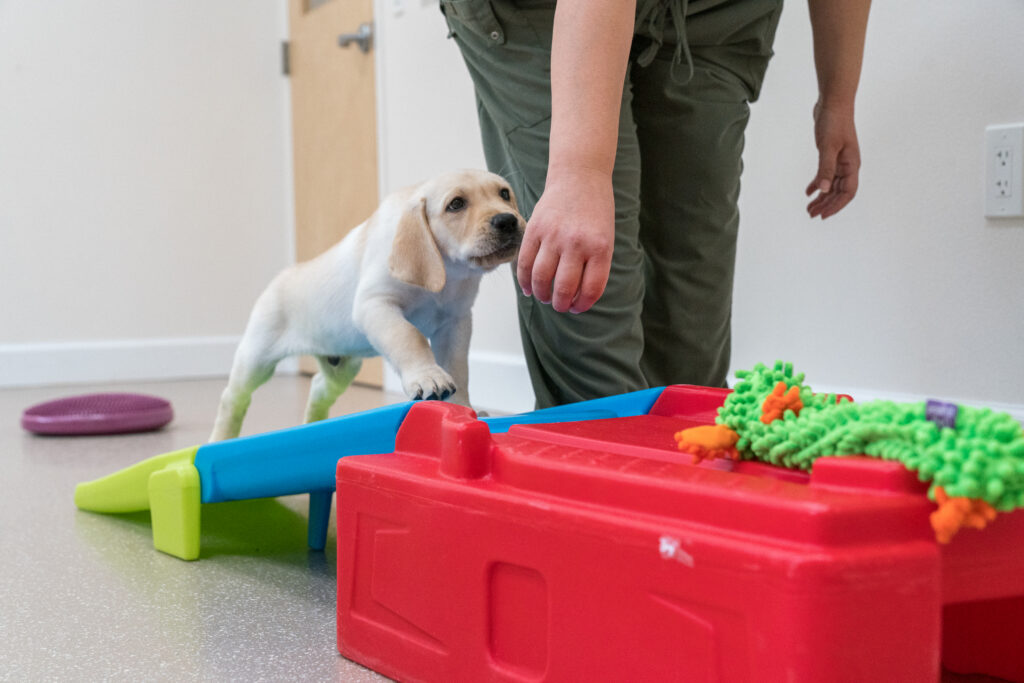
Yet, the core principle remains unchanged: development is a lifelong continuum. Whether a puppy is experiencing its first tactile stimulation on day four, learning its initial obedience cues at three months, navigating adolescent boundary-testing at six months, or entering advanced guide work in adulthood, every phase is vital.
For Dogs Inc and similar trailblazing organizations, the mission extends far beyond producing capable working animals. It is about honoring the profound bond between human and canine by ensuring that every dog starts life with every possible advantage. Through a steadfast commitment to science, empathy, and rigorous developmental protocols, these future heroes are systematically prepared to step out into the world and change lives, one paw at a time.