
Executive Overview
Across the vast and often under-resourced expanses of the rural American South, domestic animal abandonment presents a persistent humanitarian and ecological challenge. Navigating terrain that ranges from dense timberlands to decaying architectural ruins, grassroots animal welfare organizations frequently step in where municipal infrastructure falls short. At the forefront of this high-stakes field work is Audrey Luck, founder of Lux Rescue.
Over the past three years, Luck and her dedicated operational team have established a specialized niche within the animal welfare sector: executing complex, high-risk extractions of severely traumatized, stranded, or elusive canines. Guided by an uncompromising operational directive—no mama dog gets left behind—Lux Rescue combines technical field tactics, specialized behavioral understanding, and relentless perseverance.
From navigating dangerous subterranean cave systems to deploying remote-activated capture networks, Luck’s work illuminates both the extreme conditions facing abandoned animals in rural areas and the critical need for systemic policy reform.
Detailed Chronology of High-Risk Field Operations
To understand the physical and tactical demands placed on independent rescuers, one must examine the specific environments in which Lux Rescue operates. Unlike standard suburban animal control interventions, Luck’s missions frequently resemble technical search-and-rescue operations.
+-----------------------------------------------------------------------------------+
|                        LUX RESCUE TACTICAL OPERATIONAL SPECTRUM                   |
+-----------------------------------------------------------------------------------+
|  Subterranean / Cave Extractions   --> Miles of hiking, tight-squeeze navigation   |
|  Structural Excavations            --> Multi-day trenching beneath unstable sites |
|  Synchronized Remote Trapping      --> Missy Trapping with electromagnetic triggers|
|  Deep Wilderness Retrievals        --> High-risk navigation, off-grid survival    |
+-----------------------------------------------------------------------------------+
Subterranean Extraction: The Mountain Cave Rescue
In one of the organization’s most technically demanding interventions, Luck was alerted to a young puppy trapped within a mountain cave network. Gaining access required a multi-mile uphill trek across rough terrain, followed by navigating subterranean crevices with minimal clearance.
The primary danger was an imminent vertical fall: the puppy was hovering at the edge of a deep internal shaft that would have rendered recovery nearly impossible with standard equipment. Contorting through narrow rock passages, Luck managed to reach the terrified animal moments before it slipped further into the cavern system, successfully securing the puppy for transport back down the mountain.
Structural Excavation: The Two-Day Trailer Operation
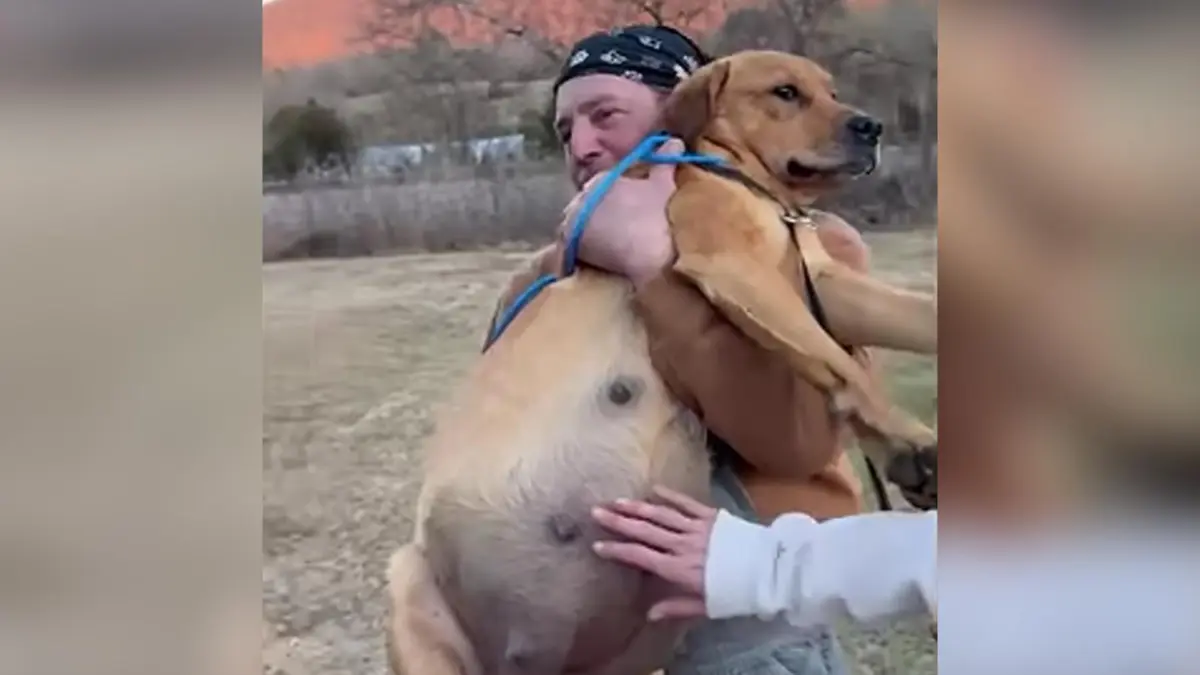
Abandoned rural properties often serve as makeshift shelters for stray animals, but deteriorating structures pose severe collapse hazards. When a feral mother dog sought refuge beneath an aging mobile home to whelp her litter, the sub-floor clearance was too tight for standard human entry.
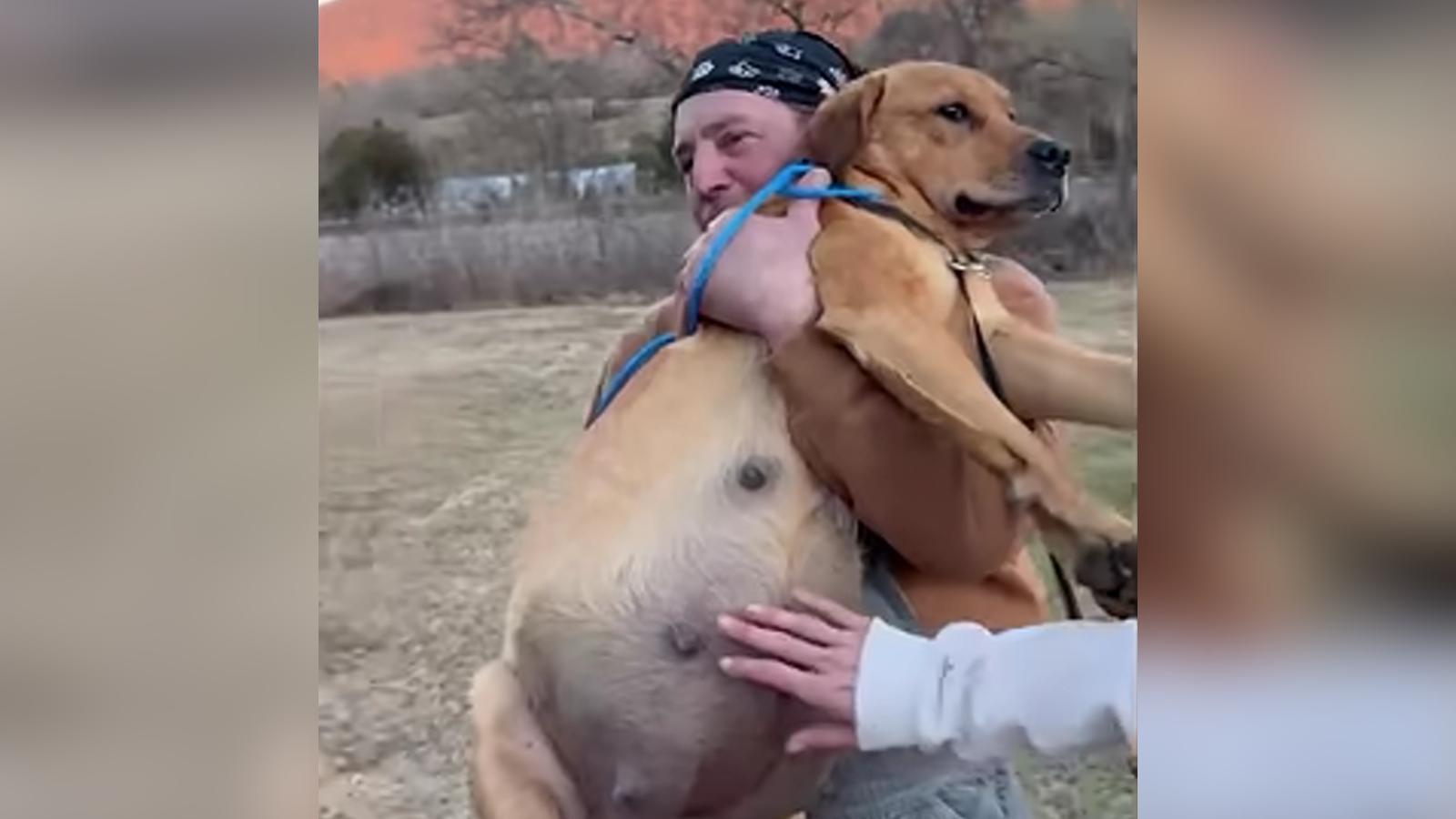
Refusing to leave the protective mother behind while extracting the litters—a practice that often dooms feral mothers to perpetual breeding cycles—Luck initiated a multi-day excavation project. Working over 48 hours, the team manually trenched around the unstable perimeter, creating a safe access corridor that preserved structural integrity while allowing rescuers to reach both the mother and her puppies simultaneously.
Synchronized Remote Capture: The Case of Darla and Daria
Not all complex rescues are defined by physical barriers; many hinge on canine psychology. In a notable case, Luck targeted Darla and Daria, a mother-daughter pair who had been abandoned in a rural area after their respective litters were removed. Both dogs had developed a deep suspicion of humans, rendering standard catch-pole or hand-feeding methods ineffective.
The logistical challenge was acute: capturing one dog would instantly spook the second, causing her to flee into surrounding woodlands and effectively ending any chance of a dual recovery.
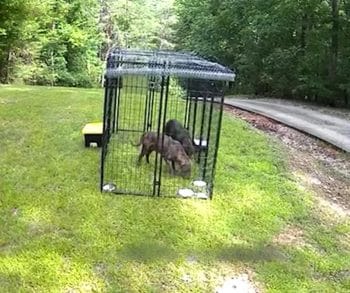
To overcome this, Luck deployed a specialized drop-gate system known as a "Missy trap." Featuring a wider, non-threatening entry enclosure, the trap was outfitted with an electromagnetic release mechanism linked to a remote battery pack and control switch.
By monitoring the site from a distance and waiting until both dogs stepped fully inside the enclosure, Luck triggered the mechanism, capturing both animals simultaneously without injury or separation.
                    [ Remote Trigger Button ]
                                |
                                v
               [ Wireless Battery & Magnet Release ]
                                |
                                v
     +-----------------------------------------------------+
     |                     MISSY TRAP                      |
     |  +-------------------+       +-------------------+  |
     |  |   Darla (Mother)  |       |  Daria (Daughter) |  |
     |  +-------------------+       +-------------------+  |
     |                                                     |
     |                 [ Drop-Gate Seals ]                 |
     +-----------------------------------------------------+
Off-Grid Survival Crisis: The Great Dane Search in Deep Timber
Perhaps the most perilous scenario occurred during the search for a missing, traumatized Great Dane named Scooby. The assignment required Luck to push miles into dense timberland as daylight waned.
As night fell, the operation took a dangerous turn: Luck’s cellular phone battery died, her personal water supply was depleted, and she found herself stranded deep off-grid in complete darkness with a 100+ pound, non-cooperative canine who refused to walk.
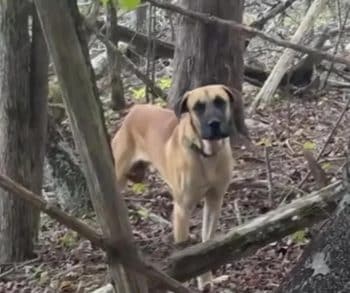
Navigating out of the forest under these conditions required pure physical endurance and field experience, highlighting the acute personal risks rescuers take when operating alone in remote wilderness environments.
Supporting Context & Operational Metrics
The challenges faced by Lux Rescue mirror broader structural issues throughout the rural American South. A combination of factors contributes to an ongoing overpopulation crisis:
- High Rates of Abandonment: Rural areas frequently serve as dumping grounds for unwanted litters or working dogs that have outlived their perceived utility.
- Infrastructure Deficits: Many rural counties lack municipal animal shelters, public spay/neuter mandates, or dedicated animal control officers.
- Limited Financial Resources: Local non-profit rescues often absorb the entire financial, legal, and medical burden of animal control without public funding.
Key Factors Driving Rural Animal Crisis
| Metric / Indicator | Rural Rescue Reality | Standard Suburban Baseline |
|---|---|---|
| Municipal Shelter Availability | Minimal to non-existent across multi-county regions | Easily accessible municipal facilities |
| Average Search Area Radius | 5 to 15 miles of dense terrain per call | Defined urban/suburban residential grids |
| Recovery Difficulty Score | High (Requires heavy machinery, traps, or ropes) | Moderate (Standard leashes, humane traps) |
| Medical Acuity Upon Intake | Extreme (Emaciation, untreated fractures, parasites) | Variable (Often vaccinated, microchipped) |
To maintain operational efficacy under these conditions, field teams must master multiple disciplines, combining wilderness survival tactics with advanced behavioral analysis and emergency veterinary first aid.
Official Statements and Behavioral Insights
Beyond the immediate mechanics of field extraction, Luck emphasizes that physical safety is merely the first phase of a dog’s recovery. The emotional trauma endured by abandoned animals often presents a longer, more arduous rehabilitation path.
Reflecting on her experiences in an interview with media outlet The Dodo, Luck underscored the profound psychological shift that occurs once traumatized animals realize they are safe:
"The most rewarding part of this work isn’t just getting the dog out of the cave or out from under the trailer—it’s watching them realize they don’t have to fight to survive anymore. Seeing a dog that arrived terrified and aggressive slowly relax, lean into your hand, and learn to trust humans again… that transformation never stops moving me."
Luck also highlighted the necessity of her strict rule regarding mother dogs:
"Leaving a mother dog behind simply isn’t an option. If you rescue the puppies and abandon the mother, you haven’t solved the problem—you’ve left a traumatized animal to suffer and repeat the cycle. ‘No mama left behind’ is the backbone of how we operate."
+-----------------------------------------------------------------------+
|                    THE REHABILITATION CONTINUUM                       |
|                                                                       |
|  [ Field Extraction ] --> [ Trauma Stabilization ] --> [ Trust &      |
|                                                          Rehab ]      |
|                                                            |          |
|  [ Long-Term Adoption ] <-- [ Medical & Behavioral ] <-----+          |
|                                Clearing                               |
+-----------------------------------------------------------------------+
Future Outlook & Systemic Impact
While individual rescues provide immediate relief to animals in peril, Audrey Luck and the Lux Rescue team recognize that field work alone cannot resolve the systemic issues gripping the region. The organization is increasingly turning its focus toward preventative measures and legislative advocacy.
1. Legislative Reform & Advocacy
Lux Rescue is actively working alongside regional animal welfare coalitions to strengthen local animal cruelty ordinances and push for stricter penalties regarding domestic animal abandonment. By providing field documentation and photographic evidence directly to local lawmakers, the organization aims to demonstrate the public safety and financial costs of unmonitored animal neglect.
2. Expanding Spay/Neuter Infrastructure
Recognizing that overpopulation is the root cause of high-risk rescues, Lux Rescue seeks to expand access to low-cost spay and neuter clinics across underserved rural counties. Stopping the reproductive cycle at the community level reduces the number of litters whelped in hazardous locations like caves and abandoned structures.
3. Community Support and Capacity Building
The sustainability of Lux Rescue’s work relies on public support, donor funding, and volunteer engagement. With an ever-increasing volume of emergency calls—often forcing Luck to manage active rescue alerts mid-interview—the organization is seeking to expand its volunteer network, acquire advanced rescue apparatus, and build dedicated rehabilitation facilities.
Through technical skill, tactical ingenuity, and unwavering dedication to vulnerable animals, Lux Rescue continues to set a benchmark for field rescue operations across the American South. Every successful intervention reinforces a core message: no terrain is too rugged, no rescue too complex, and no animal too forgotten to be brought to safety.