The pet care industry has experienced a significant paradigm shift over the past decade, driven by technological innovation and an increasing consumer preference for at-home maintenance solutions. Among the most impactful developments in this market is the integration of high-efficiency vacuum systems directly into canine grooming tools. Traditionally, pet owners were forced to choose between the high recurring costs of professional grooming salons or the messy, labor-intensive reality of manual brushing at home—a process that inevitably spreads pet dander, loose fur, and microscopic allergens throughout living environments.
Vacuum-assisted grooming kits address this challenge at its source. By utilizing localized negative air pressure, these multi-functional systems capture up to 99% of shed fur, epidermal debris, and external particulates before they can disperse into the atmosphere or settle on household surfaces. Beyond cosmetic benefits and environmental cleanliness, systematic at-home grooming plays a crucial role in canine preventive health. Regular physical inspection during grooming sessions allows pet owners to identify early indicators of dermatological pathology, matting, localized inflammation, and parasite infestations such as ticks and fleas.
This comprehensive report evaluates the engineering principles, health benefits, and current market offerings defining the modern ecosystem of dog vacuum grooming systems.
Detailed Chronology and Comparative Evaluation
The Evolution from Manual Tools to Suction-Assisted Systems
To understand the current market, it is necessary to examine how canine coat maintenance technology has evolved:
[1990s–2000s] Manual Grooming Tools
   │ (Slicker brushes, pin combs, manual clippers; hair dispersed into indoor air)
   ▼
[2010s] Motorized Standalone Grooming
   │ (Electric clippers & rotary nail grinders; fast, but heavy cleanup required)
   ▼
[2020–Present] Integrated Vacuum Systems
   │ (Direct suction attached to clippers/deshedders; captures up to 99% of fur instantly)
The introduction of specialized low-noise micro-vacuums paired with specialized grooming head attachments represents a major technological leap. By creating an airtight seal around the cutting blade or comb teeth, these tools remove clipped coats directly into sealed canisters, revolutionizing home pet care.
Analysis of Leading Market Models
An analysis of leading high-performance models highlights key variations in capacity, power, and tool versatility across the industry landscape:
+--------------------------+---------------+----------------+--------------------+
| Model                    | Dust Bin Cap. | Max Suction    | Key Highlight      |
+--------------------------+---------------+----------------+--------------------+
| Oneisall Dog Vacuum Kit  | 1.5 Liters    | Standard Low-N | Paw/Nail Focused   |
| LMVVC Grooming Kit       | 2.5 Liters    | High-Cap Flow  | Mid-Sized Canister |
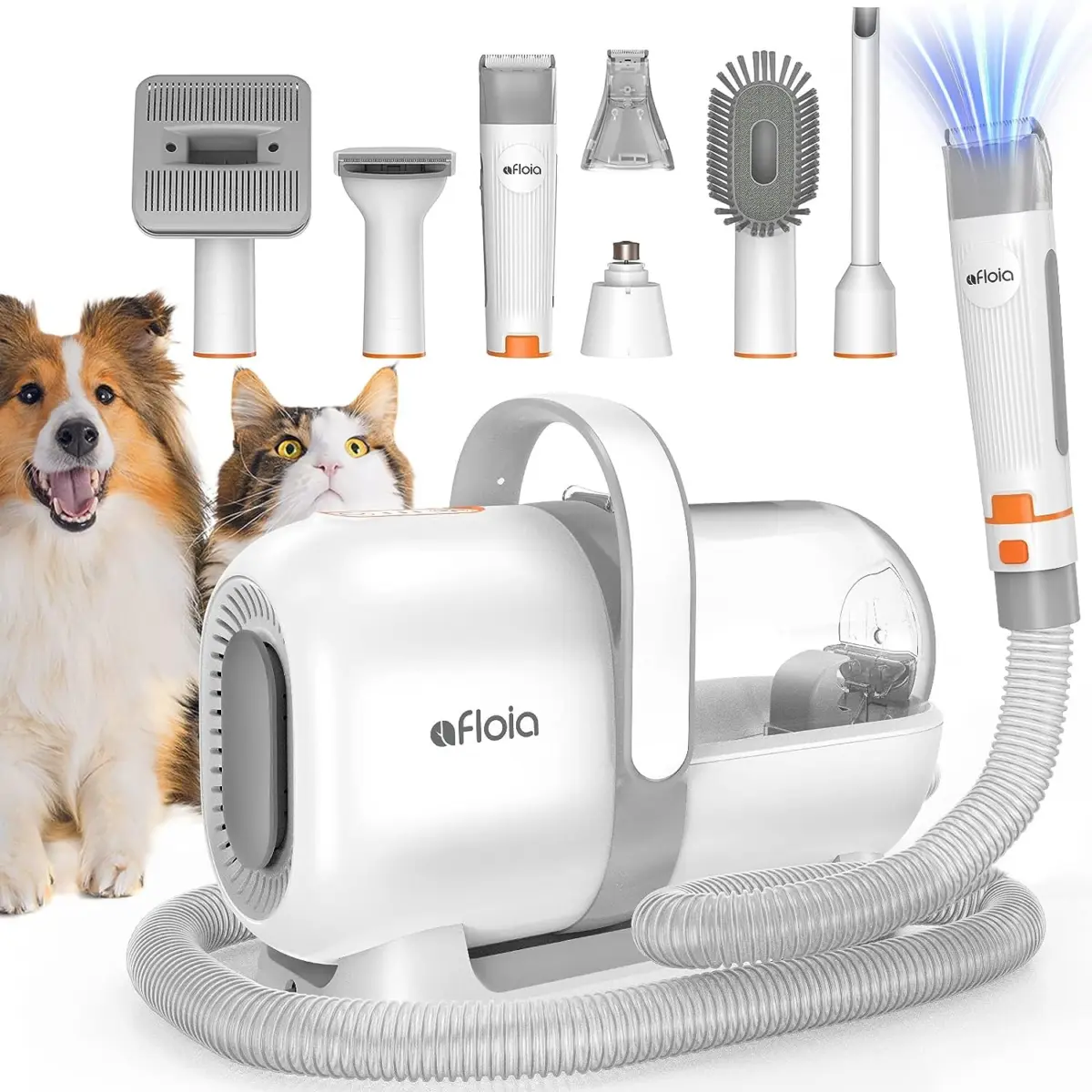
| Afloia Grooming Kit      | High-Cap      | Variable Flow  | Storage Tray Design|
| Neakasa by Neabot System | Standard      | 5-Tool Flow    | Multi-Pet Hybrid   |
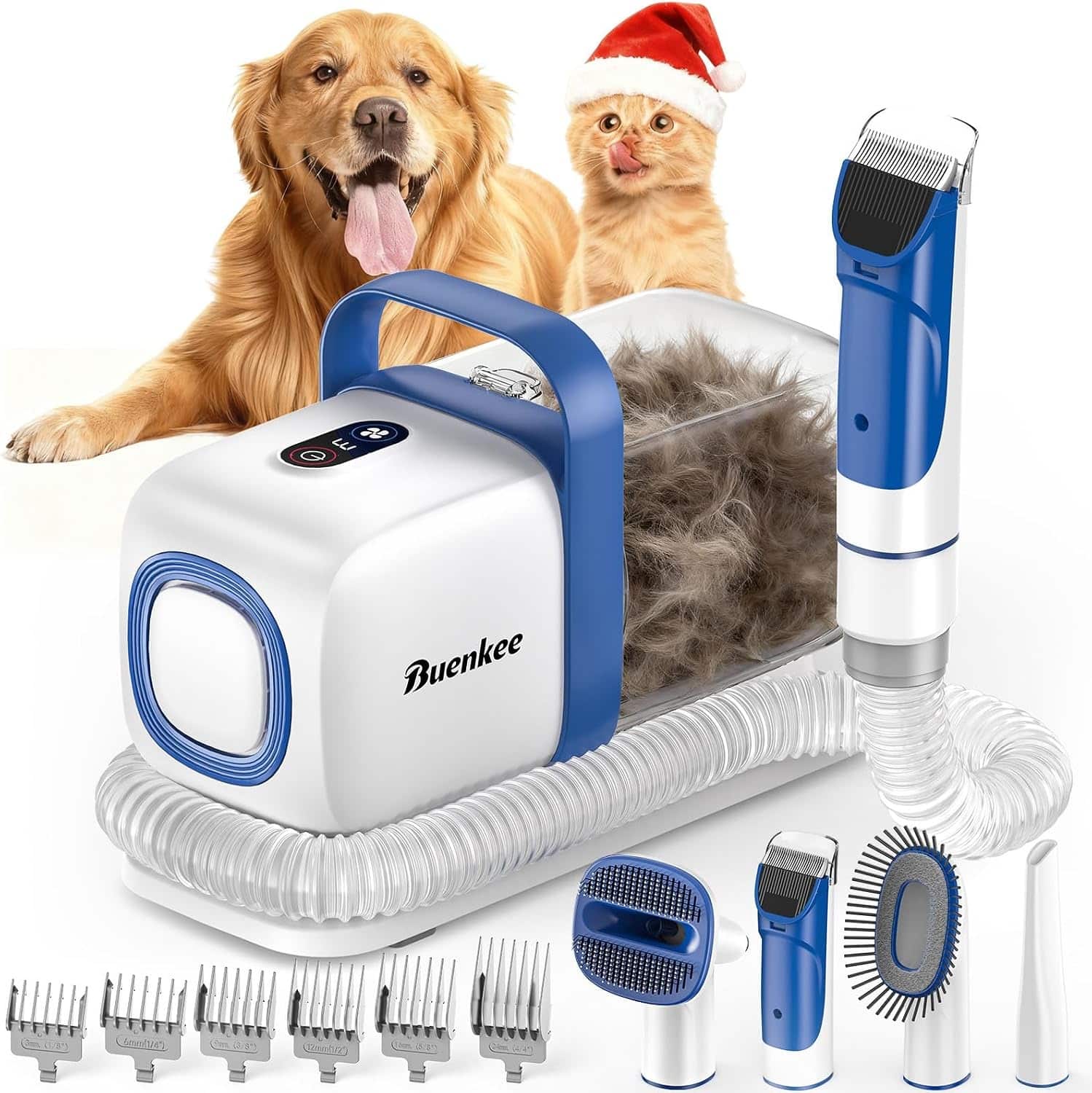
| Homeika / Buenkee Kit    | 1.5 Liters    | 15,000 Pa      | 8-in-1 Tool Array  |
| Bunfly Clipper & Vacuum  | 3.0 Liters    | Heavy Duty     | Max Bin Capacity   |
| RyRot Grooming Vacuum    | Standard      | Ultra-Quiet    | Noise Reduction    |
+--------------------------+---------------+----------------+--------------------+
1. Oneisall Dog Hair Vacuum & Grooming Kit
Engineered specifically for skittish or highly sound-sensitive canines, the Oneisall system combines a low-decibel acoustic dampening structure with a 1.5-liter dust collector. The kit features an array of accessories, including electric hair clippers, a precision paw trimmer, a rotary nail grinder, a dematting brush, and a deshedding tool. Its lower decibel threshold makes it an ideal option for introducing sound-sensitive dogs to mechanical grooming.
2. LMVVC Dog Grooming Kit
The LMVVC unit addresses a common operational bottleneck: canister capacity. Featuring an enlarged 2.5-liter bin, this system reduces interruption during heavy deshedding cycles. It includes precision-engineered clippers with multi-length guard combs, a suction brush, and an ergonomic disassembly interface that enables hygienic, mess-free waste disposal.
3. Afloia Dog Grooming Kit
The Afloia system emphasizes mobility and modular storage. It features a detachable wireless clipper module that allows for untethered movement around sensitive areas, alongside extended vacuum hosing and power cords. An integrated storage tray keeps accessory heads organized, preventing cord tangles and component degradation over time.
4. Neakasa by Neabot Pet Grooming System
Recognized as a benchmark in multi-species application, Neakasa’s 5-in-1 tool arrangement features high-grade grooming brushes, a specialized deshedder, electric clippers, and focused cleaning nozzles. The system uses balanced airflow to lift the undercoat before trimming, ensuring an even finish across varying hair densities.
5. Homeika / Buenkee Vacuum Grooming System
Positioned at the upper limit of suction performance, the Homeika/Buenkee system generates up to 15,000 Pascals (Pa) of negative pressure. This high vacuum force allows it to extract deeply embedded loose fur and dander from dense double-coated breeds (e.g., Huskies, Shepherds). The unit features an 8-tool array, an adjustable multi-speed suction dial, and a 1.5-liter collection chamber.
6. Bunfly Pet Clipper & Vacuum Kit
The Bunfly system features a 3.0-liter waste canister—one of the largest capacities available in the consumer market. Designed for multi-dog households or large giant-breed dogs, it eliminates the need for frequent emptying during grooming. Its 7-piece attachment suite also includes upholstery cleaning nozzles to remove residual hair from home furnishings.
7. RyRot Dog Grooming Vacuum
Focusing on acoustic engineering, the RyRot unit uses a multi-stage noise suppression motor housing. This minimizes high-frequency motor whine, converting operational sound into a low, non-threatening hum while maintaining the suction performance needed to collect 99% of shed fur.
Supporting Context & Technical Metrics
When evaluating a dog vacuum grooming kit, several engineering and biological factors must be balanced to ensure safety, efficiency, and comfort.
Acoustic Intensity (Decibels): Canine auditory perception extends up to 45,000 Hz—far exceeding the human limit of 20,000 Hz. High-pitched motor whine can trigger severe acoustic distress in dogs. Quality pet vacuums maintain sound emissions below 65 decibels (dB) at low settings, using acoustic baffling to dampen high-frequency vibrations.
Suction Pressure (Pascals): Effective hair extraction requires between 8,000 and 15,000 Pa of pressure. However, excessive static pressure at skin level can cause epidermal bruising or discomfort. Leading systems feature adjustable suction dials to balance comfort with hair pickup efficiency.
Collection Capacity: Dust canister size directly impacts workflow efficiency. While a 1.5-liter canister is sufficient for toy and small breeds, larger double-coated breeds require 2.5 to 3.0 liters of capacity to prevent clogging and workflow interruptions.
Thermal Management & Blade Friction: Motorized clippers generate friction heat. Integrated vacuum lines serve a secondary performance function by constantly drawing cool ambient air across the clipper blades, dissipating heat and preventing contact burns on the dog’s skin.
Expert Opinions and Safety Protocols
Veterinary dermatologists and professional groomers agree that at-home vacuum assisted grooming offers clear health benefits, provided proper safety protocols are observed.
Veterinary Practice Guideline: "Regular coat maintenance is a essential component of preventive canine health. Vacuum grooming tools minimize indoor allergen accumulation and allow owners to closely monitor skin condition. However, motor noise must be introduced gradually to prevent behavioral anxiety."
Key Safety and Operational Directives
Desensitization Protocol: Never expose an unconditioned dog to a running vacuum at max power immediately. Introduce the system powered off, allowing the animal to inspect the unit while reinforcing positive associations with treats. Next, operate the motor at its lowest power setting at a distance before bringing the attachment to the animal’s coat.
Epidermal Protection: Ensure all metal pin brushes feature rounded, rubberized tips or blunted ends. Excessively stiff bristles combined with strong suction can cause micro-abrasions on delicate skin.
Mat Management: Vacuum grooming tools are engineered to manage loose fur and dense undercoats; they are not built to pull through severe matting. Dense mats should be detangled manually using specialized detangling sprays and dematting combs before running high-suction tools over the skin.
Frequently Asked Questions
1. What distinguishes a pet grooming vacuum from a standard household vacuum cleaner?
Standard household vacuums operate at significantly higher acoustic levels (often exceeding 75–85 dB) and emit high-frequency motor noise that can shock canine hearing. Furthermore, standard vacuum attachments lack soft skin guards, variable safety airflow controls, and coat-specific grooming surfaces, presenting a risk of skin pinch injuries or suction burns.
2. Can suction-assisted grooming eliminate the need for professional salon visits entirely?
For many short-to-medium hair breeds, a complete at-home vacuum kit can meet all ongoing coat maintenance needs. However, long-haired breeds requiring specialized scissoring, breed-standard style shaping, or medicinal skin treatments may still benefit from periodic professional grooming complemented by routine at-home maintenance.
3. Is the suction force safe for small puppies or toy breeds?
Yes, provided the system features adjustable suction settings. For puppies and smaller breeds, the unit should be operated on its lowest suction setting. This provides enough air movement to draw loose hair into the canister without tugging on sensitive young skin.
4. How do these tools prevent hair clogs within the extension hose?
Pet vacuum systems utilize wide-bore, smooth-wall flexible hoses designed to prevent hair accumulation. To maintain clear airflow, avoid forcing large bundles of matted fur into the nozzle at once.
5. What is the recommended cleaning schedule for the filtration system?
To prevent suction loss and maintain motor health, the central dust canister should be emptied after every use. Any integrated HEPA or foam filters should be rinsed with cold water monthly and allowed to dry completely before reinstallation.
Future Outlook: The Evolution of Smart Pet Grooming
The pet care technology sector continues to advance rapidly, driven by developments in brushless motor technology, battery chemistry, and intelligent sensing.
Future iterations of vacuum grooming systems are expected to feature:
Smart Optical Sensors: Integrated optical sensors within the vacuum head that analyze coat density and automatically adjust suction force in real time.
Brushless Motors: Advanced motor designs that reduce operating sound levels below 50 dB while generating stronger, more energy-efficient suction force.
Advanced Lithium Power Systems: High-density cordless battery bases capable of delivering consistent suction for extended grooming sessions without requiring a wall outlet tether.
In conclusion, vacuum-assisted grooming kits represent a major advancement in domestic pet care. By combining high-efficiency hair capture, whisper-quiet operation, and ergonomic design, these tools help owners maintain clean home environments while supporting the long-term health and comfort of their pets.