For the average citizen, navigating a bustling international airport terminal, a packed downtown restaurant, or a sprawling, cacophonous shopping center can be a sensory-overloading experience. The environment is a chaotic orchestra of rolling luggage, squeaking shoes, overhead announcements, sudden bursts of laughter, the clatter of silverware, and a relentless sea of moving humanity. For most, it is merely a logistical hurdle of daily life.
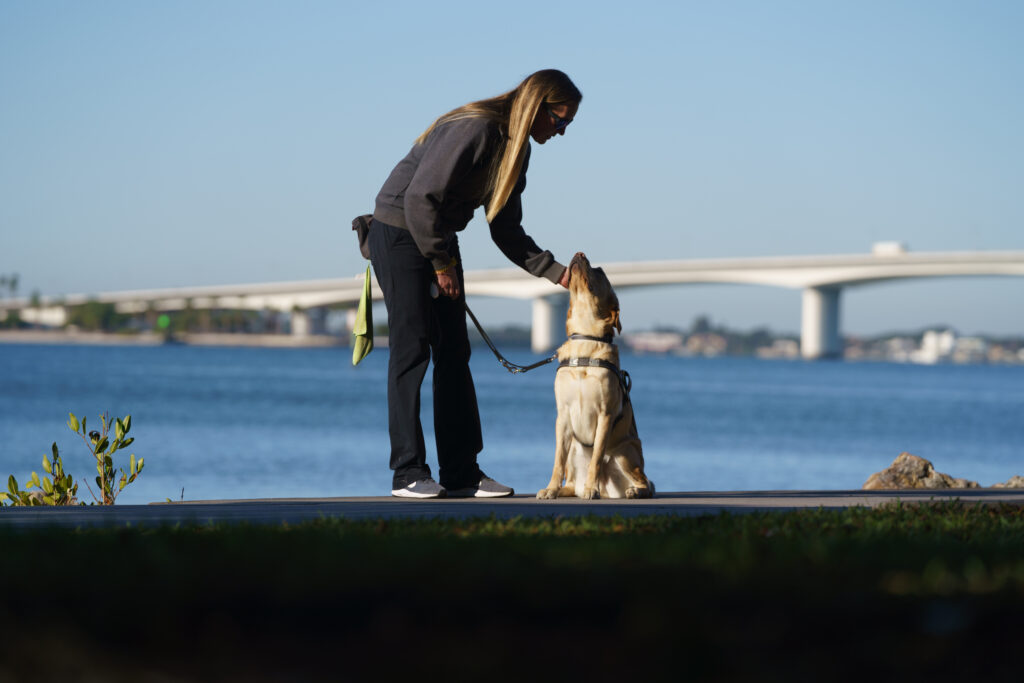
Yet, for individuals living with profound physical disabilities, neurological conditions, or post-traumatic stress disorder (PTSD), traversing these environments is the gateway to independence, employment, and community integration. The key to unlocking this freedom is not human fortitude alone, but the quiet, steadfast presence of a highly trained service dog.
The serene, unshakeable composure that the public routinely witnesses in a working service dog is neither an accident of birth nor a stroke of good luck. Rather, it is the culmination of years of meticulous breeding, early developmental socialization, advanced task-specific education, and rigorous public access training. This specialized phase of a canine’s education transforms a willing learner into an unflappable professional capable of maintaining laser-like focus amid intense sensory distractions.
Under the legal framework of the Americans with Disabilities Act (ADA), service animals must be individually trained to do work or perform tasks directly related to a handler’s disability. Crucially, the law establishes a clear distinction between task training—teaching a dog to retrieve dropped items, stabilize a gait, or provide deep pressure therapy—and public access training, which governs how the animal behaves in spaces open to the general public. While emotional support animals offer psychological comfort simply through their presence, service dogs are working professionals. They must legally and practically earn their right of access through immaculate public manners, absolute impulse control, and an unwavering commitment to safety.
Detailed Chronology of a Service Dog’s Journey to Public Access
The journey from a curious, waddling puppy to a dignified, life-changing working partner is a multi-year chronological progression. Every phase is meticulously engineered to build resilience, cognitive flexibility, and unshakable confidence.
Phase 1: Foundation and Early Puppy Raising (Months 0–12)
Long before a candidate dog ever steps foot inside a security checkpoint or a crowded dining room, the foundation for public access is laid in living rooms, grocery store parking lots, and neighborhood parks. Volunteer puppy raisers play the role of primary architects during this formative window.
During these early months, puppies are systematically introduced to a vast taxonomy of sensory inputs. They experience novel textures under their paws (grates, gravel, tile, plush carpets), unfamiliar sounds (sirens, vacuum cleaners, lawnmowers), and diverse social interactions with people of all ages, ethnicities, and physical appearances. Raisers take future service dogs into pet-friendly stores, hardware shops, and quiet office buildings. These outings are not obedience drills; they are positive exploratory sessions designed to foster curiosity rather than fear, using high-value rewards to wire the puppy’s developing brain for adaptability.
Phase 2: Adolescent Transition and Intermediate Obedience (Months 12–18)
As adolescent hormones kick in, dogs—much like human teenagers—can experience periods of distraction, testing boundaries, and transient regression. During this critical window, professional trainers take over primary instruction, though puppy raisers often remain involved as co-pilots.
Training transitions from casual exposure to structured obedience in moderately distracting environments. Dogs master foundational cues such as "heel," "sit-stay," "down-stay," and "recall" amidst the gentle hum of suburban shopping plazas and park paths. Trainers begin introducing mild distractions, such as rolling a cart past a resting dog or dropping a metallic object nearby, rewarding the animal for maintaining its composure and looking to its handler for guidance.
Phase 3: Advanced Public Access and Real-World Immersion (Months 18–24)
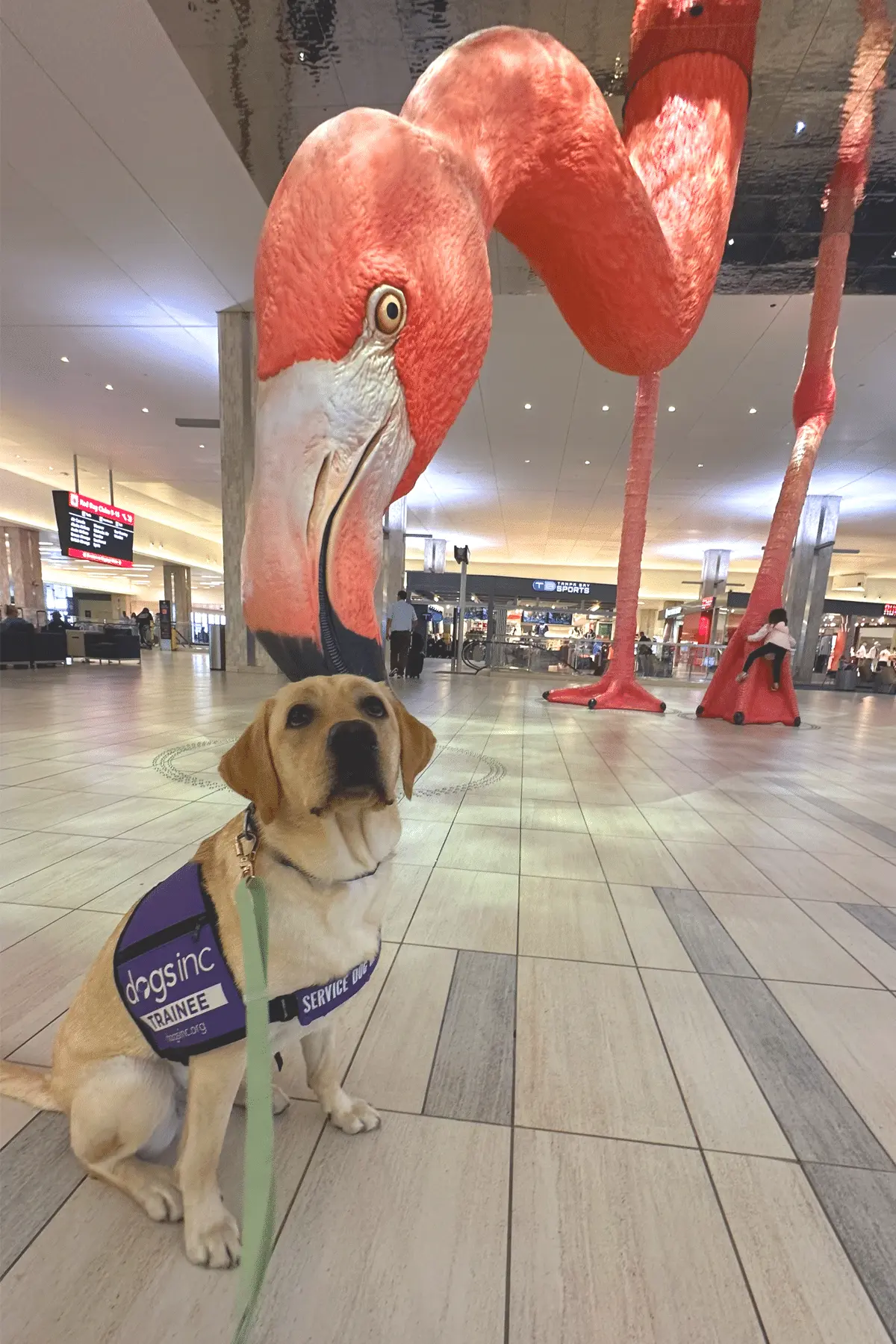
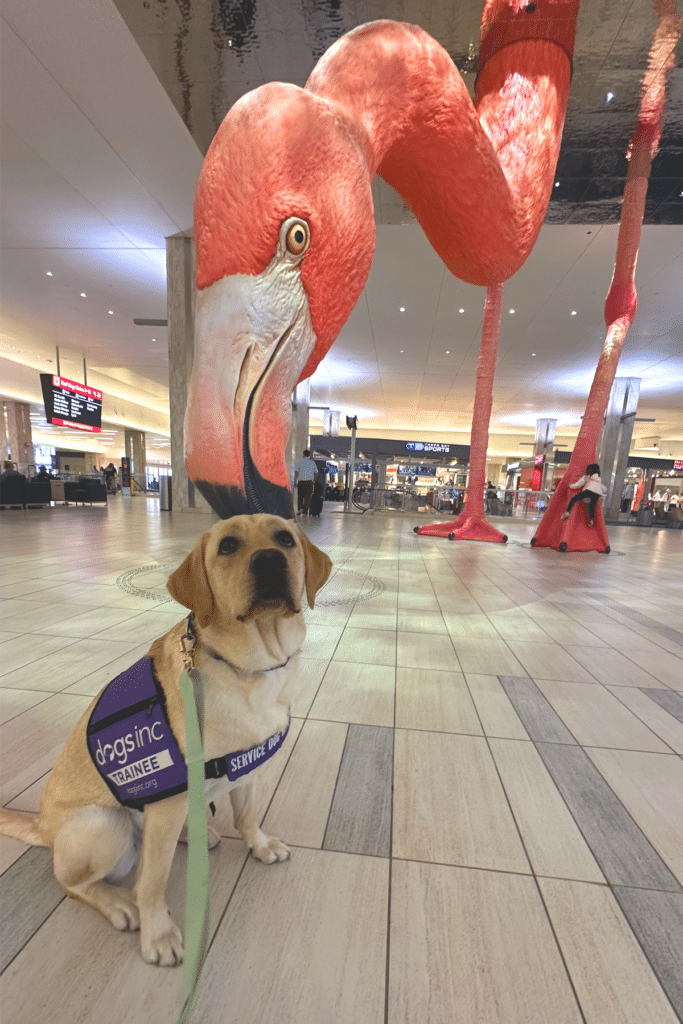
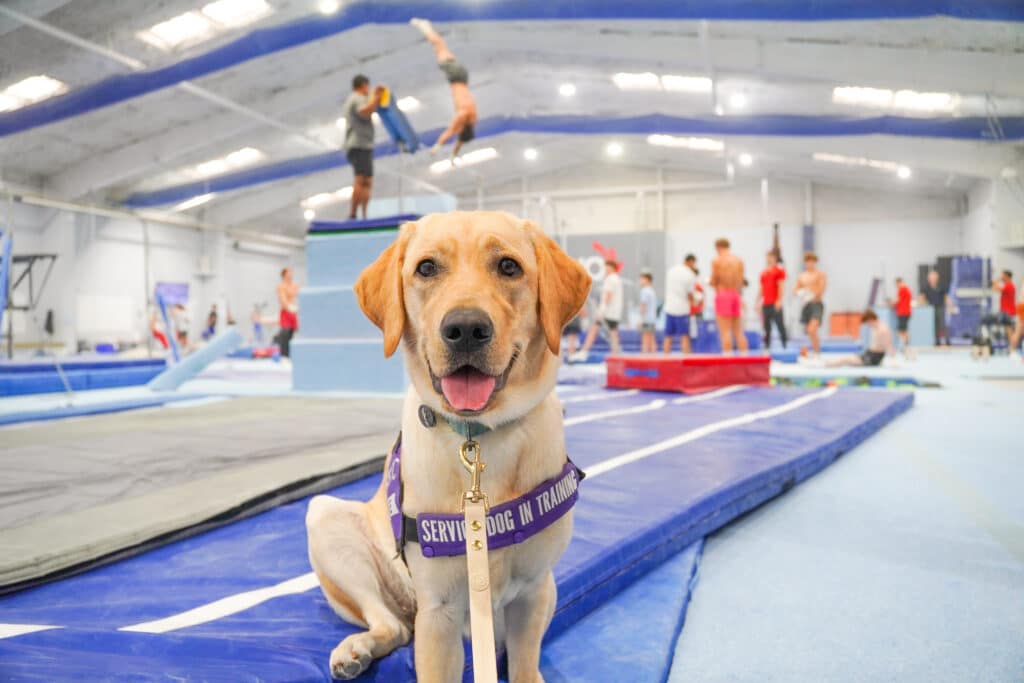
This is the crucible of the service dog’s education. Having mastered basic impulse control, candidates enter intensive public access simulations. Training moves out of controlled classrooms and spills directly into high-stakes environments: commercial airline terminals, bustling train stations, packed university cafeterias, and multi-level shopping malls.
Trainers subject candidates to graduated challenges. A dog might first visit a quiet airport terminal during off-peak hours, learning to ignore the reverberation of flight announcements and the strange mechanics of moving walkways. Weeks later, that same dog will navigate a fully operational security screening queue during rush hour, tucking neatly beneath seating arrangements or walking calmly beside a wheelchair amidst a surge of rushed travelers.
Phase 4: Final Evaluation and Placement (Months 24+)
Before a dog is certified and officially matched with a human partner, it must pass a comprehensive battery of public access evaluations. Evaluators assess the dog’s stress levels, physiological recovery times, responsiveness to handler commands, and general public deportment. Once these benchmarks are verified, the dog enters team training—a intensive period where the human handler and canine partner learn to operate as a singular, cohesive unit before graduating into the real world together.
Supporting Context & Metrics: The Anatomy of Distraction Training
Understanding the complexity of public access training requires examining the specific environments that test a dog’s neurological resilience. Trainers break down distractions into three primary operational categories: auditory, olfactory, and visual-spatial.
The Airport Environment: Mastering the Symphony of Transit
Airports represent the pinnacle of public access challenge. Canines must contend with spatial compression in security lines, the sudden roar of jet engines, the clatter of heavy rolling luggage striking tile floors, and the unpredictable movements of frantic travelers.
The Training Strategy: Dogs are taught to ignore the "reach" of rolling bags—which often clip uninitiated animals—and to remain completely neutral when TSA agents or security personnel conduct inspections. They learn that the airport is simply an office space where their job is to remain tethered in purpose to their handler.
The Restaurant Environment: Conquering Temptation and Spatial Limits
Restaurants offer a sensory overload unlike any other venue. The air is rich with the irresistible aromas of sizzling proteins, melted cheese, and dropped carbohydrates. Furthermore, restaurant layouts often feature cramped seating, narrow aisles, and intrusive foot traffic from waitstaff.
The Training Strategy: Service dogs undergo rigorous "table-side settling" drills. They are taught to curl compactly beneath tables or chairs, often in spaces smaller than their actual body length, and remain motionless for 60 to 90 minutes. They must actively ignore food dropped inches from their nose, demonstrating a level of impulse control that defies mammalian instinct.
Crowded Public Spaces: Navigating the Human Tide
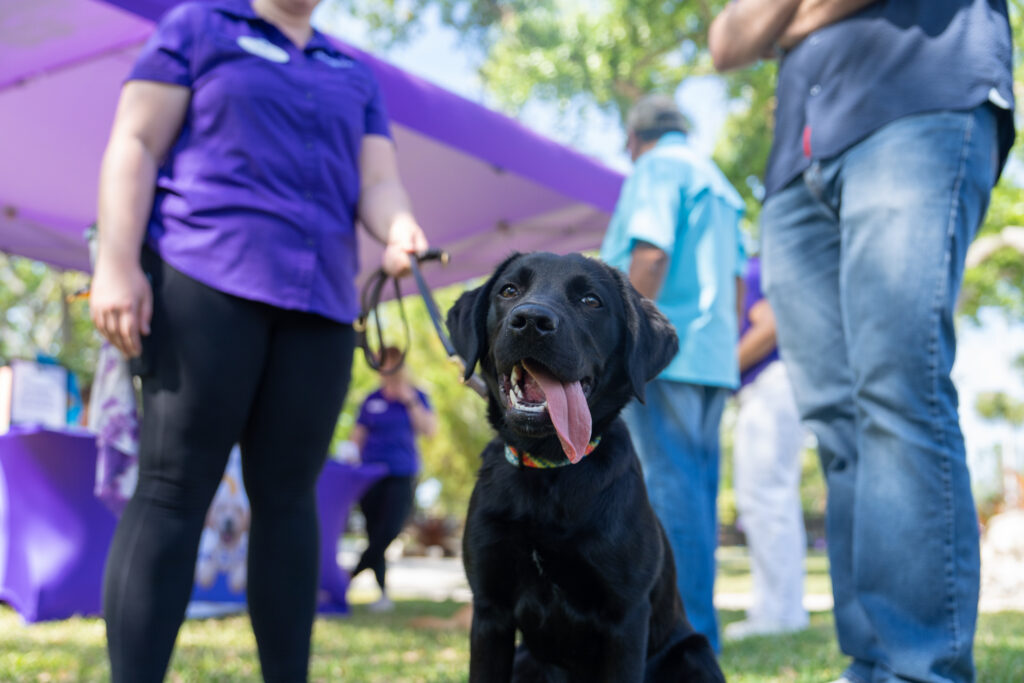
Festivals, sporting events, and outdoor markets expose dogs to unpredictable crowds where human behavior is erratic. Children running unpredictably, dropped ice cream cones, skateboards, and competing domestic pets create a minefield of potential distractions.
The Training Strategy: Trainers use systematic desensitization. If a dog shows hesitation toward a novel stimulus (such as a person pushing a stroller or wearing a bulky Halloween costume), the trainer stops at a safe distance, rewards calm observation, and gradually closes the distance. The animal learns that novelty is unthreatening.
Official Industry Perspectives
The development of a premier service dog relies on professional methodologies backed by decades of behavioral science. Industry leaders emphasize that the philosophy of public access training is rooted in cooperation rather than coercion.
"True public access mastery is not about breaking a dog’s spirit or forcing compliance through fear," explains a senior lead instructor at a nationally accredited training facility. "It is about building a profound cognitive resilience. We are shaping a dog that wants to focus on its handler because it has learned through thousands of positive repetitions that the handler is the safest, most rewarding anchor in any room, no matter how loud or chaotic that room might be."
Animal behaviorists point out that breeds typically selected for service work—predominantly Labrador Retrievers, Golden Retrievers, and occasionally German Shepherds or Standard Poodles—possess an inherent "biddability" (a genetic predisposition to work cooperatively with humans). However, genetics are merely the raw clay; public access training is the sculpting hand.
"When the public looks at a service dog quietly resting under an airline seat or guiding a handler through a congested railway station, they are witnessing an invisible partnership," notes a veteran canine mobility specialist. "The dog isn’t just behaving; it is working. Every calm breath, every ignored distraction, and every steady step represents an investment in human dignity and freedom."
Future Outlook: The Evolution of Public Access Standards
As society becomes increasingly aware of accessibility rights, the landscape of service dog training and public access continues to evolve. However, this growth brings unique challenges. The proliferation of poorly trained animals under the guise of "service dogs" or emotional support animals has heightened public scrutiny and created friction for legitimate handlers.
Looking ahead, organizations dedicated to ethical service dog breeding and training are advocating for standardized national testing credentials and clearer public education campaigns regarding ADA laws. The goal is to protect public accommodations while ensuring that genuine service teams are not unfairly harassed or denied access due to public confusion.
Concurrently, training methodologies are incorporating advanced behavioral monitoring technologies—such as heart-rate variability trackers during high-stress simulations—to better understand canine stress loads. This ensures that working dogs maintain optimal mental health and longevity throughout their careers.
Ultimately, the future of public access training remains anchored in its foundational mission: empowering individuals with disabilities to move through the world with absolute confidence. Through rigorous preparation, compassionate instruction, and unwavering community support, the next generation of service dogs will continue to bridge the gap between human limitation and boundless possibility—one perfectly executed heel at a time.