
Executive Overview
In an international meat trade historically dominated by sheer volume, cost efficiency, and large-scale industrial output, a quiet revolution is taking shape across the grasslands of Ireland. Unable to match the titanic production capacities of global beef and lamb superpowers like Brazil, the United States, or Australia, Ireland’s food export sector has chosen a different path. Instead of fighting a war of attrition on tonnage, the nation is pinning its international trade future on an uncompromising value proposition: verified sustainability, rigorous traceability, and premium quality from farm to fork.
This strategic pivot is anchored by a high-profile, three-year promotional campaign recently launched across key Asian economies, specifically targeting Singapore, Japan, and China. Orchestrated by Bord Bia—the Irish Food Board—the initiative seeks to elevate awareness and demand for European beef and lamb produced under the stringent environmental and ethical standards of Irish agriculture.
However, entering the dynamic Asian market is not without its hurdles. Recent trade data reveals a turbulent trajectory for Irish meat exports to the region. Beef exports, which stood at €87.1 million in 2021, experienced a contraction down to €60.4 million by 2023, before staging a modest recovery to €62.9 million in 2024 and reaching €30.1 million in 2025. Lamb exports have faced even greater volatility, dropping sharply after peaking at €6.6 million in 2023. These fluctuations underscore the complex realities of global supply chains, domestic production constraints—such as lower local sheep throughput—and the prioritization of closer European markets during periods of tight supply.
Despite these headwinds, Bord Bia remains resolute. By leaning heavily into its unique selling propositions—such as its world-renowned grass-fed production systems, the pioneering Origin Green sustainability framework, and advanced digital emissions-tracking tools like AgNav—Ireland is successfully carving out a lucrative niche. Rather than aiming to be the cheapest option on supermarket shelves, Irish agriculture is positioning itself as an indispensable partner for Asia’s discerning high-end food service sectors, luxury retail markets, and conscious consumers who demand verifiable proof behind every sustainability claim.
Detailed Chronology: Navigating Market Realities and Strategic Pivots
To understand the current positioning of Irish meat in Asia, one must trace the evolution of trade flows, regulatory milestones, and strategic market adaptations over the past decade.
The Japanese Blueprint: A Decade of Niche Cultivation
The blueprint for Ireland’s modern Asian strategy was forged in Japan approximately ten years ago. When Irish beef first gained market access to the island nation, exporters quickly realized that attempting to out-volume established competitors was a fool’s errand. Instead, Bord Bia and Irish processors adopted a precision-targeting approach, focusing on specific culinary niches that large-scale global competitors often overlooked.
A prime example of this strategy is the beef tongue market. While western markets often discard or underutilize certain cuts, beef tongue is a prized, high-value delicacy in Japanese cuisine. By identifying this demand and tailoring export offerings, Ireland successfully secured a formidable foothold. Today, an astounding 80% of Ireland’s total beef tongue exports are channeled directly into Japan. This early success proved that Irish meat could thrive in Asia if positioned correctly around specialized segments rather than baseline commodity volumes.
The Pandemic and Post-Pandemic Trade Flux (2021–2025)
Following years of steady market penetration, the broader Asian export portfolio experienced significant turbulence during the global economic shifts of the early 2020s. According to official export statistics, Irish beef exports to Asia stood at a robust €87.1 million in 2021. However, global inflationary pressures, logistical bottlenecks, and fluctuating consumer spending power saw this figure recede to €60.4 million by 2023.
A stabilization effort took root in 2024, with exports ticking upward to €62.9 million, followed by €30.1 million recorded mid-cycle in 2025.
Irish lamb exports experienced an even more dramatic pendulum swing. After registering a modest €2.1 million in 2022, lamb exports surged to €6.6 million in 2023. This momentum was abruptly checked in 2024, when exports fell sharply to €652,777, followed by €394,213 in 2025.
Industry analysts point out that this contraction was not driven by a collapse in Asian consumer demand. Rather, it was the direct result of a structural decline in domestic sheep throughput across Irish farms over the previous two years. Faced with tightening livestock supplies, Irish producers and processors prioritized closer-to-home European markets to minimize transport costs and maintain continuity for established local buyers.
The Launch of the Three-Year APAC Campaign
Recognizing the long-term growth potential of the Asia-Pacific (APAC) region, Bord Bia initiated its comprehensive three-year promotional campaign across Singapore, Japan, and China. This multi-phased campaign is specifically engineered to insulate Irish exporters against short-term volume shocks by building deep, brand-level recognition. By moving beyond transactional trading and engaging directly with importers, chefs, culinary influencers, and media outlets, the campaign aims to re-accelerate demand for European beef and lamb, cementing Ireland’s reputation as a reliable, premium-tier supplier for the future.
Supporting Context & Metrics: The Science of Sustainable Farming
In modern international trade, greenwashing has made consumers and corporate buyers inherently skeptical of marketing buzzwords. Claims of "eco-friendly," "sustainable," or "ethical" are routinely dismissed unless backed by rigorous, independently audited data. Ireland has addressed this skepticism head-on by constructing what is arguably the world’s most comprehensive national food sustainability ecosystem.
Origin Green: The Architecture of Accountability
At the epicenter of this ecosystem is Origin Green, a groundbreaking national sustainability program launched by Bord Bia. Uniquely positioning Ireland on the global stage, Origin Green unites more than 61,000 farms and over 300 food and drink companies under a single, unified charter. Together, these entities account for approximately 90% of Ireland’s total food and drink exports.
Unlike voluntary corporate social responsibility pledges, Origin Green enforces strict accountability. Every participating farm and processing facility is subjected to rigorous, independent audits every 18 months. These audits measure concrete, performance-based targets across critical environmental and operational metrics, including:
- Carbon emission reductions
- Water and energy conservation
- Biodiversity preservation
- Animal welfare enhancements
- Total supply chain traceability
Quantifiable Environmental Impacts
The results of this data-driven framework speak for themselves. According to data compiled across Origin Green’s specialized verification streams, members of the Sustainable Beef and Lamb Assurance Scheme (SBLAS) have achieved an average 8% reduction in carbon dioxide ($CO_2$) emissions per unit of beef produced. Similarly, participants in the Sustainable Dairy Assurance Scheme (SDAS) have recorded an average 9% reduction in $CO_2$ emissions per unit of milk.
Furthermore, the implementation of these compliance schemes has enabled the calculation and monitoring of more than 367,000 individual farm carbon footprints. This vast repository of empirical data allows Irish exporters to walk into a boardroom in Shanghai, Tokyo, or Singapore and present verifiable proof of their environmental credentials.
AgNav: Digital Innovation at the Grassroots
To ensure that sustainability targets do not remain theoretical concepts on paper, Ireland has invested heavily in digital infrastructure at the farm level. A cornerstone of this technological push is AgNav, a cutting-edge, free digital platform designed to help farmers optimize their operations and reduce environmental impacts.
Developed collaboratively by Teagasc (the Agriculture and Food Development Authority), Bord Bia, and the Irish Cattle Breeding Federation (ICBF), with vital support from the Department of Agriculture, Food and the Marine, AgNav provides farmers with personalized, data-driven sustainability planning tools.
The platform delivers granular, farm-level emissions data, predictive forecasting models, and actionable planning capabilities. Farmers simply input operational data—such as livestock management practices, fertilizer use, and feed types—and the platform generates bespoke recommendations to improve resource efficiency and lower carbon outputs.
Recognizing the value of this tool, 13 major dairy and beef processors in Ireland have integrated AgNav into their corporate supply chain frameworks. Many of these processors actively incentivize farmers to adopt the platform by offering financial assistance, bonuses, or specialized programme-based support. To date, more than 10,000 farmers have registered to use AgNav, demonstrating a widespread cultural embrace of digital-age farming across the Irish countryside.
The Grass-Fed Advantage
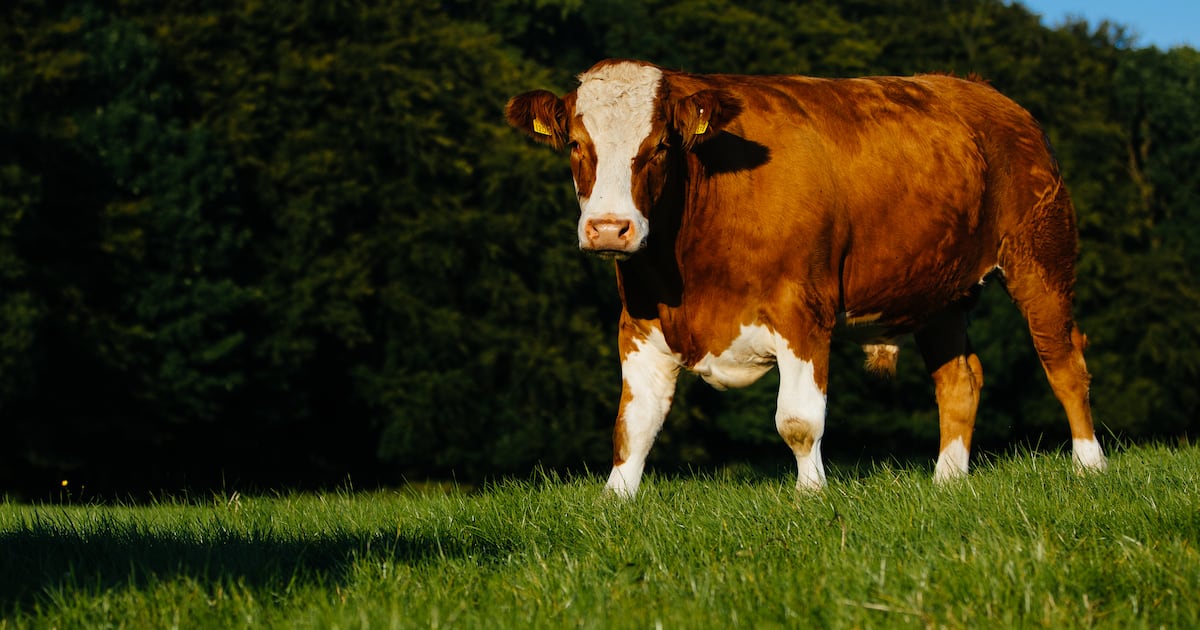
Beyond digital tracking and carbon accounting, Ireland possesses an inherent geographical and climatic advantage: its natural grass-fed production system.
Unlike intensive feedlot operations common in other parts of the world, Irish cattle and sheep spend approximately 240 days of every year grazing outdoors on lush, temperate pastures nurtured by the Atlantic Gulf Stream. This pasture-based model offers profound natural benefits. From an environmental perspective, permanent grasslands act as vital carbon sinks. From an animal welfare perspective, allowing livestock to roam and graze naturally drastically reduces stress and promotes healthier physiological development.
This lifestyle translates directly onto the plate. Grass-fed meat is naturally leaner, boasts a superior omega-3 fatty acid profile, is rich in essential proteins, and delivers a distinct, robust flavor profile that differentiates it sharply from grain-fed alternatives.
Official Statements: Perspectives from Bord Bia Leadership
The strategic intent behind Ireland’s export push is articulated clearly by the trade specialists spearheading operations on the ground in Asia and Europe.
Addressing the economic realities of competing against high-volume agricultural giants, Peng Zhang, Market Specialist for Meat and Seafood in South East Asia at Bord Bia, emphasized that Ireland’s strategy is built on value rather than tonnage:
“We’re not competing in volume, but in quality, food safety, sustainability, and long-term partnerships.”
Zhang noted that while Asian consumers are culturally diverse, they share a rapidly growing interest in food provenance and safety. However, winning over these sophisticated markets requires more than eloquent storytelling; it requires irrefutable evidence.
“What we find in Asian markets is that people care about sustainability, provenance, and evidence. How do you prove this is sustainable? We need verified data,” Zhang explained.
Reinforcing this sentiment, David Mulholland, EU Programme Specialist at Bord Bia, highlighted the holistic nature of Ireland’s national agricultural ethos during the launch of the latest APAC campaign:
“Ireland takes this very seriously. It has created a full ecosystem of sustainability practices, genuinely from farm to fork. That’s underpinned by Ireland’s national food sustainability programme, Origin Green.”
Mulholland stressed that Origin Green is designed as an engine for perpetual advancement rather than a static badge of honor:
“It’s not just signing up and becoming a member. It’s continual improvement to continually reduce carbon emissions and continually get better.”
Expounding on the nutritional and ethical superiority of Ireland’s pasture-based model, Mulholland added:
“That’s very different from what many competitors can offer, and it’s a very strong sustainability credential. It helps tell the story behind the product and intrinsically leads to healthier, happier animals that produce better-quality meat. The result is a product that is rich in protein, much leaner, and different from grain-fed options.”
Addressing the price positioning of Irish exports in high-end Asian establishments, Mulholland concluded with absolute clarity:
“We’re not going to be the cheapest product, but we can offer a genuine story about how the product was developed sustainably and why it tastes as good as it does.”
Future Outlook: The Horizon for Irish Meat in the APAC Region
As the three-year promotional campaign across Singapore, Japan, and China gains momentum, the strategic outlook for Irish beef and lamb in the Asia-Pacific region appears promising yet demanding.
The primary challenge facing Bord Bia and Irish exporters is brand awareness. In vast consumer markets like China, European meat must contend with deeply entrenched domestic suppliers and heavily marketed imports from nearby Oceania and South America. To overcome this, Ireland is doubling down on a B2B strategy centered on high-end culinary partnerships. By leveraging Michelin-starred restaurants, elite hotel chains, and specialty gourmet retailers as brand ambassadors, Ireland aims to introduce its premium beef and lamb directly to influential food critics, chefs, and affluent consumers.
Furthermore, global regulatory trends are tilting heavily in Ireland’s favor. As governments across Asia introduce stricter environmental guidelines, carbon reduction targets, and consumer-protection transparency laws, food importers are actively seeking out supply chains that are future-proofed against regulatory shocks. Because Ireland’s Origin Green framework and AgNav platform already provide end-to-end carbon auditing and verifiable compliance, Irish processors are exceptionally well-positioned to meet tomorrow’s regulatory standards today.
Ultimately, Ireland’s agricultural sector has accepted that it cannot win a race to the bottom on price or volume. By choosing instead to compete at the absolute summit of quality, animal welfare, and verifiable environmental stewardship, Irish beef and lamb are charting a sustainable course for global trade. As Asian markets mature and consumer values increasingly align with ecological responsibility, Ireland’s green pastures are poised to yield enduring dividends across the globe.