
Executive Overview
The journey of animal rescue often transcends the simple act of relocation, revealing complex intersections of veterinary science, canine genetics, and behavioral rehabilitation. The case of Nina—a highly unusual-looking stray dog discovered in the dense woodlands of Puerto Rico—offers an illuminating look into these dynamics. Found wandering alone with severe physical vulnerabilities, Nina’s path to recovery was catalyzed when her online profile caught the attention of New York residents Emily and Shawn.
What began as a standard rescue operation quickly evolved into a sophisticated medical and genetic exploration. Upon her arrival in New York, Nina exhibited profound trauma-induced anxiety, which gradually subsided under a patient, low-stress decompression protocol. Beyond her psychological rehabilitation, Nina’s unique, striking physical appearance sparked intense curiosity among veterinary professionals.
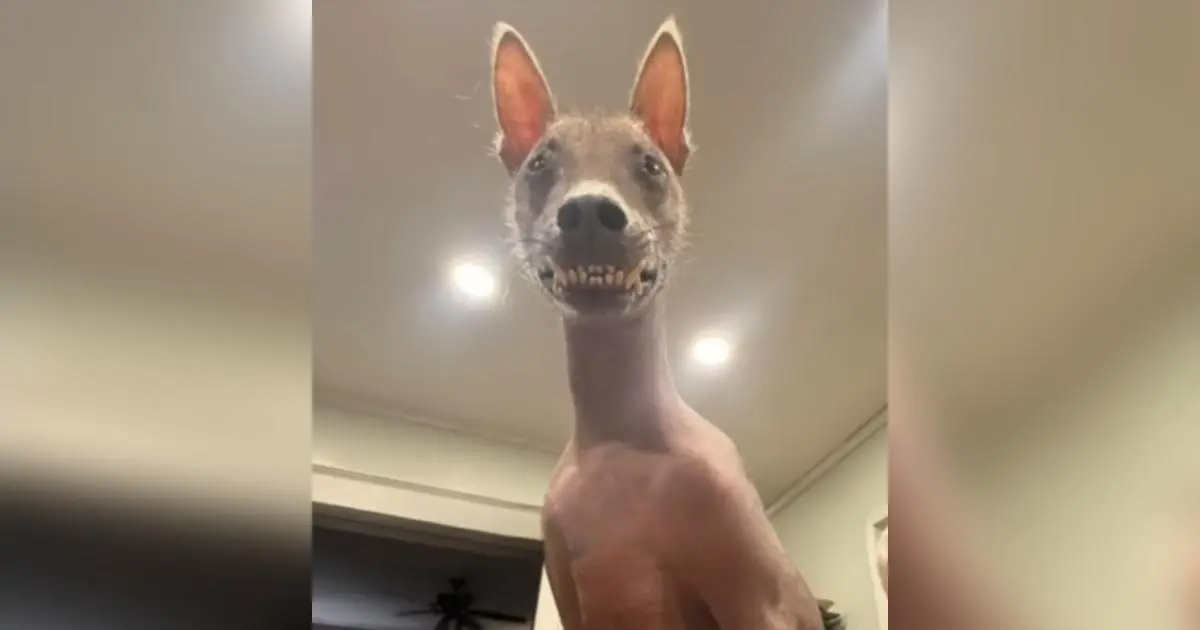
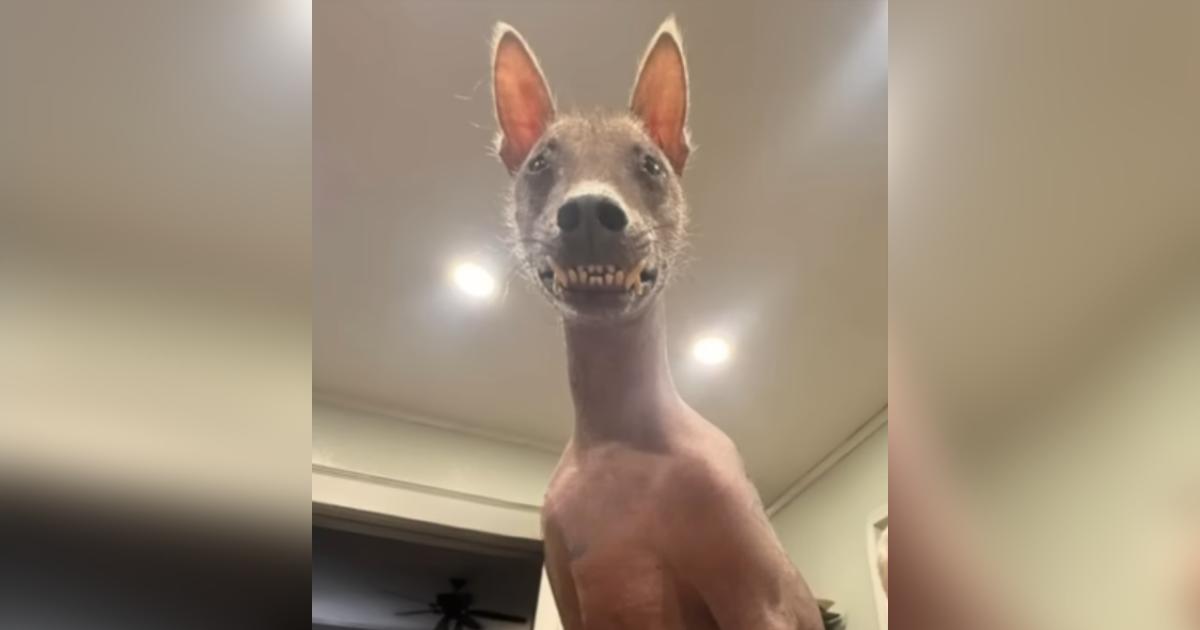
Initial speculations regarding her breed were confounded by her hairless, distinctive features, leading her caretakers to affectionately nickname her the "chupacabra"—a nod to the legendary creature of Latin American folklore. However, subsequent diagnostic evaluations, including advanced DNA sequencing and chromosomal testing at the prestigious Cornell Veterinary Hospital, debunked local myths and revealed a complex genetic tapestry, including Doberman Pinscher ancestry, alongside congenital chromosomal abnormalities.
Today, Nina’s successful integration into a multi-dog household serves as a compelling case study in the power of specialized veterinary care and dedicated adoptive guardianship.
Detailed Chronology
[Discovery Phase] ──> [Relocation & Arrival] ──> [Behavioral Breakthrough] ──> [Medical & Genetic Diagnosis] ──> [Social Integration]Phase 1: Discovery in the Puerto Rican Hinterlands
The narrative begins in the rural, forested regions of Puerto Rico, an island currently grappling with a severe stray dog crisis. Nina was discovered wandering deep within the woods, showing signs of long-term survival in a harsh wild environment. Her cautious, highly vigilant demeanor suggested a history of minimal human contact or survival-driven avoidance strategies. Local rescuers secured the dog, noting her highly unusual physical phenotype, which featured sparse hair, distinct facial structures, and visible ocular distress.
Phase 2: Digital Outreach and Interstate Relocation
Recognizing that Nina’s unique appearance and potential medical needs required specialized care, rescuers published her story online. Hundreds of miles away in New York, Emily and Shawn encountered her profile. Sensing an immediate connection and possessing the resources to manage a special-needs animal, the couple initiated the adoption process.
The logistics of transporting Nina from Puerto Rico to New York involved a complex transit pipeline, culminating in her arrival at a major New York airport. For a dog accustomed to the quiet isolation of the Puerto Rican canopy, the sensory overload of a bustling airport terminal was profoundly disorienting. Upon arrival, Nina exhibited severe physiological markers of stress, including trembling, hypervigilance, and defensive avoidance behavior.
Phase 3: The Decompression Phase and the "First Smile"
Understanding the psychological fragility of a newly relocated stray, Emily and Shawn implemented a strict decompression protocol. Rather than forcing social interaction or exposing Nina to novel stimuli, they allowed her to navigate their home at her own pace, establishing a secure baseline.
Decompression Timeline:
┌──────────────────────────────┐
│ Days 1-3: High Vigilance     │ ──> Quiet environment, minimal direct eye contact
└──────────────────────────────┘
┌──────────────────────────────┐
│ Days 4-5: Environmental Map  │ ──> Independent exploration of the home
└──────────────────────────────┘
┌──────────────────────────────┐
│ Day 6+: Trust Breakthrough   │ ──> Volitional physical proximity (the "Bedside Smile")
└──────────────────────────────┘
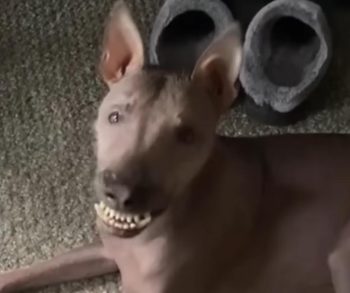
The breakthrough occurred only days after her arrival. Emily and Shawn awoke to find Nina voluntarily sitting at the foot of their bed, displaying a relaxed facial posture that closely resembled an enormous smile. In canine behavioral science, this shift from defensive reservation to voluntary proximity indicates a crucial transition from a state of survival-driven hyper-arousal to a state of perceived safety.
Phase 4: Advanced Medical Intervention and Genetic Profiling
With behavioral stability established, Emily and Shawn initiated a comprehensive veterinary diagnostic regimen to address Nina’s distinct physical characteristics and health challenges:
- Ophthalmic Surgery: Nina was diagnosed with severe entropion—a painful congenital condition where the eyelid rolls inward, causing the eyelashes and hair to rub directly against the cornea. Left untreated, this can lead to corneal ulceration, scarring, and permanent blindness. She underwent corrective surgery to reposition her eyelids.
- Post-Operative Management: Because of the unique anatomical structure of her face, Nina’s eyelids do not close completely (a condition related to lagophthalmos). To prevent chronic dry eye and subsequent corneal damage, her daily care regimen now includes the lifelong administration of lubricating eye drops.
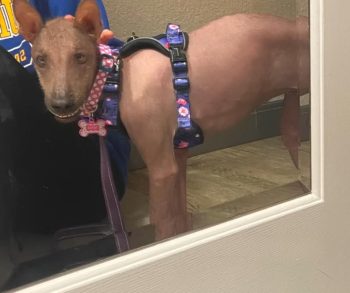
- Genetic Testing: Her striking, near-hairless appearance initially led veterinary staff and her owners to wonder if she belonged to a rare hairless breed, such as the Xoloitzcuintli. A commercial canine DNA test revealed a highly surprising breed composition, identifying her as a complex mixed-breed with significant Doberman Pinscher ancestry. This proved that her hairless appearance was not the result of purebred genetics, but rather a unique phenotypic expression of her mixed heritage.
- Chromosomal Diagnostics: To further investigate her developmental anomalies, Nina underwent advanced genetic and chromosomal testing at Cornell Veterinary Hospital. The diagnostics confirmed the presence of congenital chromosomal abnormalities, explaining both her unique physical appearance and her developmental idiosyncrasies.
Supporting Context & Metrics
The Puerto Rican "Sato" Crisis
Nina’s origins highlight a systemic animal welfare issue in Puerto Rico. The island is home to an estimated 300,000 to 500,000 free-roaming dogs, colloquially known as satos.
| Metric | Estimated Value | Impact on Animal Welfare |
|---|---|---|
| Stray Dog Population | 300,000 – 500,000 | Extreme strain on local shelters and municipal resources. |
| Surgical Spay/Neuter Rates | Low in rural areas | Exponential population growth in forested and agricultural zones. |
| Primary Health Hazards | Parasites, malnutrition, physical trauma | High incidence of heartworm, sarcoptic mange, and untreated injuries. |
The transport of these dogs to the United States mainland, via coordinated rescue networks, remains a vital lifeline for animals like Nina who require advanced veterinary care that may be inaccessible or cost-prohibitive on the island.
The Science of Entropion and Chromosomal Anomalies
Entropion is highly uncomfortable for canines. The continuous friction of hair against the ocular surface causes chronic pain, tear production (epiphora), and squinting (blepharospasm). While surgery is highly effective at relieving this discomfort, Nina’s secondary issue—her inability to fully close her eyes—requires vigilant, daily management to preserve her vision.
Furthermore, chromosomal abnormalities in dogs, though rarely diagnosed outside of academic veterinary research institutions like Cornell, can affect skeletal development, coat quality, and organ function. Nina’s ability to live a high-quality, active life despite these genetic anomalies is a testament to the efficacy of targeted, proactive veterinary care.
Official Statements and Perspectives
The Veterinary Perspective on Specialized Care
Dr. Elizabeth Vance, a veterinary ophthalmologist specializing in reconstructive procedures, emphasizes the importance of early intervention in cases like Nina’s:
"Entropion is not merely an aesthetic concern; it is a source of chronic, debilitating pain. When an animal presents with both entropion and an inability to completely close the eyelids, the surgical approach must be incredibly precise. The goal is to alleviate the painful inward roll without exacerbating the exposure of the cornea. Nina’s ongoing treatment—daily lubricating drops—is a crucial component of her long-term care plan, ensuring her eyes remain healthy and free of ulcerations."
Behavioral Insights on Rescue Dog Integration
Canine behaviorist Marcus Thorne notes that Nina’s rapid decompression highlights the importance of handler patience:
"When dealing with street or forest strays, particularly those with physical discomfort or sensory deficits, the instinct of many adopters is to shower the animal with affection and immediate attention. Emily and Shawn’s decision to step back and allow Nina to dictate the terms of her integration was textbook perfect. That ‘first smile’ at the foot of the bed was not just a heartwarming moment; it was a clear neurological signal that Nina’s nervous system had successfully shifted out of a fight-or-flight state."
Future Outlook
Nina’s transition from a vulnerable stray in the Puerto Rican wilderness to a beloved pet in New York is now complete. Despite her complex medical profile, she continues to thrive, showing no signs of cognitive or physical decline.
A key factor in her ongoing success is her relationship with Emily and Shawn’s other resident dogs. Rather than rejecting or reacting defensively to Nina’s unusual appearance and scent profile, the existing pack has fully integrated her. Observers note that the other dogs treat her with a protective tenderness, effectively adopting her as the "baby" of the household.

       [Nina's Daily Care Protocol]
                    │
       ┌────────────┴────────────┐
       ▼                         ▼
[Ophthalmic Maintenance]  [Social Stability]
- Daily eye drops         - Pack integration
- Regular corneal checks  - Low-stress routine
Nina’s story challenges conventional perceptions of rescue dogs, particularly those with atypical physical traits or complex genetic backgrounds. By blending compassionate guardianship with advanced veterinary science, her family has demonstrated that even the most unusual and medically complex animals can transition from survival to a life of safety, health, and deep familial connection.