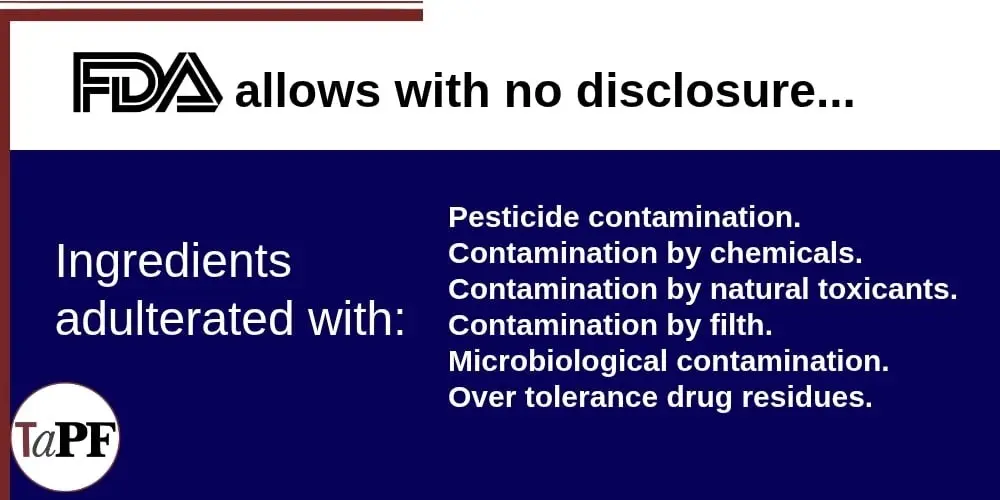
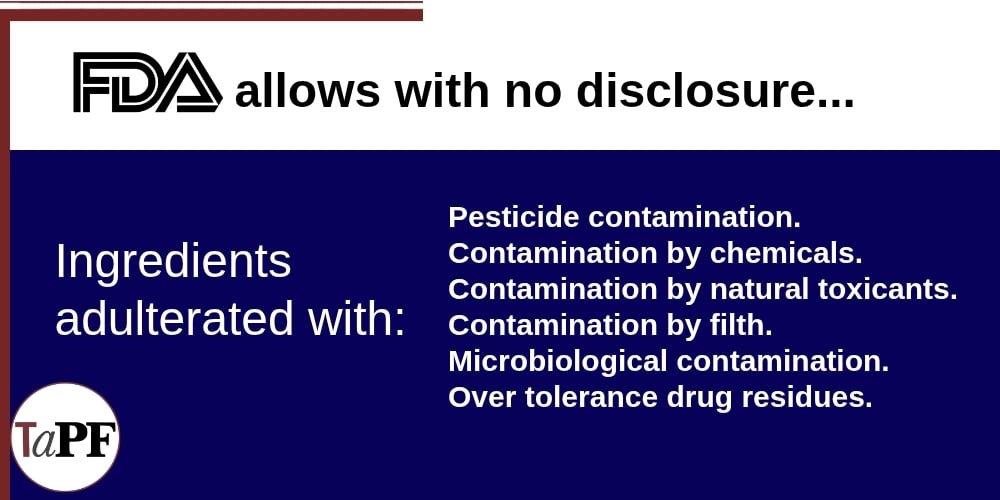
Behind the benign descriptions on commercial pet food packaging lies a complex regulatory structure that permits foods contaminated with biological waste, industrial pollutants, and chemical residues to enter the animal feed supply. Under a series of formal Compliance Policy Guides (CPGs) maintained by the U.S. Food and Drug Administration (FDA), food legally classified as "adulterated"—unfit for human consumption due to contamination by pests, mold, floodwaters, or prohibited chemical residues—can be lawfully diverted into animal feed and pet food.
While the FDA maintains strict statutory definitions for human food safety under the Federal Food, Drug, and Cosmetic (FD&C) Act, the agency routinely exercises regulatory discretion to allow compromised agricultural commodities and recalled consumer goods to be salvaged. To execute these diversions, the FDA requires food processing entities to submit formal requests and obtain prior agency approval. Consequently, the FDA possesses precise, detailed records identifying which feed manufacturers and pet food brands acquire and process adulterated ingredients.
However, neither federal regulations nor standard ingredient labeling mandates require manufacturers to inform consumers when a product contains salvaged or previously adulterated material. This systemic opacity has prompted formal legal challenges by consumer advocacy organizations seeking to compel agency transparency and expose the corporate beneficiaries of these regulatory exemptions.
Detailed Chronology and Regulatory Framework
The policy framework governing the diversion of adulterated food into animal feed is codified in three primary FDA Compliance Policy Guides. These documents outline the specific conditions under which contaminated human foods may be re-routed into the pet food and livestock feed supply chains.
       ADULTERATED HUMAN FOOD DIVERSION PIPELINE

 +---------------------------------------------------+
 |   Contaminated / Adulterated Human Food Source     |
 | (Rodent/Bird Feces, Sewage/Floodwaters, Residues) |
 +---------------------------------------------------+
                           |
                           v
 +---------------------------------------------------+
 |         FDA Prior Review & Authorization          |
 |    (CVM / CFSAN Review on a Case-by-Case Basis)   |
 +---------------------------------------------------+
                           |
                           v
 +---------------------------------------------------+
 |                 Allowed Treatment                 |
 |  (Heat Treatment for Filth / Salvage Mitigation)  |
 +---------------------------------------------------+
                           |
                           v
 +---------------------------------------------------+
 |             Animal Feed / Pet Food                |
 |        (No Consumer Label Disclosure Required)    |
 +---------------------------------------------------+
1. CPG Sec. 675.100: Diversion of Contaminated Food for Animal Use
Under CPG Sec. 675.100, titled Diversion of Contaminated Food for Animal Use, the FDA outlines its policy regarding human food contaminated with pest waste. The document acknowledges the biological risks inherent in such contamination:
"FDA does not object to the diversion to animal feed of human food adulterated with rodent, roach, or bird excreta. However, since rodent, roach, or bird excreta are vectors for microorganisms deleterious to the health of animals, including such things as parasite eggs, salmonella, leptospira, or other pathogenic organisms, diversion has not been authorized except following a heat treatment appropriate to destroy such organisms."
The policy specifies that any diversion of food contaminated with rodent, cockroach, or avian feces—whether executed voluntarily or pursuant to a court order—must undergo thermal processing intended to neutralize biological threats. The directive mandates prior agency consultation:
"Diversion of rodent, roach, or bird contaminated food for animal feed use, whether pursuant to a court order or a voluntary action, requires heat treatment to destroy pathogenic organisms. The Center for Veterinary Medicine (HFV-236) should be contacted on a case-by-case basis concerning suitability of proposed treatment…"
While thermal processing may neutralize active bacteria such as Salmonella and Leptospira, the underlying policy legally reclassifies pest-contaminated waste into usable feed material once agency approval is granted.
2. CPG Sec. 675.300: Moisture-Damaged and Mold-Contaminated Grain
Agricultural commodities damaged by natural disasters or municipal infrastructure failures are governed by CPG Sec. 675.300, titled Moisture Damaged Grain. In this guidance, the FDA’s Center for Veterinary Medicine (CVM) notes the severe hazards associated with flood-damaged crops:
"In the past CVM has authorized the diversion of moisture-damaged grain as well as other food materials for animal feed use. Such authorization has always had to take into consideration the nature and source of the water since fires from grain elevator explosions are often quenched using sea water or river water which may contain sewage, pathogenic organisms, chemical wastes or other toxic substances. Similar problems are posed when foodstuff is flooded following hurricanes or other natural disasters. Even more serious is the mold growth which may occur in wet foods."
Despite acknowledging that floodwaters frequently carry untreated human sewage, industrial chemicals, heavy metals, and dangerous fungal toxins (mycotoxins), the FDA’s operational policy permits these materials to enter the feed system:
"Moisture-damaged and/or moldy foodstuffs may be considered for conversion to animal feed use. However, in each case authorization will be made by CVM in consultation with CFSAN based upon information concerning the nature and source of the moisture and the actual or suspected type of contamination and whether the damaged material may be rendered safe for use as animal feed."
This framework requires grain handlers and processing facilities to notify CVM and the Center for Food Safety and Applied Nutrition (CFSAN) before diverting contaminated grains into animal feed channels.
3. CPG Sec. 675.200: Diversion of Adulterated Food to Acceptable Animal Feed Use
The broad policy governing chemical residues, recalled items, and regulatory detentions is set forth in CPG Sec. 675.200, Diversion of Adulterated Food to Acceptable Animal Feed Use. This policy establishes a dual safety standard that differentiates human food thresholds from animal food thresholds under Section 402(a)(3) and (4) of the FD&C Act:
"In the past, FDA has authorized the salvage of human or animal food considered to be adulterated for its intended use by diverting that food to an acceptable animal feed use. Most of these instances have involved… different standards for foods intended for human use vs. food intended for animal use, e.g., defect action levels for filth in a food intended for human use but not for the same food intended for animal feed use. Diversion requests, however, have also included USDA detained meat and poultry products contaminated with drug or other chemical residues, as well as food and feed under voluntary industry recall or quarantine…"
The policy outlines an ad hoc administrative procedure. Facility operators seeking to salvage adulterated goods—including meat products seized by the U.S. Department of Agriculture (USDA) for unapproved veterinary drug residues—must submit prior written applications to the FDA detailing the nature of the contamination, proposed processing methods, and destination facilities.
Supporting Context and Supply Chain Dynamics
Regulatory Directive
Permitted Contaminants / Adulterants
Mandatory Agency Review
Primary Processing / Safety Requirements
CPG Sec. 675.100
Rodent, cockroach, and bird excreta; Salmonella, Leptospira, parasite eggs
FDA Center for Veterinary Medicine (CVM)
Approved heat treatment to destroy pathogenic vegetative bacteria
CPG Sec. 675.300
Floodwater exposure, river/sea water, human sewage, industrial runoff, toxic mold
Joint consultation between CVM and CFSAN
Case-by-case toxicity evaluation and mycotoxin risk assessment
CPG Sec. 675.200
USDA-detained meat/poultry, veterinary drug residues, pesticide residues, recalled items
FDA CVM Prior Written Authorization
Demonstration that adulterant level is "acceptable" for target animal species
Dual Safety Standards and the Supply Chain
The operational mechanics of these Compliance Policy Guides rely on a regulatory distinction between human and veterinary food standards. Under the FD&C Act, human food containing insect parts, mammalian feces, or chemical residues above specified Defect Action Levels (DALs) is deemed adulterated and legally prohibited from commerce.
However, CPG 675.200 allows manufacturers to re-route these rejected raw materials into animal feed streams, provided the consignee demonstrates that the contaminants fall within parameters deemed tolerable for livestock or companion animals.
       STATUTORY SAFEGUARD DIFFERENTIAL

 HUMAN FOOD SAFETY STANDARD (FD&C Act Sec. 402)
 [Strict Defect Action Levels | Zero Tolerance for Sewage / Detained Residues]
                         |
                         v  (Adulteration Finding / Rejection)
                         |
 ANIMAL FEED / PET FOOD STANDARD (CPG Diversion System)
 [Heat-Treated Filth Allowed | Diluted Chemical & Drug Residues Permitted]
Limitations of Thermal Processing and Safety Risks
While CPG 675.100 mandates thermal processing to kill heat-sensitive bacteria like Salmonella, animal nutritionists and toxicologists point out that heat treatment does not address all potential chemical and biological hazards:
Heat-Stable Toxins and Endotoxins: Heat treatment destroys vegetative bacterial cells but does not deactivate lipopolysaccharides (endotoxins) released by Gram-negative bacteria, which can cause severe inflammatory reactions in animal digestive tracts.
Mycotoxins: Fungal metabolites such as aflatoxins, vomitoxin (deoxynivalenol), and zearalenone—frequent contaminants in moisture-damaged grains covered under CPG 675.300—are highly heat-stable and persist through standard pet food extruders.
Bioaccumulation of Residues: Veterinary drug residues and persistent agrochemicals present in USDA-detained livestock tissue (governed by CPG 675.200) can accumulate in animal tissues over time.
The Labeling Deficit
Under current federal labeling regulations administered by the FDA and shaped by the Association of American Feed Control Officials (AAFCO), ingredient panels reflect only the generic identity of a raw material (e.g., "poultry meal," "ground yellow corn," "animal fat").
Manufacturers are not legally required to disclose whether an ingredient was derived from USDA-detained meat, flood-damaged grain, or filth-contaminated food subjected to thermal salvage. As a result, commercial ingredient labels provide consumers with no indication of whether a product contains virgin commodities or diverted adulterated waste.
Transparency Deficit and Legal FOIA Investigation
Because every diversion request under CPGs 675.100, 675.200, and 675.300 requires advance submission, agency evaluation, and written authorization, the FDA maintains a complete regulatory registry of these transactions. These internal agency records document:
The identity of the corporate entity originating the adulterated food.
The specific nature and concentration of the contaminant (e.g., specific drug residues, mold counts, pest excreta).
The identity of the purchasing consignee—the pet food or livestock feed manufacturer acquiring the material.
The approved processing method used to render the adulterated food legally marketable.
Despite possessing comprehensive supply chain tracking data, the FDA does not publish these authorization records for consumer review.
                  FDA ADULTERATED FOOD DIVERSION REGISTRY

 +-----------------------------------------------------------------------+
 | [INTERNAL FDA DATA]                                                  |
 | - Originating Processing Entity                                        |
 | - Specific Contaminant Profile (Feces, Sewage, Residues)             |
 | - Approved Salvage / Heat Treatment Parameters                       |
 | - Purchasing Consignee (Pet Food / Animal Feed Manufacturer)          |
 +-----------------------------------------------------------------------+
                                    |
                                    v

                       PUBLIC CONSUMER DISCLOSURE
                       [  INFORMATION WITHHELD  ]
The September 2026 FOIA Filing
To bring transparency to these regulatory practices, consumer advocate Susan Thixton—representing TruthaboutPetFood.com and the Association for Truth in Pet Food—filed a comprehensive Freedom of Information Act (FOIA) request with the FDA on September 17, 2026.
The FOIA submission requests full public disclosure of all approved adulterated food diversion applications processed by the agency from January 1, 2020, through September 17, 2026. Crucially, the filing seeks the unredacted corporate names of the purchasing consignees, aiming to reveal which commercial pet food and animal feed brands regularly purchase diverted adulterated raw materials.
Historically, FOIA filings targeting sensitive supply-chain data within the FDA’s Center for Veterinary Medicine have faced significant administrative delays, with processing times often extending from several years to over half a decade. Advocates anticipate that the agency may assert statutory disclosure exemptions to protect commercial confidences and proprietary trade secrets on behalf of regulated feed manufacturers.
Future Outlook
The legal petition filed in September 2026 marks a significant step in the broader effort to reform pet food regulation. The outcome of this request will test the boundaries between federal administrative discretion, corporate commercial privacy, and the public’s right to clear information regarding consumer goods.
Regulatory experts note that meaningful policy reform would require structural updates to both federal guidance documents and model state feed laws:
Policy Revisions: Modernizing CPGs 675.100, 675.200, and 675.300 to restrict the inclusion of waste-derived and salvaged ingredients in companion animal diets.
Mandatory Disclosure: Enacting federal regulations requiring explicit labeling on retail pet food packaging when diverted or salvaged ingredients are utilized.
Public Databases: Establishing accessible federal registries listing approved corporate diversion permits to enable informed purchasing decisions by livestock producers and pet owners.
Until regulatory standards shift toward greater disclosure, consumer advocacy groups recommend that pet owners directly contact feed manufacturers to inquire whether their ingredient suppliers utilize FDA-authorized diversion programs under CPGs 675.100, 675.200, and 675.300. The pending FOIA response from the FDA will serve as a key test of administrative transparency in the animal feed industry.