
By Tom Walsh, DVM
In collaboration with the team at Shepherd Veterinary Solutions
Executive Overview
Every veterinary practice in the world operates on a spectrum of functionality, yet virtually all of them harbor a dirty little secret: at least one piece of mission-critical equipment that everyone has quietly agreed to work around. It’s the centrifuge that only fires up if you slam the lid at a precise, hard-earned angle; the dental unit that mysteriously loses suction by mid-afternoon; or the blood chemistry analyzer that is technically functional on paper but requires three frustrating calibration cycles to run a simple panel.
Because these machines have not catastrophically failed, they rarely make the cut for an annual replacement list. Yet, they levy a heavy tax on the practice every single day. They drain time, demand elaborate physical workarounds, and steadily erode the patience and morale of a front-line veterinary team.
As budget season rolls around, these hidden operational costs ultimately come due—or get kicked down the road to compound further. The prevailing operational model for most veterinary clinics is overwhelmingly reactive: something crucial dies, and it gets replaced under acute duress, usually at full retail price, on a vendor’s delivery timeline rather than the clinic’s operational schedule.
A deliberate, systematic equipment audit flips this paradigm entirely. Conducted annually, an audit transforms clinic hardware from a series of unpredictable financial emergencies into a predictable, manageable line item. By shifting from emergency response to proactive capital planning, practice owners and managers can safeguard clinic revenue, streamline workflows, and protect staff well-being.
Detailed Chronology: The Lifecycle of Veterinary Capital Equipment
Understanding how equipment quietly turns from an asset into an operational liability requires looking closely at the typical lifecycle of veterinary hardware.
Phase 1: Peak Performance and Integration
When a piece of equipment—such as a high-end ultrasound, an automated hematology analyzer, or an underwater rehabilitation treadmill—is first introduced to the clinic, it operates at peak efficiency. Staff receive initial onboarding and training, and the device handles heavy caseloads without a hitch. During this honeymoon phase, repairs are covered under initial manufacturer warranties, and downtime is virtually zero.
Phase 2: The Subtle Creep of Quirks
As years pass, wear and tear begins to take a subtle toll. This is the inflection point where machines stop working perfectly, but continue working “well enough.” Calibration takes a little longer; gaskets begin to dry out; software updates clash with older operating systems. This is where the infamous "workaround culture" is born. Technicians and assistants invent clever, ad-hoc methods to keep the equipment moving, bridging the gap between hardware failure and clinical necessity without ever notifying management.
Phase 3: The Normalization of Deviance
Sociologists call it the "normalization of deviance"—the process by which abnormal or substandard conditions become accepted as normal because nothing catastrophic has happened yet. In a veterinary clinic, this looks like a team automatically planning an extra 10 minutes into an appointment slot just to warm up, trick, or restart a temperamental diagnostic unit. The team stops complaining because complaining hasn’t changed anything, and practice leadership remains entirely oblivious because the machine is still producing readings or moving water.
Phase 4: Acute Failure and Emergency Spending
Inevitably, the hardware reaches its breaking point. The machine that was nursed along for an extra 18 months fails completely—usually on a Monday morning when the clinic is operating at maximum capacity, or during a complex emergency case. At this stage, the practice loses all leverage. Equipment must be replaced immediately, leading to rushed decisions, expensive overnight shipping, emergency service call-out fees, and lost clinical revenue from canceled procedures.
Supporting Context & Metrics: Uncovering the Hidden Costs of Aging Equipment
When practice managers fixate solely on the sticker price of a new capital purchase, they miss the broader financial ecosystem of their clinic. The real, compounding expense of aging veterinary equipment hides in three distinct categories: service and repair expenses, operational downtime, and lost staff time.
+-----------------------------------------------------------------+
|               THE HIDDEN COSTS OF AGING EQUIPMENT               |
+--------------------------+--------------------------------------+
| 1. Service & Repair      | Rising out-of-warranty costs,        |
|                          | emergency diagnostic fees.           |
+--------------------------+--------------------------------------+
| 2. Operational Downtime  | Rescheduled appointments, outside    |
|                          | lab fees, lost client trust.         |
+--------------------------+--------------------------------------+
| 3. Lost Staff Time       | Unbilled labor spent coaxing,        |
|                          | resetting, and working around quirks.|
+--------------------------+--------------------------------------+
1. Service and Repair
As equipment ages, manufacturer service contracts scale upward in price or sunset entirely. Once a machine enters legacy status, out-of-warranty repairs arrive unpredictably and carry exorbitant hourly labor rates and shipping costs for replacement parts. A single emergency service call on a critical imaging unit or chemistry analyzer can easily run into the thousands of dollars—a sudden capital hit that disrupts cash flow.
2. Operational Downtime
When a revenue-generating asset fails midday, the true cost extends far beyond the repair bill. It encompasses:
- Rescheduled appointments that delay patient care.
- Diagnostic samples that must be shipped to expensive external reference laboratories.
- Disappointed clients who leave the clinic without answers.
For high-throughput machinery, even a single afternoon of downtime can silently cost more than a monthly equipment lease payment.
3. Lost Staff Time and Unbilled Labor
This is the most pervasive and least quantified metric in veterinary medicine. Every manual intervention your team performs to compensate for equipment failures represents unbilled, wasted labor.
Consider a real-world example from my own practice: We kept an older underwater treadmill running for years because the motor still turned and the belt still cycled. However, the internal temperature-control sensor had degraded, becoming chronically unreliable. This forced our technical staff to run a 10-to-15-minute diagnostic, testing, and manual adjustment protocol before every single hydrotherapy session, alongside occasional mid-session reboots if water temperatures drifted outside safe therapeutic parameters.
When I finally audited the time spent across a normal operating week, we were losing the equivalent of three and a half billable therapist hours every month on that single, "working" piece of equipment. That was time stripped away from treating patients, conducting client education, or generating revenue. The machine was never technically broken. Yet, it was profoundly expensive—and because it never resulted in a clear repair invoice, its cost remained entirely invisible to the balance sheet until we measured it.
The "Annoying But Not Broken" Trap
The single hardest category of equipment to evaluate during an operational review is the gear nobody complains about anymore. This is the quiet, deceptive middle ground between equipment that is functioning at a high level and equipment that has failed outright.
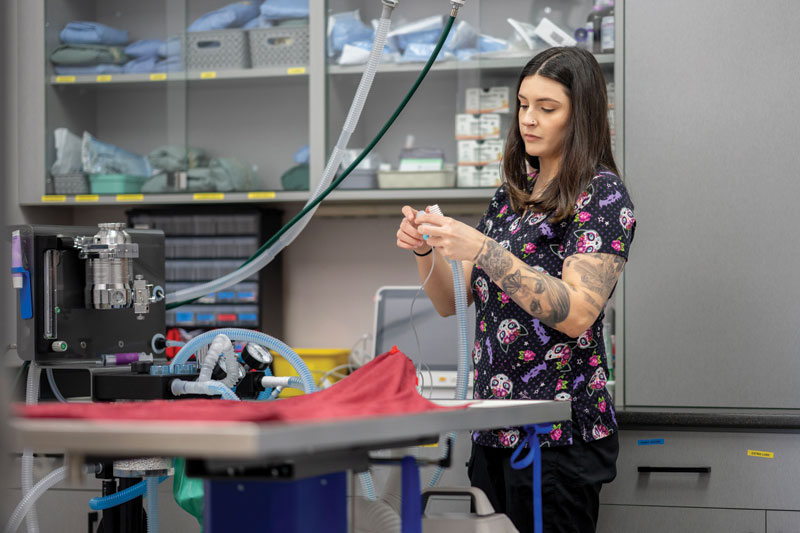
Equipment trapped in this category continues to execute its core function, which keeps it off any replacement radar. Yet, the staff has built an entire infrastructure of unofficial habits around its quirks:
- The precise sequence of power buttons you must press in order.
- The specific software setting that refuses to save, requiring manual data entry every time.
- The backup unit that staff instinctively reach for because the primary unit is too finicky.
These improvised habits become so deeply ingrained in the clinic’s daily routine that practice leadership often remains completely blind to their existence.
The danger here is twofold. First, the accumulated time cost is invisible precisely because it has been absorbed into the clinic’s cultural muscle memory ("That’s just how we do it here"). Second, this coping mechanism masks latent risk. Equipment that is constantly nursed along tends to fail suddenly and completely, usually at the worst possible moment, because the warning signs were normalized and ignored months prior.
Uncovering this category is arguably the highest-value objective of an annual equipment audit. But it cannot be accomplished from an office behind a spreadsheet; it requires directly engaging the people who touch the machinery every single day.
Involving the Team That Uses It
Practice leadership looks at financial statements, depreciation schedules, and vendor invoices. The clinical team looks at daily reality. An equipment audit constructed entirely from a top-down perspective is guaranteed to miss the "annoying but not broken" category because those friction points live deep within the day-to-day veterinary workflow, far away from the accounting ledger.
The technicians, assistants, and receptionists who operate the equipment know precisely what is frustrating to use, what slows down patient throughput, and what creates bottlenecks. They know which machine everyone actively avoids, which unit has a hidden "trick" to make it function, and which piece of hardware they are secretly bracing to lose.
To extract valuable insights, leadership must change how they ask questions. Asking, "Is anything broken?" yields a polite, reflexive "No." Asking, "What do you work around every day?" unlocks the truth.
The first time I stopped asking my staff if anything was broken and instead asked what daily annoyances they faced, my lead veterinary technician immediately pointed out that a specialized therapeutic exercise platform was fully functional on only one side, rendering the other half completely useless. I was genuinely shocked; the issue had never appeared on a maintenance log or a management meeting agenda. To my staff, the platform was still usable with careful patient positioning; to me, it was costing valuable time and compromises to operate at half-capacity. Without probing their lived workflow, I never would have known.
Furthermore, involving the frontline team builds profound operational buy-in. Staff members who actively help identify a workflow bottleneck are far more invested in the chosen solution, and infinitely more forgiving of the inevitable training curve that accompanies new technology. A replacement decision handed down unilaterally from above often lands as just one more disruptive change imposed on an already exhausted staff; a replacement decision shaped by the team lands as a long-awaited fix they asked for and designed.
5 Essential Questions for Every Major Veterinary Asset
Conducting an effective equipment audit does not require an exhaustive, academic spreadsheet filled with complex depreciation formulas. It simply requires five honest, probing questions applied to every significant piece of hardware in the clinic. Walk through the practice room by room and answer these questions out loud with your team:
+-----------------------------------------------------------------+
|                 THE 5-QUESTION AUDIT FRAMEWORK                  |
+-----------------------------------------------------------------+
| 1. How old is this unit, and what is its expected lifespan?     |
| 2. What are our total maintenance and repair costs YTD?         |
| 3. How often does this equipment experience downtime or lags?   |
| 4. What is the actual cost when this machine is idle?           |
| 5. Does a newer model offer significant workflow gains?         |
+-----------------------------------------------------------------+- How old is this unit, and what is its expected operational lifespan?
Establish baseline age against industry standards for veterinary durability. - What are our total maintenance and service contract costs year-to-date?
Sum up all out-of-warranty repairs, consumable replacement parts, and scheduled maintenance fees. - How often does this equipment experience unplanned downtime or performance lags?
Track how frequently the machine halts operations or requires manual resets. - What is the true cost when this machine is idle or operating at half-capacity?
Calculate the downstream impact on appointment schedules, staff time, and outside reference lab costs. - Does current market technology offer significant diagnostic, efficiency, or ergonomic improvements?
Determine whether upgrading will fundamentally improve patient care quality or staff retention.
Answered collectively, these five questions transform a vague sense that "we should probably replace that eventually" into a ranked, defensible capital expenditure list. The unit that is old, expensive to maintain, frequently down, cheap to replace relative to its value, and costly when idle becomes your immediate priority. Conversely, the asset that is aging but fundamentally reliable and inexpensive to run can safely wait another year.
Future Outlook: Building a Defensible Capital Plan
Once you have compiled and ranked your equipment audit data, building next year’s budget becomes a straightforward exercise. Sort your inventory into three clear operational tiers:
+-----------------------------------------------------------------+
|                    TIERED BUDGET ALLOCATION                     |
+-----------------------------------------------------------------+
| TIER 1: Replace This Year                                       |
| (Old, costly, frequently down, expensive when idle)             |
+-----------------------------------------------------------------+
| TIER 2: Watch & Budget for Next Year                            |
| (Aging but currently reliable; monitor closely)                 |
+-----------------------------------------------------------------+
| TIER 3: Retain                                                  |
| (Structurally sound, reliable, and cost-effective)              |
+-----------------------------------------------------------------+
By attaching accurate replacement-cost projections to Tiers 1 and 2, you transition from maintaining a wish list to executing a formal, strategic capital plan.
The ultimate advantage of planning this way is leverage. Equipment purchased on your clinic’s timeline is equipment purchased on your terms. You gain the luxury of comparing competing vendors, negotiating volume discounts, waiting for seasonal promotions, and scheduling equipment installation during slow weeks rather than scrambling desperately after a catastrophic breakdown.
Reactive purchasing surrenders all of that leverage. Every single market advantage evaporates the moment a critical machine quits at 8:00 AM on a Monday morning.
Start your equipment audit today, while your clinic is operating smoothly and no emergency is forcing your hand. Walk the building, ask the five core questions, and—most importantly—ask your team what they have quietly been working around. The equipment costing your practice the most money is rarely the machine that is broken. It is the machine everyone stopped talking about. Find it before it finds you, and next year’s budget will finally transform from a series of stressful financial surprises into a deliberate, empowering plan for growth.
Tom Walsh, DVM, is the owner of PrimePet Rehabilitation Therapy in Myrtle Beach, S.C. He co-wrote this article in collaboration with the practice management advisory team at Shepherd Veterinary Solutions.