
Executive Overview
For millennia, the global expansion of human civilization has radically transformed the natural world. Roads slice through ancient migration routes, sprawling suburbs replace native prairies, and industrial agriculture converts diverse ecosystems into monocultures. Ecologists have long understood that wildlife must constantly adapt to these heavily altered physical environments. However, a landmark study published in the prestigious journal Science reveals a critical missing dimension in our understanding of human-wildlife conflict and coexistence: animals are responding not just to the concrete and steel of our built environments, but to the simple, dynamic fact of our physical presence.
By combining cutting-edge GPS tracking data from thousands of individual animals with high-resolution, anonymized mobile device data collected across the United States, an interdisciplinary team of researchers from UC Santa Barbara (UCSB), the Smithsonian’s National Zoo and Conservation Biology Institute, and Yale University has unlocked unprecedented insights into the behavioral ecology of the Anthropocene. The findings demonstrate that wildlife responses to humans are deeply nuanced, varying substantially depending on the specific species and the degree to which a landscape has already been altered.
Crucially, this research was made possible by the unprecedented conditions of the COVID-19 pandemic—a global period of sudden behavioral shifts often termed the "anthropause." During this time, pandemic lockdowns dramatically altered where, when, and how humans moved across the landscape. This sudden disruption gave scientists a rare, natural laboratory to untangle the separate effects of permanent habitat modification from the transient, direct pressures of human bodies moving through nature.
The implications of this research are profound. By demonstrating that human presence and habitat modification work in tandem—often compounding or contradicting one another—the study challenges traditional conservation models. As conservationists and policymakers grapple with rapidly accelerating biodiversity loss, these findings provide an essential roadmap for designing smarter, more precise wildlife management strategies. Ultimately, the research offers a hopeful path forward: by understanding the precise temporal and spatial dynamics of human presence, humanity may finally learn how to share the planet more effectively with its non-human inhabitants.
Detailed Chronology: Unraveling the "Anthropause" Experiment
To fully comprehend the breakthrough achieved by the UCSB, Smithsonian, and Yale research teams, it is necessary to examine the chronological evolution of how scientists study human-wildlife interactions, culminating in the unique window of opportunity opened by the COVID-19 pandemic.
The Blind Spots of Traditional Ecology
Historically, wildlife biologists faced immense logistical barriers when trying to quantify human disturbance. While tracking animal movements via satellite telemetry and GPS collars has become increasingly sophisticated over the last few decades, measuring the exact distribution and movement of humans proved significantly more difficult. Public data tracking real-time human locations at a granular level is tightly guarded by private entities and rarely shared due to privacy and proprietary concerns.
Consequently, decades of ecological research had to rely on indirect proxies to infer human pressure. Scientists used metrics such as housing density, proximity to paved roads, agricultural coverage, or municipal zoning maps. During times of crisis or policy shifts, such as localized lockdowns, researchers might use broad binary classifications—such as whether a county was under stay-at-home orders—to gauge human activity. While these proxies provided valuable macro-level clues, they lacked the precision needed to understand real-time behavioral adjustments. They could not answer a fundamental ecological question: When an animal alters its migration path or shrinks its home range, is it reacting to the physical infrastructure of a nearby highway, or is it reacting to the cars driving on it and the hikers walking alongside it?
The Catalyst: COVID-19 and the Global Shutdown
The arrival of the COVID-19 pandemic in early 2020 triggered an unprecedented global disruption. Lockdowns, travel restrictions, and sudden shifts toward remote work dramatically altered human movement patterns almost overnight. Major metropolitan areas emptied, national parks experienced radical fluctuations in visitor numbers, and traffic volumes plummeted on both rural highways and urban thoroughfares.
Recognizing the gravity of this moment, an international collective of scientists mobilized under the banner of the COVID-19 Bio-Logging Initiative. This massive collaborative effort ultimately united over 600 research partners, synthesizing roughly one billion location records gathered from approximately 13,000 individual animals worldwide. The overarching goal was to document how wildlife responded to the sudden, profound quieting of the human footprint—a period researchers came to call the "anthropause."
Within this global initiative, the team led by UCSB and the Smithsonian zeroed in on the continental United States. They acquired a massive, unprecedented dataset: anonymized cellphone geolocation data aggregated at the neighborhood level. This marked the first time such fine-scale human movement data had ever been paired directly with high-resolution wildlife tracking data to evaluate ecological impacts.
Executing the Analysis
The research team narrowed their focus to weekly GPS records gathered from 4,581 individual mammals and birds across the continental U.S., comparing identical time periods in 2019 (pre-pandemic baseline) and 2020 (the anthropause). By holding the physical landscape constant while introducing a massive, sudden variance in human presence, the researchers were able to cleanly separate the two variables.
The results shattered long-held assumptions. The data proved that human presence is not merely a background noise in ecosystems, but an active, driving force that fundamentally shapes how wildlife navigates the physical world.
Supporting Context & Metrics: How Human Presence and Habitat Modify Behavior
The empirical findings of the study reveal a complex, interconnected web of behavioral adjustments across avian and mammalian taxa. The research analyzed 37 distinct animal species, evaluating two primary dimensions of wildlife behavior: the physical territory (or space) occupied by an animal, and its environmental niche (how it utilizes habitats and resources within that space).
The Dominance of Dual Pressures
For the vast majority of species studied, looking solely at landscape modification tells an incomplete story. The statistical models revealed that 57% of all species studied were significantly affected by both human presence and landscape modification acting simultaneously.
When broken down by taxonomic group, the impact of human presence alone was striking:
- Mammals: 67% of mammal species experienced measurable changes in either their territory size or environmental niche due to human presence.
- Birds: 68% of bird species altered their spatial or ecological habits in direct response to nearby humans.
These influences were rarely isolated. The research uncovered a profound interactive effect: the magnitude of an animal’s response to human presence depended heavily on how intensely the surrounding landscape had already been modified. Conversely, the impact of landscape alteration was heavily mediated by the density of people moving through it.
Territory Contraction in Pristine Environments
One of the most counterintuitive findings of the study involved where sensitivity to human presence was most acute. Conventional wisdom might suggest that animals living in dense urban centers or heavily farmed regions would show the highest levels of stress and behavioral modification due to constant human exposure. However, the data revealed the exact opposite.
Sensitivity to human presence was exceptionally pronounced in landscapes with relatively low levels of development—such as national parks, wilderness buffers, and rural preserves.
- Approximately 67% of mammal species and 41% of bird species responded to the dual pressure of human presence and landscape alteration by reducing the amount of habitat they used.
- In quieter, less developed environments where wildlife is unaccustomed to dense human traffic, the sudden introduction of people triggered significant spatial constriction, as animals actively retreated to avoid human encounters.
Species-Specific Behavioral Divergence
Importantly, the study underscores that there is no universal template for how wildlife reacts to humanity. Different evolutionary histories, life-history strategies, and ecological needs dictate vastly different survival tactics.
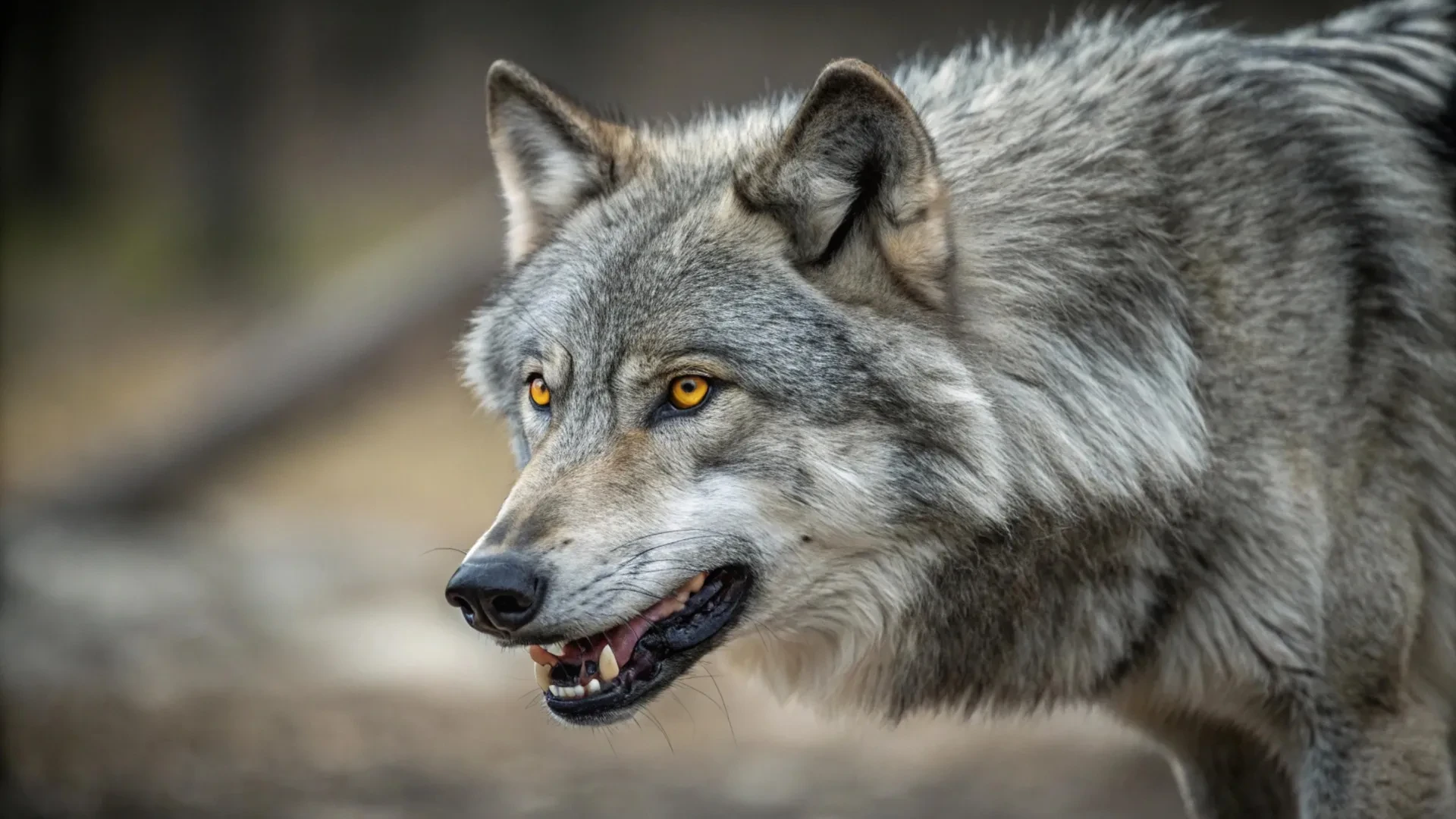
- Gray Wolves (Canis lupus): Wolves demonstrated a distinct behavioral pattern that diverged sharply from many other mammals. In response to human presence, wolf habitat use actually expanded. Researchers hypothesize that this outward expansion reflects the long, fraught history of human-wolf conflict. To minimize dangerous encounters with humans, wolves actively push outward, spreading their territories and moving into broader ranges to maintain a safe buffer.
- White-Tailed Deer (Odocoileus virginianus): North America’s most ubiquitous large ungulate displayed a fascinating push-and-pull dynamic. White-tailed deer environmental niches tended to expand as landscapes became more heavily modified (likely taking advantage of agricultural resources and edge habitats), but their spatial use contracted sharply as direct human presence and movement increased in those areas.
- Sandhill Cranes (Antigone canadensis): Displaying an inverse pattern to white-tailed deer, sandhill cranes exhibited different trade-offs between physical infrastructure and human foot traffic, highlighting how avian species balance foraging needs against perceived predation risk from humans.
Official Statements and Expert Perspectives
The groundbreaking nature of the study, published in Science, has drawn widespread acclaim within the global ecological and conservation communities. The lead researchers emphasize that these findings mark a paradigm shift in how conservationists must approach wildlife management in the 21st century.
Dr. Ruth Oliver, co-lead author of the study and an assistant professor in UCSB’s Bren School of Environmental Science & Management, highlighted the necessity of looking beyond physical infrastructure.
"Humans have complicated effects on wildlife—from our physical presence to how we reshape habitats—but we can’t understand our full impact without information on both," Oliver stated. "These findings highlight the critical importance of species-based conservation. Every species has different habitat requirements, has its own particular behavioral tendencies, and faces unique threats. Effective conservation requires that we understand the particular challenges that each species faces."
Dr. Scott Yanco, a research ecologist at the Smithsonian’s National Zoo and Conservation Biology Institute and co-lead author of the research, emphasized the unique value of the pandemic-era data and the rarity of the datasets utilized.
"The cell phone data we used was made available to researchers during the pandemic to help reveal the impacts of COVID-19 shutdowns," Yanco explained. "Typically, private companies hold onto these, which made this a rare opportunity for us to quantify how human presence impacts wildlife, and to demonstrate that there is more to consider than just land modification to create robust conservation plans."
Reflecting on the broader implications for human-wildlife coexistence, Oliver expressed guarded optimism regarding what these granular insights mean for future policy design.
"Our results give me some optimism that we can achieve wildlife coexistence through more nuanced policies that more smartly consider where and when we need to give animals space," Oliver noted.
Future Outlook: Survival, Stress, and Smarter Conservation
While the study successfully demonstrates how animals alter their spatial use and resource allocation in response to human presence, it opens the door to an even more urgent and complex question: Are these behavioral adaptations helping wildlife survive, or are they signs of chronic, sublethal stress?
The Next Frontier: Adaptation vs. Stress
As human populations continue to grow and climate change exerts additional pressures on fragile ecosystems, understanding the ultimate consequences of behavioral modifications is paramount. Animals that constantly shift their home ranges, abandon optimal foraging grounds, or expend precious metabolic energy fleeing human recreationists may be paying a heavy biological toll, even if they are not directly killed.
Dr. Oliver and her colleagues have already turned their attention to this critical inquiry. The research team is currently investigating whether human-driven landscape and climate pressures directly correlate with survival rates and mortality risks.
"Our current study shows that animals change how they use space and resources, but we don’t know if these changes are helping them adapt or are a sign of stress," Oliver pointed out. "Our group is now digging into that question by asking whether animals that change their behavior in response to human pressures are at greater or lower risk of dying."
Redefining Conservation Policy for the Anthropocene
Historically, conservation policy relied on static measures: drawing boundaries around national parks, protecting specific tracts of forest, or establishing wildlife corridors based solely on vegetation and topography. While these habitat-centric measures remain foundational, the new research proves they are fundamentally incomplete.
To successfully manage wildlife in the Anthropocene—an epoch defined by human dominance over Earth’s ecosystems—conservation frameworks must evolve to incorporate dynamic, temporal management tools. This means moving beyond rigid zoning to implement smart, flexible policies that account for human behavior in real-time. Potential applications of this research include:
- Dynamic Recreation Management: Implementing seasonal or time-of-day access restrictions in sensitive wilderness areas and national parks during critical wildlife breeding or migration periods, even when the physical habitat remains unaltered.
- Targeted Buffer Zones: Designing more effective buffer strips around core wildlife habitats that account not only for physical distance from roads and buildings, but also for projected human foot and vehicle traffic volumes.
- Species-Specific Interventions: Tailoring conservation strategies to recognize that generalist species (like deer) and apex predators (like wolves) require entirely different management approaches regarding human proximity.
The unprecedented convergence of animal telemetry and mobile geolocation data during the COVID-19 pandemic has provided science with a clearer, sharper lens through which to view human-wildlife dynamics. By acknowledging the invisible footprint of human presence—and learning to manage not just where we build, but how and when we move—humanity takes a vital step toward a future where biodiversity can endure and thrive alongside civilization.