
Executive Overview
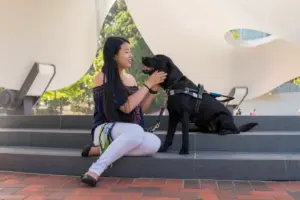
In a world saturated with sensory stimuli—blaring sirens, the tantalizing scent of dropped food, sudden pedestrian movements, and the chaotic bustle of modern urban environments—the average domestic dog is constantly pulled in a dozen directions. For pet dogs, yielding to these distractions is a natural, harmless instinct. However, for a service dog, maintaining unbroken attention is not merely a matter of obedience; it is a critical lifeline.
Service dogs serve as the eyes, ears, and physical support system for individuals with disabilities. Their ability to remain calm, neutral, and hyper-focused on their handler directly translates to safety, independence, and dignity in everyday life. Yet, this unwavering concentration does not happen by chance. It is the result of a meticulously structured, years-long developmental journey rooted in behavioral science, positive reinforcement, early socialization, and rigorous real-world testing.
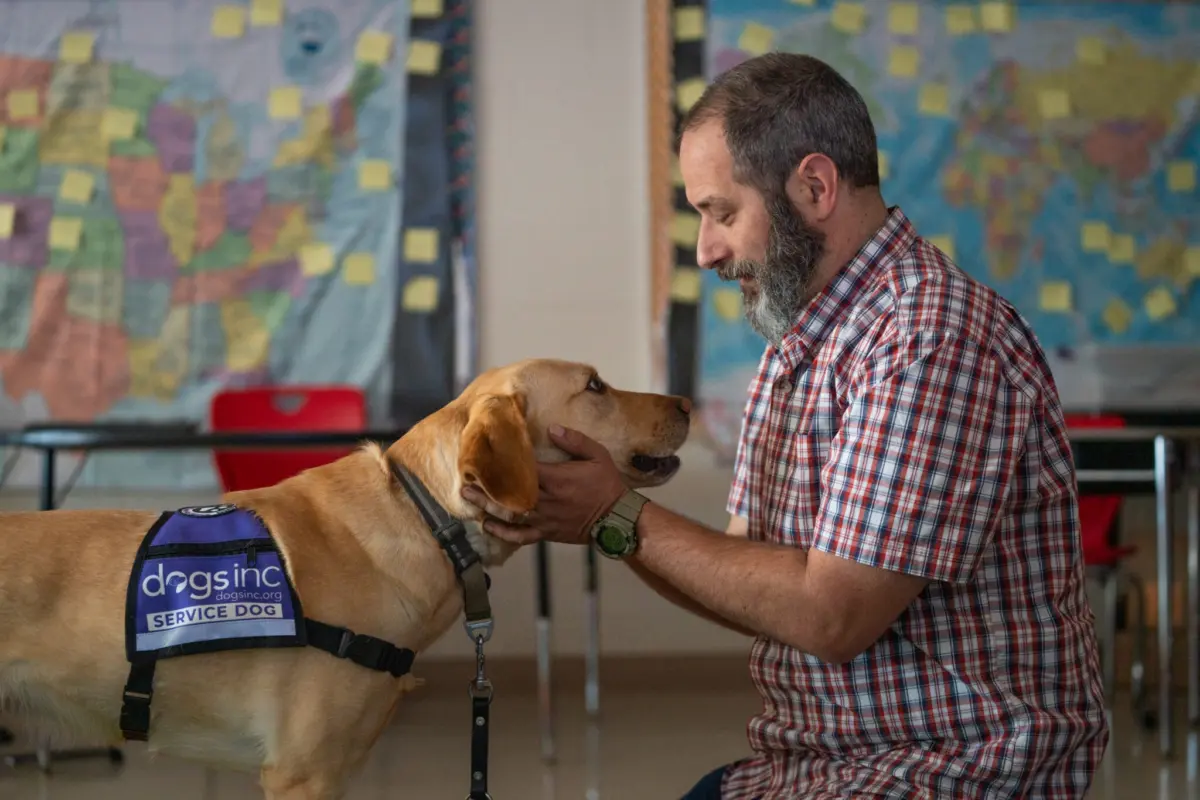
Organizations such as Dogs Inc spearhead this complex process, orchestrating a collaborative ecosystem involving dedicated puppy raisers, professional trainers, and specialized instructors. This comprehensive report explores the anatomy of service dog focus, the mechanics of distraction management, the stages of specialized training, and the ultimate goal of canine neutrality in a bustling world.
Detailed Chronology: The Developmental Timeline of Canine Focus
Building a service dog capable of navigating a crowded international airport, a busy grocery store, or a bustling university campus requires a systematic, chronological approach to education. Focus training begins long before a dog ever performs complex mitigation tasks; it starts on day one of a puppy’s life and evolves in distinct developmental phases.
Phase 1: Neonatal and Early Puppyhood (Weeks 0–8)
Long before formal obedience training commences, puppies are laying the neurological groundwork for emotional regulation. During this critical window, breeders and early handlers introduce gentle handling, novel textures, and soft sounds. While formal "focus" cannot be demanded of a newborn puppy, early conditioning teaches the animal that human interaction is safe, rewarding, and calming.
Phase 2: The Puppy Raiser Foundation (Months 2–12)
Once puppies are placed with volunteer puppy raisers, the real journey toward focused attention begins. This phase is characterized by intentional exposure and socialization. Raisers introduce pups to varied environments—sidewalks, public parks, shopping centers, and public transit—at a distance that allows the puppy to remain calm.
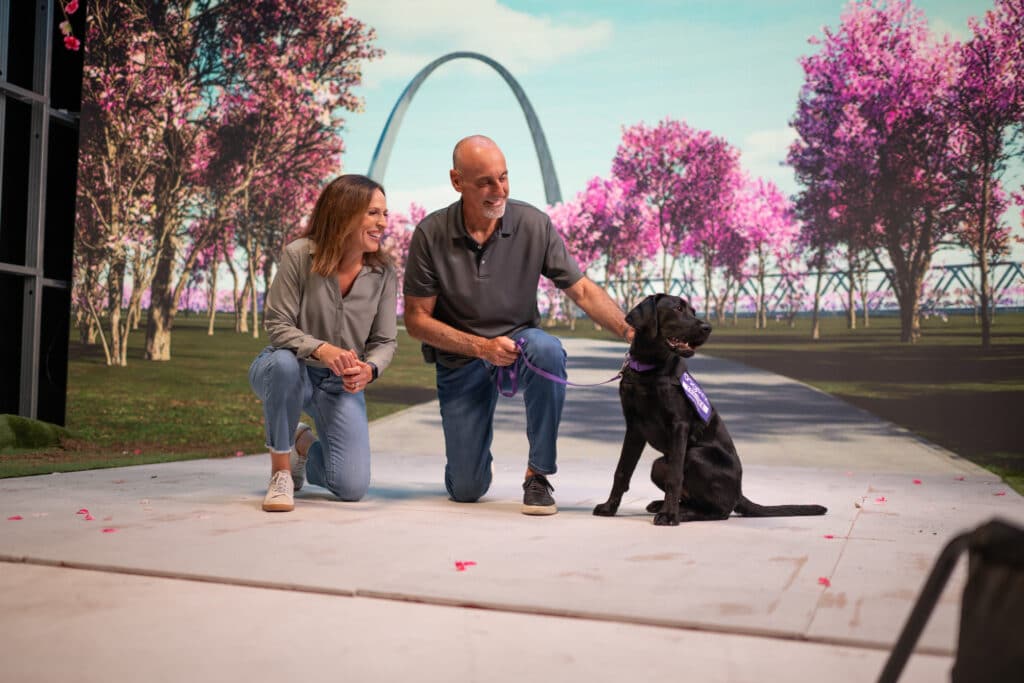
- Setting Expectations Early: Puppies are taught fundamental impulse control cues, such as holding eye contact and checking in with their handler before reacting to environmental changes.
- Positive Associations: Every new sight, sound, and smell is paired with high-value rewards and calm praise, transforming potential stressors into routine occurrences.
Phase 3: Advanced Professional Training (Months 12–18+)
As dogs transition from puppy raisers to professional training facilities like Dogs Inc, instructors take the foundational focus and "proof" it against extreme distractions. This stage marks the shift from general obedience to task-specific execution.
- Dogs learn to anchor, guide, brace, or retrieve items while ignoring complex social and environmental stimuli.
- Training sessions move from controlled training rooms to high-distraction, real-world public venues.
Phase 4: Placement and Lifelong Maintenance (Adulthood)
Upon graduation, the service dog is matched with a handler. However, focus training is never truly "finished." Throughout the working life of the animal, the handler must maintain consistency, ensuring that the communication bridge built during puppyhood remains strong, reliable, and rewarding.
Supporting Context & Metrics: Understanding Distractions and Canine Psychology
To appreciate the magnitude of service dog training, one must understand what constitutes a distraction to a canine and how their cognitive processing differs from humans. A dog’s olfactory capabilities are estimated to be 10,000 to 100,000 times more acute than a human’s, meaning that a grocery store aisle or a crowded restaurant is an overwhelming symphony of scent messages.

Categorizing Canine Distractions
Trainers systematically break distractions down into four primary categories, each requiring specialized counter-conditioning:
- Environmental Distractions: Encompassing loud noises, flashing lights, sudden structural movements (such as automatic doors or elevators), and dense crowds. These challenge a dog’s startle reflex and spatial confidence.
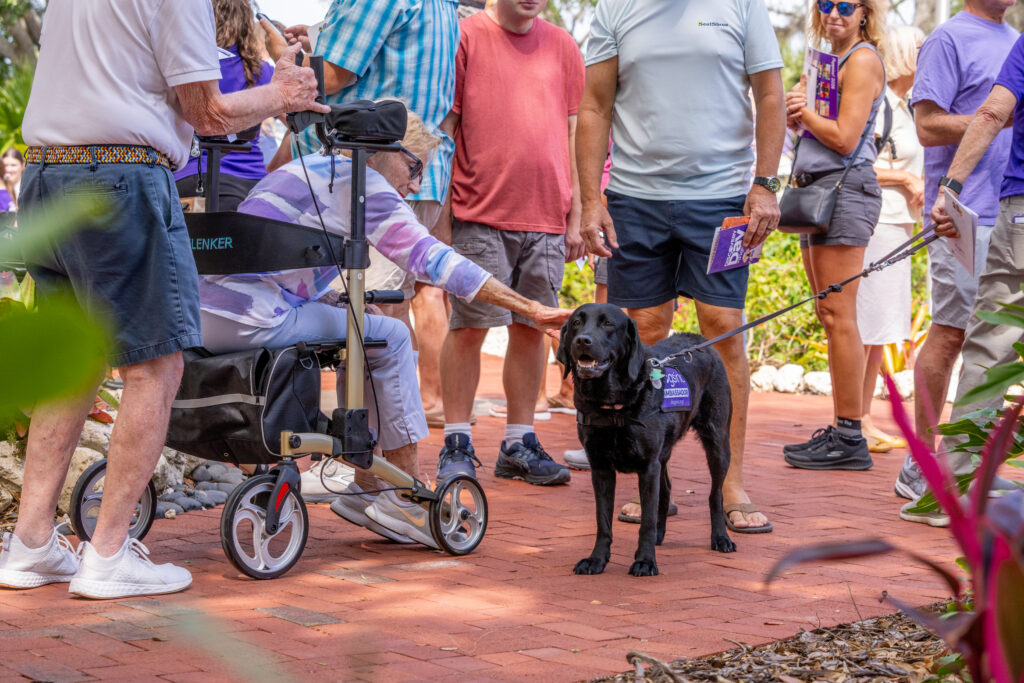
- Social Distractions: Involving well-meaning strangers attempting unsolicited eye contact, verbal coaxing, or unauthorized leash greetings. Service dogs must learn to treat human crowds as part of the background scenery rather than interactive opportunities.
- Food and Scent Distractions: Often the most primal pull for a canine. Restaurants, cafeterias, and dropped food present intense olfactory temptations. Training ensures that food on the ground is categorized as something to observe and bypass, rather than consume.
- Other Animals and Wildlife: Squirrels, birds, and pet dogs passing by trigger natural predatory or social instincts. The hallmark of a well-trained service dog is the ability to remain completely neutral in the immediate presence of other animals.
The Metrics of Success: Measuring Reliability
In professional service dog training, success is measured not by perfection on day one, but by recovery time and reliability under pressure. A reliable service dog demonstrates:
- Sub-Second Re-engagement: When a distraction successfully breaks a dog’s attention, the animal must re-establish eye contact with its handler within seconds upon redirection.
- Zero-Reactivity Thresholds: The absolute absence of vocalization, lunging, cowering, or whining when exposed to sudden auditory or visual stimuli.
- Sustained Task Performance: The ability to continue performing a medical alert or mobility brace even while navigating chaotic environments.
Official Statements & Expert Perspectives on Working Mindsets
The philosophy guiding modern service dog training emphasizes cooperation, emotional safety, and mutual trust rather than outdated dominance-based paradigms.
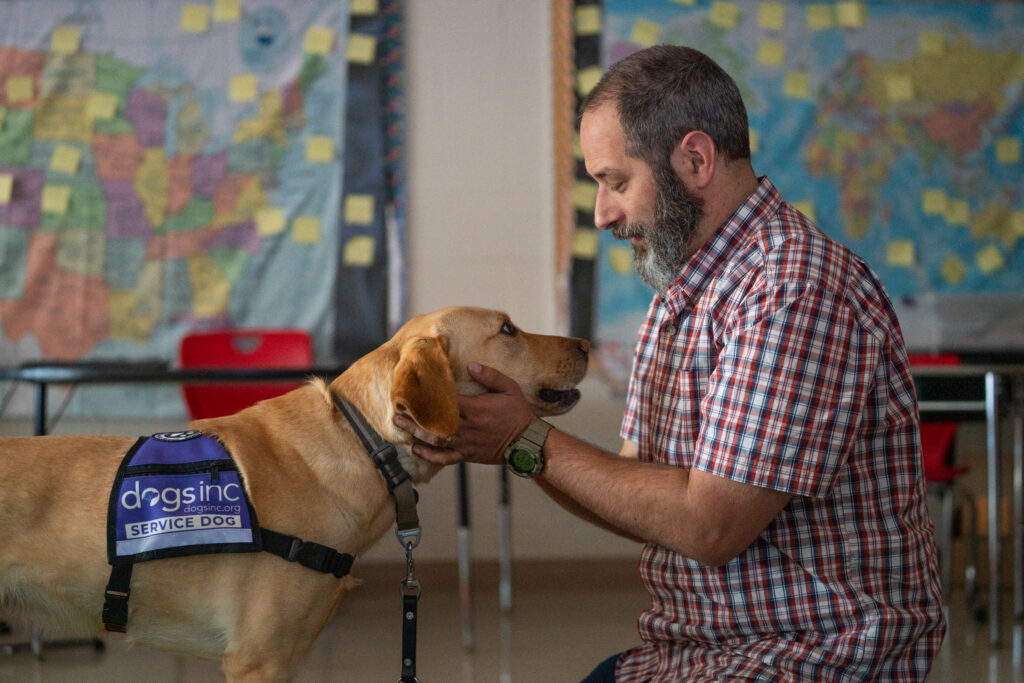
Animal behaviorists and master instructors emphasize that a service dog’s focus is fundamentally an expression of trust. According to leading training organizations, a dog naturally focuses on its handler when it perceives that individual as the most secure, rewarding, and consistent part of its environment.
"A service dog is not trained to live in a vacuum or to completely ignore the world around them," notes a senior master instructor at Dogs Inc. "True neutrality means the dog perceives the entire world, assesses it for safety, and consciously chooses to invest its attention in its partner. It is an active, mindful state of working composure."
Furthermore, experts highlight the indispensable contributions of community volunteers. "Puppy raisers do more than teach basic manners; they build the emotional resilience of the dog," institutional training coordinators report. "They turn mundane daily routines into profound lessons in impulse control, bridging the gap between a playful puppy and an indispensable working partner."

Future Outlook: The Evolution of Service Dog Education
As urban environments grow denser and societal awareness of invisible disabilities expands, the demand for highly specialized service animals continues to rise. The future of focus training lies in the integration of advanced behavioral science, personalized matching algorithms, and enhanced public education regarding service dog etiquette.
Emerging Trends in Training Methodologies
- Data-Driven Progression: Training facilities are increasingly utilizing quantitative tracking of distraction thresholds to tailor programs to individual dogs, optimizing the transition from low-stimulus environments to complex public spaces.
- Public Awareness Initiatives: A persistent hurdle in service dog handling is interference from the general public. Future advocacy efforts focus heavily on educating communities about the dangers of distracting a working dog, thereby reducing social hurdles for handlers.
- Holistic Wellness Integration: Modern programs place heightened emphasis on mental decompression, play, and physical longevity, recognizing that sustainable, lifelong focus requires a balanced, well-rested mind.
Conclusion
The journey from a curious, easily distracted puppy to a steadfast, focused service dog is an extraordinary feat of education, patience, and partnership. Through structured socialization, positive reinforcement, and relentless real-world practice, organizations like Dogs Inc ensure that these remarkable animals can navigate any environment with absolute poise. By mastering their own instincts, service dogs grant their handlers something truly priceless: the freedom to move forward through life with unshakeable confidence, safety, and independence.