The recovery of a severely traumatized dog named Citrus—rescued from a large-scale hoarding operation in Texas—offers a compelling case study in canine trauma rehabilitation, animal shelter transport pipelines, and the efficacy of specialized foster care. Arriving at her foster home in a state of profound psychological shutdown, Citrus exhibited extreme agoraphobic behaviors, remaining immured within her travel crate for nearly a week. Through a structured, low-pressure rehabilitation regimen focused on incremental exposure, voluntary agency, and peer-assisted social facilitation, Citrus made a remarkable psychological recovery.
Her case drew particular attention due to an unexpected behavioral milestone: a self-directed toy-collecting habit that served as an essential bridge between safety-seeking withdrawal and voluntary environmental exploration. Now permanently adopted under the name Maggie, her journey highlights the critical role foster networks play in absorbing difficult-to-place rescue cases, the clinical dynamics of resource gathering in traumatized animals, and the systematic frameworks required to transition victims of environmental neglect into stable domestic pets.
Detailed Chronology: From Extraction to Permanent Placement
[Texas Hoarding Rescue]
       │
       ▼
[Phase I: Extracted & Transported]
       │
       ▼
[Phase II: Decompression & Micro-Stepping (Crate-Bound: Days 1–7)]
       │
       ▼
[Phase III: Cognitive Breakthrough via Toy Gathering Routine]
       │
       ▼
[Phase IV: Social Facilitation with Resident Canine]
       │
       ▼
[Phase V: Permanent Adoption & Renaming to "Maggie"]
Phase I: Extraction and Acute Stress Response
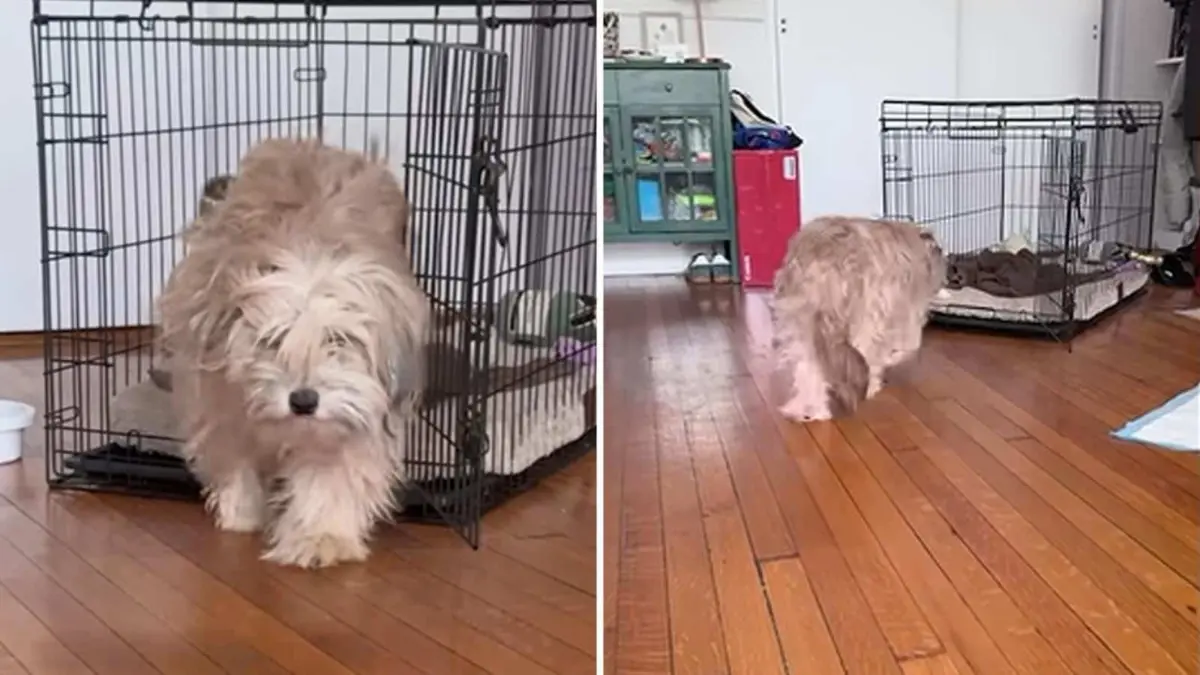
Citrus was removed from a high-density animal hoarding environment in Texas, a background characterized by chronic environmental deprivation, lack of socialization during critical developmental windows, and prolonged sensory overload. Upon arriving at her temporary foster home, her immediate physiological response to a novel environment was severe somatic shutdown. For the first six days, Citrus refused to voluntarily step outside the perimeter of her plastic transport crate, viewing the open room as a zone of immediate threat.
Phase II: Passive Decompression and Incremental Exposure
Faced with a subject exhibiting acute fear-induced inhibition, the foster caregiver implemented a passive habituation protocol. Recognizing that forced interaction would heighten sensory overload and potentially trigger fear-aggression, the caregiver minimized direct physical contact and eliminated eye contact during essential maintenance tasks.
To meet basic metabolic needs without triggering panic, high-value proteins (such as cooked chicken) were introduced through hand-feeding at the crate threshold. When Citrus remained too inhibited to ingest food in the presence of humans, the caregiver vacated the room entirely, granting the animal total environmental isolation to eat and drink.
Progress was measured in minor distance metrics. Over several days, Citrus began extending her physical boundary outside the crate door—first taking five steps before retreating into the crate, then advancing to seven, and eventually nine steps. These micro-excursions demonstrated that the canine was beginning to self-regulate her neurological stress response.
       [ Crate Sanctuary ]
               │
               ├─► Day 1-5: 0 Steps (Complete Crate Invalidation)
               ├─► Day 6-7: 5 Steps (Initial Probe & Retreat)
               ├─► Day 8-10: 7 Steps (Extended Sniffing Radius)
               └─► Day 11+: 9+ Steps (Voluntary Room Navigation)
Phase III: The Behavioral Pivot – Voluntary Toy Hoarding
As Citrus’s spatial comfort expanded beyond the crate threshold, she initiated an intriguing behavioral sequence: collecting plush stuffed toys from around the room and transporting them back into her crate.
Recognizing this behavior as a manifestation of both self-soothing and controlled environmental engagement, the foster caregiver constructed a structured daily game around it. Every morning, the caregiver would remove the collected toys from the crate and scatter them across the living room floor. In response, Citrus would voluntarily leave her sanctuary, retrieve each toy individually, and carry it back to her bed until the entire collection was reassembled inside her crate.
This daily loop fundamentally altered Citrus’s relationship with her environment. What began as a defensive retreat converted into an active, goal-oriented routine driven by internal motivation rather than external coercion.
While human intervention established baseline safety, the introduction of a balanced, well-socialized resident canine accelerated Citrus’s cognitive recovery. Through observational learning (social facilitation), Citrus watched the resident dog interact fearlessly with human caregivers, navigate household thresholds, and partake in play.
The presence of a non-threat canine proxy provided a regulatory buffer, allowing Citrus to mimic normative dog behaviors. Within weeks, her timid excursions evolved into open displays of playfulness, loose body posture, and active engagement in the household’s shared spaces.
Phase V: Permanent Adoption and Transition
Once Citrus reached behavioral stability—demonstrating resilience to routine household stimuli and displaying consistent affection toward humans—she was cleared for permanent placement. A prospective family prepared to continue trauma-informed management adopted her, renaming her Maggie. Follow-up reports confirm that Maggie has successfully generalized her confidence to her permanent residence, maintaining her playful temperament while building strong attachments with her new owners.
Supporting Context & Metrics
The Pathology of Hoarding Environments on Canine Behavior
Canines rescued from severe hoarding scenarios present distinct neurological and behavioral challenges compared to typical stray or surrendered animals. These challenges stem from specific environmental variables inherent to hoarding conditions:
Social Isolation vs. Overcrowding: Animals in hoarding situations frequently live in chaotic, dense packs without structured human interaction. While they may communicate with other dogs, they lack exposure to human handling, collars, leashes, and domestic home noises (e.g., appliances, footsteps, doorbells).
Sensory Deprivation & Agoraphobia: Raised within enclosed, cluttered environments, these animals frequently develop severe agoraphobia when exposed to open spaces, lawns, or rooms with high ceilings.
Chronic Cortisol Elevation: Prolonged exposure to poor air quality, resource competition, and unpredictable environmental stress leads to baseline hyper-arousal. When placed in a normal domestic setting, any novel stimulus can trigger an extreme fight, flight, or freeze response.
+----------------------------------------------------------------------+
|                 HOARDING TRAUMA vs. STANDARD SURRENDER               |
+---------------------------+------------------------------------------+
| Hoarding Victim           | Standard Surrender                       |
+---------------------------+------------------------------------------+
| Agoraphobia / Crate-Bound | Basic Environmental Familiarity          |
| Extreme Human Neophobia   | Socialized to Human Handling             |
| Lack of Leash/House Skills| Pre-Existing Household Conditioning      |
| Severe Somatic Freeze     | Stress Manifested as Vocalization/Pacing |
+---------------------------+------------------------------------------+
Quantitative Metrics: The "Rule of Three" in Trauma Rehabilitation
Canine behavioral professionals utilize the "3-3-3 Rule" as a standardized benchmark for tracking recovery trajectories in rescued animals, a timeline that aligned closely with Citrus’s documented progress:
[3 Days: Shutdown & Decompression]
   │
   ├─► Somatic freeze, elevated heart rate, refusal to eliminate or eat publicly.
   │
[3 Weeks: Environmental Habituation]
   │
   ├─► Understanding of daily routines, initial exploration (e.g., toy collecting).
   │
[3 Months: Baseline Integration]
   │
   └─► Full expression of personality, established security, readiness for adoption.
First 3 Days (Decompression): The animal experiences high acute stress, elevated cortisol levels, and physiological shutdown. During this phase, interventions must focus entirely on safety, environmental quiet, and stress minimization. Citrus spent this period exclusively inside her crate, coming out only during total isolation.
First 3 Weeks (Habituation): The animal’s sympathetic nervous system begins to downregulate. It begins to learn household routines, identifies safe zones, and attempts exploratory behaviors. Citrus reached this stage when she initiated her toy-gathering routine between days 7 and 21.
First 3 Months (Integration): The animal establishes genuine trust, demonstrates cognitive flexibility, and consolidates new behaviors. Citrus achieved this state through peer-modeling with the resident canine, transforming from a fear-bound rescue into an adoptable companion within this window.
Mechanisms of Resource-Based Self-Soothing
Citrus’s instinct to hoard plush toys offers an informative look into canine resource gathering. In severe trauma cases, resource accumulation can manifest in two distinct ways:
Pathological Resource Guarding: Driven by intense fear of deprivation, characterized by stiffening, growling, or biting when humans or other animals approach the gathered objects.
Comfort-Oriented Resource Gathering: Driven by a need to create a secure, tactile sanctuary. The objects (often soft materials like blankets or stuffed toys) provide olfactory and physical insulation, offering the animal a sense of ownership and control over an immediate micro-environment.
Citrus exhibited pure comfort-oriented gathering. Her willingness to allow her caregiver to remove the toys daily—and her subsequent, non-anxious retrieval of those toys—demonstrates that the behavior was an active self-regulatory exercise rather than an aggressive guarding response.
Official Statements & Case Reflections
Reflecting on the complex rehabilitation process, Citrus’s foster caregiver noted the profound severity of her initial state, comparing her to numerous prior foster subjects:
"I have cared for many foster dogs over the years, but Citrus arrived as unequivocally the most frightened dog I had ever brought into my home. In the beginning, the sheer level of panic she experienced over basic movements was heartbreaking. Every single step—going from five steps outside her crate to seven, and then to nine—was a massive victory that required immense patience."
The caregiver further detailed how the behavioral shift around toy collection altered the momentum of her recovery:
"Discovering her obsession with stuffed toys was the major turning point. She turned into a sweet little ‘hoarder’ in the best way possible. By turning it into a daily game where I cleared her crate and watched her methodically carry every single toy back inside, she gained a purpose. That routine gave her the courage to cross the room voluntarily, which did more for her confidence than any forced interaction ever could."
Regarding the role of the resident dog and the adoption outcome, representatives involved in the placement highlighted the necessity of peer support:
"Watching Citrus observe our resident dog was like seeing a lightbulb go off in her head. She realized that humans weren’t dangerous and that being out in the house was safe. By the time her adoptive family came into the picture, she was ready. They received a dog who had learned how to trust, and seeing her thrive today as Maggie in her forever home is the ultimate validation of the foster care system."
Future Outlook & Systemic Implications
The successful rehabilitation and placement of Citrus (Maggie) underscores broader challenges and potential solutions within national animal welfare logistics. Southern states, particularly Texas, continue to face acute shelter overcrowding and high volumes of severe animal neglect cases. The resolution of such cases depends heavily on multi-regional rescue networks that transfer vulnerable animals from high-intake municipalities to specialized foster-based organizations nationwide.
Investment in Foster Network Infrastructure: Shelter environments, characterized by high noise levels and limited individualized attention, are inherently counter-therapeutic for animals suffering from acute psychological trauma. Expanding foster infrastructure is essential for managing complex behavioral cases that would otherwise face euthanasia due to unadoptability.
Standardization of Trauma-Informed Care Protocols: Citrus’s recovery highlights the necessity of educating foster caregivers in non-confrontational, slow-exposure methods. Prioritizing voluntary agency, low-stress thresholds, and behavioral enrichment games over forced physical interaction significantly lowers fear response duration.
Strategic Deployment of Social Facilitation: Utilizing stable, non-reactive resident dogs to assist in the rehabilitation of fear-bound rescues remains one of the most effective, underutilized strategies in shelter behavioral medicine. Peer modeling bypasses human-canine communication barriers, enabling traumatized dogs to build environmental confidence rapidly.
As Maggie continues her life with her adoptive family, her case stands as a model for rescue organizations. It demonstrates that even dogs emerging from severe environmental deprivation can achieve full psychological recovery when provided with structured decompression, innovative behavioral outlets, and patient care.