Executive Overview
The story of Audrey, a severely injured rescue dog found abandoned in a vacant rental property, represents an extraordinary confluence of human compassion, unexpected timing, and cutting-edge veterinary innovation. Left with extensive trauma to her lower limbs and an uncertain future, Audrey’s trajectory changed fundamentally when country music singer-songwriter Jessica Lynn and her husband, musician Steve, encountered her profile on social media.
What began as a daunting rescue operation coincided with the global shutdown of the live music industry in 2020. The abrupt cancellation of Lynn’s massive international tour provided an unprecedented two-and-a-half-year window for the couple to dedicate themselves entirely to Audrey’s intensive rehabilitation.
Audrey’s recovery required navigating severe dermatological complications, failed prosthetic fittings, and recurrent tissue degradation. Her breakthrough came through an unconventional biomedical approach: the application of acellular fish skin graft matrixes—a technique originally developed for treating wildlife burn victims—alongside custom mobility engineering provided by the specialized non-profit organization Joey’s Paw.
Today, Audrey has transitioned from a neglected victim of abandonment to a fully mobile, thriving companion who travels the globe as the official stage mascot for Lynn’s international concert tours. Her case serves as an inspiring example of medical perseverance and a compelling case study in advanced veterinary orthotics, tissue regeneration, and animal welfare advocacy.
Detailed Chronology
[Early 2020] ------------> [Spring 2020] --------------> [2020-2022] -----------------> [2022-Present]
Audrey found abandoned    COVID-19 cancels world tour;   Fish skin grafts applied;    Audrey fully mobile;
in rental home with severe  Jessica & Steve adopt Audrey  custom orthotics fitted via   joins world tour as
limb loss/trauma          to begin intensive rehab       Joey's Paw & Dr. Infernuso   official stage mascot
1. Discovery and Initial Rescue (Early 2020)
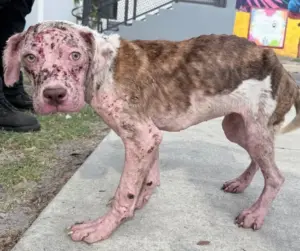
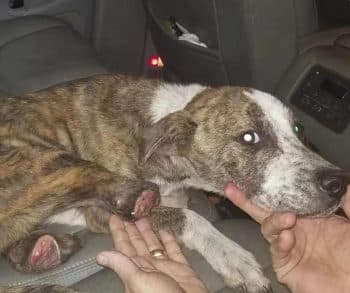
Audrey was discovered by rescuers inside an abandoned rental property, suffering from severe neglect and traumatic injuries to her lower limbs. Part of her leg had been lost, leaving exposed bone, extensive soft-tissue damage, and open wounds susceptible to life-threatening infections. She was initially sheltered and evaluated by local rescue advocates who documented her condition online.
Around the same time, country music artist Jessica Lynn was preparing for an expansive 2020 world tour slated to cover 100 cities across 15 countries over five months. While reviewing social media posts shared by a journalist she had recently met during a promotional magazine interview, Lynn saw Audrey’s profile. Touched by the dog’s resilience despite her physical state, Lynn felt an immediate calling to intervene.
2. The Pandemic Alignment (Spring 2020)
Initially, Lynn’s husband and musical collaborator, Steve, expressed reasonable hesitation regarding their capacity to care for a canine with high medical needs while maintaining a grueling international touring schedule. However, the onset of the COVID-19 pandemic dramatically altered their circumstances.
As global lockdowns grounded the entertainment industry, Lynn’s 100-city tour was entirely postponed. The unexpected professional pause stretched into a 30-month hiatus from the road, creating an ideal window for the couple to adopt Audrey and commit to her round-the-clock rehabilitation.
3. Surgical Interventions and Chronic Complications (2020–2021)
Upon taking custody of Audrey, Lynn and Steve engaged veterinary orthopedic surgeon Dr. Infernuso to assess her limbs and perform necessary corrective surgeries. Audrey demonstrated an innate drive to stand and walk on four limbs, but her remaining residual limbs presented severe clinical challenges:
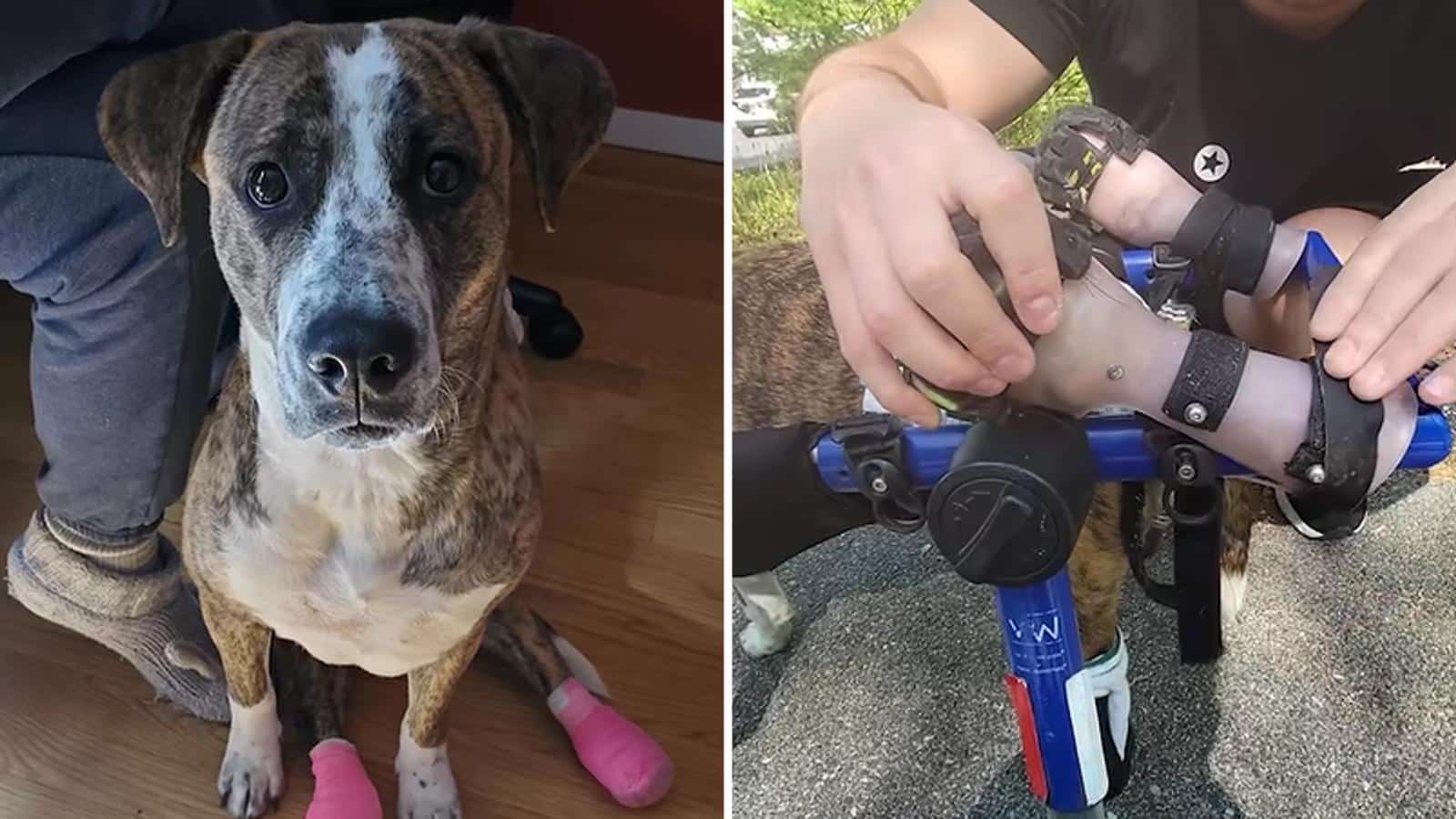
- Insufficiency of Residual Bone: Multiple prosthetics manufacturers noted that Audrey lacked adequate bone length on her affected limb to anchor standard prosthetic sockets.
- Fragile Epidermal Tissue: The skin covering her distal stumps was thin, easily tearable, and prone to severe friction sores.
- Recurrent Infections: Every attempt to encourage weight-bearing movement resulted in skin breakdown, reopenings of surgical sites, and persistent bacterial infections.
Despite integrating holistic modalities—including specialized acupuncture, canine chiropractic alignment, physical therapy, and hydrotherapy—the fundamental challenge of skin fragility prevented long-term prosthetic usage.
       +-------------------------------------------------------+
       |             CHRONIC TISSUE BREAKDOWN                  |
       |  Fragile stump tissue -> Friction/Movement -> Sores   |
       +---------------------------+---------------------------+
                                   |
                                   v
       +-------------------------------------------------------+
       |             EXPERIMENTAL INTERVENTION                 |
       |    Acellular Fish Skin Matrix (Xenograft) Applied    |
       +---------------------------+---------------------------+
                                   |
                                   v
       +-------------------------------------------------------+
       |                 MOBILITY SUCCESS                      |
       |  Durable tissue recovery -> Custom orthotics fitted  |
       +-------------------------------------------------------+
4. The Experimental Breakthrough: Fish Skin Xenografts (Late 2021)
Facing potential chronic invalidism or further limb shortening, a novel suggestion emerged from Lynn’s mother, who had read about groundbreaking treatments utilizing fish skin graft technology on wild animals injured in forest fires.
Dr. Infernuso and the medical team explored applying acellular fish skin (typically derived from cod or tilapia) to Audrey’s non-healing wounds. Rich in omega-3 fatty acids and natural collagen structures, the biological matrix was applied directly to the damaged tissue.
The treatment yielded unprecedented results:
- Accelerated cellular migration and tissue regeneration.
- Complete closure of persistent, chronic open wounds.
- Significant thickening and toughening of the skin layer covering her residual limbs.
- Total resolution of recurring bacterial surface infections.
5. Custom Prosthetics and Mobility Integration (2022–Present)
With her skin fully healed and structurally reinforced, Audrey became a candidate for advanced orthotics. The couple partnered with Joey’s Paw, a specialized non-profit organization dedicated to providing mobility devices, wheelchairs, and custom prosthetics to rescues and special-needs animals.
Engineers designed specialized prosthetic limbs tailored to Audrey’s unique stump morphology. Following intensive gait-training sessions and physical therapy, Audrey achieved full, independent quadrupedal locomotion, demonstrating the ability to walk, trot, and run without pain or tissue degradation.
Supporting Context & Metrics
The Science of Fish Skin Grafts in Veterinary Medicine
The utilization of fish skin matrixes (xenografts) represents a significant advancement in veterinary wound management and regenerative medicine. Originally popularized by researchers treating burn-injured wildlife during California wildfires, intact fish skin offers distinct biological advantages over traditional mammalian grafts:
| Feature | Mammalian Grafts (Porcine/Bovine) | Fish Skin Matrix (Xenograft) |
|---|---|---|
| Viral Transmission Risk | Requires heavy processing, destroying biological structure | Zero risk of disease transmission to mammals; gentle processing |
| Lipid Profile | Low active lipid density | High concentration of naturally occurring Omega-3 fatty acids |
| Structural Integrity | Often degraded during sterilization | Preserves natural 3D porous structure resembling human/canine skin |
| Anti-Inflammatory Properties | Minimal | High; accelerates re-epithelialization and reduces pain |
| Infection Barrier | Moderate | Provides a durable bacterial barrier while recruiting host cells |
For Audrey, whose residual limb skin was continuously breaking down under biomechanical stress, the fish skin matrix provided the structural scaffolding necessary to build vascularized, thick dermal tissue capable of enduring prosthetic contact.
Rehabilitation and Operational Metrics
The effort required to rehabilitate an amputee rescue dog with complex dermatological needs involves significant time, expertise, and financial resources.
Touring Hiatus Duration:      30 Months (2.5 Years)
Planned Tour Scope Impacted: 100 Cities / 15 Countries
Primary Medical Interventions: Corrective Surgery, Acellular Fish Skin Xenografts, Hydrotherapy, Chiropractic Care
Non-Profit Assistance:       Joey's Paw (Custom Prosthetic Engineering & Design)
Current Mobility Level:      Full independent quadrupedal running/walking
The Role of Specialized Non-Profits
Organizations like Joey’s Paw address a critical gap in the animal rescue ecosystem. Standard veterinary care rarely covers the high cost of custom-molded prosthetic devices, which can cost thousands of dollars per limb and require ongoing adjustments as the animal’s muscle mass shifts.
By funding and facilitating the manufacture of bespoke orthotics, Joey’s Paw enables special-needs dogs—who might otherwise face euthanasia due to mobility limitations—to achieve functional independence.
Official Statements & Perspectives
Jessica Lynn on the Rehabilitation Journey and Emotional Toll
Reflecting on the grueling multi-year process, Jessica Lynn detailed the emotional strain of navigating systemic setbacks before achieving a medical breakthrough:
"When we first took Audrey in, we knew it would be a challenge, but we had no idea how complex her medical recovery would become. Watching her skin repeatedly break down after we thought she was healed was devastating. Every time she tried to walk and opened those wounds, it broke our hearts.
The fish skin treatment was an absolute miracle for us. It changed everything. To go from doctors telling us she might never have enough leg or strong enough skin for prosthetics, to watching her sprint across the yard on her own four feet—it still brings me to tears. She showed a level of determination that inspired Steve and me every single day."
Steve on Balancing Career and Special-Needs Advocacy
Steve highlighted the profound impact Audrey’s recovery had on their personal perspectives and daily touring lifestyle:
"Initial concerns about how we would manage a dog with such intensive medical demands while touring vanished the moment we saw her spirit. The pandemic gave us a rare gift of time, and spending two and a half years focusing almost entirely on her recovery reshaped our priorities.
Now, having her on the road with us isn’t a burden—she is the heart of our group. Seeing how audiences react to her story and watching her walk out at venues proves that every setback, every surgery, and every bit of effort was completely worth it."
Veterinary Insights on Prosthetic Adaptation
Veterinary surgical experts emphasize that success in complex amputee cases relies on a multidisciplinary approach combining surgical precision, advanced tissue engineering, and patient compliance.
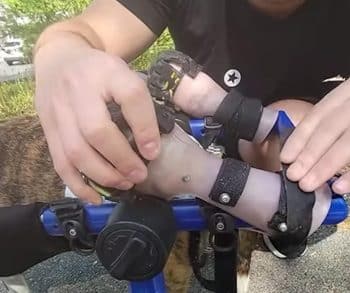
Medical commentators familiar with cases like Audrey’s note that residual limb maintenance is a lifelong endeavor. Prosthetic devices require continuous recalibration, socket lining replacements, and careful monitoring of tissue pressure points to prevent long-term joint strain or overuse injuries in the healthy limbs.
Future Outlook
Audrey’s transformation from an abandoned, immobile rescue to an international touring companion highlights broader shifts in animal welfare, veterinary medicine, and public awareness regarding special-needs pets.
1. Life on the Road: The Stage Mascot
Audrey now travels full-time with Jessica Lynn and Steve on their rescheduled domestic and international concert tours. Dubbed by the crew as the band’s official "stage manager and mascot," she actively participates in venue life, showcasing the real-world viability of canine prosthetics to thousands of fans worldwide.
       +-------------------------------------------------------+
       |                 AUDREY'S DAILY ROUTINE                |
       |  Regular prosthetic maintenance & device refurbishing |
       +---------------------------+---------------------------+
                                   |
                                   v
       +-------------------------------------------------------+
       |                 ONGOING ADVOCACY                      |
       | Partnering with Joey's Paw & promoting shelter rescues |
       +---------------------------+---------------------------+
                                   |
                                   v
       +-------------------------------------------------------+
       |               VETERINARY INSPIRATION                  |
       | Demonstrating advanced wound care (fish skin matrix)   |
       +-------------------------------------------------------+
2. Maintenance and Long-Term Care
Caring for a prosthetic-dependent canine requires ongoing maintenance:
- Refurbishment: Prosthetic sockets, tread soles, and suspension straps undergo regular wear and tear, requiring routine refitting by specialized orthotists.
- Biomechanical Monitoring: As Audrey ages, her physical therapy routine will adapt to maintain spinal alignment and prevent secondary arthritis in her non-affected joints.
- Skin Integrity Checks: Daily evaluations of her distal limb tissue remain mandatory to catch any minor abrasions before they escalate into deep-tissue wounds.
3. Advancing the Field of Veterinary Orthotics and Advocacy
Audrey’s high-profile story continues to generate tangible benefits for the broader rescue community:
- Promoting Advanced Therapies: Her successful outcome with fish skin grafts offers a documented model for veterinarians treating difficult wound cases, thermal burns, and stump degradation.
- Support for Joey’s Paw: Jessica Lynn and Steve actively use their public platform to raise funds and awareness for Joey’s Paw, ensuring other amputee and paralyzed shelter animals receive life-changing mobility devices.
- Challenging Euthanasia Norms: Audrey’s story demonstrates that severe physical disability in dogs does not equate to a poor quality of life, encouraging shelters and adopters to consider special-needs animals.
Audrey’s journey underscores a powerful truth: with patience, innovative medical science, and dedicated care, even the most vulnerable animals can overcome seemingly insurmountable odds to live full, extraordinary lives.