
Executive Overview
Every spring, the Platte River valley in Nebraska transforms into one of the most magnificent natural spectacles on the North American continent. Hundreds of thousands of Sandhill Cranes—and occasionally the critically endangered Whooping Crane—converge on the shallow braided channels and surrounding wet meadows, creating a deafening, awe-inspiring symphony of prehistoric calls and a swirling blanket of feathers. For decades, the Iain Nicolson Audubon Center at Rowe Sanctuary has served as the premier gateway for this world-renowned wildlife migration, drawing ecotourists, wildlife photographers, and ornithologists from every corner of the globe.
However, the magnetic pull of the spring crane migration often overshadows a compelling reality: Rowe Sanctuary is a spectacular, vibrant birding destination twelve months a year.
In recent years, conservationists and sanctuary staff have sought to shift the narrative surrounding wildlife tourism at the site. While the crane season requires strict scheduling, pre-dawn reservations, and guided blinds, the remainder of the year offers an entirely different, highly accessible experience. This initiative is specifically designed for the "baby birder"—the casual observer, the non-eBird user, the spouse tagging along on a trip, or the curious individual who simply wants to trade screen time for green space.
As birding experiences a massive surge in popularity nationwide, driven by post-pandemic shifts toward outdoor recreation and accessible digital identification tools, Rowe Sanctuary is positioning itself as an inclusive, low-pressure laboratory for nature lovers. By breaking down the psychological barriers of traditional birding—such as intimidating field guides, complex digital databases, and the pressure of spotting rare lifers—Rowe Sanctuary is proving that the gateway to the natural world requires nothing more than curiosity, an open ear, and a willingness to slow down.
Detailed Chronology and Evolution of Rowe Sanctuary
From Agricultural Footprint to Ecological Sanctuary
To understand the year-round vibrancy of Rowe Sanctuary, one must examine its geographical and historical evolution. Situated along a critical bottleneck of the Central Flyway, the sanctuary spans miles of the Platte River and its adjacent lowland grasslands. Historically, this ecosystem was maintained by natural flooding cycles and migratory bison herds, which scoured the landscape and kept woody vegetation at bay, maintaining the wide, open-channel riverbed that cranes and shorebirds require.
As European settlement expanded westward through Nebraska, the Platte River watershed underwent profound alterations. Upstream dam construction, water diversion for agriculture, and fire suppression choked the river with invasive phragmites, purple loosestrife, and eastern red cedar trees. The once-wide river narrowed, threatening the roosting security of millions of migratory birds.
Recognizing this ecological crisis, the National Audubon Society established the Rowe Sanctuary in the late 20th century. Through aggressive habitat restoration—including mechanical tree clearing, prescribed burns, and wetland restoration—staff and volunteers systematically re-engineered the landscape. They recreated a mosaic of wet meadows, river channels, and cottonwood groves.
While these restoration efforts were initially prioritized to secure a safe haven for the spring Sandhill Crane surge, they inadvertently created a permanent, highly diverse micro-habitat capable of supporting resident and breeding birds throughout the entire annual cycle.
The Shift Toward Inclusivity
For much of its early history, Rowe Sanctuary’s public-facing identity was inextricably linked to the frantic, compressed window of February through April. Visitors booked months in advance, bundled up in sub-freezing pre-dawn darkness, and sat quietly in blinds to watch the cranes. While this remains a cornerstone of the sanctuary’s mission, the operational strategy evolved in the 2020s.
Recognizing that modern conservation relies on building broad-based public empathy, sanctuary leadership pivoted toward year-round accessibility. They recognized that the intense, high-stakes environment of crane season could inadvertently intimidate beginners. A visitor who missed out on a booked crane tour might assume the sanctuary had nothing to offer for the rest of the year.
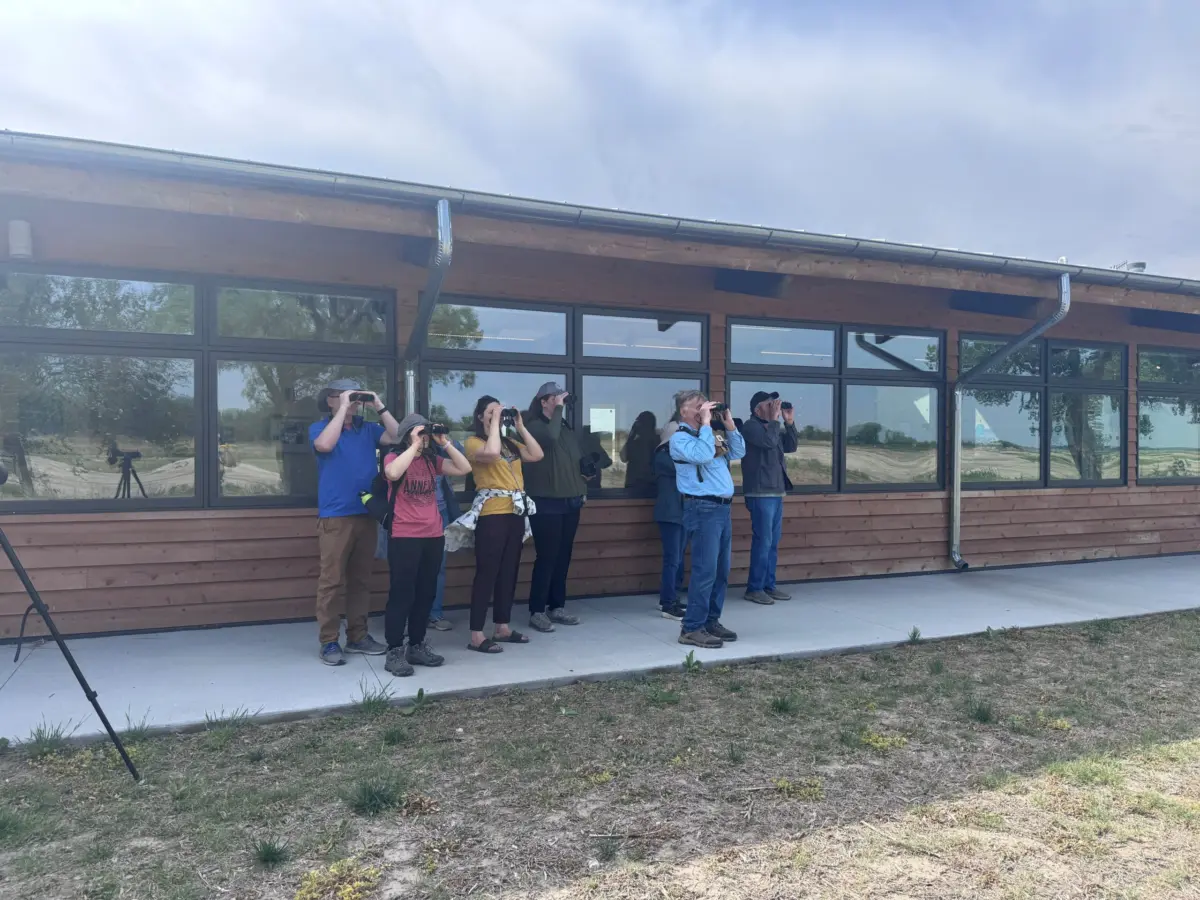
To counter this, Rowe expanded its public infrastructure. The visitor center was enhanced with panoramic windows overlooking the Platte River, equipped with high-powered spotting scopes, feeder stations, and real-time sighting logs. Trails were meticulously maintained and mapped, turning the sanctuary into a dynamic, drop-in educational center where anyone could walk in off Interstate 80—which runs parallel to the sanctuary corridor—and immerse themselves in local ecology without paying an admission fee or navigating a complex reservation system.
Supporting Context and Metrics: The Rise of the "Baby Birder"
The Democratization of Birding
Birding has undergone a quiet revolution over the last decade. Once stereotyped as an elite pastime dominated by retirees with heavy spotting scopes and exhaustive life lists, the hobby has democratized rapidly. This shift has been catalyzed by three major factors:
- Technological accessibility: Smartphone apps like Merlin Bird ID (developed by the Cornell Lab of Ornithology) allow users to identify birds instantly using acoustic recognition (recording a song) or quick photo uploads.
- The wellness movement: A growing body of psychological and medical research highlights the mental health benefits of "forest bathing," green time, and acoustic ecology.
- Community platforms: Digital tools like eBird have gamified and connected the birding community, making participation feel less isolated.
Despite these tools, beginners frequently experience "birder’s imposter syndrome." The vast terminology, obscure subspecies distinctions, and intimidating leaderboards on platforms like eBird can alienate novices.
Rowe Sanctuary by the Numbers: What to Expect
To demystify birding for beginners, Rowe Sanctuary’s staff emphasizes baseline metrics that ground expectations in reality. While hundreds of bird species have been documented within the sanctuary’s boundaries over decades of intense monitoring, a visitor stepping out for a casual, mid-day summer or autumn walk will not encounter all of them at once.
- Typical Yield: A short, leisurely 45-minute stroll along the sanctuary trails generally yields between 15 and 25 species for a beginner.
- Seasonal Shifts: While spring brings migrating waterfowl and shorebirds, summer introduces breeding songbirds (such as Dickcissels, Blue Grosbeaks, and Orchard Orioles), and autumn heralds raptor movements and returning northern migrants.
- Cost of Entry: $0. The visitor center and trail systems are designed to remove economic barriers to nature access.
- Time Commitment: Highly flexible. Visitors can spend 20 minutes peering through the visitor center windows with a cup of coffee or dedicate an entire afternoon to exploring the hiking trails.
The Anatomy of a Beginner’s Mistake
One of the most comforting realities taught at Rowe Sanctuary is that identification errors are a universal rite of passage. Staff frequently share lighthearted anecdotes about beginners convinced they have spotted a rare, exotic vagrant—such as a displaced Australian parrot or an Arctic shorebird—only to discover they were looking at a ubiquitous American Robin, European Starling, or Red-winged Blackbird viewed through a sun-glared lens or an unusual anatomical angle.
Far from discouraging novices, this shared vulnerability fosters a welcoming community culture. Birding, at its core, is not about getting every identification right on the first try; it is about the process of observation.
Official Perspectives and Community Engagement
Expert Insights on Observation and Acoustic Ecology
According to sanctuary naturalists and educators, one of the most common pitfalls for beginners is relying exclusively on their eyes. While binoculars and field guides are standard equipment, the human ear is frequently the most underutilized and powerful tool in the field.
"One of your most underrated birding tools is something you already have with you: your ears," notes the Rowe Sanctuary education team. "Birders often focus on what they can see, but birdsong and calls can tell you where a bird is hiding, help you identify a species, and even give you clues about what is happening around you. Sometimes you don’t have to see a bird to start figuring out what it is."
Acoustic ecology allows visitors to navigate complex habitats like the Platte River cottonwood forests. A sharp chup note might reveal a hidden Yellow-breasted Chat, while the rattling call of a Belted Kingfisher alerts the listener to movement along the water long before the bird enters the field of vision.
Building Human Connections: The Community Aspect
Birding is frequently perceived as a solitary activity, but at its heart, it is deeply communal. Rowe Sanctuary leverages this by hosting regular community events designed to bridge the gap between novice nature lovers and experienced ornithologists.
A prime example of this initiative is the recurring "Let’s Go Birding Together" walks, designed specifically to create a safe, inclusive, and welcoming space for all individuals—including members of the LGBTQ+ community, families, and absolute beginners—to explore nature together.
- Upcoming Event Date: August 29, 2026.
- Registration Details: While online registration is encouraged via Audubon’s engagement portal, walk-ins are routinely welcomed, reinforcing the barrier-free ethos of the sanctuary.
These monthly walks serve a dual purpose. They provide structured mentorship where novices can learn field-craft secrets—such as how to hold binoculars smoothly, how to interpret tail-bobbing behavior, and how to navigate field guide index systems—while simultaneously forging social bonds among people who share a passion for conservation.
Demystifying eBird for the Novice
For those hesitant to enter the digital realm of citizen science, Rowe Sanctuary staff actively demystify platforms like eBird. Operated by the Cornell Lab of Ornithology, eBird functions as a global database where birders log their observations, contributing vital data to professional conservationists tracking population trends, climate migration shifts, and habitat degradation.
For a beginner, however, eBird can look like a spreadsheet-heavy marathon of competitive listing. Sanctuary educators actively reframe the tool:
- You do not need to identify every bird in the bush to submit a list.
- You can start by logging just three common birds you know for certain (e.g., Mourning Dove, American Goldfinch, House Wren).
- Submitting incomplete or simple lists is entirely acceptable; the platform values data transparency over perfection.
Visitors can also bypass the app entirely during their initial visit by checking the sanctuary’s physical recent sightings board located inside the visitor center. This analog chalkboard provides a communal snapshot of what has been spotted that very morning, offering actionable targets for a afternoon walk.
Future Outlook: The Expanding Role of Rowe Sanctuary in Modern Conservation
As land-use pressures, climate volatility, and habitat fragmentation continue to challenge North American bird populations, the strategic importance of sanctuaries like Rowe cannot be overstated. However, the future of conservation relies just as heavily on human habitat as it does on avian habitat.
Cultivating the Next Generation of Stewards
Rowe Sanctuary’s year-round pivot represents a broader philosophical shift within the modern Audubon movement: the democratization of environmental stewardship. By welcoming the "baby birder" in the quiet months of August, September, or November, the sanctuary is cultivating a broader, more resilient base of advocates.
A person who visits Rowe Sanctuary on a quiet Tuesday afternoon in late summer to watch a Great Blue Heron stalk the shallows, or to listen to the frantic chatter of House Wrens in the brush, is far more likely to support regional water conservation policies, vote for wetland protections, and appreciate the complex ecological realities of the Platte River basin.
Year-Round Discovery: What Lies Ahead
Looking forward, Rowe Sanctuary plans to expand its digital literacy programs, integrating beginner-friendly workshops that pair smartphone identification apps with traditional field craft. Plans are also underway to enhance universally accessible trail loops, ensuring that physical mobility limitations do not prevent anyone from experiencing the restorative power of the Platte River ecosystem.
Ultimately, the message from Rowe Sanctuary is clear: do not wait for spring to experience the magic of the Platte. Whether it is a Bald Eagle soaring silently overhead against a slate-gray autumn sky, a tiny songbird darting through the riparian shrubs, or a familiar resident bird exhibiting an unexpected behavioral quirk, the sanctuary remains open.
Birds are everywhere, all the time. You simply need to step outside, open your ears, and let curiosity be your guide.