
Executive Overview
In the realm of domestic canines, few lineages are as frequently conflated, misunderstood, or subjected to intense public scrutiny as the American Bulldog and the American Pitbull Terrier. To the untrained eye, their robust musculature, short coats, and powerful jaws create a visual blur, leading many to incorrectly assume these two distinct breeds are interchangeable. In reality, they represent entirely separate canine developments shaped by divergent histories, distinct biological architectures, and unique behavioral profiles.
As modern pet ownership intersects with complex municipal legislation and deeply entrenched cultural myths, distinguishing between the American Bulldog and the Pitbull is more critical than ever. Both breeds trace distant ancestral roots back to the now-extinct Old English Bulldog, yet their evolutionary trajectories split significantly over the centuries. While the American Bulldog evolved primarily as a formidable homestead guardian and agricultural working dog, the American Pitbull Terrier was forged through strategic crossbreeding with terriers to maximize agility and tenacity.
This comprehensive investigative report moves past generalized stereotypes to examine the anatomical realities, historical contexts, and behavioral requirements of these two powerful canines. Through expert analysis and empirical comparison, we explore what it truly means to care for these magnificent athletes in the twenty-first century.
Detailed Chronology: The Historical Evolution of Two Powerhouses
To understand the modern American Bulldog and American Pitbull Terrier, one must retrace the historical forces that shaped their development. Both breeds carry the legacy of working utility, but their specific chapters in canine history are profoundly different.
The Foundation: The Old English Bulldog Legacy
During the Middle Ages and early modern era in the British Isles, a heavy-set, exceptionally courageous dog known as the Old English Bulldog was utilized in blood sports such as bull-baiting and bear-baiting. These dogs were selected explicitly for their powerful grip, low center of gravity, and stoic resistance to pain. When these blood sports were officially outlawed in the 19th century through legislative acts like the Cruelty to Animals Act 1835, the utilitarian purpose of the Old English Bulldog rapidly diminished, leading to a dramatic shift in how breeders approached the canine stock.
The American Bulldog: Saving a Guardian from Extinction
As immigrants traveled to the American continent, they brought along their working Bulldogs to serve on farms as catch dogs for feral livestock, property guardians, and hunters of wild boar. These dogs were larger, more agile, and possessed greater stamina than the show-type Bulldogs developing in Victorian England.
However, by the mid-20th century, the working American Bulldog population had dwindled precipitously, bringing the breed to the absolute brink of extinction. The survival of the American Bulldog as a distinct, recognizable breed is largely credited to the tireless conservation efforts of Dr. John D. Johnson and Alan Scott. Beginning in the late 1940s, Johnson traveled the rural American South to locate, document, and selectively breed the remaining working stock, establishing the foundation lines that define the breed today.
The Pitbull: Merging Bulldog Power with Terrier Agility
Conversely, the American Pitbull Terrier emerged through a different hybridization process. Breeders in England, Ireland, and later the United States crossed the foundational Old English Bulldog with various working terriers—such as the Old English Terrier. The explicit goal was to combine the raw jaw strength and physical resilience of the Bulldog with the lightning-fast reflexes, gameness, and high prey drive of the terrier.

Brought to North America by immigrants, these dogs found roles as all-around farm helpers, hunting companions, and family pets. Unfortunately, their high gameness and intense physical capabilities also made them primary targets for illegal dog-fighting rings, a dark historical association that continues to cast a long shadow over the breed’s public reputation today.
Supporting Context & Metrics: Anatomy, Physiology, and Performance
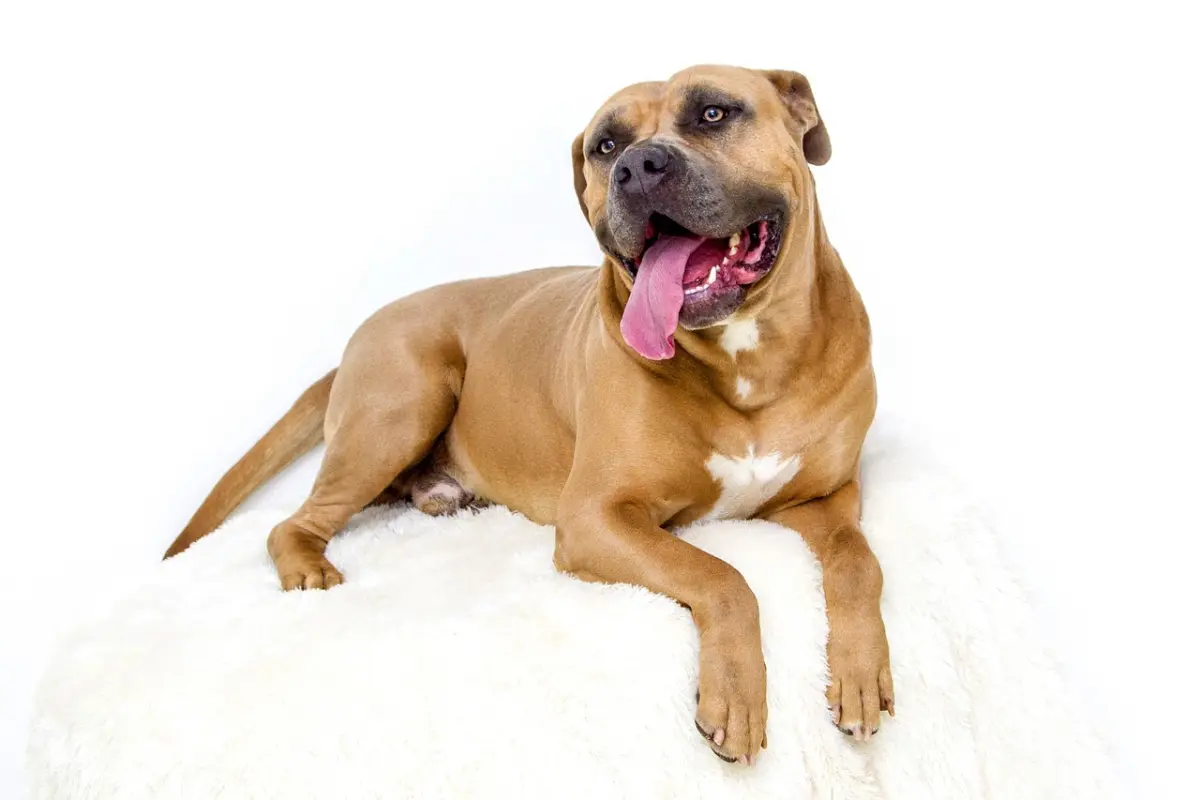
When placed side by side, the physical differences between an American Bulldog and an American Pitbull Terrier become remarkably apparent, though their sheer muscular density often causes confusion for casual observers.
Comparative Breed Metrics
| Metric | American Bulldog | American Pitbull Terrier |
|---|---|---|
| Height Range | 20–27 inches (51–69 cm) | 17–21 inches (43–53 cm) |
| Weight Range | 75–125 lbs (34–57 kg) | 35–65 lbs (14–29 kg) |
| Physical Build | Heavy, stocky, and powerfully boned | Lean, athletic, and streamlined |
| Coat Characteristics | Short, single coat; white, brindle, or patched | Glossy, short coat; blue, red, black, fawn, or brindle |
| Average Lifespan | 10–12 years | 12–15 years |
| Energy Output | Moderate to high; robust stamina | Exceptionally high; intense daily drive |
Structural Contrasts: Size and Agility
The American Bulldog is decidedly the larger and more substantial of the two breeds. Males typically tower between 22 and 27 inches at the shoulder and can weigh up to 125 pounds, supported by heavy bone structures and broad, deep chests designed for brute power and endurance. Their heads are massive, featuring powerful jaws capable of exerting immense pressure, though scientifically debunked myths regarding a "locking jaw" mechanism persist. (Canine experts confirm that neither breed possesses any unique anatomical locking mechanism; their reputation stems entirely from their high tenacity and muscular grip strength).
The American Pitbull Terrier, meanwhile, is built for dynamic agility and explosive speed. Standing between 17 and 21 inches tall and generally weighing between 35 and 65 pounds, the Pitbull features a leaner, more streamlined frame. Their compact, muscular bodies allow for exceptional vertical leap capabilities and rapid directional changes, making them formidable competitors in canine sports like weight pulling, agility, and dock jumping.
Official Statements and Behavioral Insights
Behavioral scientists, animal behaviorists, and breed rescue organizations consistently emphasize that environment, socialization, and owner leadership play infinitely larger roles in canine temperament than genetics alone. However, breed-specific predispositions cannot be entirely ignored.
American Bulldog Temperament: The Confident Protector
American Bulldogs are profoundly loyal, confident, and protective of their family units. Having been bred to work independently as farm guardians, they possess an inherent independence that can manifest as stubbornness if not managed with consistent, firm, and positive reinforcement training.
According to canine behavior specialists, American Bulldogs are often remarkably tolerant of human family members, including children, when properly socialized. However, their guarding instincts mean they require early, deliberate exposure to strangers, new environments, and other animals to prevent over-protectiveness from escalating into unwarranted wariness.
Pitbull Temperament: Affection, Energy, and Animal Reactivity
The American Pitbull Terrier is frequently subjected to polarized narratives—either vilified as inherently vicious or idealized as a "nanny dog." Neither extreme reflects biological reality. When raised by responsible, experienced owners, Pitbulls are notoriously affectionate, people-oriented, and eager to please, earning them high marks in therapy and companion work.

However, veterinary behaviorists note a crucial distinction regarding animal reactivity. Due to their historical selection for fighting tasks, many Pitbulls retain a higher predisposition toward dog-selectivity or dog-aggression as they mature into adulthood. While early socialization can mitigate this trait significantly, responsible Pitbull ownership requires lifelong vigilance around other animals, regardless of early training success.
Exercise, Nutrition, and Health Requirements
Both the American Bulldog and the Pitbull are high-energy, working-class dogs that wither under sedentary conditions. Attempting to keep either breed as a purely indoor, low-activity pet is a recipe for behavioral disaster.
Daily Energy Expenditure
- American Bulldog: Requires at least 60 to 90 minutes of daily vigorous exercise, such as brisk long-distance walking, hiking, or structured obedience training. Owners must exercise caution during hot weather; due to their slightly shorter muzzles (brachycephalic tendencies in some lines), American Bulldogs are prone to overheating and respiratory distress.
- Pitbull: Demands intense physical and mental stimulation daily. Lacking an outlet for their abundant energy, Pitbulls can easily develop destructive behaviors, such as chewing furniture, digging, or fence-running. Interactive play, agility courses, and weighted drag training are exceptionally beneficial for this breed.
Veterinary Care and Common Health Predispositions
Both breeds are generally robust, but their specific builds predispose them to certain hereditary conditions:
- Hip and Elbow Dysplasia: Common in larger, heavy-boned dogs like the American Bulldog due to excess weight and joint stress.
- Skin Allergies and Demodicosis: Both short-coated breeds are prone to environmental and food allergies, which can manifest as chronic dermatitis or skin infections.
- Cardiac Issues: American Bulldogs require routine cardiac screenings to monitor for aortic stenosis and other congenital heart defects.
Future Outlook: Legislation, Ownership, and the Path Forward
As municipal governments continue to grapple with public safety concerns, Breed-Specific Legislation (BSL)—which often targets Pitbulls and, by extension, any heavy-bodied bulldog-type dog—remains a contentious social and political issue. Animal welfare advocates, veterinary associations, and legal experts increasingly argue that BSL is an ineffective policy measure, advocating instead for owner accountability laws, mandatory spay/neuter initiatives, and strict penalties for irresponsible dog management.
For prospective owners, the choice between an American Bulldog and an American Pitbull Terrier is not merely an aesthetic preference; it is a commitment to managing two vastly different athletic profiles. The American Bulldog offers steadfast, imposing guardianship and immense physical strength, while the Pitbull delivers high-octane agility, boundless affection, and an intense drive for engagement.
Ultimately, neither breed is inherently dangerous, nor are they suitable for passive or first-time dog owners. With rigorous socialization, intelligent leadership, and a deep respect for their working heritage, both the American Bulldog and the American Pitbull Terrier can fulfill their true potential: loyal, well-adjusted pillars of the modern canine family.