
Executive Overview
For centuries, the classification of the natural world has operated on a foundational premise: that species are fixed, distinct entities. Yet, for modern ornithologists and the passionate community of field birders who track them, avian taxonomy is a living, breathing, and perpetually shifting science. As genetic sequencing advances, field observations sharpen, and evolutionary biology uncovers hidden divides, the bird checklists that enthusiasts rely on are undergoing a profound transformation.
The year 2026 has brought a seismic wave of updates to the ornithological world. In late October, simultaneous announcements from the American Ornithological Society (AOS) committee—the traditional gatekeepers of North American bird names—and eBird, the global database and mobile application hosted by the Cornell Lab of Ornithology, delivered a flurry of taxonomic changes. These updates feature newly minted species splits, expanded geographical distinctions, and localized name corrections that will require birders across the continent to rewrite their life lists and relearn field identification markers.
Compounding this evolution is a major institutional shift: the National Audubon Society and its flagship publication, Audubon magazine, have officially transitioned to align with eBird’s global taxonomic list. Driven by Audubon’s expanding conservation and research footprint across the Americas, this shift means that eBird’s nomenclature is now the default standard for public communications, field guides, and conservation literature moving forward.
While the AOS and eBird lists remain largely harmonious, divergences in specific rulings have created a fascinating moment of transition—and mild confusion—for birders navigating the field. From the bifurcation of the widespread Willet to the genetic remapping of Marsh Wrens and the dramatic reclassification of the Great Egret, 2026 marks a watershed year for North American ornithology.
Detailed Chronology: The 2026 Taxonomic Updates
The process of avian taxonomy is rarely sudden, but its formal publication dates serve as critical milestones for the birding community. The timeline leading up to the late October 2026 updates involved years of behavioral studies, vocalization analyses, and mitochondrial DNA sampling.
The Willet Bifurcation
For generations, the Willet was regarded as a single, highly adaptable shorebird species, recognizable by its large frame, noisy disposition, and the striking flashing black-and-white wing pattern revealed in flight. However, persistent field observations regarding habitat preferences, migration pathways, and subtle morphological differences prompted a deeper investigation. By late 2026, both the AOS and eBird formally recognized what birders had long suspected: the Willet is actually two distinct species.
- Prairie Willet (Tringa inornata): This western population nests primarily around inland marshes, stretching from the Dakotas and Canadian prairie provinces down into eastern California. When winter arrives, they stage massive migrations to coastal regions, populating the Pacific Coast, the Gulf Coast, and the southern Atlantic Coast northward to New Jersey. During migration windows, they frequently transit through the interior West and around the Great Lakes. Structurally, Prairie Willets average larger in size, appear noticeably paler in all plumages, and possess thinner, more tapered bills that create the optical illusion of greater length.
- Saltmarsh Willet (Tringa semipalmata): True to their name, these birds are tightly bound to coastal salt marshes, nesting extensively along the Gulf and Atlantic coasts from Texas to eastern Canada. Their winter migrations take them far south into the coastal wetlands of Central and South America, often requiring grueling overwater flights. Saltmarsh Willets are exceptionally rare inland; the vast majority of inland Willet records across eastern North America belong exclusively to the Prairie species. They can be distinguished from their western counterparts by a heavier, thicker-tipped bill and darker, more heavily barred breeding plumage.
The Marsh Wren Divide
Few sounds are as characteristic of North American cattail marshes as the sputtering, chattering vocalizations of the Marsh Wren. Yet, for more than four decades, researchers recognized a glaring behavioral split: male Marsh Wrens in the western half of the continent possessed significantly larger repertoires of songs than their eastern counterparts.
Gradual genetic and acoustical studies eventually confirmed that these regional divergences were absolute. The species has now been officially split into the Western Marsh Wren (Cistothorus paludicola) and the Eastern Marsh Wren (Cistothorus palustris).
Visually, the two birds are nearly identical, making identification in zones of overlap—such as the Great Plains and Canadian prairie provinces—a formidable challenge. Acoustically, however, they diverge. The Western Marsh Wren delivers a harsher, highly variable song loaded with rattling noises and initiated by one or more hard chuck notes. In contrast, the Eastern Marsh Wren typically opens with a buzzy note before transitioning into a more musical, bubbling cadence. Ornithologists strongly recommend that birders navigating the central plains study audio references, such as the digital archives hosted by the Cornell Lab of Ornithology’s Macaulay Library, before attempting field identification.
Warblers, Whimbrels, and Pelagic Complexities
The 2026 updates also integrated key splits that had been pioneered by eBird in late 2025:
- Whimbrels: The large, curve-billed shorebird has been partitioned into the Hudsonian Whimbrel (Numenius hudsonicus) of the Americas and the Eurasian Whimbrel (Numenius phaeopus) of the Old World. Distinguished by its pale or white rump, the Eurasian species is a regular vagrant to North America, with dozens of documented records primarily concentrated in Alaska.
- Yellow Warblers: Once celebrated as a single, unbroken breeding lineage spanning from the Arctic Circle to South America, the Yellow Warbler’s range has been halved. The Northern Yellow Warbler (Setophaga aestiva) now blankets North America during the breeding season, while the Mangrove Yellow Warbler (Setophaga petechia) occupies coastal mangrove ecosystems from Mexico and the Caribbean down to South America and the Galapagos. In the U.S., Mangrove Yellow Warblers are localized to the Florida Keys, the Everglades, and the southernmost tip of Texas, where males are immediately identifiable by their striking chestnut-red heads.
- Seabirds and Petrels: The "Fea’s Petrel" species complex—infamous among pelagic birders tracking rare visitors off the southeastern U.S. coast—has been dissolved entirely into three distinct species. Birds appearing off North Carolina are now most frequently attributed to the Desertas Petrel, though Zino’s Petrel and the Cape Verde Petrel remain plausible, presenting an ongoing identification puzzle for pelagic enthusiasts.
Supporting Context & Metrics: Nomenclature and Etymology
Beyond major species splits, the 2026 revisions introduced a series of targeted name corrections and minor taxonomic realignments designed to correct historical misnomers or reflect fine-scale evolutionary splits.
Linguistic Accuracy: The Rise of the "Whitestart"
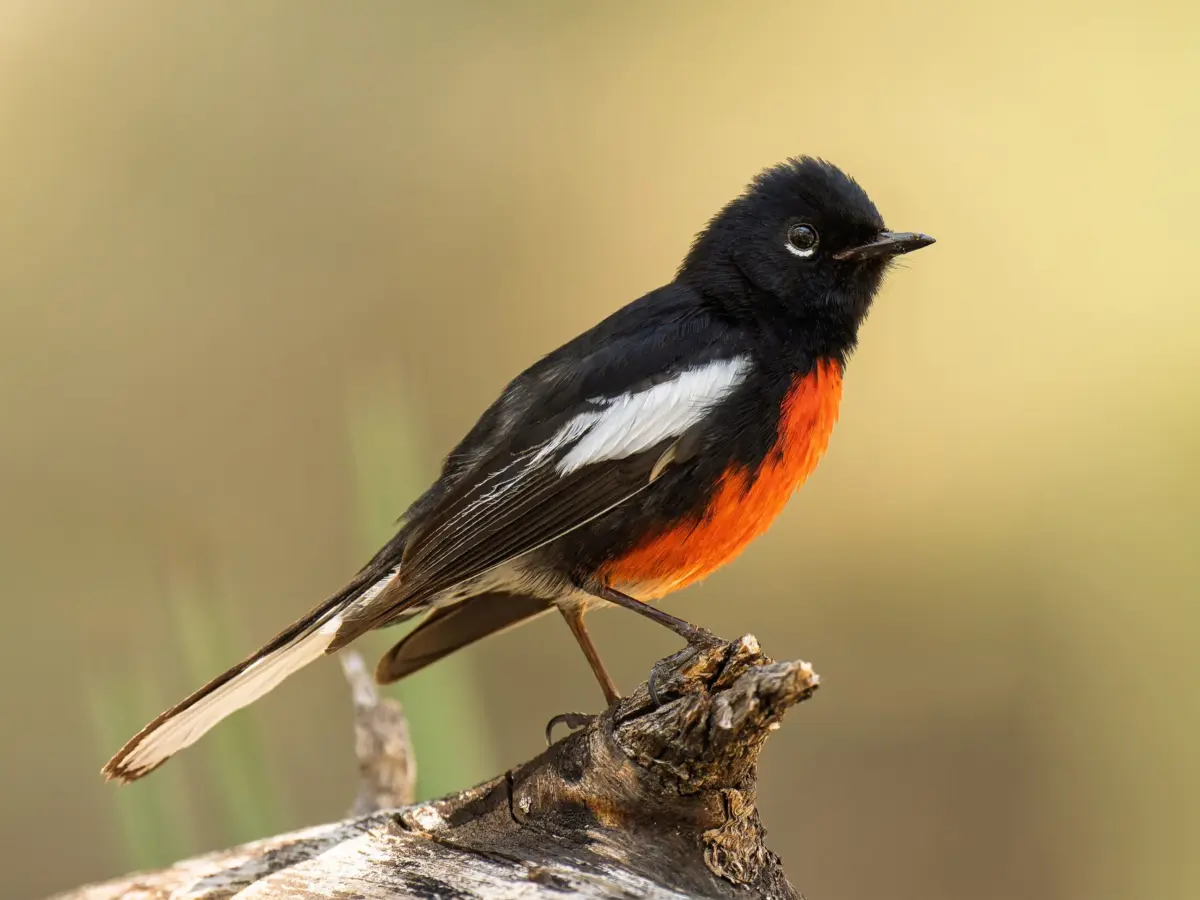
One of the most notable semantic shifts involves the Painted Redstart and Slate-throated Redstart, both of which are now officially designated as Painted Whitestart and Slate-throated Whitestart.
For years, purists argued that the term "redstart" was etymologically inaccurate. The suffix originates from the Old English word steort, meaning tail or rump, and was originally applied to Eurasian songbirds possessing genuine reddish tails. While the unrelated American Redstart (a wood-warbler) features red patches in its tail, the bird long known as the Painted Redstart displays flashy, stark white outer tail feathers. Changing the name to "whitestart" rectifies this historical misnomer.
Minor Splits and Modifiers
- Tufted Flycatcher: This crested vagrant from the American southwest is now officially the Tawny Tufted-Flycatcher, receiving a geographic/color modifier following its split from southern populations.
- Red-legged Thrush: Rare visitors to Florida are now designated as Western Red-legged Thrush, differentiating them from eastern Caribbean forms.
- Scientific Name Shifts: Tracking strict nomenclature, the Winter Wren shifts its scientific designation from Troglodytes hiemalis to Nannus hiemalis, while the Pacific Wren transitions from Troglodytes pacificus to Nannus pacificus.
Official Statements and Institutional Divergences
While institutional alignment is generally high, 2026 highlighted a few notable fractures between the American Ornithological Society and eBird. These divergent paths introduce subtle headaches for record-keepers and field guides.
Punctuation and Common Names
On minor formatting and naming conventions, the two bodies parted ways:
- Marsh Wrens: The AOS prefers hyphenated common names (Western Marsh-Wren and Eastern Marsh-Wren), whereas eBird drops the hyphen (Western Marsh Wren and Eastern Marsh Wren).
- Yellow Warblers: eBird maintains Northern Yellow Warbler and Mangrove Yellow Warbler, whereas the AOS lists them simply as Yellow Warbler and Mangrove Warbler.
The Great Egret Division
The most substantial institutional divergence centers on the Great Egret, a bird historically treated as a single cosmopolitan species spanning the globe.
The AOS has officially split the taxon into two distinct species:
- Great White Egret (Ardea alba): Widespread across Eurasia, Africa, and Australia, with rare vagrant appearances documented in western Alaska. Breeding adults are characterized by an all-black bill and variable tinges of yellow or pink on the legs.
- American Egret (Ardea egretta): The familiar white heron of the Americas, boasting yellow bills during the breeding season.
Because Audubon magazine and its communication channels now mirror eBird’s taxonomy, birders navigating North American wetlands find themselves in a transitional gray area. For the moment, both "American Egret" and "Great Egret" remain functionally acceptable in casual conversation for the North American population. However, hardcore birders can rest easy knowing that the beloved four-letter banding code—GREG—remains secure.
Future Outlook: What This Means for the Birding Community
The 2026 taxonomic updates are far more than academic exercises or semantic debates among scientists; they have a direct, grassroots impact on the global birding community.
For recreational birders, these changes inject a renewed sense of challenge into the hobby. Finding a Willet is no longer merely a checklist checkbox; it requires identifying whether one is observing the pale, inland-nesting Prairie Willet or the dark, coastal Saltmarsh Willet. Similarly, listening to the rattling preamble of a Western Marsh Wren versus the bubbling cadence of an Eastern counterpart turns an ordinary marsh walk into an active acoustic survey.
From a conservation perspective, splitting widespread species into narrower, endemic lineages is a vital regulatory tool. When a broad species like the Yellow Warbler is fractured into localized populations—such as the vulnerable Mangrove Yellow Warbler of the Florida Keys and Texas coast—conservationists can better target habitat protections, combat localized threats, and secure funding for specific ecosystems that might otherwise be overlooked under a umbrella classification.
As genetic sequencing technology continues to evolve and ornithologists peer ever deeper into the evolutionary tree of life, one truth remains absolute: the 2026 updates will not be the last. Birders and scientists alike must remain adaptable, embracing a dynamic understanding of nature where the lines separating species are drawn not by human convenience, but by millions of years of evolutionary history.