
By Olivia A. Petritz, DVM, DACZM
Executive Overview
The art and science of animal euthanasia demand an unwavering commitment to minimizing and eliminating pain, anxiety, and distress. Ideally, the process achieves a rapid loss of consciousness, followed swiftly by cardiac and respiratory arrest, and ultimately, the complete cessation of brain function. While this trajectory is well-understood in traditional companion animals like dogs and cats, evaluating the final stages of brain death remains profoundly challenging across zoological companion animals.
Death fundamentally occurs through direct depression of the central nervous system (CNS), hypoxia, or physical disruption of brain activity. However, exotic pets—including fish, reptiles, birds, and small mammals—introduce a labyrinth of unique physiological challenges that complicate clinical decision-making.
Veterinary practitioners must grapple with difficult diagnostic questions:
- How does one accurately assess pain or distress in a fish, a snake, or an avian patient?
- How can a clinician confirm true respiratory arrest in an animal equipped with significant breath-holding capabilities, such as an aquatic turtle?
- How should a clinic manage the euthanasia of an exceptionally small exotic species versus an exceptionally massive one?
To answer these questions, veterinary professionals rely heavily on the AVMA Guidelines for the Euthanasia of Animals, a freely accessible framework updated most recently in 2020. These guidelines categorize methodologies across multiple taxa into acceptable, acceptable with conditions, and unacceptable protocols. This report explores the nuanced landscape of exotic animal euthanasia in a hospital setting, examining physiological hurdles, recent clinical research, and concrete protocol options for contemporary veterinary practice.
Detailed Chronology & Taxonomic Breakdown
Fish: Beyond the Heartbeat
According to the American Veterinary Medical Association (AVMA) guidelines, hypothermia and anoxia (desiccation following removal from water) are strictly classified as unacceptable methods for fish euthanasia. A foundational pitfall in aquatic medicine is the reliance on a beating heart as an indicator of life. The heart of a fish can continue to beat long after brain death or physical removal from the body—up to four hours in a decapitated goldfish. Consequently, the mere presence of a heartbeat is neither a reliable indicator of life nor indicative of active brain function.
Recent literature highlights the unreliability of single-step immersion protocols, particularly in hypoxia-tolerant species. For instance, a study by Balko et al. demonstrated that prolonged immersion in buffered MS-222 (Tricaine methanesulfonate) alone was inadequate for euthanizing adult goldfish. Immersion in 1,000 mg/L—a concentration five to ten times the standard anesthetic dose—resulted in the death of only seven percent of immersed adult goldfish.
Conversely, juvenile goldfish exhibited different tolerances; another study found that a high dose (1,000 mg/L) of buffered MS-222 successfully euthanized them. The same authors evaluated continuous topical delivery of MS-222 or clove oil over the gills versus prolonged bath submersion in juvenile red head Tapajos eartheaters (Geophagus pyrocephalus). Interestingly, the immersion bath yielded a statistically faster mean time to cardiac arrest compared to continuous topical delivery. Regardless of these variations, a two-step process—combining profound general anesthesia with a physical or chemical secondary method—remains the gold standard for companion fish.
Reptiles: Slow Metabolisms and Breath-Holding Mastery
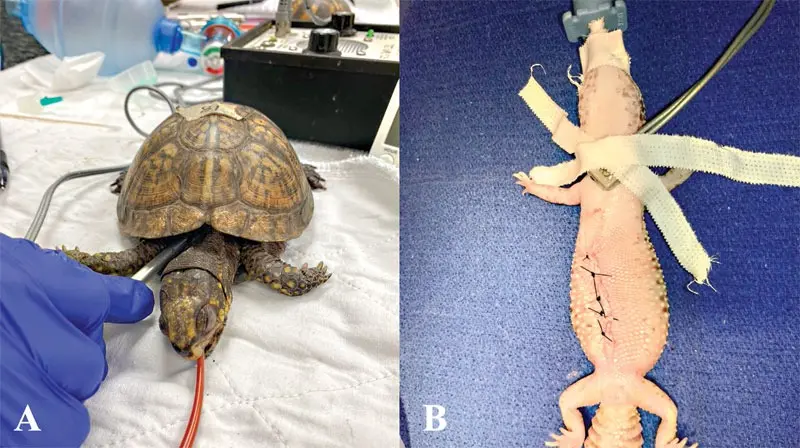
Reptilian patients present formidable obstacles, including increased resistance to hypoxia, difficult vascular access, and characteristically slow metabolisms. In certain reptile species, the euthanasia process can span hours if not managed meticulously. As with fish, the presence of a heartbeat does not equate to "life"; reptilian hearts can continue to beat even after being excised and placed in formalin.
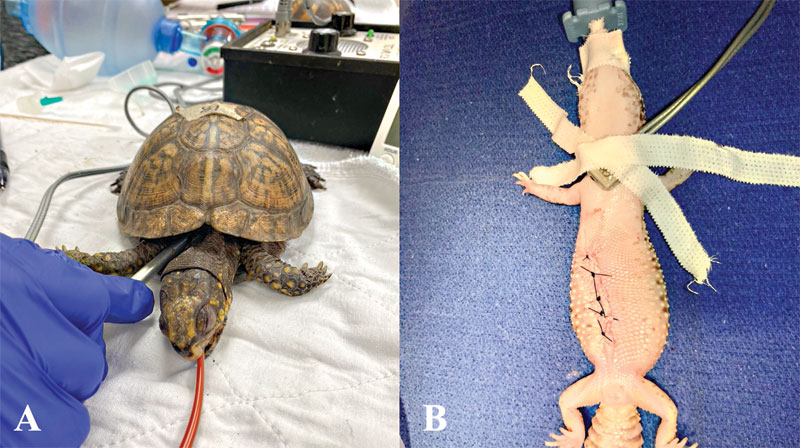
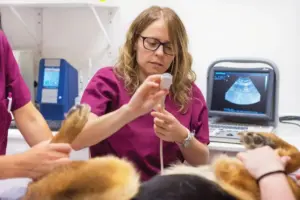
Electroencephalograms (EEGs) are rarely available in clinical reptile practice, and published normal values for reptilian EEGs do not currently exist. Therefore, determining cardiac activity requires a Doppler ultrasound or standard ultrasound. Traditional stethoscopes are largely ineffective due to scaled skin and the rigid carapace and plastron of chelonians. Clinicians should listen for a heartbeat via Doppler for at least one to two minutes, accounting for the characteristically slow heart rates of most reptiles, particularly under sedation.
To hasten cardiac arrest in an unconscious reptile, clinical experience suggests that an intravenous or intracardiac injection of potassium chloride (KCl) following pentobarbital administration is highly effective.
Evaluating Alternative Drugs and Routes in Reptiles
Recent clinical trials have scrutinized various administration routes and pharmacological agents in reptiles. A study evaluating adult leopard geckos sedated with alfaxalone (20 mg/kg IM) investigated intracoelomic pentobarbital (400 and 800 mg/kg), intracardiac pentobarbital (800 mg/kg), intracardiac KCl (10 mEq/kg), and intracardiac lidocaine (100 mg/kg). While intracardiac injection of all three drugs yielded instantaneous cardiac arrest, the intracoelomic route required 30 to 35 minutes—a clinically significant delay.
Furthermore, several adverse effects surfaced:
- Animals in the intracoelomic group displayed injection-site erythema and intermittent arched postures prior to cardiac arrest.
- Six out of nine geckos receiving intracardiac KCl experienced severe muscle spasms violent enough to allow them to right themselves from dorsal to sternal recumbency post-cardiac arrest.
- Most unexpectedly, six out of nine geckos receiving intracardiac lidocaine experienced a spontaneous return of respiration and heartbeat five to six hours after initial cardiac arrest.
Consequently, intracardiac lidocaine and KCl at these dosages are strongly discouraged for leopard gecko euthanasia.
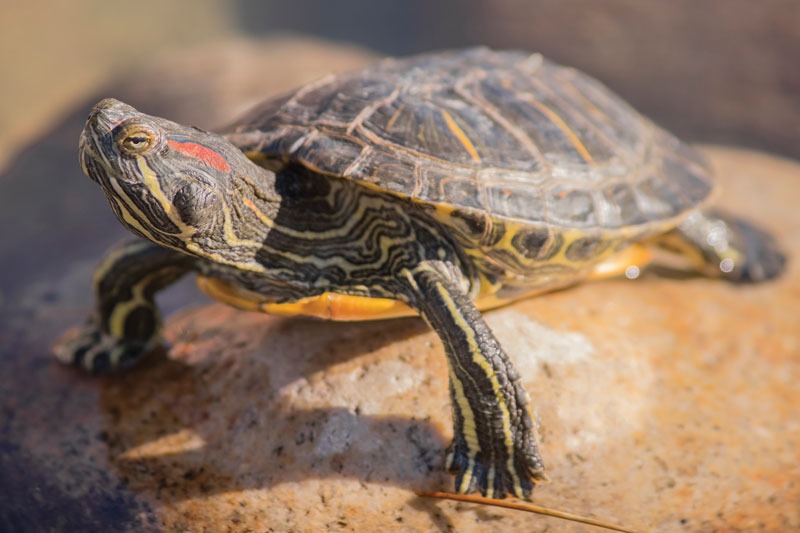
Investigations into oral and cloacal transmucosal administration in other reptiles have yielded similarly variable results. In red-eared sliders, oral and cloacal transmucosal pentobarbital (100 mg/kg) revealed that 75% of turtles in the cloacal group suffered significant solution leakage, necessitating rescue intravenous injections. Respiratory arrest occurred in roughly 15 minutes, but cardiac arrest took an average of 18 hours (ranging from 6 to 26 hours). While the oral route was successful, cardiac arrest remained prolonged.
Similarly, oral transmucosal pentobarbital and phenytoin evaluated in bearded dragons using a two-dose protocol (100 mg/kg PO initially, followed by 400 mg/kg PO 20 minutes later) revealed solution leakage and abnormal behaviors after the first dose, potentially indicating pain, with an average time to cardiac arrest of six hours. In feral green iguanas, transmucosal pentobarbital and phenytoin at 100 and 200 mg/kg consistently required rescue intravenous doses.
Birds: Achieving Painless Intravenous Access
The AVMA avian guidelines encompass pet, aviary, falconry, racing, research, and zoo birds, with poultry addressed separately due to distinct regulatory and processing frameworks. Acceptable methods for non-poultry birds include intravenous (IV) injection of a barbiturate in an unconscious or conscious bird. However, because the AVMA explicitly dictates that IV injection in a conscious bird must not cause fear or distress, deep sedation or general anesthesia is mandatory prior to euthanasia solution administration.
The primary venipuncture sites utilized in avian medicine include:
- Right jugular vein
- Medial metatarsal vein
- Ulnar vein
In smaller avian species, the right jugular is frequently the only vessel of sufficient caliber for injection. Because placing an indwelling IV catheter in small birds is exceptionally challenging and nearly always requires general anesthesia, injections are typically administered directly into the vessel. When IV access is unachievable, intracardiac, intracoelomic, or intraosseous routes of barbiturate administration can be considered, provided they strictly avoid air sacs and pneumatized bones (such as the femur and humerus). Thoracic compression in a conscious bird is strictly unacceptable.
Small Mammals: Bridging the Gap to Traditional Pets
Euthanasia protocols for small mammals—including ferrets, rabbits, and rodents—closely mirror those established for dogs and cats. Intraperitoneal injections are approved by the AVMA for many rodent species; however, clinical experience indicates that time to cardiac arrest can be notably delayed compared to IV or intracardiac routes.
Because rabbits and rodents are classic prey species, heavy sedation or general anesthesia is strongly recommended prior to euthanasia solution administration. Intravenous access can be difficult in hemodynamically compromised small mammals, making intracardiac injection in an unconscious patient a viable alternative. Additionally, an intrarenal route for rabbit euthanasia has been described and approved by the AVMA for unconscious animals, though studies show that the IV route is significantly faster, and approximately 30 percent of rabbits required a rescue IV dose of pentobarbital following intrarenal administration.
Supporting Context & Metrics
To operationalize these guidelines safely, clinicians rely on structured, multi-step protocols. While dosages and exact regimens vary based on clinical presentation, the following example protocols provide a foundational reference for veterinary teams:
1. Fish Euthanasia Protocol
- Anesthesia Induction: Immersion in buffered MS-222 (300–500+ mg/L) for a minimum of 30 minutes following opercular cessation.
- Secondary Method:
- Pithing or decapitation.
- Intracardiac injection of potassium chloride (KCl; 10 mEq/kg) or pentobarbital.
2. Reptile Euthanasia Protocol
- Anesthesia Induction:
- Alfaxalone (15–20 mg/kg IM in the forelimbs), OR
- Dexmedetomidine (0.1 mg/kg IM) $pm$ Ketamine (5–20 mg/kg IM), OR
- Propofol (10–20 mg/kg IV via the caudal tail vein).
- Primary Injection: Intravenous or intracardiac injection of pentobarbital euthanasia solution.
- Secondary Action: Additional intravenous or intracardiac KCl administered once the patient is unconscious.
3. Pet Bird Euthanasia Protocol
- Sedation & Anesthesia:
- Heavy sedation with Butorphanol (2–5 mg/kg IM) and Midazolam (2–5 mg/kg IM), $pm$ Ketamine (10–20 mg/kg IM).
- Induction of general anesthesia via face mask with an inhalant anesthetic.
- Final Administration: Intravenous injection of euthanasia solution.
4. Rabbit or Rodent Euthanasia Protocol
- Sedation & Anesthesia:
- Heavy sedation with Butorphanol (2 mg/kg IM), Midazolam (2 mg/kg IM), and Ketamine (15–20 mg/kg IM).
- Induction of general anesthesia via face mask with an inhalant anesthetic.
- Final Administration: Intravenous or intracardiac injection of euthanasia solution.
Official Statements and Environmental Considerations
Beyond the immediate clinical suite, veterinary teams bear an ethical and legal responsibility regarding the disposal of animal remains. Ideally, all exotic companion animals should be incinerated or cremated following euthanasia. However, clients frequently request the return of remains for home burial.
Clinicians must proactively counsel clients regarding the profound ecological risks of pentobarbital residue. Carcasses containing pentobarbital pose a severe risk of secondary intoxication and fatal poisoning to wildlife scavengers, including raptors such as bald eagles. Because burial regulations and municipal environmental laws vary widely by region, veterinarians must educate clients thoroughly on safe disposal practices—ideally documented via a signed euthanasia consent form.
Future Outlook
As exotic animal medicine continues to evolve as a recognized specialty, the standardization of euthanasia protocols remains a critical frontier. Future research must prioritize the establishment of normative electroencephalographic data across diverse reptilian and avian taxa to eliminate ambiguity regarding brain death. Furthermore, pharmacokinetic and pharmacodynamic studies focusing on transmucosal and alternative injection routes will refine our approaches, minimizing the need for stressful rescue interventions. By anchoring clinical practice in rigorous evidence and adherence to the AVMA guidelines, veterinary professionals can ensure that the final act of veterinary care for exotic species is executed with uncompromising dignity, compassion, and scientific precision.