
Executive Overview
When an exceptionally calm, impeccably focused Labrador Retriever or German Shepherd navigates a crowded grocery store aisle, an airport terminal, or a busy restaurant, it is entirely natural for onlookers to feel a swell of warmth. Their composure is striking, their demeanor friendly, and the urge to offer a quick scratch behind the ears, a soft "good boy," or an enthusiastic wave feels almost instinctual. After all, modern society is conditioned to celebrate our canine companions at every turn.
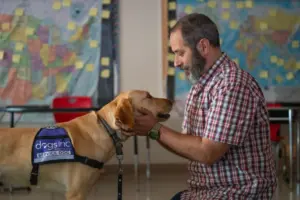
Yet, beneath that polished, unflappable exterior lies a critical distinction: a service dog is not a pet out for a casual stroll, nor is it an emotional support animal seeking socialization. It is a highly specialized, working canine partner functioning as an essential medical and navigational lifeline for an individual with a disability.
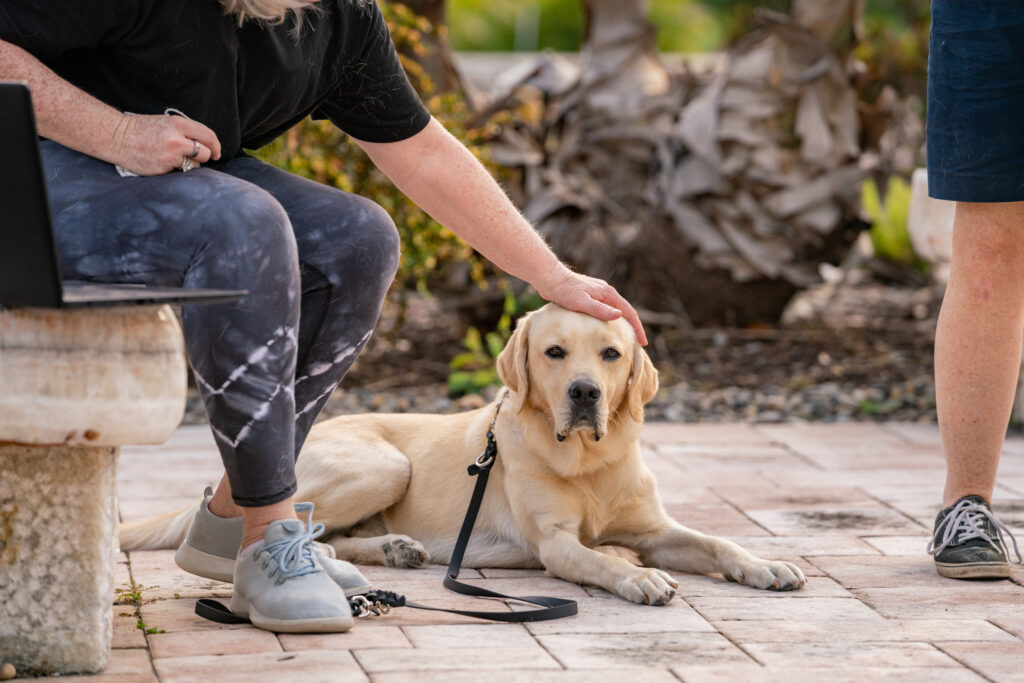
The golden rule of public interaction with working service dogs remains absolute: always look, but never touch, talk to, or distract the dog without explicit permission.
As public spaces become increasingly inclusive, the lack of widespread public education regarding service dog etiquette continues to present daily safety and accessibility challenges for handlers. A single moment of distraction—whether through a whispered whistle, a tossed scrap of food, or an unannounced pat—can disrupt a dog’s concentration, potentially compromising a handler’s safety, medical stability, or independence. This report explores the legal, operational, and social dimensions of service dog etiquette, offering an authoritative guide on how the public, businesses, and children can support these extraordinary working partnerships.
Detailed Chronology: The Evolution of Access and Etiquette
To fully understand why modern service dog etiquette is so rigorously enforced, one must trace the legal and social evolution that brought working animals into the mainstream of public life.
- Pre-1990s (The Era of Isolation): For decades, individuals with severe physical disabilities, particularly the visually impaired, relied on guide dogs. However, public access rights were inconsistent at best. Handlers frequently faced discrimination, illegal denials of entry at restaurants and hotels, and a complete lack of legal recourse. Public understanding of working canine boundaries was practically nonexistent, leading to frequent, hazardous interferences by well-meaning citizens.
- 1990 (The Landmark ADA Legislation): The passage of the Americans with Disabilities Act (ADA) marked a revolutionary turning point. For the first time, federal law legally protected the rights of individuals with disabilities to be accompanied by their service animals in all areas where the general public is permitted. This legislation shifted the cultural paradigm, transitioning service dogs from a rare, isolated sight to an integral, protected component of public infrastructure.
- Late 1990s to 2010s (Expansion of Service Roles): As training methodologies evolved, the scope of service animals expanded dramatically. No longer restricted to guide work for the blind, specialized organizations began training dogs to assist individuals with mobility impairments, post-traumatic stress disorder (PTSD), seizure disorders, severe diabetes, and autism. With this proliferation came a surge in public encounters, exposing a dangerous knowledge gap regarding the difference between pets, emotional support animals, and bona fide working service dogs.
- Present Day (The Current Public Awareness Imperative): Today, service dog teams operate in virtually every public sector—from corporate boardrooms and commercial aviation to high-velocity urban centers. While legal protections are robust, social etiquette has struggled to keep pace. Misunderstandings, unauthorized petting, and fraudulent representation of pets as service animals have created an urgent need for authoritative public education campaigns led by premier training institutions like Dogs Inc.
Supporting Context & Metrics: Defining the Working Partnership
To appreciate why public interference is so dangerous, one must examine the rigorous journey a service dog undergoes and the specific parameters that define its work.
What Constitutes a Legally Defined Service Dog?
Under Title III of the ADA, a service dog is strictly defined as a dog that has been individually trained to do work or perform tasks for the benefit of an individual with a disability, including a physical, sensory, intellectual, or mental disability.
The tasks performed must be directly related to the person’s disability. Examples include:
- Guiding individuals who are blind or low vision.
- Pulling wheelchairs or providing heavy bracing and stability for mobility impairments.
- Alerting a handler to an impending medical crisis, such as a drop in blood sugar for diabetics or an oncoming epileptic seizure.
- Retrieving dropped medications, opening heavy doors, or turning on lights.
- Mitigating panic attacks or disorientation for individuals with PTSD by performing deep pressure therapy or clearing rooms.
The Anatomy of a Distraction
Most people assume that a brief, affectionate pat is completely harmless. However, behavioral science and professional trainers demonstrate otherwise. A service dog is conditioned to maintain hyper-focus on its handler amidst a sensory overload of sights, sounds, and smells.
When a stranger approaches a working dog, several disruptions occur simultaneously:
- Broken Focus: The dog’s attention is instantly diverted from scanning the environment for hazards or monitoring the handler’s physiological state.
- Reinforced Undesirable Behaviors: A dog that receives positive reinforcement (attention, petting, or food) from a stranger is incentivized to break protocol in future public outings.
- Compromised Safety: For a handler relying on a dog for physical stability or medical alerts, even a split-second lapse in the dog’s concentration can result in a fall, an unmanaged medical emergency, or a navigational collision.
Official Guidelines and Expert Insights
Navigating public spaces alongside a service dog team requires adherence to established protocols. Industry experts, advocacy groups, and training organizations emphasize several core rules of engagement.
The Golden Rule: Always Ask First
The absolute baseline of service dog etiquette is simple: always ask permission before interacting.

- Approach the handler—never the dog.
- Politely inquire if it is acceptable to speak to or pet the animal.
- Graciously and immediately accept the handler’s answer, whether it is a "yes" (often when the dog is off-duty or taking a scheduled rest break) or a firm "no."
"Talk to the Person, Not the Dog"
A common pitfall for well-meaning observers is directing all verbal communication toward the canine ("Who’s a good dog? Look at you!"). This behavior actively encourages the dog to break its working frame of mind. Observers should maintain focus exclusively on the human handler, treating them with the same polite decorum afforded to any other customer, client, or citizen.
Common Pitfalls to Avoid in Public
To maintain an accessible and safe environment, the public must eliminate several recurring behaviors:
- Making noises or whistling: Mimicking animal sounds or trying to "shh" or call the dog over.
- Offering food or treats: Giving human food to a service dog can cause severe gastrointestinal distress or break critical training boundaries.
- Hovering or crowding: Intruding on the physical space of the handler-dog team.
- Allowing pet dogs to approach: Uncontrolled pets posing as friendly greeters can frighten, distract, or attack working service dogs, permanently damaging the working dog’s confidence and career viability.
Specialized Etiquette Across Different Environments
Proper etiquette extends beyond individual interactions; it requires tailored approaches depending on the setting and the demographic involved.
Educating Children
Children are naturally drawn to dogs, viewing public appearances as opportunities for play. Service dogs provide an invaluable teaching moment for parents and educators to instill empathy, patience, and respect for boundaries.
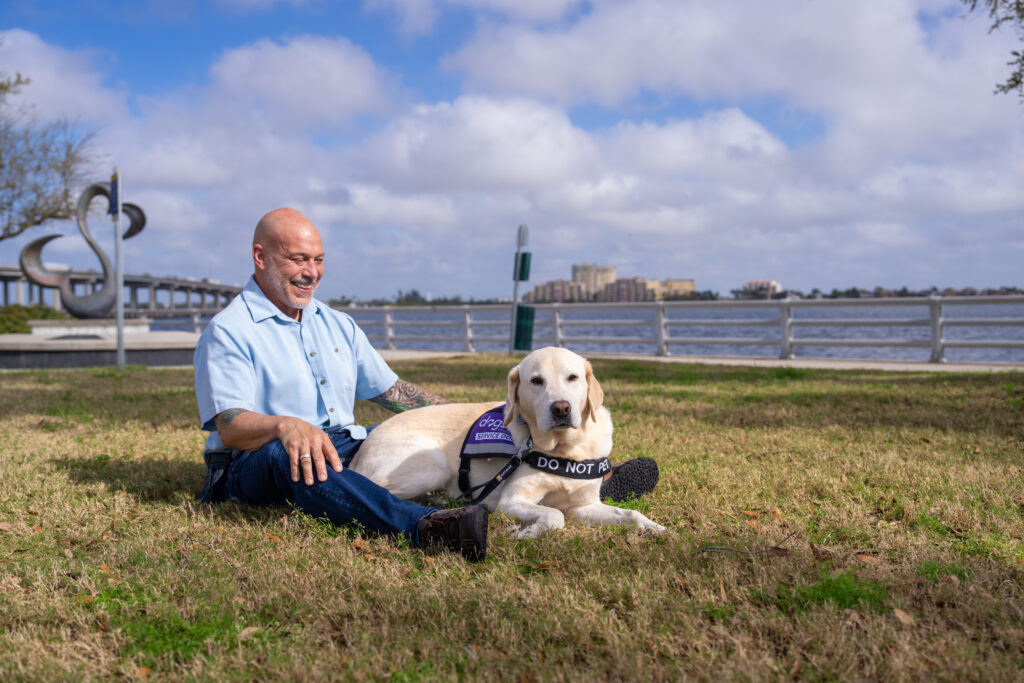
- The Lesson: Teach children that a service dog wearing a vest is "on the clock" and performing a critical job.
- The Action: Encourage children to admire the dog quietly from a distance and ask educational questions rather than rushing forward with open arms.
Responsibilities of Businesses and Public Accommodations
Employees in retail, hospitality, healthcare, and corporate sectors carry a legal and ethical responsibility to foster welcoming environments.
- Standard Protocol: Welcome the handler and their service animal precisely as you would any other patron.
- Legal Boundaries: Under the ADA, businesses are permitted to ask only two questions if the necessity of the service dog is not obvious: (1) Is the dog a service animal required because of a disability? and (2) What work or task has the dog been trained to perform? Businesses cannot require documentation, medical proof, or special identification tags.
Future Outlook: Building a More Inclusive and Aware Society
As service dog training organizations like Dogs Inc continue to pioneer life-changing partnerships, the future of accessibility relies heavily on continuous public education. The ultimate goal is a society where service dog teams can navigate public spaces with seamless integration, absolute safety, and profound mutual respect.
Achieving this future requires a collective shift in mindset. When we view a service dog not merely as a friendly animal to be petted, but as an indispensable technological and biological lifeline for an individual with a disability, our behavior naturally shifts.
By honoring their workspace, respecting their boundaries, and spreading awareness within our communities, we ensure that these extraordinary dogs can perform their life-saving duties without interruption. A little restraint, a brief pause for consideration, and a fundamental respect for personal space go a long way in supporting the independence, dignity, and freedom of those who rely on them every single day.