
Executive Overview
In the high-altitude forests and rugged terrain of eastern Arizona’s White Mountains, a quiet revolution in water management is unfolding. As the arid American Southwest confronts the compounding pressures of prolonged megadroughts, climate volatility, and accelerating population growth, the paradigm of water security is undergoing a fundamental shift. No longer is water management viewed strictly through the lens of concrete dams, deep-bore wells, and sprawling municipal distribution networks. Instead, policymakers, conservationists, and local utilities are embracing a holistic, dual-pronged strategy that marries engineered "hard" infrastructure with the restorative power of "natural" infrastructure.
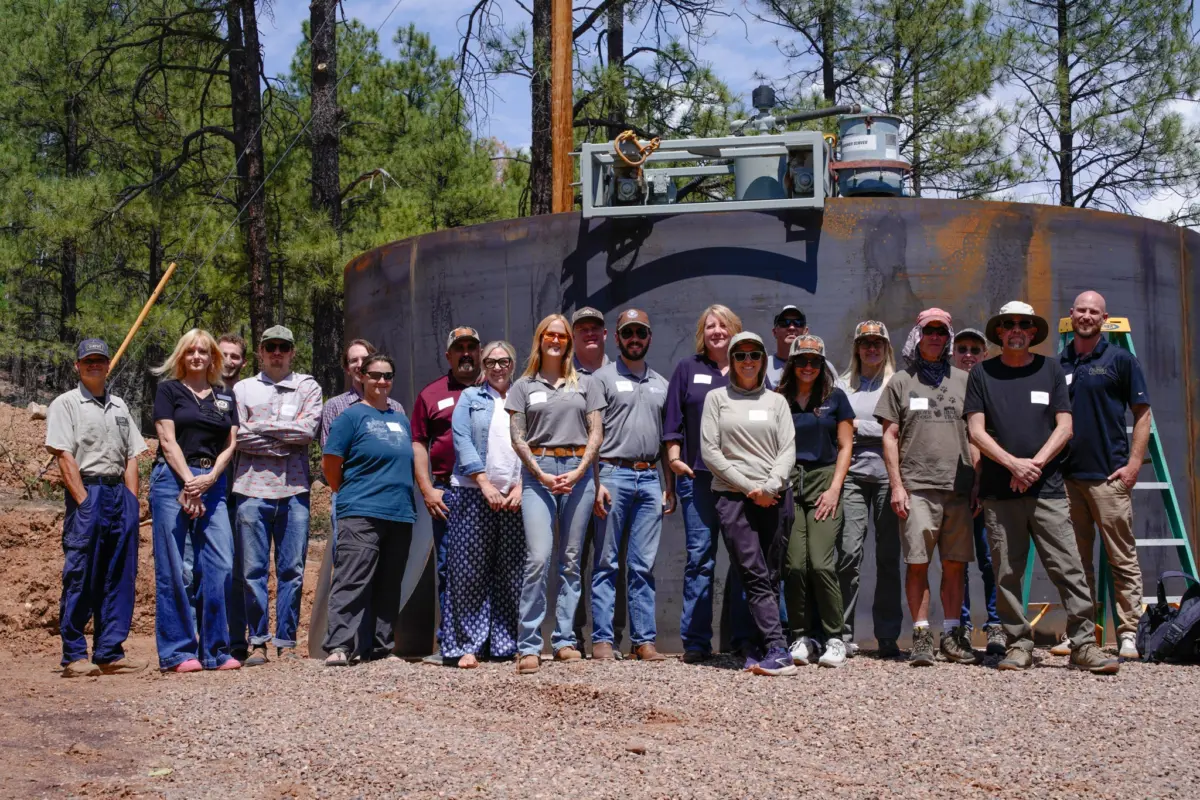
In late August, Audubon Southwest organized an immersive field expedition into the White Mountains to investigate how vital funding mechanisms translate into tangible, on-the-ground resilience. The tour offered a rare, up-close examination of the challenges facing rural water providers, the vulnerability of aging systems, and the innovative watershed restoration projects safeguarding downstream metropolitan supplies.
The findings from the field are both a cautionary tale and a blueprint for the future. From a catastrophic storage tank collapse in Heber to community-driven modernization efforts in Pinedale Estates, and high-altitude meadow restoration projects in the shadow of Mount Baldy, the tour underscored a singular, unifying reality: securing Arizona’s water future requires robust, sustained investment across the entire hydrological continuum. With recent polling indicating that nearly all Arizona voters view regional water security as a paramount priority, understanding how capital is deployed—and where it is desperately needed—has never been more urgent.
Detailed Chronology: The White Mountains Field Expedition
The late-August expedition served as a geographical and logistical cross-section of modern western water challenges, tracing the journey of water from rural community distribution taps back to its origins in forested headwaters.
Stop 1: Heber, Arizona – The High-Stakes Reality of Rural Utility Management
The expedition commenced in Heber, a community offering a stark masterclass in the vulnerabilities of rural water utility management. While major metropolitan providers often possess dedicated engineering departments and robust capital improvement budgets, small rural districts frequently operate on razor-thin margins with aging assets.
The Heber Domestic Water Improvement District recently secured nearly $4 million from the Water Infrastructure Finance Authority’s (WIFA) Water Supply Development Revolving Fund. These funds were specifically earmarked for the design phase of a vital redundancy project: interconnecting two distinct water systems and installing an additional storage tank to ensure continuous service during emergencies.
The acute necessity of this funding was punctuated by a dramatic stroke of timing. Just three days prior to the tour’s arrival, Heber’s original 50-year-old water storage tank—the very unit scheduled for imminent replacement—catastrophically collapsed. The structural failure drained 300,000 gallons of treated water in less than two minutes. Only quick-thinking emergency intervention by the district’s operator, who rapidly rigged a hose to connect the compromised network to an alternate tank, averted a total community outage. The incident provided a visceral demonstration of why system redundancy is indispensable: it offers an operational safety net capable of withstanding catastrophic failures and replacing obsolete infrastructure before time runs out.
Stop 2: Pinedale Estates – Overcoming Legacy Deficits through Collaboration
Moving deeper into the region, the tour visited Pinedale Estates to inspect a community water system undergoing a sweeping, long-overdue modernization. For years, residents had grappled with sub-par water quality driven by naturally occurring mineral elements, compounded by failing, patchwork storage infrastructure.
Recognizing that piecemeal repairs were no longer viable, neighbors banded together alongside Mogollon Water Management. By leveraging a targeted mix of loans and grants secured through WIFA and the Arizona Department of Environmental Quality (ADEQ), the community marshaled the necessary capital to overhaul its utility network.
The ongoing transformation is set to deliver newly drilled groundwater wells yielding vastly improved drinking water quality, alongside critical system redundancy. Most notably, the upgrades will introduce fire hydrants to Pinedale Estates for the very first time, vastly elevating the community’s baseline public safety and structural fire resilience.
Stop 3: Thompson-Burro Meadow – Restoring the Sponge at the Salt River Headwaters
Shifting focus from built distribution systems to ecological health, the tour’s final destination ventured into the high-elevation headwaters of the Salt River at the picturesque Thompson-Burro Meadow, nestled near the base of Mount Baldy.
Here, representatives from Trout Unlimited detailed collaborative restoration work being executed in partnership with the U.S. Forest Service. The meadow had been severely degraded following the catastrophic Wallow Fire of 2011, which stripped the landscape of vegetation and destabilized local stream channels. To reverse this damage, conservationists installed more than 200 woody, natural "log jam" structures within the meadow’s streams.
This passive, nature-based engineering forces the landscape to act as a ecological sponge. By intentionally slowing surface water velocity, the structures elevate local groundwater tables, reconnect the river with its historic floodplain, and encourage the natural regeneration of native riparian flora such as willows. Because Thompson-Burro Meadow feeds the Black River—which subsequently flows into the Salt River and is delivered to the Phoenix metropolitan area via the Salt River Project (SRP)—this high-altitude intervention directly bolsters the water security of millions of downstream urban residents.
Supporting Context & Metrics: Hard vs. Natural Infrastructure
To contextualize the lessons of the White Mountains tour, it is essential to examine the dual pillars of modern water management: built (hard) infrastructure and natural infrastructure.
+-------------------------------------------------------------------------+
|                   ARIZONA'S WATER INFRASTRUCTURE DUAL PILLARS           |
+------------------------------------+------------------------------------+
|         HARD INFRASTRUCTURE        |       NATURAL INFRASTRUCTURE       |
+------------------------------------+------------------------------------+
| • Pipes, valves, and distribution  | • Forests, watersheds, and headwaters|
| • Storage tanks and reservoirs     | • Alpine meadows and wetlands      |
| • Booster pumps and water meters   | • Rivers, streams, and floodplains |
| • Canals and aqueducts             | • Natural aquifers and recharge zones|
+------------------------------------+------------------------------------+
| PURPOSE: Move, store, and deliver  | PURPOSE: Capture, filter, store,   |
| treated water to taps and fields.  | and regulate flow naturally.       |
+------------------------------------+------------------------------------+
The Anatomy of Built Infrastructure
Hard infrastructure comprises the physical assets engineered by humanity to capture, treat, move, and store water. This includes:
- Conveyance Networks: Canals, aqueducts, and pressurized piping networks that transport water across vast geographic distances.
- Storage and Regulation: Surface reservoirs, subterranean storage vaults, and above-ground steel or concrete tanks.
- Operational Control: Booster pumping stations designed to maintain pressure gradients across changing elevations, and precision water meters that monitor consumption and detect leaks.
In rural communities like Heber and Pinedale Estates, maintaining these assets requires significant capital outlays that often outstrip local tax bases. Without external grant and low-interest loan programs, rural districts face insurmountable hurdles in replacing infrastructure that has exceeded its design life.
The Ecological Engine of Natural Infrastructure
Conversely, natural infrastructure refers to the self-sustaining ecological systems—forests, alpine meadows, river networks, and soil structures—that form the baseline of the hydrological cycle throughout the Colorado River Basin.
Natural infrastructure acts as the original pre-treatment and regulatory system. Healthy forests and meadows absorb intense rainfall and snowmelt, reducing peak flood velocities, filtering out sediment and pollutants, and slowly recharging groundwater aquifers. When these natural systems are compromised by high-severity wildfires, overgrazing, or unmanaged development, they lose their sponge-like capacity. The resulting runoff causes flash flooding, severe soil erosion, and downstream sedimentation that chokes reservoirs and complicates municipal water treatment.
Official Statements & Stakeholder Perspectives
The integration of funding and operational execution was a recurring theme among the organizations and agencies participating in the White Mountains initiative:
- Audubon Southwest Advocates: Emphasized that safeguarding Arizona’s water supplies and unique way of life requires breaking down silos between urban and rural, engineered and ecological interests. "Supporting Arizona’s water infrastructure is vital to protect our water supplies and way of life," representatives noted, stressing that investment must be distributed equitably across the entire spectrum of water needs.
- Trout Unlimited Project Leaders: Highlighted the direct correlation between upstream forest health and downstream urban reliability. By rehabilitating fire-scarred meadows in the White Mountains, projects executed in coordination with the U.S. Forest Service provide scalable benefits that protect municipal supplies in the Phoenix Valley while simultaneously restoring critical wildlife habitats.
- Rural Utility Operators: Pointed out the precarious nature of legacy infrastructure. Following the near-disaster in Heber, operators reiterated that proactive funding—securing capital before catastrophic failure occurs—is the single most cost-effective measure a water district can take to protect public health and economic viability.
Future Outlook & Policy Implications
The insights gleaned from the White Mountains field tour arrive at a critical juncture for the American Southwest. Recent comprehensive polling commissioned by conservation foundations reveals an overwhelming consensus among Arizona voters: nearly all respondents believe that proactive, aggressive action by federal and state officials to secure long-term water supplies in the Colorado River Basin is an absolute necessity.
Meeting this mandate demands a diversified, multi-tiered funding architecture. Relying solely on local rate payers or single-source state appropriations is no longer sufficient to address the compounding deficits of a changing climate. Future resilience relies on stacking financial resources from local, state, federal, philanthropic, and corporate channels.
Strategic capital allocation must adhere to a two-fold imperative:
- Modernizing the Grid: Directing grants and low-interest loans—such as those administered by WIFA and ADEQ—toward rural water providers to eliminate single points of failure, upgrade aging storage tanks, and remediate water quality deficits.
- Upscaling Ecological Restoration: Expanding forest thinning, watershed health initiatives, and meadow restorations to mitigate wildfire risks and enhance natural hydrological retention in vital headwater regions like the White Mountains.
Only through this balanced, comprehensive investment strategy can Arizona ensure that both its rural communities and its sprawling metropolitan centers thrive in an increasingly uncertain hydrological future.