
Executive Overview
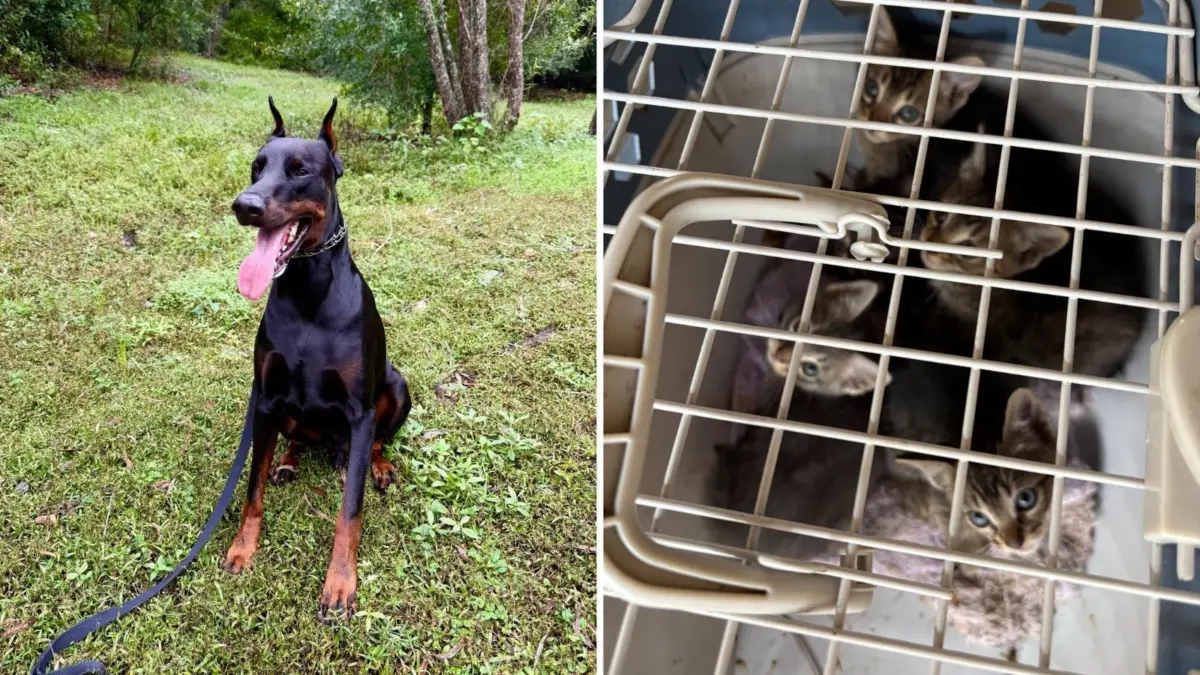
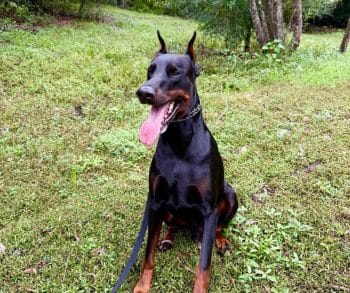
In an extraordinary demonstration of canine perception and community mobilization, a routine neighborhood walk in Tampa Bay, Florida, culminated in the rescue of five newborn kittens locked inside a sealed pet carrier and left to perish in a heavily wooded area. The incident unfolded when Roman, a Doberman Pinscher, abruptly disrupted his daily walk, exhibiting persistent behavioral distress and forcing his owner off the paved pathway and into dense foliage.
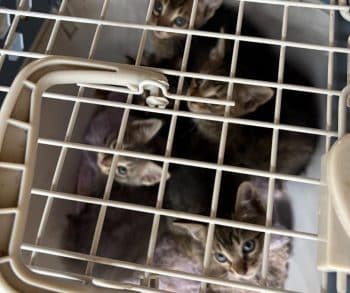
Following Roman’s relentless cues, the owner discovered a plastic pet carrier that had been deliberately bound shut with heavy-duty tape. Inside were five malnourished kittens trapped amidst soiled bedding, completely deprived of ventilation, nourishment, and hydration. With no means of self-extraction, the animals faced imminent mortality due to environmental exposure and heat accumulation.
The intervention expanded swiftly as a local community cat advocate specializing in Trap-Neuter-Vaccinate-Return (TNVR) protocols mobilized to administer immediate emergency triage. The kittens—subsequently named Lenny, Levi, Logan, Lavendar, and Lara—were extracted from the contaminated crate, provided emergency nourishment, and transferred to the Humane Society of Tampa Bay (HSTB). Medical evaluations confirmed that despite the harrowing conditions, all five kittens survived the ordeal and were stabilized.
This case highlights the acute sensory capabilities of working canine breeds, the critical utility of grassroots animal welfare networks, and the systemic challenges surrounding illegal companion animal abandonment in urban and suburban landscapes.
Detailed Chronology
[Routine Walk] ────> [Canine Alert] ────> [Discovery of Sealed Crate] ────> [TNVR Emergency Triage] ────> [HSTB Intake & Recovery]
   (Roman & Owner)       (Doberman pulls     (5 kittens taped inside)        (Immediate clean/feed)        (Lenny, Levi, Logan,
                          into foliage)                                                                     Lavendar, & Lara)
The Initial Interruption and Canine Behavior Shift
The sequence of events began on what was intended to be an ordinary recreational walk along a suburban trail. Roman, a Doberman Pinscher recognized by his owner for his predictable leash manners, abruptly altered his trajectory near a heavily wooded tree line flanking the trail.
Rather than continuing along the designated path, Roman fixed his posture toward the brush, displaying vocal distress—specifically whining and low-pitched agitation—coupled with intense physical pulling on the lead. His owner initially attempted to steer the dog forward, but Roman anchored himself, refusing to move away from the dense tree cover. Recognizing that the Doberman’s fixation was atypical and targeted, the owner yielded to Roman’s sensory cues and allowed the dog to lead the way into the underbrush.
Discovery of the Sealed Carrier
Guided by Roman’s nose, the owner navigated several yards past the visible perimeter of the trail into obscured foliage. Hidden beneath low-hanging branches sat a hard-shell plastic pet carrier.
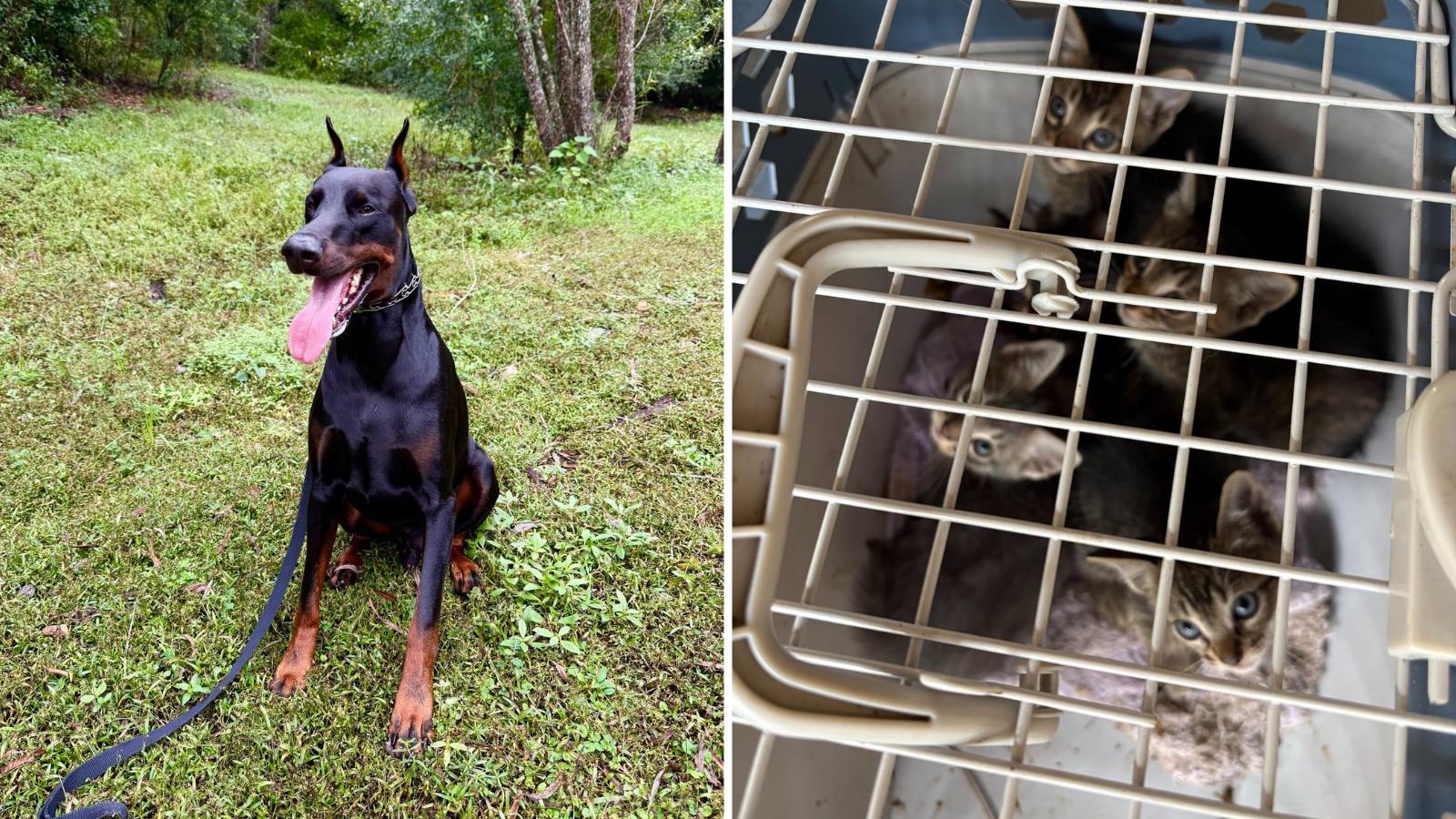
A closer inspection revealed a disturbing sight:
- Physical Tampering: The plastic carrier’s door mechanism had been fortified shut using multiple strips of adhesive tape, ensuring the latch could not be dislodged from within or loosened by movement.
- Environmental Degradation: The internal cavity lacked any access to freshwater or dry food.
- Sanitation Failure: The towel lining the floor of the enclosure was saturated with waste, signaling that the animals had been confined in the enclosed space for an extended period.
- Entrapment: Five small kittens were crammed inside, unable to turn around comfortably or escape the toxic atmosphere accumulating within the unventilated plastic shell.
Given the ambient temperatures and high humidity typical of the Florida environment, the sealed enclosure functioned effectively as a thermal trap. Without Roman’s intervention, the hidden carrier likely would have remained undetected behind the dense line of trees until the heat and dehydration proved fatal.
       +-------------------------------------------------------+
       |   CONDITIONS INSIDE DISCOVERED PET CARRIER            |
       +-------------------------------------------------------+
       | • Access Door: Bound shut with heavy adhesive tape   |
       | • Internal Resources: Zero food, zero water           |
       | • Sanitation: Towel heavily soiled with organic waste |
       | • Airflow: Severely restricted by physical enclosure  |
       | • Occupants: 5 kittens (Lenny, Levi, Logan, Lavendar, Lara) |
       +-------------------------------------------------------+
Grassroots Mobilization and Immediate Triage
Faced with an urgent welfare crisis, the owner contacted a nearby resident active in local animal rescue operations. The neighbor, an experienced advocate participating in regional Trap-Neuter-Vaccinate-Return (TNVR) programs for community cat colonies, arrived promptly with emergency supplies.
The response sequence moved through critical field-triage phases:
- Extraction and Containment Transfer: The neighbor carefully peeled away the adhesive tape to open the carrier door, freeing the trapped animals. The kittens were immediately removed from the contaminated environment and transferred into a clean, well-ventilated travel crate lined with sterile bedding.
- Rehydration and Hydration Assessment: Field responders offered suitable liquid nourishment and wet food to assess swallow reflexes and metabolic stability. To the responders’ relief, all five kittens exhibited strong nursing and eating instincts, taking in food independently.
- Transport to Professional Care Facilities: Recognizing the necessity of comprehensive veterinary diagnostics and long-term shelter management, the neighbor transported the litter directly to the Humane Society of Tampa Bay.
Supporting Context & Metrics
The Canine Olfactory Advantage and Working Breed Instincts
The successful discovery of the hidden carrier underscores the olfactory architecture of Canis lupus familiaris, particularly working breeds such as the Doberman Pinscher. A canine’s olfactory bulb possesses up to 300 million scent receptors—compared to approximately 6 million in humans—allowing them to detect chemical compounds associated with distress, organic waste, and confinement from significant distances, even when obscured by environmental barriers.
| Biological / Behavioral Parameter | Human Capability | Canine (Doberman Pinscher) Capability |
|---|---|---|
| Olfactory Receptor Count | ~6 Million | ~200–300 Million |
| Relative Olfactory Brain Volume | Baseline (1x) | ~40x larger devoted to smell analysis |
| Detection of Hidden Biological Scent | Visual dependence; extremely low | High sensitivity to waste/distress pheromones |
| Working Instinct Profile | N/A | High prey drive, spatial awareness, territorial vigilance |
In this incident, the combination of high ambient humidity and organic distress odors escaping the carrier’s ventilation slits created an olfactory plume that Roman picked up despite the carrier being hidden deep in the foliage.
Companion Animal Abandonment and Regulatory Frameworks
The intentional dumping of animals in remote or wooded areas represents a persistent challenge for animal control authorities and humane societies nationwide. In the state of Florida, animal abandonment is governed by strict legal statutes designed to penalize individuals who breach their duty of care.
                  FLORIDA ANIMAL CRUELTY LEGISLATION
                                  │
         ┌────────────────────────┴────────────────────────┐
         ▼                                                 ▼
Florida Statute § 828.12                          Florida Statute § 828.13
(Cruelty to Animals)                              (Abandonment of Animals)
• Felony charges for intentional                  • Misdemeanor of the 1st degree
  torture, infliction of pain, or                  • Prohibits impounding/leaving animals
  causing unnecessary suffering.                    without sufficient food, water,
                                                    or shelter.
Under Florida Statute § 828.13, intentionally abandoning an animal in a street, road, or public place, or leaving an animal confined without providing necessary food, water, and protection from the elements, constitutes a first-degree misdemeanor. If the abandonment results in excessive suffering or death, charges can be elevated to felony animal cruelty under Florida Statute § 828.12.
Despite these legal prohibitions, shelters across the Sunbelt region report seasonal surges in kitten intake—often referred to as "kitten season"—which stretches shelter capacity and leads to spikes in illegal abandonments when pet owners feel overwhelmed.
The Critical Role of TNVR Networks and Foster Infrastructure
The immediate involvement of a TNVR-trained neighbor highlights how specialized community networks serve as first responders in animal welfare emergencies.
                                COMMUNITY SAFETY NET
                                         │
    ┌────────────────────────────────────┼────────────────────────────────────┐
    ▼                                    ▼                                    ▼
TNVR Advocates                      Foster Care Networks                 Shelter Facilities
• Targeted population control      • Temporary home environments        • Medical triage & surgery
• Emergency field stabilization    • Behavioral socialization           • Final adoption matching
• Community surveillance • Shelter capacity alleviation • Legal compliance & microchiping- TNVR Advocates: Primary task forces managing feral cat populations through humane trapping, sterilization, vaccination, and return. Their training enables them to recognize acute medical distress and administer field stabilization.
- Foster Care Infrastructure: Young kittens, particularly those under eight weeks of age or recovering from extreme trauma, require off-site foster care to lower their exposure to shelter-borne pathogens and ensure intensive socialization before permanent adoption.
Official Statements & Institutional Reactions
Following the intake and medical triage of the rescued litter, leadership and care staff at the Humane Society of Tampa Bay issued formal updates regarding the animals’ condition and used the case to educate the public on animal welfare protocol.
Medical Evaluation and Naming
In an official statement released via their communications channels, HSTB verified that the five kittens—officially designated as Lenny, Levi, Logan, Lavendar, and Lara—had successfully passed initial health screenings.
"Lenny, Levi, Logan, Lavendar, and Lara were brought to our facility after a remarkably attentive dog named Roman sensed them hidden in the woods taped inside a soiled crate," an HSTB Communications Representative confirmed. "Despite the shocking lack of food, water, and ventilation in their original enclosure, all five kittens are eating independently, showing strong vital signs, and demonstrating wonderful resilience."
           HUMANE SOCIETY OF TAMPA BAY INTAKE REPORT
  +---------------------------------------------------------+
  | Subject ID Group: Kitten Litter "L"                     |
  | Names: Lenny, Levi, Logan, Lavendar, Lara               |
  | Medical Status: Stable; clear respiratory function       |
  | Nutritional Status: Eating independently (weaned/semi)   |
  | Primary Needs: Short-term foster placement & spay/neuter |
  +---------------------------------------------------------+
Shelter Directives on Surrender Alternatives
Addressing the broader issue of abandonment, HSTB emphasized that leaving animals in hidden locations poses an extreme risk of mortality and constitutes a punishable offense. The shelter re-issued guidance for individuals facing hardship:
"Abandoning animals in hidden, dangerous, or enclosed conditions is never an acceptable solution," the HSTB Welfare Team noted. "We urge anyone struggling with an unintended litter or an inability to care for their pets to contact municipal shelters, humane societies, or local rescue partners. Safety net resources—including low-cost veterinary care, pet food banks, and surrender assistance programs—are available to prevent animals from being placed in life-threatening conditions."
Future Outlook
The five kittens have officially transitioned into the secondary phase of their rescue journey. Having overcome immediate environmental hazards, their care plan focuses on developmental milestones required for permanent adoption.
                     RECOVERY AND ADOPTION ROADMAP
                                   │
┌──────────────────────────────────┴──────────────────────────────────┐
│ Phase 1: Emergency Field Triage & Intake (COMPLETED)               │
│ • Extraction from taped carrier                                     │
│ • Rehydration, cleaning, and HSTB medical intake                    │
├─────────────────────────────────────────────────────────────────────┤
│ Phase 2: Foster Placement & Socialization (CURRENT)                │
│ • Placement in a temporary foster home                              │
│ • Weight monitoring, socialization, and disease prevention          │
├─────────────────────────────────────────────────────────────────────┤
│ Phase 3: Surgical Preparation & Final Adoption (PENDING)           │
│ • Pediatric spay/neuter procedures                                  │
│ • Microchipping and core vaccinations                               │
│ • Placement into permanent adoptive homes                           │
└─────────────────────────────────────────────────────────────────────┘
Immediate Care Requirements: Foster Placement
Because Lenny, Levi, Logan, Lavendar, and Lara are in a critical growth phase, the shelter prioritized placing them within its volunteer foster network. In a home foster setting, the kittens will benefit from:
- Controlled Environment: Reduced risk of upper respiratory infections (URI) common in high-density shelter environments.
- Socialization: Exposure to household sights, sounds, and human interaction, which reduces fear-based behaviors in adult cats.
- Nutritional Oversight: Monitored feeding schedules to ensure consistent weight gain.
Long-Term Prospects
Once the kittens reach requisite weight milestones (typically two pounds) and complete their vaccination schedules, HSTB medical staff will perform pediatric spay and neuter surgeries. Following these procedures, all five will be made available for public adoption.
Meanwhile, local animal advocate groups continue to highlight Roman’s actions as an extraordinary instance of animal intuition. His persistence not only saved five lives from immediate environmental threat, but also set off a chain reaction of community intervention that granted Lenny, Levi, Logan, Lavendar, and Lara a bright future ahead
.