
Executive Overview
When the general public envisions a service dog at work, the mind invariably drifts toward the cinematic and the extraordinary. We picture a canine instinctively alerting its handler to a plummeting blood glucose level moments before advanced medical telemetry registers a shift; a sleek German Shepherd or Labrador Retriever expertly navigating a visually impaired handler through a chaotic, gridlocked metropolitan intersection; or a steady veteran’s companion intercepting an approaching panic attack before the psychological spiral takes hold.
These specialized interventions are nothing short of remarkable, representing the pinnacle of canine cognition, advanced task conditioning, and rigorous technical instruction. However, behind every seamless medical alert, physical retrieval, and deep pressure therapy session lies an invisible anchor: canine calmness.
In the specialized realm of professional service dog training, calmness is frequently misconstrued as a mere personality trait or an absence of hyperactivity. In reality, true working calmness is an active, highly regulated state of emotional stability. It is the fundamental prerequisite that allows an animal to think critically, process environmental stimuli safely, and execute complex tasks with unwavering reliability in unpredictable, high-stress public environments. Without a foundation of deep-seated emotional regulation, even the most intelligent and technically proficient service dog will struggle to function safely in the real world. This comprehensive analysis explores why emotional regulation supersedes raw excitability, how elite organizations like Dogs Inc cultivate this vital trait from puppyhood, and how a calm canine partner fundamentally reshapes the autonomy and confidence of individuals living with disabilities.
Detailed Chronology: The Lifecycle of a Calm Service Dog
The journey of a service dog is a meticulously orchestrated timeline that begins long before advanced task instruction ever commences. Developing a dog capable of maintaining absolute composure in a bustling airport terminal or a crowded hospital corridor is a multi-stage developmental evolution.
Phase 1: Neonatal Imprinting and Early Puppyhood (Weeks 0–8)
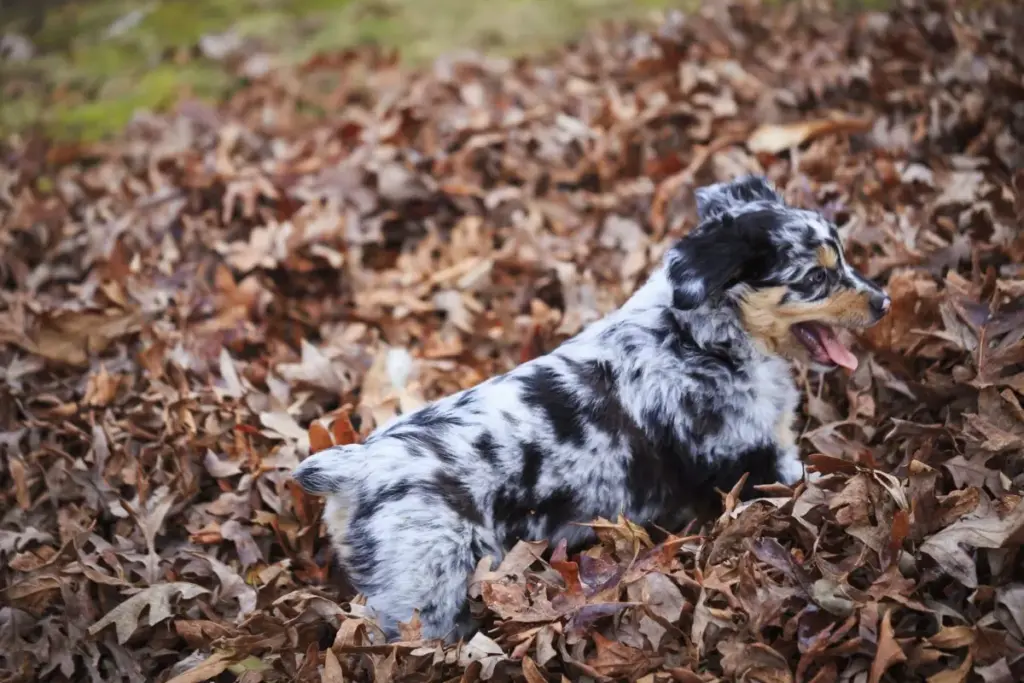
The foundation of calmness is established during the earliest stages of a puppy’s life. Professional breeding programs and expert puppy raisers understand that neurological resilience is cultivated through gentle, controlled exposures. During this critical window, puppies are introduced to varied tactile surfaces, soft auditory stimuli, and gentle human handling. The objective is not to insulate the puppy from the world, but to teach them how to process novel sensations without eliciting a fear response. Reinforcing behaviors such as "four on the floor" and rewarding quiet, unreactive observation sets the neurological baseline for future emotional regulation.
Phase 2: Structured Socialization and Domestic Integration (Months 2–6)
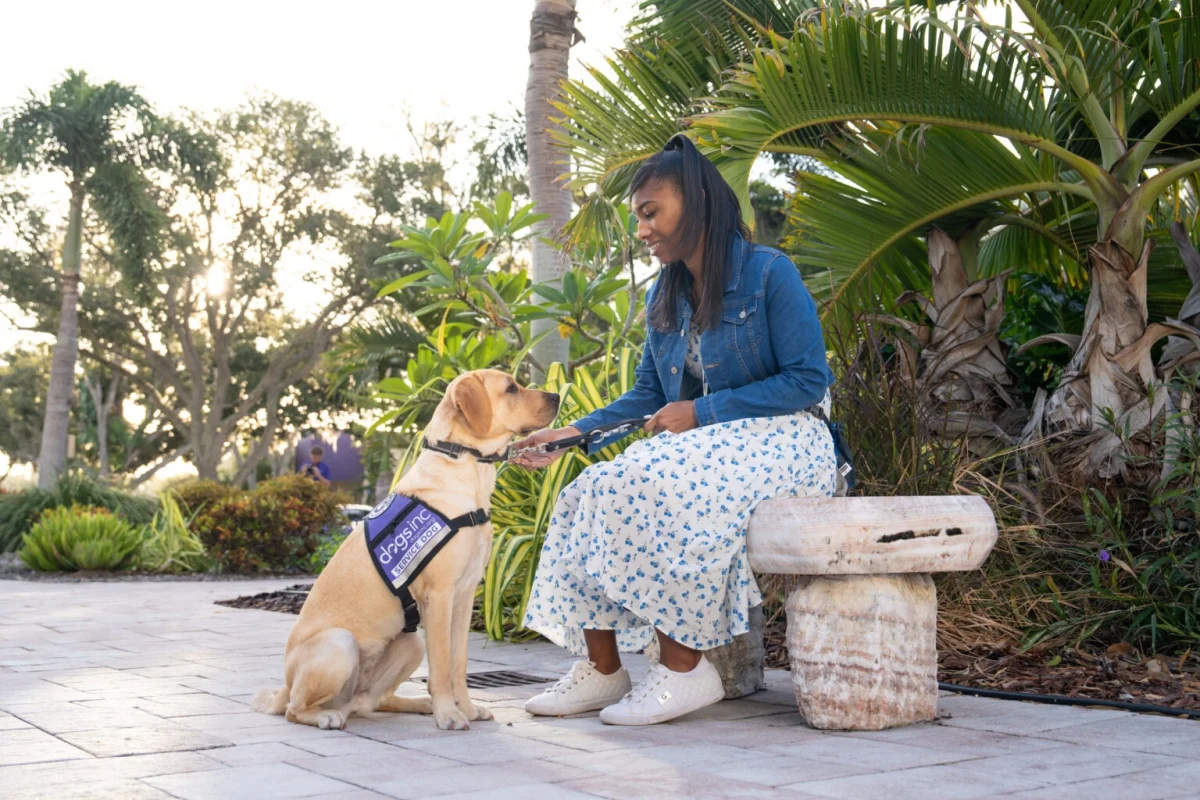
As puppies transition to their volunteer puppy raisers, structured socialization takes center stage. This period involves deliberate, positive exposure to the sights, sounds, and rhythms of everyday human life: moving traffic, passing bicycles, ringing telephones, and unfamiliar household appliances. Crucially, trainers and raisers teach the puppy how to self-settle. Instead of constantly reacting to environmental shifts, the dog learns that calmness yields rewards. Clicker training and positive reinforcement are utilized to mark and reward moments of spontaneous relaxation, teaching the young canine that a pause-and-assess strategy is always superior to an impulsive reaction.
Phase 3: Public Access and Distraction Training (Months 6–18)
As the adolescent dog enters formal, professional training programs—such as those at Dogs Inc—the stakes increase exponentially. Training shifts from controlled domestic settings to high-stimulus public spaces, including shopping malls, grocery stores, public transit networks, and restaurants.
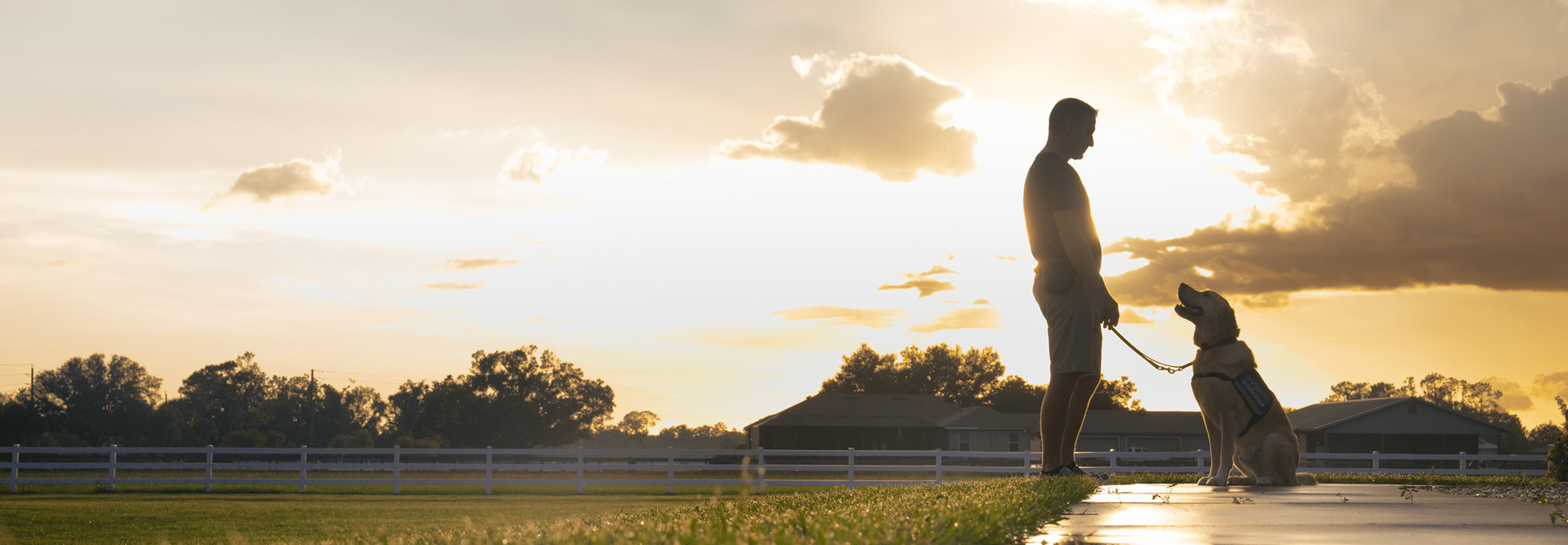
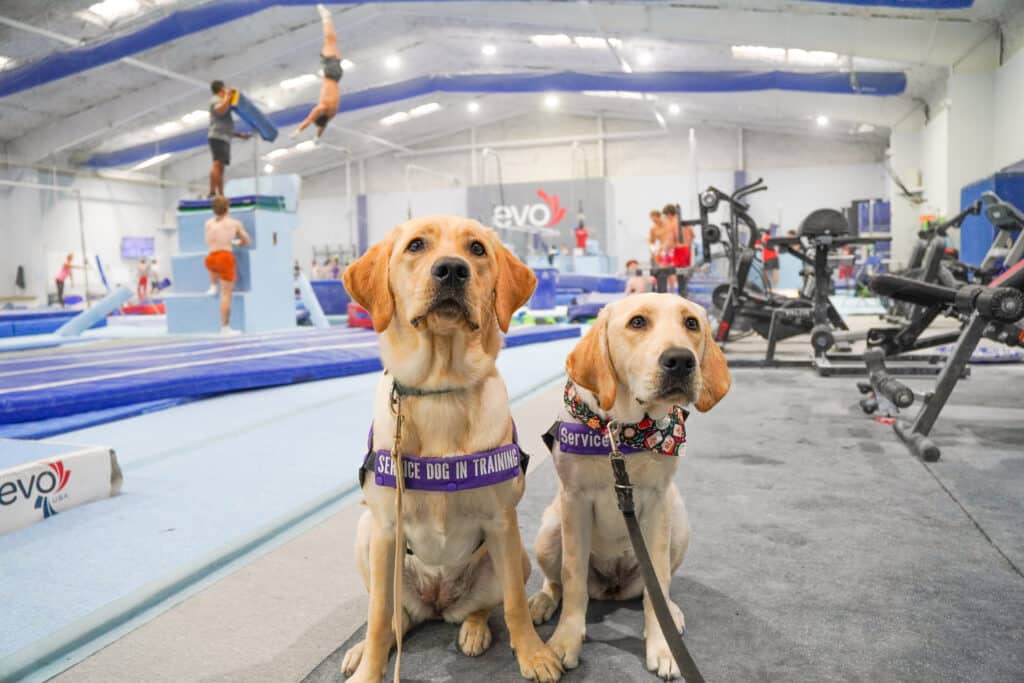
During this phase, trainers evaluate the dog’s "recovery time"—the speed at which the animal returns to an emotional baseline after encountering a sudden distraction, such as a dropped plate, a blaring siren, or an unexpected animal. Distraction training systematically introduces food temptations, narrow aisles, and intrusive human interactions (such as strangers attempting to pet the working dog). The goal is absolute neutrality: the dog learns to acknowledge the environment without directing emotional reactivity toward it.
Phase 4: Advanced Task Integration and Team Matching (Months 18–24+)
Once emotional stability and public neutrality are firmly established, trainers layer on specialized, task-specific work tailored to the individual handler’s disability. Whether the dog is learning to retrieve dropped medical equipment, provide tactile grounding during trauma responses, or guide a handler around physical barriers, these technical skills are built directly upon the established foundation of calmness. Finally, the dog is matched with a handler, undergoing a rigorous team-training period to ensure seamless communication, mutual trust, and lifelong operational success.
Supporting Context & Metrics: The Science of Canine Emotional Regulation
To fully appreciate the primacy of calmness in service work, one must examine the neurological and physiological mechanics of stress and learning in canines.
The Neurobiology of Overstimulation
When a dog becomes overstimulated or enters a state of hyper-arousal, stress hormones—specifically cortisol and adrenaline—flood the bloodstream. From a neurobiological standpoint, high levels of cortisol impair the prefrontal cortex, which is responsible for problem-solving, impulse control, and executive function.
In simple terms: a panicked or hyper-excited dog literally cannot think.
If a service dog lacks the emotional capacity to regulate its internal state in a crowded environment, its ability to respond to a cue word, execute a complex physical task, or maintain spatial awareness plummets. Calmness acts as a physiological shield, keeping stress hormones at bay and ensuring that the dog’s cognitive faculties remain fully operational, even amidst sensory overload.
+-----------------------------------------------------------------+
|                  THE NEUROLOGICAL STRESS LOOP                   |
|                                                                 |
|  [Environmental Stimulus] ---> [Sensory Overload / Fear]        |
|                                         |                       |
|                                         v                       |
|  [Impaired Executive Function] <--- [Cortisol Spike]            |
|         (Inability to Focus / Work Safely)                      |
+-----------------------------------------------------------------+

+-----------------------------------------------------------------+
|                  THE CALM TRAINING PARADIGM                     |
|                                                                 |
|  [Environmental Stimulus] ---> [Calm Neutrality / Observation]  |
|                                         |                       |
|                                         v                       |
|  [Optimal Cognitive Function] <-- [Controlled Baseline]         |
|         (Reliable Task Execution & Public Safety)               |
+-----------------------------------------------------------------+
Quantitative Metrics of Selection
Organizations dedicated to producing elite assistance dogs evaluate candidates against stringent behavioral metrics. Industry data indicates that only a fraction of dogs evaluated for service work ultimately graduate as certified working animals. The primary wash-out factors rarely involve an inability to learn physical tasks; rather, they stem from behavioral incompatibilities related to:
- Inadequate Stress Recovery: Dogs that linger in a heightened state of arousal after a startling event.
- Leash Reactivity and Predatory Drift: Inability to maintain composure around fast-moving objects, wildlife, or companion animals.
- Hyper-Attachment or Sound Sensitivity: Inability to self-soothe in unfamiliar surroundings or maintain focus during acoustic disturbances.
By prioritizing emotional stability over raw drive during the initial selection process, organizations minimize attrition and ensure that every graduate possesses the robust psychological armor required for rigorous public access work.
Official Perspectives & Expert Insights
Industry leaders and canine behaviorists uniformly emphasize that calmness is the linchpin distinguishing a true service animal from an untrained pet or an emotional support animal.
"When we look at what makes a service dog truly dependable, it is never just about how many tricks they know or how fast they can retrieve an item. It is about their internal weather. A service dog must be the eye of the storm. When the world around them is chaotic, loud, and unpredictable, their internal baseline must remain steady, thoughtful, and regulated," notes a senior canine behavior instructor at Dogs Inc.
Furthermore, professional organizations stress the critical legal and social distinctions that hinge entirely on canine demeanor. Under federal guidelines, service dogs must be individually trained to do work or perform tasks for the benefit of an individual with a disability. Crucially, public access rights—guaranteed by legislation such as the Americans with Disabilities Act (ADA)—are entirely contingent upon the animal’s behavior.
A service dog that displays panic, unwarranted barking, aggression, or lack of impulse control in a public setting not only jeopardizes public safety but also undermines the hard-earned public trust placed in legitimate working teams. Neutrality and calm public decorum are, therefore, both operational necessities and legal imperatives.
Future Outlook: The Evolution of Calmness-Centric Breeding and Training
As the demand for specialized assistance dogs continues to outpace supply across the globe, the methodology surrounding service dog cultivation is evolving. The future of the industry points toward even more sophisticated, data-driven approaches to identifying and nurturing calmness from birth.
1. Predictive Behavioral Genetics
Modern breeding programs are increasingly utilizing quantitative behavioral assessments and genetic markers to track temperament traits across generations. By selecting breeding stock with proven resilience, rapid stress-recovery profiles, and low reactivity, organizations are proactively engineering litters with a higher baseline propensity for working calmness.
2. Advanced Desensitization Technologies
Training facilities are integrating simulated environmental stressors—such as multi-speaker spatial audio systems that replicate chaotic urban environments, indoor obstacle courses, and variable tactile flooring—into early puppy development centers. These tools allow trainers to simulate real-world chaos in a controlled, highly monitored setting, accelerating the puppy’s ability to develop emotional regulation before ever setting foot in a public venue.
3. Handler Education and Co-Regulation
Future training paradigms place an ever-increasing emphasis on the symbiotic relationship between handler and dog. Canine behaviorists recognize that dogs are exceptionally perceptive emotional sponges; a handler experiencing acute anxiety or hyper-vigilance can inadvertently trigger stress responses in their companion. Consequently, modern training programs incorporate handler coaching focused on co-regulation—teaching handlers how their own breathing, posture, and energy can reinforce their dog’s calm, steady demeanor.
Conclusion
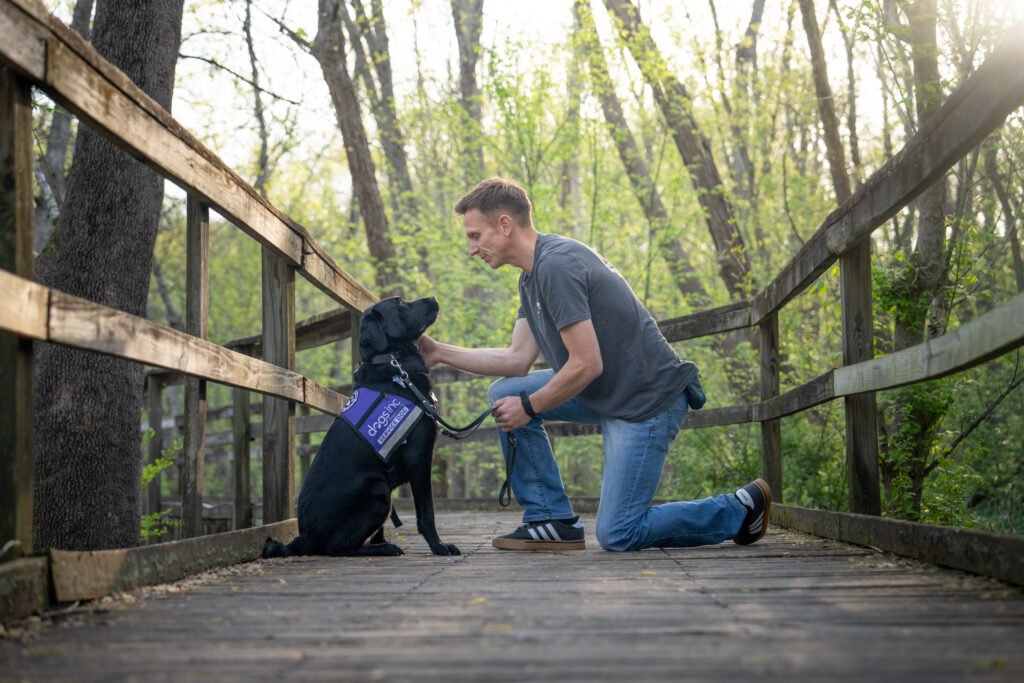
The most profound moments in the life of a service dog partnership rarely unfold amidst flashing lights or dramatic interventions. More often than not, they happen quietly: a measured, deliberate pause before reacting to an unexpected noise; a steadfast, unshakeable presence sitting quietly beside a wheelchair in a packed airport terminal; a steady heartbeat felt against a handler’s leg during the onset of a trauma-induced flashback.
Calmness may not possess the immediate theatrical flair of an advanced medical alert, but it is the indispensable bedrock upon which every other skill is built. It is the quality that transforms a talented dog into an elite working partner. Through rigorous early socialization, positive reinforcement, unwavering public neutrality, and careful genetic selection, organizations like Dogs Inc continue to shape dogs capable of navigating an unpredictable world with grace. For the individuals who depend upon them every single day, that quiet, steady partnership is nothing short of life-changing—restoring independence, mitigating fear, and anchoring them safely in an often overwhelming world.