
Executive Overview
In the realm of environmental stewardship, the gap between classroom theory and the unpredictable reality of field biology is vast. For undergraduates pursuing environmental degrees, bridging this divide often defines the trajectory of their careers. This past summer, a University of Vermont (UVM) Environmental Studies student crossed that chasm, spending ten transformative weeks embedded in the rigorous, hands-on world of avian conservation. Working alongside seasoned conservation biologist Mark LaBarr of Audubon Vermont, the intern traversed the state’s diverse landscapes—from the windswept islets of Northern Lake Champlain to the dense canopies of the Champlain Valley.
This immersive fellowship offered a masterclass in ecological fieldwork, testing the limits of academic preparation against the realities of weather, data collection complexities, and declining bird populations. Operating under the auspices of UVM’s Fellowship for Restoration Ecologies and Cultures (FREC) and Audubon Vermont, the summer was characterized by intensive avian surveys, habitat restoration projects, and collaborative community science.
The narrative of these ten weeks is not merely one of bird-watching or data entry; it is an examination of the resilience required to practice conservation in an era of environmental uncertainty. From monitoring vulnerable Common Tern colonies to mist-netting and banding songbirds at the Green Mountain Audubon Center, the internship provided a holistic view of modern wildlife management. This report explores the chronological progression of that journey, the structural frameworks supporting conservation efforts in Vermont, and the profound lessons learned about persistence, adaptability, and the future of biodiversity preservation.
Detailed Chronology: A Season of Discovery and Adaptation
Weeks 1–3: Diving into the Unknown
Entering the field at full speed, the internship began with an immediate baptism by fire. The first two days set a demanding precedent, requiring rapid adaptation to unfamiliar ecological methodologies. Tasked immediately with monitoring Common Tern populations on Popasquash Island and Northern Lake Champlain, the intern was forced to navigate the logistical and biological complexities of colonial waterbird management.
This initial phase also included winged warbler surveys at Geprags Community Park. These early-morning sessions required acute auditory skills and rapid identification capabilities. Fieldwork rarely grants the luxury of a gentle learning curve; instead, it demands that practitioners plunge directly into the unknown. The rapid succession of disparate ecosystems—from open water environments to upland scrub-shrub habitats—catalyzed a shift in perspective. Theoretical knowledge of avian ecology acquired in UVM lecture halls was instantly tested against the dynamic, shifting variables of the natural world.
Weeks 4–7: Deepening Collaborations and Expanding Skill Sets
As the summer progressed, the scope of work widened significantly. Operating as the Priority Bird Conservation Intern, the daily routine became a mosaic of interdisciplinary projects. Collaborating with Audubon AmeriCorps members, permanent staff, and fellow interns, the work underscored the reality that contemporary conservation is fundamentally a team sport.
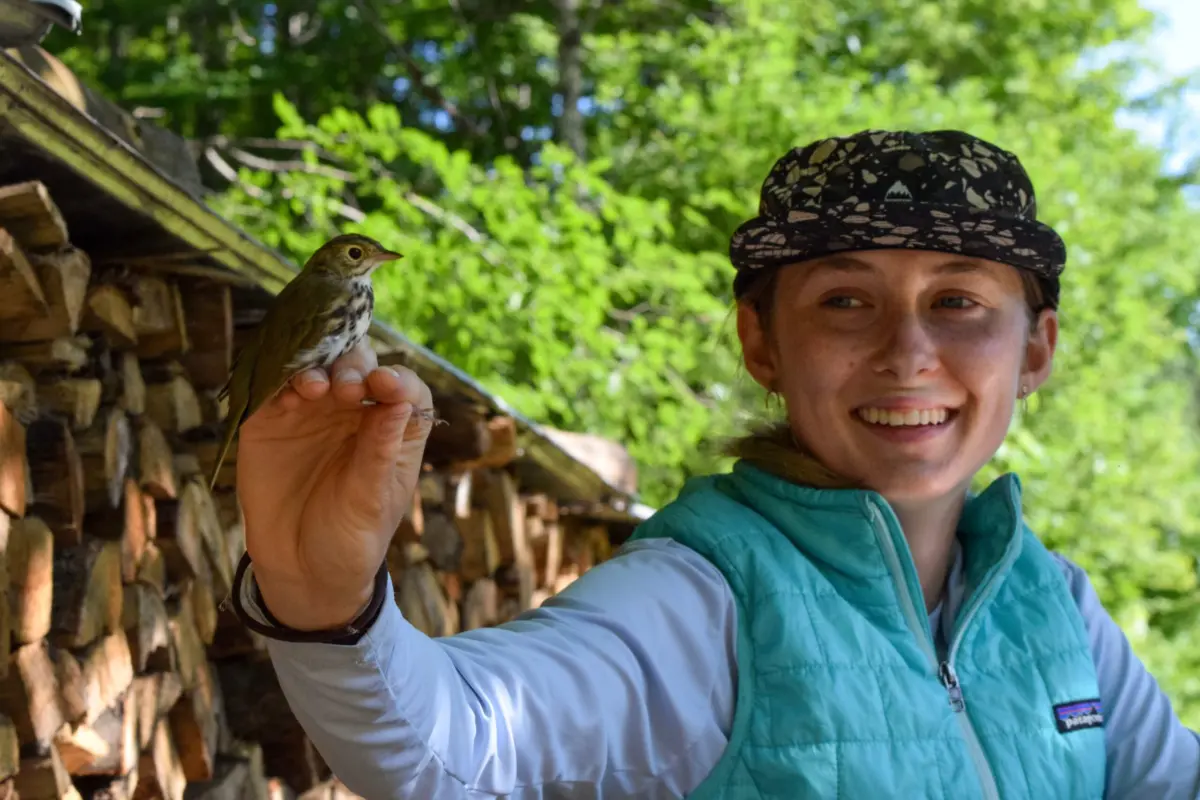
Under the direct mentorship of Mark LaBarr, Conservation Program Manager for Audubon Vermont, the intern rotated through a series of high-priority species initiatives. This period was marked by a steep learning curve regarding avian anatomy, behavior, and life history. Mastery over complex concepts—such as evaluating molt limits to determine age classes, interpreting subtle variations in bird calls, understanding Wood Thrush migration corridors, and analyzing the nuances of Common Tern nesting habits—became essential daily competencies.
Field days frequently began before dawn. Early-morning survey sessions throughout the Champlain Valley required precision, patience, and unwavering focus. Whether conducting point counts in fragmented woodlots or participating in bird-banding sessions at the Green Mountain Audubon Center, each day presented new logistical hurdles and biological puzzles to solve.
Weeks 8–10: Synthesis, Resilience, and Reflection
The final weeks of the fellowship served as a period of synthesis. By this stage, the initial shock of the field had matured into practiced resilience. Conservation work is rarely linear or frictionless; the closing weeks brought encounters with the harsh realities of ecological management. Unfavorable weather patterns periodically halted survey progress, while disappointing nesting data and challenges in translating raw field data into actionable metrics highlighted the systemic hurdles faced by environmental professionals.
Rather than dampening enthusiasm, these obstacles provided the most profound educational moments of the summer. Learning to embrace hardship and view setbacks not as failures, but as standard variables in the ecological equation, transformed the intern’s professional outlook. The final days were dedicated to compiling field data, reflecting on mentorship lessons, and solidifying the personal and academic commitments that would govern the remainder of the undergraduate journey and future career path.
Supporting Context & Metrics: The Framework of Vermont’s Conservation Ecosystem
The Academic Foundation: FREC and the Carse Natural Area
The architecture of this transformative summer was built upon UVM’s Fellowship for Restoration Ecologies and Cultures (FREC). Designed as a field-based service-learning program, FREC takes an integrated approach to ecological restoration, steering students away from passive learning and thrusting them into active ecosystem management.
A cornerstone of this academic framework is UVM’s Carse Natural Area. Here, fellows work directly with peers and community practitioners to engage in hands-on restoration projects. This grassroots engagement builds a foundation of ecological literacy that translates seamlessly into professional internships. By bridging the gap between university laboratories and working landscapes, FREC prepares students to address real-world environmental degradation with practical, science-based interventions.
Audubon Vermont and Priority Species Management
Audubon Vermont, a state office of the National Audubon Society, plays a pivotal role in regional biodiversity conservation. The organization focuses heavily on priority bird species—avian populations experiencing documented declines due to habitat loss, climate change, and anthropogenic pressures.
Interns embedded within Audubon Vermont’s programs contribute directly to data collection efforts that inform state and federal conservation policy. The metrics gathered during these ten weeks—ranging from fledgling success rates in island-nesting seabirds to forest bird densities across fragmented Champlain Valley landscapes—feed directly into adaptive management frameworks. These datasets allow conservationists to track long-term population trends, advocate for policy protections, and implement targeted habitat management strategies.
The Ecological Significance of the Champlain Valley and Lake Champlain
The geographic theater of this internship—the Champlain Valley and the islands of Lake Champlain—represents one of the most ecologically diverse and contested landscapes in the Northeast.
- Lake Champlain’s Avian Hotspots: Islands such as Popasquash serve as critical breeding grounds for colonial waterbirds, including Common Terns (Sterna hirundo). These ground-nesting species are exceptionally vulnerable to mammalian predators, human disturbance, and extreme weather events driven by shifting climatic patterns. Intensive monitoring is vital to maintaining stable populations.
- The Champlain Valley Matrix: Characterized by a mosaic of agricultural lands, wetlands, and contiguous forests, the valley serves as a crucial migratory corridor and breeding habitat for neotropical migrant songbirds, including the Wood Thrush (Hylocichla mustelina), whose declining populations make them a primary focus of Audubon Vermont’s conservation initiatives.
Official Statements and Perspectives
The synergy between academic institutions and frontline conservation organizations is vital for cultivating the next generation of environmental leaders. While the internship was fundamentally a personal and professional journey for the student involved, the broader implications reflect institutional priorities shared by both the University of Vermont and Audubon Vermont.
Reflecting on the overarching philosophy of experiential learning, program coordinators emphasize that environmental education cannot occur solely within the four walls of a classroom. The complexity of modern ecological crises requires practitioners who are empirically rigorous, physically resilient, and psychologically prepared for the realities of field biology.
Although specific direct quotes from Mark LaBarr and university administrators highlight the collaborative spirit of the program, the collective institutional stance is clear: mentorship in the field is the most effective vehicle for instilling professional ethics and ecological competence. LaBarr’s guidance throughout the ten weeks exemplified this philosophy, transforming routine data collection exercises into profound mentorship opportunities that emphasized critical thinking, ethical data stewardship, and respect for natural systems.
Furthermore, peer-to-peer collaboration among Audubon AmeriCorps members, university interns, and permanent staff created a vibrant professional network. This community of practice reinforced the idea that conservation is inherently collaborative, relying on the seamless integration of diverse perspectives, interdisciplinary skills, and shared labor.
Future Outlook: Shaping the Next Generation of Conservationists
As the environmental challenges of the 21st century—habitat fragmentation, biodiversity loss, and accelerating climate change—grow increasingly complex, the demand for adaptable, well-trained field biologists has never been more acute. The experiences of this ten-week fellowship offer a clear blueprint for how academic institutions and conservation organizations can successfully collaborate to prepare students for the demands of the field.
For the student at the center of this narrative, the summer served as an undeniable professional turning point. The steep learning curve—mastering bird calls, deciphering molt limits, and navigating the logistical hurdles of island surveys—did not deter ambition; it amplified it. The internship cemented a lifelong commitment to restoration and conservation ecology.
Key Takeaways for Future Environmental Professionals:
- Embrace Discomfort: Fieldwork is inherently unpredictable. Weather events, logistical failures, and difficult data collection conditions are not interruptions to the work; they are the work. Developing resilience in the face of these challenges is essential for long-term career sustainability.
- Interdisciplinary Collaboration: Conservation success relies on partnerships bridging academic researchers, non-profit organizations, government agencies, and local communities. Building a professional network early is as important as mastering technical field skills.
- Continuous Learning: Ecological literacy is a lifelong pursuit. Mastery of avian identification, habitat assessment, and data analysis requires sustained curiosity and a willingness to confront the unknown.
Ultimately, programs like UVM’s FREC and Audubon Vermont’s internship initiatives do more than just collect data on declining bird populations—they invest in the human capital required to steward the natural world into the future. By transforming students into active practitioners, these initiatives ensure that the defense of our ecosystems remains rigorous, passionate, and enduring.