
Executive Overview
Air travel with household pets has long been subjected to rigid parameters, strict weight limitations, and an overarching consensus that in-cabin accommodations are reserved exclusively for toy breeds and small dogs under the ten-pound threshold. For owners of larger canine companions—particularly those exceeding sixteen pounds or standing over twelve inches tall at the shoulder—the prospect of flying without placing their beloved pets into the cargo hold has traditionally been a source of immense stress. However, a growing community of resourceful pet owners is challenging these constraints through strategic planning, innovative equipment modifications, and a deep understanding of airline policies.
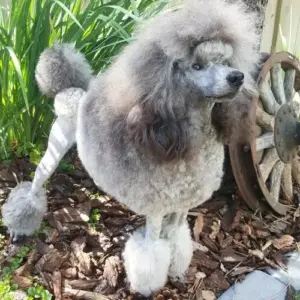
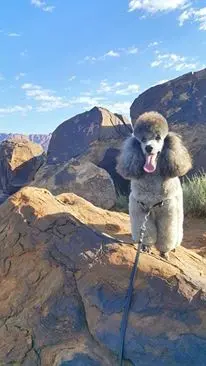
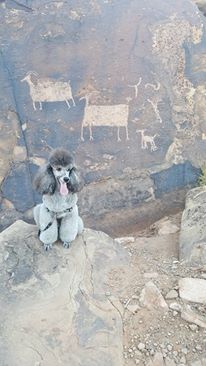
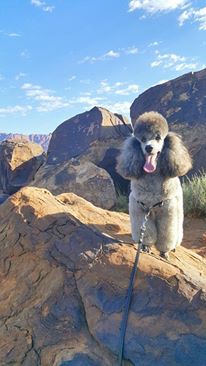
This report examines a recent triumph in canine aviation: the successful round-trip journey of Calvin, a seventeen-pound, sixteen-inch-tall Miniature Poodle, traveling in-cabin from Providence, Rhode Island, to the breathtaking landscapes of southwestern Utah via Las Vegas. Accompanied by his owner, Amy, Calvin navigated multiple commercial airlines, tight aircraft seating configurations, and bustling airport security checkpoints. By employing an extra-large (XL) SturdiBag cleverly modified with components from a smaller model, Amy bypassed the restrictive sizing norms typically enforced by carriers such as Delta Air Lines and Southwest Airlines.
Beyond serving as a travelogue for a single pet, this case study offers a definitive blueprint for owners of larger dogs who wish to travel safely alongside their pets in the passenger cabin. Through detailed logistical breakdowns, equipment analysis, and expert observations, this feature explores how ingenuity can overcome structural limitations in modern commercial air travel.
Detailed Chronology of the Journey
Phase 1: Departure and the Delta Experience (Providence to Las Vegas via Atlanta)
The journey commenced in Providence, Rhode Island, where Amy prepared Calvin for his cross-country trek to visit family in Utah. Recognizing the challenges of traveling with an oversized dog—Calvin stands roughly sixteen inches at the shoulder and weighs in at seventeen pounds—Amy opted for the extra-large SturdiBag. This particular carrier is celebrated for its flexibility, yet it pushes the boundaries of standard under-seat dimensions mandated by commercial air carriers.
To mitigate the risk of gate-check rejection, Amy devised a clever contingency plan. She packed a standard large SturdiBag, folded flat, inside her carry-on luggage. Furthermore, she pre-configured the XL carrier by swapping its rigid bottom support and soft interior pad with those salvaged from the large-sized model. This brilliant structural modification effectively reduced the footprint of the carrier from twenty inches down to eighteen inches in length, granting it the crucial compression needed to slide beneath cramped aircraft seating while remaining fully compatible with her backup bag should an immediate downsize become necessary.
Booking the initial flight with Delta Air Lines proved remarkably friction-free, defying common traveler anxieties regarding airline representatives. When Amy honestly disclosed to the reservation agent that she would be traveling with a larger small dog and an oversized soft-sided carrier, the representative offered practical reassurance: provided the carrier could compress and fit securely beneath the forward seat, it would be permitted.
The first leg of the journey utilized a Delta MD-88 aircraft. Securing the oversized carrier into a middle seat configuration presented a momentary spatial challenge. Maneuvering the bag between the passenger seat frame and the rigid rear housing of the seat directly in front required patience and a gentle squeeze. Once positioned in the under-seat well, however, the carrier settled securely, and Calvin acclimated peacefully to the cabin environment.
During a scheduled layover at Hartsfield-Jackson Atlanta International Airport, Amy successfully navigated the secure perimeter to provide Calvin with a necessary relief break. While an official, dedicated animal relief station remained elusive within her immediate vicinity, Calvin utilized a discreet arrangement of decorative terminal greenery.
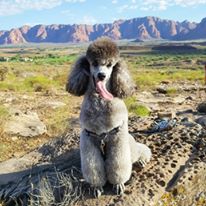
Re-boarding for the second leg aboard a Boeing 737-700 proceeded with equal smoothness, culminating in a successful touchdown in Las Vegas and an immediate transition into the scenic grandeur of Utah’s state parks and pet-friendly trails.
Phase 2: The Return Voyage and Southwest Airlines Contingency
Unforeseen technological disruptions frequently plague modern commercial aviation. On the return trip, a severe computer system failure crippled Delta’s operations, resulting in significant delays. Unwilling to subject Calvin to extended tarmac uncertainty, Amy executed a decisive pivot, purchasing a new homeward-bound ticket through Southwest Airlines.
Transitioning to Southwest introduced a new variable: the carrier’s signature open-seating policy. Despite boarding under this dynamic system, the transition remained seamless. A Southwest gate agent briefly paused the pair during the boarding process, exercising due diligence solely to verify that a proper pet reservation fee and tag had been assigned to Calvin’s carrier.
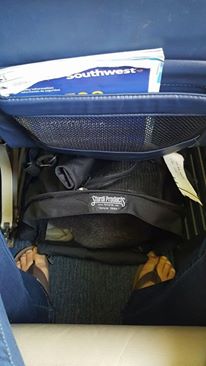
Aboard the first Southwest Boeing 737-700, Amy and Calvin secured a middle seat. The XL SturdiBag integrated smoothly into the floor space, offering the oversized Poodle ample interior volume to adjust his posture. The second leg of the Southwest itinerary, featuring a window seat configuration on another 737-700, provided even more favorable spatial metrics, allowing Calvin to rest comfortably while peering out through the carrier’s mesh hatch.
A strategic layover at Chicago Midway International Airport provided another essential opportunity for canine maintenance. Midway features an outdoor pet relief zone situated outside the secure perimeter. While Amy noted that the designated zone consisted primarily of utilitarian concrete—a texture occasionally unappealing to sensitive canine paws—abundant natural grass and mature trees surrounding the immediate perimeter ensured Calvin could relieve himself comfortably before returning through security screening.
The final leg of the flight carried the duo safely back to Providence, concluding an extensive multi-carrier journey characterized by zero structural incidents, cooperative airline personnel, and a thoroughly relaxed traveling companion.
Supporting Context & Metrics: The Mechanics of Canine Air Travel
Navigating the skies with an animal that tests the absolute boundaries of cabin regulations requires an intimate understanding of sizing metrics, equipment specifications, and behavioral conditioning.
The Canine Profile: Calvin vs. Standard Limits
- Breed: Miniature Poodle
- Weight: 17 lbs. (Exceeding the informal 10-lb comfort threshold for standard carriers)
- Height at Shoulder: 16 to 16.5 inches (Exceeding the optimal 12-inch guideline for traditional large soft carriers by a margin of four inches)
- Morphological Advantage: Calvin’s height is disproportionately distributed through his long legs rather than a bulky torso, allowing him to easily curl into a compact, curled-up posture when resting inside an enclosed soft-sided carrier.
Equipment Engineering: The SturdiBag Modifications
The extra-large SturdiBag typically measures twenty inches in length, which can pose a challenge when attempting to compress the unit beneath the seats of certain narrow-body aircraft. Amy’s modification strategy deserves special recognition from a logistical standpoint:
- The Floor Board Swap: By replacing the rigid foam floor and matching soft interior mat of the XL bag with the smaller equivalents from a standard Large SturdiBag, Amy decreased the interior tension and physical length of the housing to approximately eighteen inches.
- Dual-Purpose Redundancy: Carrying the large SturdiBag folded inside standard luggage provided an immediate "Plan B" safety net. If a gate agent or flight crew had raised objections to the dimensional profile of the XL carrier, Amy could have transferred Calvin into the smaller unit on the spot without sacrificing her structural floor supports.
- Flexibility in Compressibility: Because soft-sided pet carriers lack the rigid frame of hard plastic kennels, they rely entirely on the elasticity and give of their mesh and fabric walls. The SturdiBag’s flexible fiberglass rod frame absorbs downward pressure from passenger seats without transferring harmful force to the animal inside.
Official Guidelines and Carrier Policies
Securing advance approval for an in-cabin pet requires strict adherence to individual airline protocols. While official regulations consistently state that animals must remain inside their carriers for the duration of the flight and that the carrier must fit entirely beneath the seat ahead, enforcement styles vary widely among commercial carriers.
Delta Air Lines Policy Framework
Delta maintains a structured process for in-cabin pets, requiring advance reservations due to strict caps on the total number of animals permitted per flight cabin. Fees are applied per one-way itinerary. While Delta provides specific maximum dimensions for hard-sided kennels, soft-sided carriers are granted a degree of flexibility provided they are constructed of water-repellent material, feature adequate ventilation on multiple sides, and can naturally compress to fit under the seat without restricting the animal’s ability to stand, turn around, and lie down comfortably.
Southwest Airlines Policy Framework
Southwest operates under a similarly accommodating yet strict in-cabin animal framework. Pets must travel in leak-proof, ventilated carriers that fit comfortably beneath the seat ahead. Southwest requires passengers traveling with pets to check in at the ticket counter to verify proper documentation and attach an authorized pet carrier tag. Because of Southwest’s open-seating model, gate agents frequently inspect carriers during the boarding process to ensure compliance before passengers select their cabin seating.
Future Outlook: Evolving Standards for Pet Travel
As pet ownership continues to surge globally, and as companion animals become increasingly integrated into every facet of modern domestic life, the demand for flexible, pet-inclusive travel policies is reaching an all-time high. The traditional paradigm—which treats all pets over fifteen pounds as cargo candidates—is facing justified scrutiny from animal advocates, frequent flyers, and veterinary professionals alike.
The success of travelers like Amy and Calvin highlights a critical evolution in how pet owners approach aviation logistics. Rather than blindly accepting restrictive weight limits as absolute barriers, informed travelers are utilizing modular equipment, understanding aircraft cabin layouts, and engaging transparently with customer service representatives to secure safe passage for their animals.
Looking ahead, industry analysts anticipate several key developments in pet air travel:
- Standardized Soft-Carrier Guidelines: Pressure is mounting on commercial carriers to establish uniform, realistic dimensions for soft-sided carriers that account for the natural compressibility of modern fabric designs.
- Expanded Terminal Infrastructure: Airports nationwide are accelerating the installation of post-security, indoor and outdoor animal relief stations featuring natural elements, significantly reducing travel-day stress for pets and owners alike.
- Enhanced Community Resource Sharing: Platforms dedicated to pet travel are rapidly expanding comprehensive visual databases—such as photographic logs of specific carriers deployed on various commercial aircraft—empowering owners to visualize exact fit profiles before booking tickets.
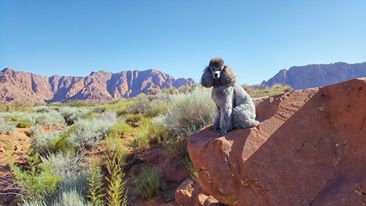
Ultimately, Calvin’s smooth journey from Rhode Island to the red-rock vistas of Utah proves that with meticulous preparation, creative equipment adaptation, and a calm demeanor, the skies are indeed accessible to larger canine companions. As more owners adopt these proactive methodologies, the boundaries of in-cabin pet travel will continue to expand, ensuring that no family member—regardless of weight or stature—is left behind.