
Executive Overview
Air travel with household pets has traditionally been viewed as a seamless endeavor reserved almost exclusively for owners of exceptionally small animals—typically dogs under 10 pounds that can easily fit into standard, rigid-compliant under-seat carriers. For pet owners whose companions stretch past conventional airline size restrictions, commercial cabins often represent a minefield of unpredictable gate agents, rigid dimension enforcement, and logistical stress.
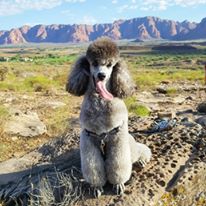
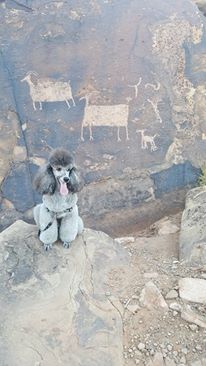
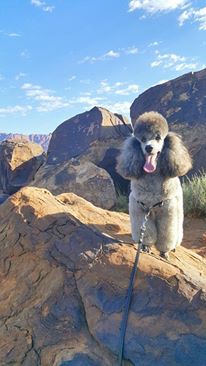
However, a growing subculture of resourceful travelers is proving that conventional wisdom can be successfully challenged. In this exclusive travel report, we examine the journey of Amy and her 17-pound, 16.5-inch-tall Miniature Poodle, Calvin, as they successfully navigated a multi-leg domestic itinerary across major carriers using a cleverly modified extra-large (XL) SturdiBag.
This comprehensive deep-dive explores the precise modifications required to fit an oversized dog carrier into standard aircraft seating, analyzes real-world airline compliance policies across Delta Air Lines and Southwest Airlines, and offers actionable strategies for pet owners seeking to stretch the limits of in-cabin animal travel without violating safety guidelines or risking being grounded at the gate.
Detailed Chronology: The Providence-to-Utah Itinerary
The journey began in Providence, Rhode Island, with a final destination of southwestern Utah to visit family. Opting for a complex multi-airline routing, Amy designed a meticulous itinerary that prioritized her dog’s comfort while maintaining a robust emergency contingency plan.

Phase 1: The Delta Leg (Providence to Atlanta to Las Vegas)
Amy’s outbound journey utilized Delta Air Lines, operating first on a Delta MD-88 aircraft from Providence to Atlanta, followed by a Boeing 737-700 connection to Las Vegas, Nevada.
Booking the trip required direct communication with airline reservations. Anticipating resistance regarding the unconventional size of the XL SturdiBag, Amy approached the reservation line with transparency. To her surprise, the booking agent displayed a pragmatic attitude. Rather than grilling her on millimeter-exact dimensions, the representative noted that as long as the flexible soft-sided carrier could comfortably compress to fit underneath the seat in front of her, it would be permitted.
Upon boarding the MD-88, Amy encountered the first minor logistical hurdle: the middle seat layout. Maneuvering an XL carrier into the narrow space between the assigned seat and the seatback pocket in front required careful compression. Once settled, however, the flexible nature of the SturdiBag conformed smoothly to the cabin floor contours.
During the layover at Hartsfield-Jackson Atlanta International Airport, Amy successfully cleared security to provide Calvin with a much-needed outdoor break. While official dedicated pet relief stations were not immediately located, a patch of decorative landscaping served the immediate biological purpose. The subsequent flight to Las Vegas aboard the Boeing 737-700 proceeded without incident.
Phase 2: The Southwest Contingency (Las Vegas to Chicago to Providence)
The return journey introduced an unexpected operational challenge. Due to computer system outages and significant scheduling delays with Delta, Amy made the executive decision to pivot to Southwest Airlines to avoid prolonged airport stress for her dog.
Purchasing a last-minute ticket on Southwest, Amy experienced firsthand the carrier’s unique operational environment. Southwest utilizes an open-seating boarding process, which can introduce uncertainty regarding under-seat storage availability. During boarding, a vigilant gate agent briefly intercepted the team to verify that a formal pet fee ticket had been correctly issued for Calvin’s carrier, but raised no concerns regarding the physical dimensions of the XL bag.
Securing a middle seat on the first Southwest leg—a Boeing 737-700—proved surprisingly advantageous. The XL SturdiBag slipped effortlessly into the designated space, offering Calvin ample internal volume to adjust his position during the flight.
The connecting stop at Chicago Midway International Airport provided another opportunity for canine rehabilitation. While the designated outdoor concrete pet relief area lacked natural vegetation, adjacent grassy perimeters allowed Calvin to stretch his legs comfortably. Following a rapid, stress-free re-screening through TSA security, the final leg home to Providence concluded a remarkably smooth transit.
Supporting Context & Metrics: The Engineering of an Oversized In-Cabin Carrier
The success of Calvin’s journey hinges upon a brilliant exercise in pet-gear modification and physical ergonomics. Understanding why this configuration worked requires analyzing the specifications of the equipment involved and the anatomical profile of the animal.
The Equipment Breakdown: Standard vs. Modified SturdiBag
- The Extra-Large (XL) SturdiBag: Out of the box, the XL SturdiBag measures approximately 20 inches in length. While it offers superior vertical and volumetric space compared to standard carriers, a strict 20-inch rigid floor span can present significant difficulties when wedged beneath the restrictive pitch of modern commercial aircraft seats.
- The Modification Strategy: Recognizing this structural limitation, Amy engineered a brilliant workaround. She packed a standard Large (L) SturdiBag inside her primary luggage as a fail-safe backup. More importantly, she swapped the rigid bottom structural insert and internal soft pad of the XL bag with the smaller counterparts from the Large model.
- The Dimensional Impact: By substituting the floorboards, Amy effectively shortened the usable interior base length of the XL bag from 20 inches down to 18 inches. This subtle reduction introduced crucial flexibility, allowing the ends of the soft-sided carrier to compress effortlessly against the metal legs of airline seats without sacrificing the overhead clearance required by Calvin’s height.
Canine Biomechanics: Why Dimensions Can Be Deceiving
Airlines typically publish rigid maximum dimensions for soft-sided pet carriers, often hovering around 17 to 19 inches in length and roughly 8 to 10 inches in height. Calvin stands an imposing 16.5 inches at the shoulder and weighs approximately 17 pounds—specifications that officially place him well outside standard cabin thresholds.
However, pet travel experts emphasize that raw measurements fail to capture the entire operational picture. Calvin’s height is concentrated primarily in his long, elegant Poodle legs rather than a bulky torso. When resting inside a confined space, a dog naturally curls into a compact, feline-like bundle. By focusing on volume flexibility rather than rigid skeletal height, Amy correctly determined that her dog could comfortably occupy a soft-sided enclosure that adapted to his resting posture.
Official Statements and Industry Insights
The aviation sector’s approach to in-cabin pets remains decentralized, with individual carriers maintaining distinct internal policies regarding dimensions, carrier flexibility, and documentation.
Airline Policy Comparison
| Airline | Carrier Size Policy Stance | Enforcement Vibe | Flexibility on Soft-Sided Bags |
|---|---|---|---|
| Delta Air Lines | Publishes recommended dimensions; emphasizes under-seat compressibility. | Moderate to Professional | High, provided the bag compresses safely. |
| Southwest Airlines | Enforces strict pet ticket requirements; relies on open seating. | Strict on Documentation, Pragmatic on Size | High, standard soft-sided compliance preferred. |
Industry analysts note that gate agents and flight crews prioritize safety compliance and aisle clearance over millimeter-level inspections. If a soft-sided carrier fits completely underneath the seat without blocking the egress path or protruding into the footwell of neighboring passengers, enforcement officers rarely intervene.
Future Outlook: Trends in In-Cabin Pet Travel
As pet ownership surges and animals increasingly assume the role of core family members, the demand for flexible, human-grade travel accommodations will continue to escalate.
Key developments shaping the future of pet aviation include:
- Standardized Soft-Sided Guidelines: Advocacy groups are pushing for uniform airline standards that recognize the compressibility of modern technical fabrics, moving away from archaic, rigid-box mandates.
- Advanced Modular Gear: Manufacturers are responding with modular travel systems featuring adjustable frames, mirroring the ingenuity displayed by travelers like Amy and Keri with their littermate Miniature Poodles.
- Expanded Airport Infrastructure: Major domestic hubs are steadily improving their airside and landside animal relief facilities, though inconsistencies between sterile-zone and non-sterile zone amenities remain a logistical hurdle for multi-leg itineraries.
Conclusion
Traveling with an oversized pet in an airline cabin is not for the faint of heart; it requires meticulous planning, an intimate understanding of your pet’s comfort thresholds, and robust contingency frameworks—such as carrying a backup carrier. However, as demonstrated by Calvin and Amy’s triumphant excursion through Utah’s breathtaking landscapes, meticulous preparation can transform an intimidating logistical challenge into an unforgettable adventure.