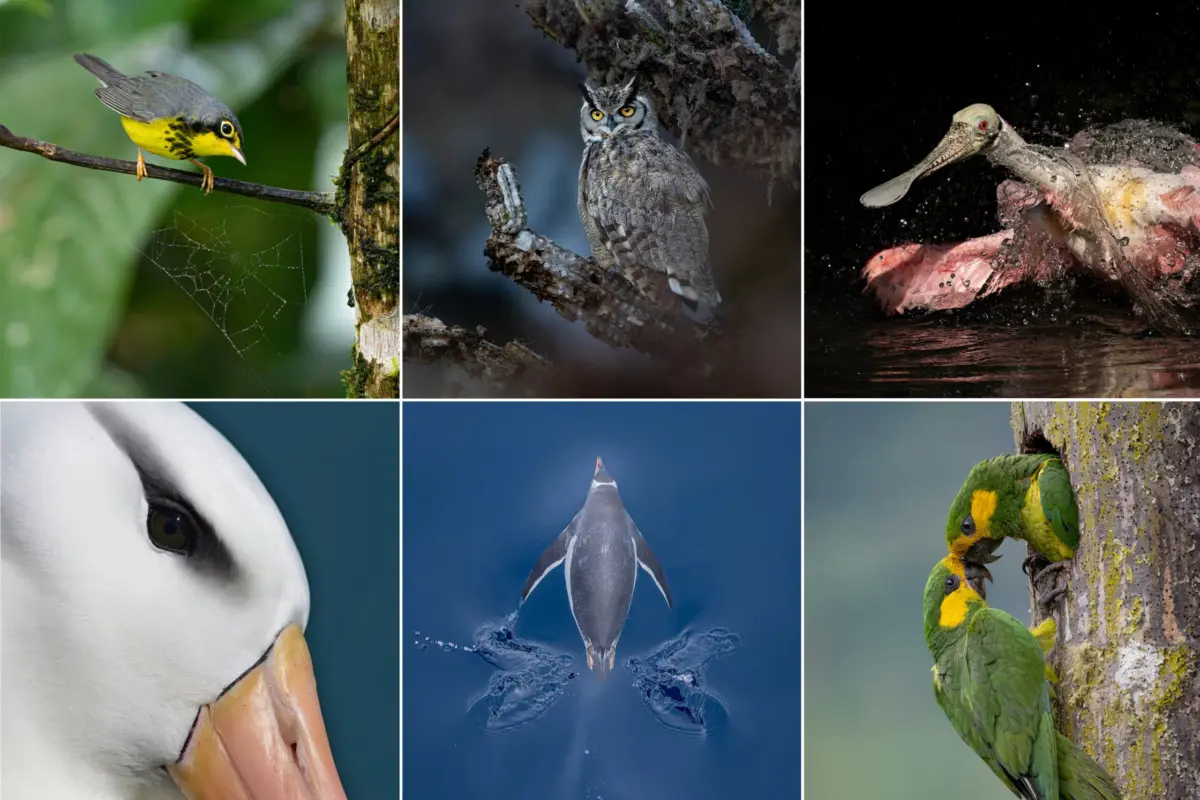

NEW YORK / SANTIAGO / BOGOTA — In an era defined by accelerating ecological fragmentation and shifting climatic baselines, wildlife photography has evolved beyond mere aesthetic appreciation. Today, the lens serves as both a mirror reflecting planetary distress and a megaphone calling for urgent international stewardship.
This philosophy took center stage on September 2, 2026, as the National Audubon Society officially announced the winners of the 17th annual Audubon Photography Awards. Marking nearly two decades of celebrating the intersection of avian artistry and scientific storytelling, this year’s competition underscored a vital truth: birds do not recognize human-drawn borders. By uniting contestants and ecosystems across the Americas, the 2026 awards demonstrated that safeguarding migratory species requires a synchronized, multinational commitment.
Executive Overview: A Pan-American Celebration of Avian Artistry
Now in its seventeenth consecutive year, the Audubon Photography Awards continue to set the gold standard for nature and wildlife photojournalism. The competition highlights not only the breathtaking beauty of birds in their natural habitats, but also the compounding environmental threats they face—from rapid urbanization and habitat fragmentation to warming temperatures and shifting food webs.
In a powerful structural continuation introduced last year, the 2026 competition maintained its international scope by formally recognizing and awarding entrants from Chile and Colombia alongside those from the United States and Canada. This pan-American framework honors the ecological reality of the Western Hemisphere: countless migratory species spend their breeding seasons in northern latitudes while wintering or stopping over in Central and South America.
The numbers reflect this international reach. Out of a fiercely competitive pool evaluated by independent, anonymous panels of judges, seventeen total prizes were distributed. Residents of Chile and Colombia secured nine prizes, while entrants from the United States and Canada captured eight.
Grand Prize winners received a prestigious financial award of $5,000 paired with an extraordinary experiential prize: an immersive, once-in-a-lifetime voyage to Antarctica courtesy of HX Expeditions, Audubon’s exclusive cruise partner. This unique collaboration merges high-level wildlife exploration with hands-on conservation education, sending top-tier photographers straight to the frontlines of polar research and climate vulnerability.
Beyond the Grand Prizes, the competition honored specialized categories designed to highlight specific conservation realities. These included the second annual Birds Without Borders Prize—which specifically highlights migratory species whose lifecycles span international jurisdictions—and the Conservation Prize, which captures the acute environmental challenges birds face or showcases active, community-led solutions that help populations thrive.
Detailed Chronology: The Evolution of a Hemispheric Competition
To understand the cultural and scientific impact of the 2026 Audubon Photography Awards, one must trace the event’s evolution from a localized U.S. photography contest into a truly hemispheric conservation initiative.
The Path to September 2, 2026
Planning and evaluation for the 2026 awards spanned multiple months and hemispheres, relying on rigorous blind-judging panels divided by regional expertise to ensure cultural and ecological accuracy.
- January – April 2026: Photographers across North and South America submitted thousands of entries capturing avian behavior, adaptive strategies, and ecological vulnerability.
- May – June 2026: Two separate, specialized panels of judges—one dedicated to the U.S. and Canada, and another focused on Chile and Colombia—conducted rigorous anonymous reviews to select finalists, honorable mentions, and category winners.
- September 2, 2026: The National Audubon Society officially released the winners to the global public, sparking widespread acclaim across digital networks, conservation forums, and international media outlets.
- September 23, 2026: Audubon is slated to unveil its highly anticipated Top 100 photos, expanding the public showcase and providing deeper visual context into avian biodiversity.
- Fall 2026: Winners will be permanently enshrined in the print edition of Audubon magazine, bringing tactile, high-resolution photojournalism to hundreds of thousands of members and subscribers.
- January 13, 2027: The submission window for the 2027 Audubon Photography Awards officially opens, welcoming a new cycle of global storytellers.
Supporting Context & Metrics: The Ecological Imperative
While the winning photographs celebrate the sheer majesty of avian life, they also serve as stark reminders of an unfolding ecological crisis. Across the Americas, bird populations are facing unprecedented systemic pressures.
Shared Threats Across Latitudes
The birds linking Chile, Colombia, Canada, and the United States—such as iconic residents and long-distance migrants like the Roseate Spoonbill, the Lesser Horned Owl, and the Tennessee Warbler—face a compounding matrix of threats:
- Habitat Loss & Fragmentation: Agricultural expansion, industrial development, and urban sprawl continue to gobble up critical wetlands, forests, and native grasslands.
- Climate Disruption: Rapidly warming global temperatures disrupt the delicate phenological synchronization between migratory arrivals and the peak abundance of insects and floral resources.
- Chemical Contamination & Invasive Species: Pesticide use, domestic predators, and non-native plant species further degrade the ecological integrity of vital flyways.
Audubon’s Cross-Border Interventions
Recognizing that local conservation is insufficient for migratory species, the National Audubon Society deploys coordinated, international strategies. Initiatives like Audubon’s Latin America and the Caribbean programs work hand-in-hand with local communities, Indigenous groups, and international partners to protect nesting, stopover, and wintering grounds.
Domestically and regionally, programs like Audubon’s Plants for Birds initiative empower everyday citizens, urban planners, and landowners to restore native flora. By replacing sterile lawns and invasive plants with native species, communities create essential oases that provide migrating and resident birds with the food, shelter, and breeding habitat they need to survive year-round.
Official Statements: Voices from the Partnership
The success of the 2026 awards relies heavily on deep institutional collaboration, uniting conservation science, public engagement, and responsible adventure travel.
The National Audubon Society: Sentinels of Planetary Health
As a leading nonprofit conservation organization with 120 years of science-based, community-driven impact, the National Audubon Society views birds not merely as subjects of beauty, but as vital ecological barometers.
"Birds are powerful indicators of our planet’s health, acting as sentinels that warn us of environmental change and inspire action," the organization noted in a formal statement. "Audubon works across the Western Hemisphere, driven by the understanding that what is good for birds is good for the planet. Through a collaborative, nonpartisan approach across habitats, borders, and the political spectrum, Audubon drives meaningful and lasting conservation outcomes."
With a robust network comprising over 1,000 staff members and more than 2.6 million supporters, Audubon continues to pioneer innovative ways to connect people to nature, leveraging visual arts to bridge cultural and geographic divides.
HX Expeditions: Pioneering Mindful Exploration
As Audubon’s exclusive cruise partner, HX Expeditions brings a century-old legacy of polar navigation to the partnership. Founded in 1896 and headquartered in London, HX is the world’s first and longest-running expedition cruise company, as well as the premier provider of voyages to Antarctica. Operating a fleet of five modern ships across more than 250 destinations in 30+ countries, HX champions sustainable travel through concrete actions.
HX was the first expedition cruise company to ban heavy fuel oil and eliminate unnecessary single-use plastics across its global operations. Furthermore, the company has integrated hybrid-powered technology into its fleet to reduce carbon emissions. Demonstrating an enduring commitment to science, HX provides more than 1,600 complimentary cruise nights annually to third-party researchers and manages the HX Foundation, which actively funds grassroots environmental conservation and community development projects worldwide.
Future Outlook: Looking Toward 2027 and Beyond
The 2026 Audubon Photography Awards have successfully demonstrated that art transcends linguistic and political borders, forging a unified cultural appreciation for hemispheric wildlife. By shining a spotlight on the photographers who brave the elements to capture these avian moments, Audubon and HX Expeditions are cultivating a new generation of environmental advocates.
As digital galleries continue to roll out throughout the year—and as subscribers eagerly await the Fall 2026 print edition of Audubon magazine—the conservation community is already casting its gaze forward.
Photographers, conservationists, and nature enthusiasts across the Americas should mark their calendars for January 13, 2027, when the submission window for the 2027 Audubon Photography Awards officially opens. Whether entering the U.S. and Canada contest or the specialized Chile and Colombia tracks, future participants will have the opportunity to contribute their lenses to the ongoing story of hemispheric bird conservation.
In a changing world, every captured frame serves as a testament to what is at stake. Through continued cross-border collaboration, rigorous science, and evocative visual storytelling, the global conservation community moves closer to ensuring that the skies above the Americas remain vibrant, resilient, and full of life for generations to come.
Media Contact Directory
For journalists, researchers, and media professionals seeking further information, high-resolution imagery, or interview opportunities with competition organizers and winners, please contact the respective media representatives:
- United States & Canada: Megan Moriarty — [email protected]
- Chile & Colombia: Poly Martínez — [email protected]