
Executive Overview
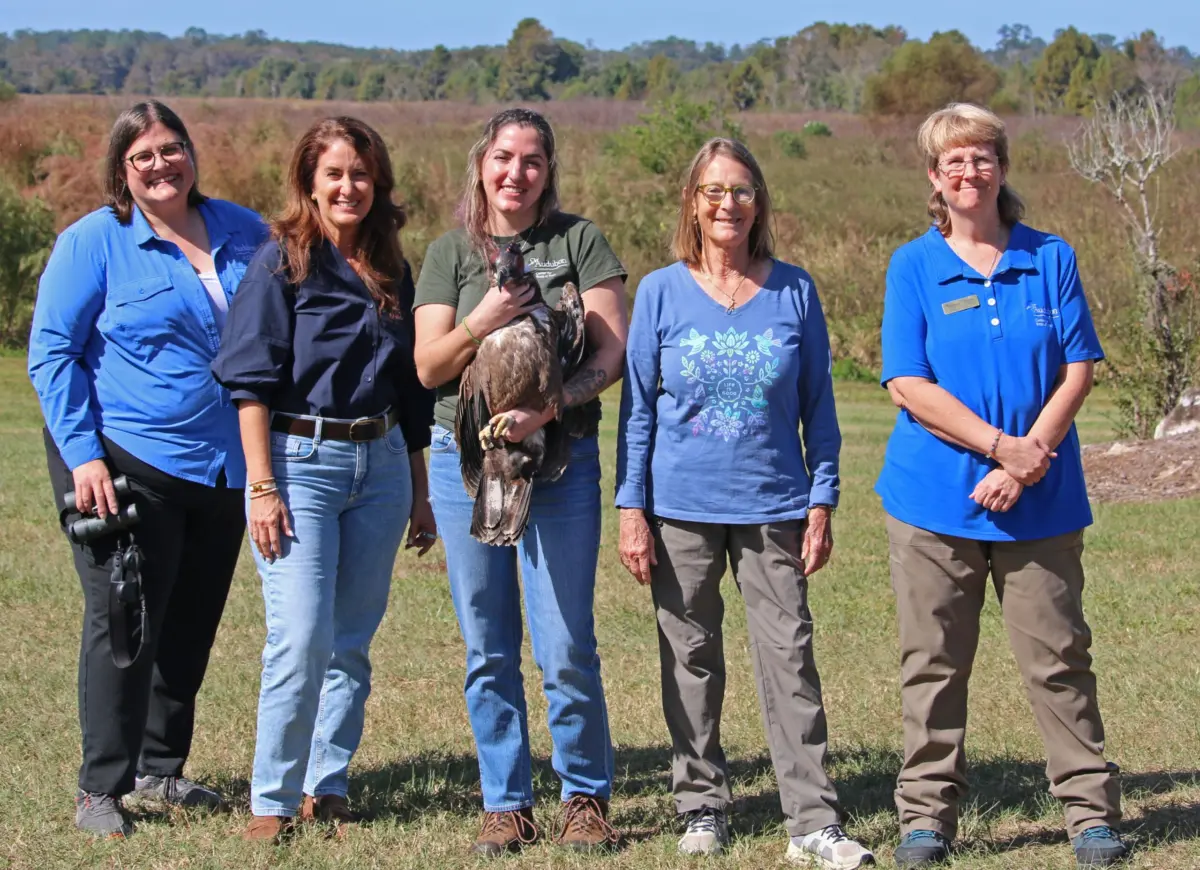
On a brilliant, sun-drenched afternoon in late October, the Florida skies welcomed back a true icon of American wilderness. Amidst the cheers of an enthusiastic crowd comprising local homeschool students, devoted Audubon chapter members, and environmental advocates, a juvenile Bald Eagle was successfully released into its natural habitat at Alligator Lake in Columbia County. State Senator Jennifer Bradley had the distinct honor of performing the release, marking a triumphant end to a dramatic journey that began months prior in the coastal wetlands of Southwest Florida.
This young male raptor represents a significant milestone for conservation in the Sunshine State: he is the 823rd bald eagle to be successfully rehabilitated and released by the renowned Audubon Center for Birds of Prey since its foundational establishment in 1979. More than just a singular moment of wildlife reclamation, this event serves as a powerful testament to the efficacy of cross-sector collaboration—uniting grassroots volunteers, specialized veterinary surgeons, state legislators, and institutional conservationists.
However, the journey from a vulnerable rescue patient with a compromised foot to a soaring apex predator highlights both the fragility of Florida’s native wildlife and the rigorous, multi-step pipeline required to sustain it. As the eagle took its first powerful strokes above the tree line of Alligator Lake, it carried with it not only the hopes of its human caretakers but also the broader narrative of habitat preservation, legislative land stewardship, and the ongoing struggle to protect Florida’s diminishing wilderness areas from the relentless pressures of development.
Detailed Chronology: From Coastal Rescue to Flight Conditioning
The saga of Eagle #823 began on a precarious note in coastal Lee County. Having recently achieved the milestone of fledging—the stage at which young birds grow their first heavy flight feathers and leave the safety of the nest—the juvenile raptor faced a sudden, life-threatening setback. Just two days after taking its maiden flights, the bird sustained a severe injury to its foot. In the unforgiving wild, an injured foot means an inability to hunt, capture prey, and ultimately survive.
Fortunately, sharp-eyed observers intervened, securing the distressed bird and transporting it to a specialized veterinary facility in Southwest Florida. There, specialized surgical intervention was administered to stabilize and repair the damaged appendage. While the surgery was a critical first step, the road to recovery for an apex avian predator requires far more than basic wound closure; it demands intensive physical rehabilitation and psychological de-escalation from human contact.
Recognizing the complex needs of the recovering raptor, medical staff transferred the eagle to the premier facilities of the Audubon Center for Birds of Prey located in Maitland, Florida. Founded over four decades ago, this institution operates as a state-of-the-art emergency room and physical therapy center for Florida’s raptor populations.
Upon arrival in Maitland, the juvenile entered a rigorous regimen of rehabilitation and flight conditioning. Under the watchful eyes of avian specialists and veterinary technicians, the eagle was introduced to specialized flight mews—large, enclosed aviaries designed to encourage muscle rebuilding, stamina testing, and aerodynamic coordination. Over several weeks, the bird regained the powerful breast muscle mass and wing strength necessary to navigate thermal currents and execute high-speed hunting maneuvers. By late October, a comprehensive physical examination revealed a clean bill of health, clearing the young male for his ultimate return to the wild.
Supporting Context & Metrics: The Science of Raptor Conservation
Understanding the significance of this release requires examining the broader biological lifecycle of the Bald Eagle (Haliaeetus leucocephalus) and the systemic operational metrics of the Audubon Center for Birds of Prey.
Biological Development and Identification
At the time of its release, the young male was entirely draped in dense, mottled brown plumage—the standard developmental uniform of a juvenile bald eagle. Unlike the iconic, stark white head and tail feathers of mature adults, juvenile plumage provides crucial camouflage during the bird’s early, vulnerable years. According to avian biologists, the transformation from brown juvenile to striking adult is a slow, gradual process. Over the next four to five years, the eagle will undergo a series of progressive molts, slowly acquiring the signature white crown and tail feathers that signal sexual maturity.
Once he attains this adult plumage between his fourth and fifth years, he will possess the biological readiness to establish an independent territory, attract a mate, and embark on the generational cycle of nesting and raising young.
To ensure researchers and conservationists can track this developmental arc, the eagle was fitted with a standard aluminum federal leg band featuring a unique, alphanumeric combination. Crucially, this band is designed with large lettering that can be easily read from a distance using standard binoculars or spotting scopes. This non-invasive tracking method allows citizen scientists and field researchers to report "resights," thereby compiling vital data regarding juvenile dispersal patterns, survival rates, and territorial establishment across the state.
The Audubon Center for Birds of Prey: A Legacy of Healing
The milestone of the 823rd released eagle underscores the staggering, institutional output of the Audubon Center for Birds of Prey since 1979. Operating at the intersection of acute veterinary medicine, environmental education, and scientific research, the Center admits hundreds of raptors annually—including hawks, owls, falcons, and eagles suffering from vehicle strikes, fish-hook ingestions, pesticide poisonings, and habitat displacement.
The success of these rehabilitation efforts is heavily buoyed by community science initiatives. Chief among these is Audubon’s EagleWatch program, a statewide network of dedicated volunteers who monitor active eagle nests, document breeding behaviors, and report potential disturbances to wildlife authorities. By mobilizing everyday citizens to act as stewards for nesting pairs, the program provides an invaluable early-warning system that safeguards the species on a hyper-local level, directly complementing the clinical work performed at the Maitland hospital.
Official Statements and Community Engagement
The release event at Alligator Lake was as much a celebration of community solidarity as it was an environmental triumph. Columbia County officials, local park administrators, and regional conservation groups rolled out the red carpet to facilitate a public education moment that resonated deeply with attendees—particularly the contingent of local homeschool students who witnessed the event firsthand.
State Senator Jennifer Bradley, who played the central role of releasing the bird, emphasized the profound connection between wildlife rehabilitation and public policy. Holding the hooded raptor carefully to prevent undue stress during its final moments of transition, Senator Bradley allowed the animal ten vital seconds to re-acclimate to the bright Florida sunlight before setting it free.
The moment the hood was removed, the eagle paused momentarily on the ground, assessing its surroundings before deploying a magnificent wingspan. With powerful, rhythmic flaps, it ascended into the air, banking gracefully over the mesmerized crowd before disappearing into the mature hardwood canopy bordering Alligator Lake.
Following the successful launch, local representatives expressed profound gratitude to Columbia County for designating a pristine, undisturbed municipal park as the release site. Environmental leaders noted that releasing a rehabilitated animal into a substandard environment defeats the entire purpose of veterinary intervention. Therefore, selecting a biologically rich, protected area like Alligator Lake was paramount.
Future Outlook: Habitat Preservation as the Ultimate Medicine
While the surgical repair of a broken foot and weeks of flight conditioning saved Eagle #823’s life, conservationists are quick to point out that true wildlife preservation extends far beyond the walls of a veterinary hospital. Releasing an apex predator back into the wild is meaningless if the wild itself is eroding beneath the waves of unchecked urban sprawl and industrial development.
In Florida, the long-term survival of bald eagles, ospreys, and countless other native species depends entirely on the aggressive preservation of connected ecosystems. Programs such as Florida Forever—the state’s premier conservation and recreation lands acquisition program—alongside the Rural and Family Lands Protection Program, play an indispensable role in this defense. These legislative frameworks work tirelessly to shield vital forests, sprawling wetlands, and working agricultural lands from fragmentation.
By maintaining these green infrastructure networks, the state ensures that rehabilitated raptors like Eagle #823 can readily find expansive hunting grounds, abundant prey populations (such as fish, waterfowl, and small mammals), and undisturbed canopy sites essential for future nest building. Continued, robust financial investment in these land-protection mechanisms is not merely an aesthetic choice for tourism; it is an ecological necessity for maintaining the biological health of the state.
The Broader Mission of Audubon Florida
Operating as the state’s oldest statewide conservation nonprofit, Audubon Florida continues to spearhead science-driven solutions to the existential challenges facing Florida’s water tables, native wildlife, and delicate habitats. Working in tandem with 44 distinct community chapters spread across the peninsula, the organization bridges the gap between grassroots passion and high-level environmental policy.
Locally, Four Rivers Audubon serves as a vital regional anchor in Columbia County. Renowned for its leadership in outdoor education and localized community conservation, Four Rivers Audubon has cultivated a sterling reputation, recently partnering directly with Columbia County to establish a thriving native plant demonstration garden at Alligator Lake. This ongoing partnership exemplifies how regional conservation groups actively cultivate public appreciation for native flora and fauna, ensuring that the ecosystems supporting majestic birds like Eagle #823 remain protected, vibrant, and resilient for generations to come.