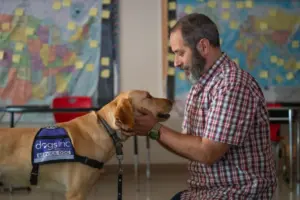
In a world saturated with sensory stimuli—from the tantalizing scent of dropped food on a bustling sidewalk to the unpredictable choreography of moving crowds, blaring sirens, and passing wildlife—maintaining composure is a monumental challenge. For a typical domestic pet, yielding to these curiosities is a natural, harmless part of daily life. However, for a service dog, a momentary lapse in attention is not merely a distraction; it can represent a critical compromise to a handler’s safety, mobility, and independence.
At the heart of every successful assistance animal lies an extraordinary cognitive attribute: laser-like focus coupled with absolute environmental neutrality. This specialized capability does not manifest by chance, nor is it solely the product of innate temperament. Rather, it is meticulously cultivated through structured early socialization, progressive impulse control, positive reinforcement, and expert professional guidance.
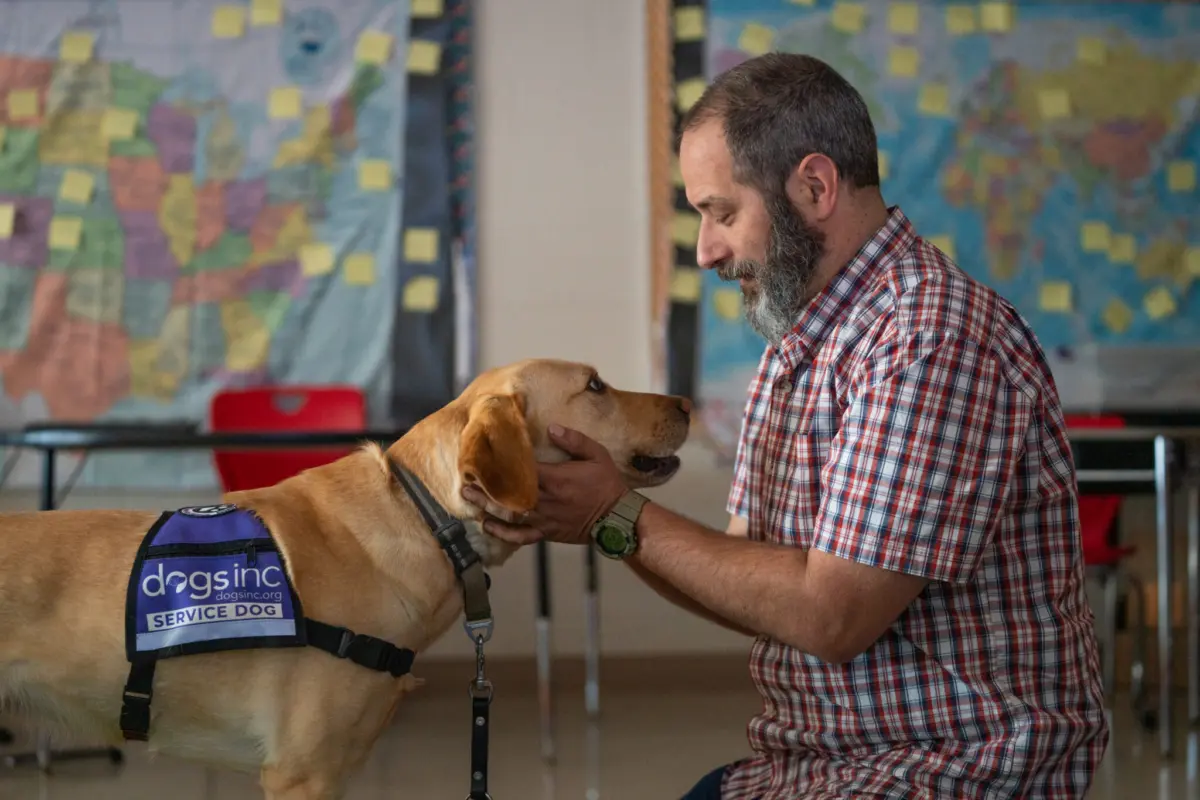
Organizations at the forefront of this field, such as Dogs Inc., have pioneered comprehensive training frameworks that bridge the gap between raw canine instinct and reliable working behavior. By examining the anatomy of distractions, the mechanics of foundational puppy-raising, and the sophisticated methodologies of real-world proofing, this report explores how dedicated training turns everyday pandemonium into unwavering tranquility, ensuring that handlers can navigate the world with unshakeable confidence and trust.
Detailed Chronology: The Lifecycle of Service Dog Focus Training
The development of a service dog’s attention span is a deliberate, multi-staged marathon rather than a sprint. From whelping box to final placement, every phase of a dog’s maturation is leveraged to inoculate them against environmental chaos and reinforce their bond with their human partner.
Phase 1: Neonatal Imprinting and Early Socialization (Months 0–2)
Long before a puppy is tasked with guiding a handler or retrieving dropped items, the neurological foundation for focus is being laid. In the earliest weeks of life, professional breeders and dedicated handlers introduce puppies to novel textures, gentle handling, and foundational auditory stimuli. At this stage, the goal is not obedience, but neuro-resilience—teaching the young brain that new or startling sounds and sensations do not warrant panic or hyper-fixation.
Phase 2: The Puppy Raiser Era (Months 2–14)
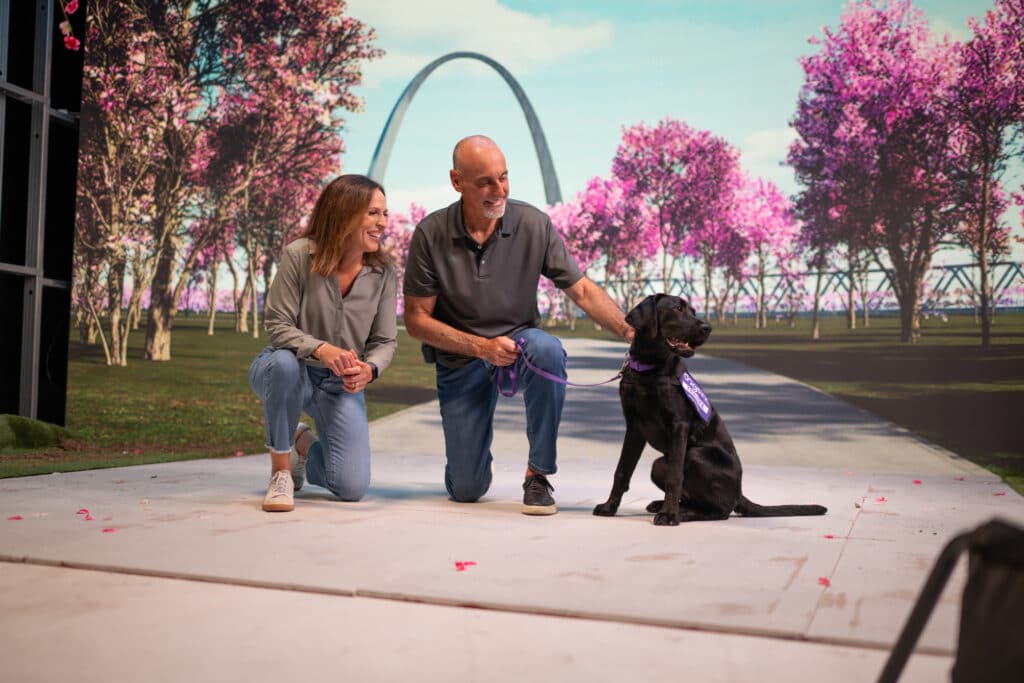
Entering the care of volunteer puppy raisers marks the true commencement of active focus training. During this critical window, puppies are exposed to the sprawling unpredictability of everyday society. Raisers take developing dogs into grocery stores, public transit hubs, and bustling downtown districts.
The Check-In: Puppies are actively rewarded whenever they voluntarily break away from environmental curiosities to offer eye contact to their raiser.
Low-Distraction to High-Distraction Escalation: Training begins in quiet hallways and backyards before systematically graduating to parks filled with running children, skateboards, and loose pets.
Establishing Consistency: Basic cues like "sit," "stay," and "leave it" are reinforced across a multitude of changing backdrops, ensuring the dog learns that commands apply everywhere, not just in the living room.
Phase 3: Advanced Professional Instruction (Months 14–18+)
Once foundational socialization is complete, the adolescent dog transitions to advanced training facilities under the stewardship of certified professional instructors. This phase shifts focus from general good behavior to task-specific execution.
Task Integration: Dogs learn to anchor during mobility assistance, screen for medical alerts, or clear pathways through congested corridors while maintaining unbroken awareness of their handler.
Proofing Behaviors: Instructors intentionally stage high-level distractions—such as rolling food carts, sudden loud noises, or simulated approaches by untrained pets—to test the dog’s impulse control and verify that their working mindset remains uncompromised.
Phase 4: Team Training and Placement
The culmination of the chronological journey involves pairing the fully trained service dog with its lifelong human partner. During intensive on-site team training, the human handler learns the specific verbal and physical cues required to maintain the dog’s focus. Once graduation occurs, the partnership enters the real world, where daily reinforcement transforms trained behaviors into lifelong habits.
Supporting Context & Metrics: The Anatomy of Canine Distraction
To appreciate the magnitude of service dog training, one must understand what constitutes a distraction from a canine perspective. Dogs experience the world primarily through an olfactory landscape that is exponentially more complex than our own, complemented by acute hearing and motion sensitivity.
Categorizing Canine Triggers
Environmental Stimuli: Sudden changes in terrain, flashing lights, heavy traffic, and loud mechanical sounds (such as construction equipment or sirens) test a dog’s startle recovery and baseline stability.
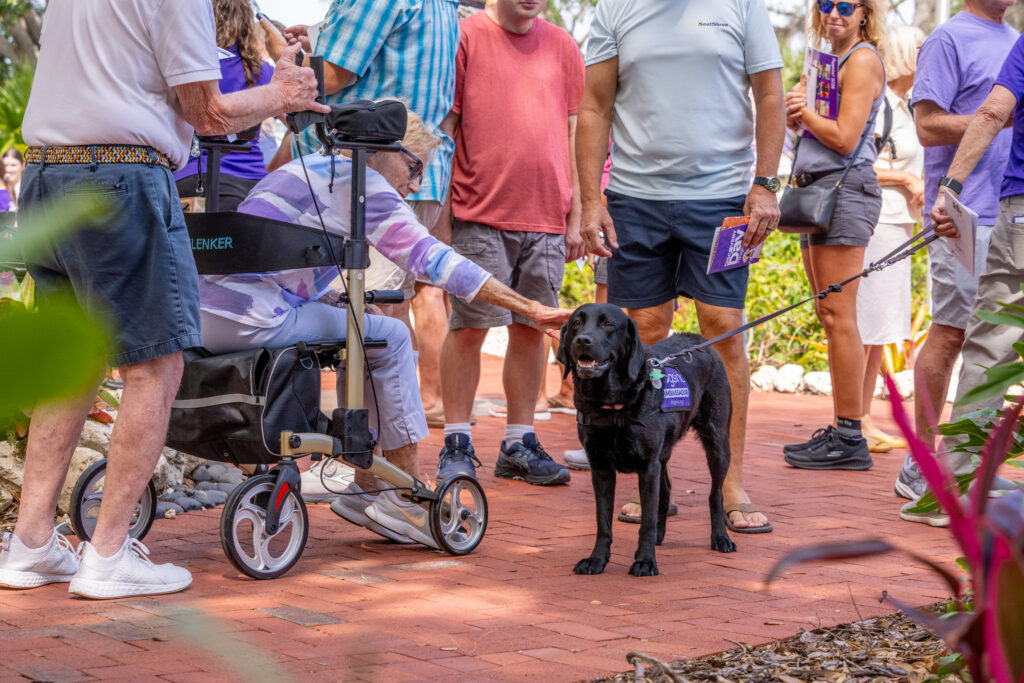
Social Intrusions: Well-meaning strangers attempting unauthorized eye contact, direct vocalizations, or sudden lunges to pet a working dog represent some of the most persistent operational hurdles. Service dogs must be conditioned to treat human adulation as background noise.
Olfactory and Gustatory Pulls: Scents emanating from restaurants, bakeries, or carelessly discarded food items present powerful visceral temptations. For an unconditioned dog, food on the ground is an immediate target; for a service dog, it must register as an ignorable object.
Fauna and Companion Animals: Squirrels, birds, and loose domestic pets trigger hardwired predatory or social engagement instincts. Neutrality protocols dictate that a working dog must acknowledge these animals without breaking stride or shifting attention away from the handler.
Behavioral Metrics of Success
While exact behavioral benchmarks vary by organization, industry standards measure focus efficacy through specific quantitative indicators:
Latency to Redirection: The time it takes for a dog to disengage from a novel distraction and return its attention to the handler upon receiving a cue (ideally under 1.5 seconds).
Threshold Distance: The minimum spatial proximity a dog can maintain to a high-value trigger (e.g., another barking dog) without displaying physiological signs of stress or fixation.
Task Completion Rate: The percentage of executed tasks successfully completed despite active, unpredictable environmental interference.
Official Statements and Expert Insights
Industry leaders emphasize that the success of a service animal is fundamentally rooted in the relational dynamic between dog and handler. Rather than relying on punitive measures, modern assistance dog training prioritizes positive reinforcement and mutual trust.
"A service dog’s ability to stay focused is not born out of fear or suppression; it is built through a partnership where the handler consistently represents the safest, most rewarding anchor in any given environment," notes an institutional training director at Dogs Inc. "When a dog views their human partner as the absolute center of gravity, the rest of the world naturally fades into the background."
Specialists also highlight the community responsibility surrounding working animals. Public education regarding service dog etiquette—specifically, resisting the urge to distract, call out to, or attempt to pet a working animal—remains a vital component of preserving operational safety.
"When a stranger approaches a working team and attempts to engage the dog, they are inadvertently testing a complex psychological barrier that our trainers and puppy raisers have spent over a year constructing," explains a senior field instructor. "True neutrality means the dog can walk through a sea of chaos and affection alike, entirely dedicated to the safety and well-being of the person holding the leash."
Future Outlook: Evolution in Assistance Dog Training
As urban environments grow denser and societal expectations around accessibility shift, the methodologies employed in service dog training continue to adapt. The future of focus training points toward increasingly personalized, data-driven approaches that account for individual canine temperament profiles from an early age.
Technological and Methodological Innovations
Behavioral Profiling Analytics: Enhanced observational metrics allow training organizations to identify early markers of distractibility or high prey drive, enabling instructors to tailor environmental exposure regimens to each specific puppy’s needs.
Virtual and Simulated Distraction Labs: Advanced training facilities are beginning to incorporate controlled virtual reality soundscapes and motion-simulation rigs to expose dogs to extreme urban anomalies (such as subway surges and emergency response environments) in a safe, graduated manner before real-world deployment.
Expanded Public Awareness Initiatives: Ongoing advocacy campaigns aim to educate the general public on the critical importance of service dog neutrality, fostering environments where working teams can operate with minimal interference.
The Ultimate Impact
Ultimately, the meticulous cultivation of focus is about much more than obedience—it is about liberation. By transforming instinctive curiosity into unwavering composure, service animals provide individuals with disabilities the priceless gifts of autonomy, safety, and dignity. Through the combined dedication of puppy raisers, professional instructors, and organizations like Dogs Inc., the distracted world is reframed into a manageable landscape, allowing handlers to move forward into their daily lives with absolute confidence.