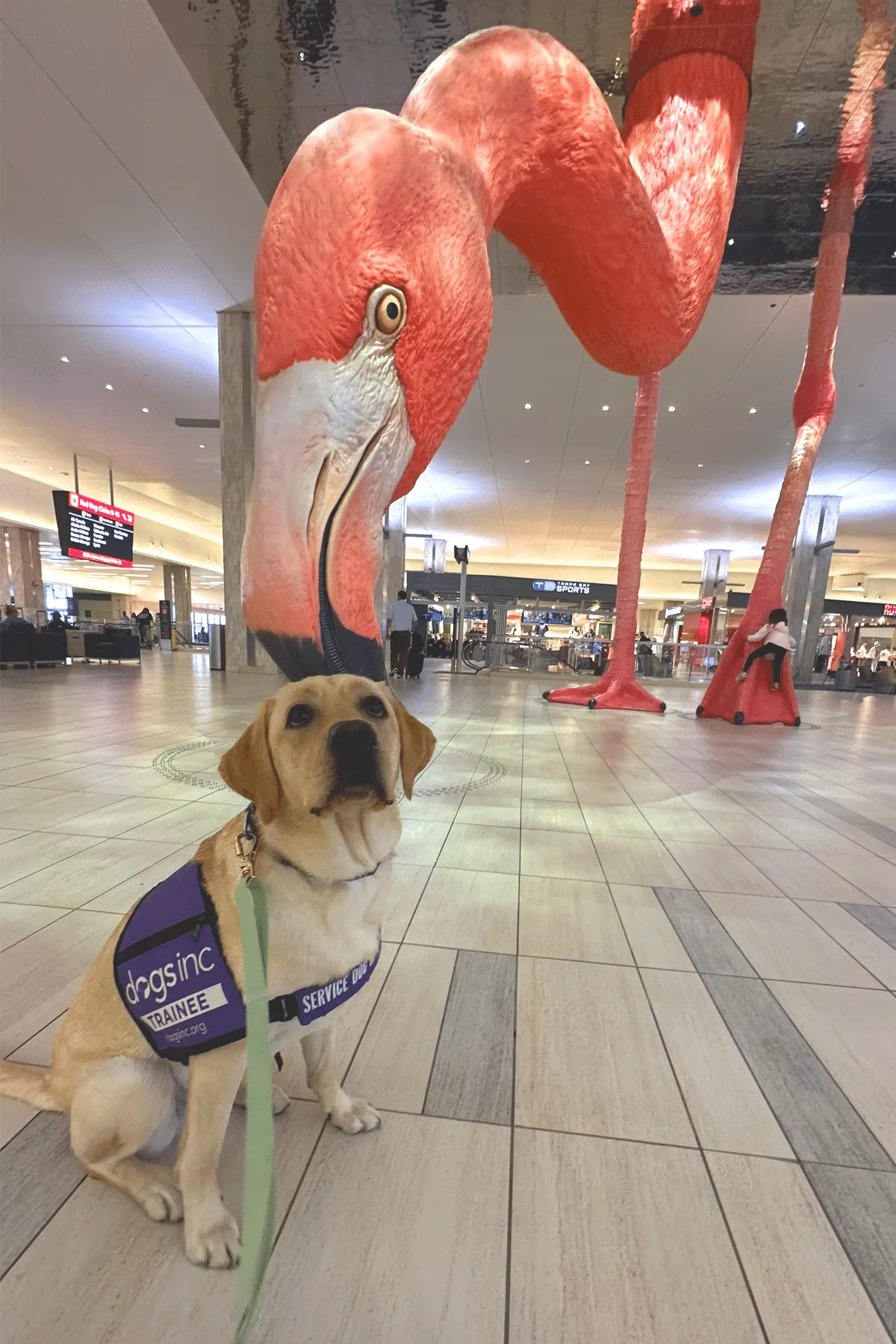
To the average commuter navigating a bustling airport terminal, the patrons of a packed downtown restaurant, or the shoppers pushing carts through a sprawling commercial mall, a service dog often blends seamlessly into the chaotic backdrop of modern life. These environments—replete with jarring overhead announcements, the clatter of dropped trays, flashing lights, erratic human movement, and unpredictable sensory triggers—can induce anxiety in even the most seasoned travelers. Yet, amidst the sensory overload, service dogs move with an unwavering, serene confidence. They clear security checkpoints, tuck themselves neatly under tight restaurant banquettes, and maintain absolute composure in heaving crowds.
This apparent effortless grace is not an accident of nature or a stroke of luck; it is the culmination of years of deliberate, scientifically backed, and intensive preparation. The calm demeanor observed by the public is the direct result of a specialized curriculum known as public access training, paired with comprehensive socialization, specialized task instruction, and countless hours of real-world practice.
Under legal frameworks such as the Americans with Disabilities Act (ADA), a service animal must be individually trained to do work or perform tasks directly related to a person’s disability. This legal distinction separates true service animals from emotional support animals, whose primary value stems from companionship. While task training equips a canine with the specific mechanical skills needed to mitigate a disability—such as retrieving dropped items, opening doors, or providing mobility support—public access training shapes the animal’s psychological resilience, behavioral restraint, and environmental adaptability.
This comprehensive report examines the anatomy of service dog public access training, detailing why high-stimulus environments are vital, how professional instructors and volunteer puppy raisers systematically build canine confidence, and what it takes to forge an unshakeable working partnership.
Detailed Chronology: The Lifecycle and Training Pipeline of a Service Dog
The journey from an inquisitive, playful puppy to a hyper-focused, life-changing working dog is a structured, multi-stage developmental pipeline. Each phase of this chronology builds systematically upon the last, ensuring that the canine is never overwhelmed, but rather steadily inoculated against the stresses of the human world.
Phase 1: Early Puppyhood and Foundation Socialization (Months 0–12)
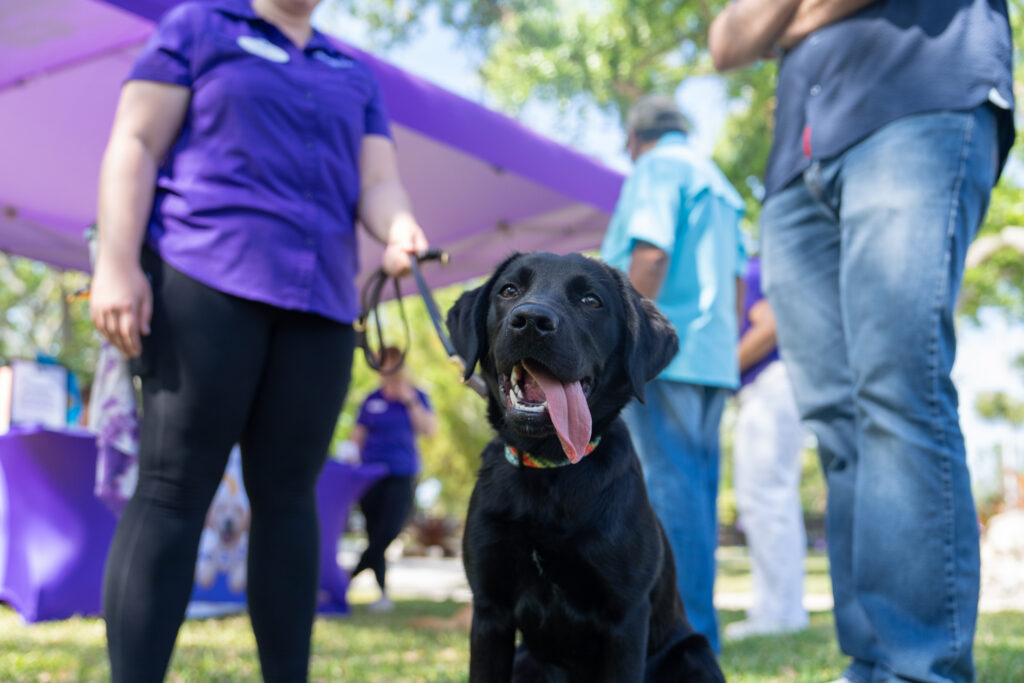
Long before a candidate enters formal, advanced service dog training, the foundation of public access is laid during early puppyhood. Spearheaded by dedicated volunteer puppy raisers, this phase focuses heavily on neuro-developmental exposure.
The Imprinting Window: During the first few months of life, puppies undergo critical socialization windows where novel experiences shape their lifelong responses to fear and stress.
Gradual Exposure: Raisers introduce future service dogs to everyday life by taking them to community parks, grocery stores, quiet office buildings, and outdoor neighborhood events.
Surface and Sound Conditioning: Puppies learn to walk across metal grates, slick tile floors, and noisy wooden boardwalks while encountering umbrellas, skateboards, and sirens in a controlled, positive manner.
Phase 2: Adolescent Skill Acquisition and Distraction Training (Months 12–18)
As the dogs enter adolescence, professional instructors take over or closely guide the next tier of development. This period transitions basic obedience into rigorous impulse control.
Systematic Distraction Inoculation: Training begins in quiet environments and gradually scales up in difficulty. Instructors introduce food temptations, strange animals, sudden loud noises, and erratic human crowds.
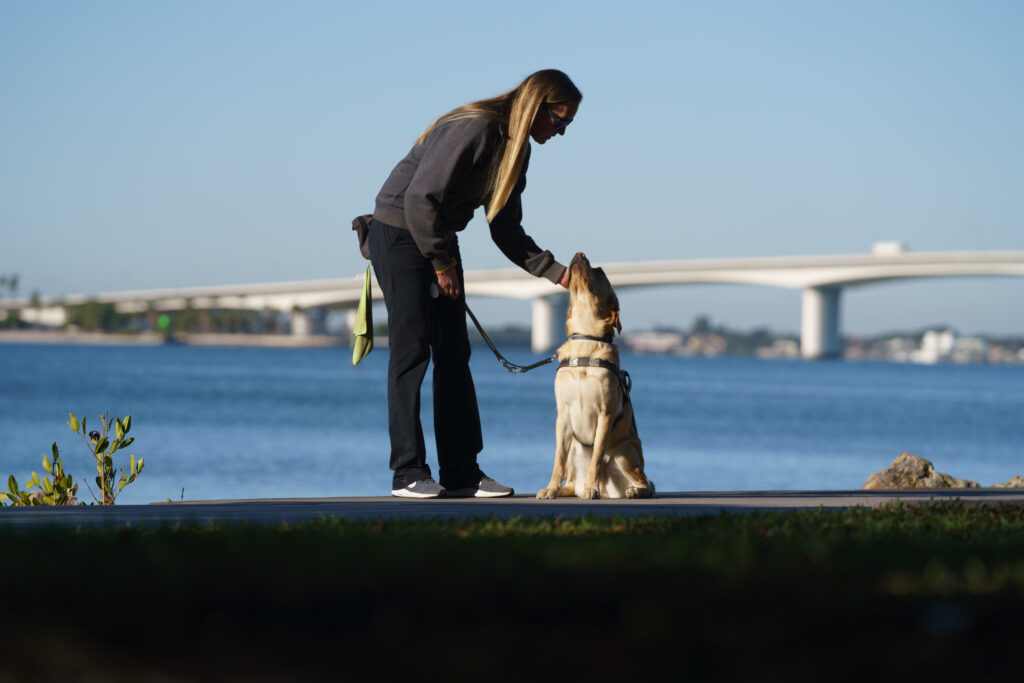
Positive Reinforcement Loops: Using high-value rewards, trainers reinforce the dog’s choice to maintain focus on the handler rather than investigating environmental distractions.
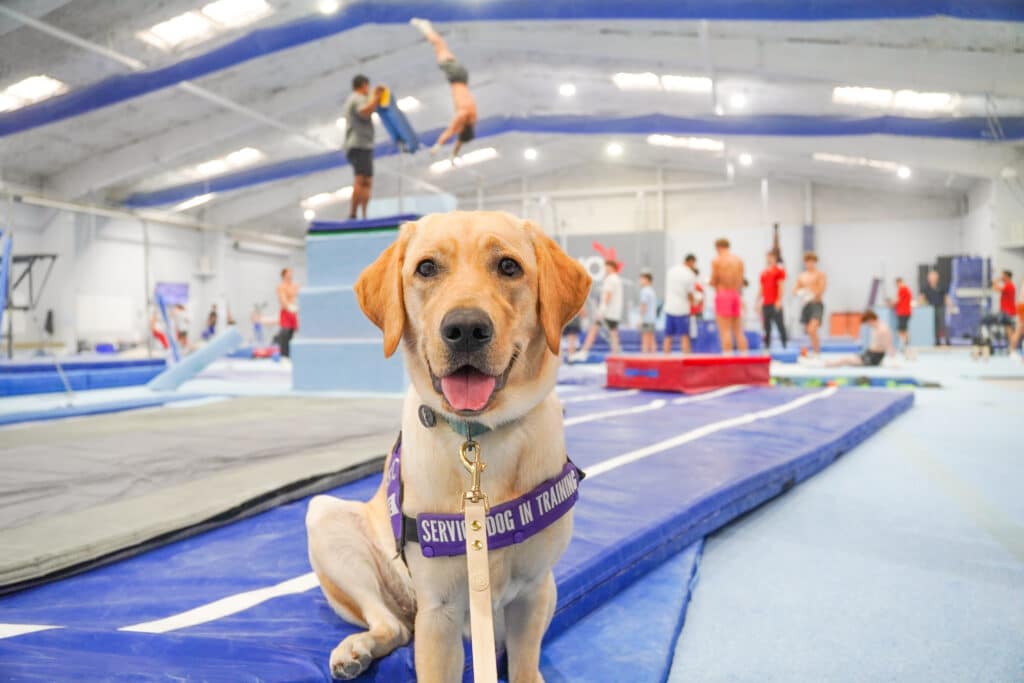
Introduction to Specialized Settings: Adolescents begin targeted exposure sessions in specific venues—such as the perimeter of airports or quiet corners of dining establishments—to test their psychological resilience.
Phase 3: Advanced Public Access and Real-World Integration (Months 18–24)
At this stage, the dog must prove its ability to generalize its training across entirely unfamiliar settings.
Generalization Trials: A dog that behaves impeccably in a training facility must now demonstrate the exact same reliability in a bustling downtown center or a crowded transit hub.
The Art of the "Settle": Dogs learn to remain completely composed for extended durations—sometimes lasting hours—tucked under tables, sitting quietly in medical waiting rooms, or stationed beside a wheelchair.
Task Integration: Public access behaviors are merged seamlessly with disability-mitigation tasks, ensuring the dog can execute commands like deep pressure therapy (DPT) or PTSD panic-interruption in the middle of a high-stress, public environment.
Phase 4: Final Evaluation and Partnership Matching
Before a service dog is certified and placed with an individual with a disability, it must pass comprehensive, uncompromising evaluations.
Comprehensive Testing: Professional instructors rigorously assess the dog’s focus, confidence, reliability, and public etiquette across multiple dynamic settings.
Team Training: Once the dog passes its independent evaluations, it is matched with a handler. A multi-week team training period ensures the human-canine pair can navigate the public sphere as a synchronized, highly functional unit.
To fully appreciate the scope of public access training, one must examine the specific environments that present the greatest challenges to a working dog. Each venue tests distinct psychological thresholds and behavioral boundaries.
1. Airports: The Ultimate Sensory Crucible
Service dog airport training exposes candidates to a concentrated storm of unpredictable stimuli.
The Stimulus Array: Dogs encounter rolling luggage wheels snapping at their heels, TSA security checkpoints with heavy machinery and shifting lines, overhead public address announcements echoing off high ceilings, and moving walkways.
The Training Objective: The dog must learn that these sights and sounds are merely background noise. Whether weaving through a congested ticketing queue or waiting patiently at a departure gate, the canine must maintain absolute spatial awareness and focus on its handler.
2. Restaurants: Navigating Temptation and Spatial Constraints
Restaurant training introduces distinct physical and psychological hurdles.
The Stimulus Array: Enclosed dining spaces are saturated with potent food aromas, discarded crumbs on the floor, tight seating arrangements where waiters and patrons brush past, and unfamiliar social dynamics.
The Training Objective: Dogs must master the "settle"—a command requiring them to curl into a compact, unobtrusive position beneath a table or chair. They must remain completely indifferent to dropped food, wandering children, and the close proximity of strangers.
3. Crowded Public Spaces: Festivals, Malls, and Transit Hubs
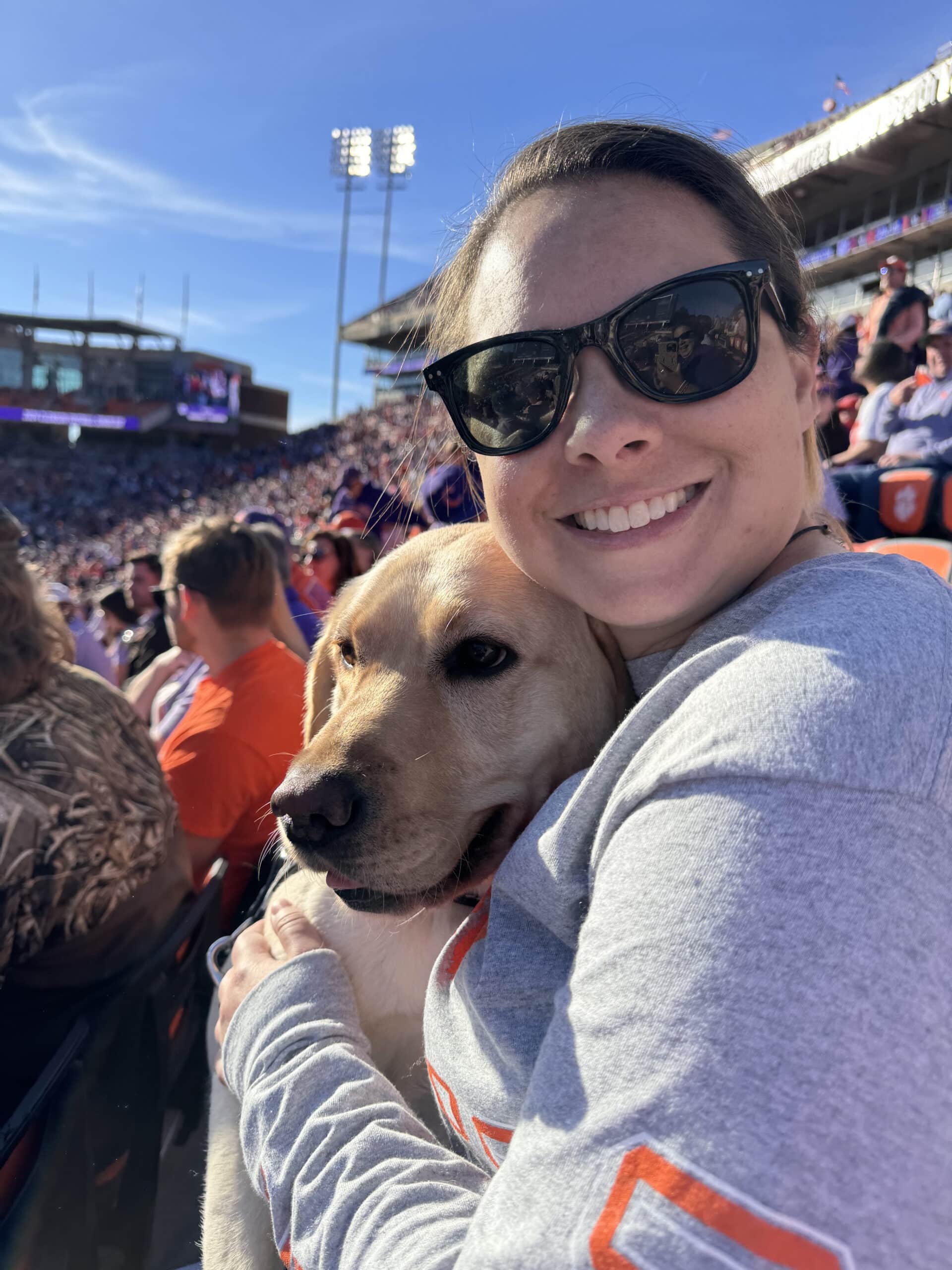
Shopping centers, athletic events, and civic festivals test a dog’s adaptability to mass gatherings.
The Stimulus Array: These spaces overflow with erratic foot traffic, shopping carts, strollers, unpredictable children, barking pet dogs, and flashing promotional displays.
The Training Objective: Through systematic crowd training, dogs develop profound impulse control. They learn not to startle when bumped from behind, nor to react when confronted by poorly managed pet animals violating public access norms.
Official Statements and Industry Insights
Industry leaders and canine behavioral experts emphasize that public access training is fundamentally an exercise in mutual trust, welfare, and public safety.
Dr. Elena Vance, Senior Director of Canine Programs at national service organizations, notes:
"The public often sees the polished final product—a dog that looks effortless and calm in a crowded terminal. What they don’t see is the meticulous, positive-reinforcement-based foundation that spans two full years. We never force a dog into a situation it is not ready for. Every exposure is an opportunity to build resilience, curiosity, and deep operational confidence. The goal is a partner that is mentally bulletproof, yet deeply attuned to its handler."
Furthermore, legal and advocacy groups stress the importance of distinguishing between public accommodation access rights granted exclusively to fully trained service animals versus the limitations placed on pets and emotional support animals.
A spokesperson for accessibility compliance oversight shared:
"Public access training protects the integrity of the ADA. Because service dogs accompany individuals with disabilities into environments where animals are typically prohibited—such as sterile medical facilities, food-service establishments, and aircraft cabins—their behavior must be immaculate. Public access standards ensure that public safety and sanitation are uncompromised, while preserving the life-changing independence of the handlers who rely on them."
Future Outlook: The Evolution of Canine Assistance and Public Access
As the modern landscape grows increasingly complex, the methodologies surrounding service dog preparation continue to evolve. Looking toward the future, several key trends are shaping the sector:
Data-Driven Behavioral Tracking: Organizations are increasingly utilizing wearable biometric monitors during training to track heart rate variability and stress recovery in candidate dogs. This data allows trainers to identify subtle signs of environmental fatigue long before burnout occurs, ensuring optimal animal welfare.
Expanded Public Awareness Initiatives: With the proliferation of mislabeled pets in public spaces, training organizations are investing heavily in public education campaigns. These initiatives aim to teach business owners and the general public how to recognize legitimate service dog behavior and understand the parameters of public access laws.
Specialized PTSD and Neurological Support Integration: As the demand for psychiatric service dogs—particularly for veterans and individuals managing post-traumatic stress disorder—continues to rise, public access training curricula are being refined. Trainers are placing an even greater emphasis on rapid decompression techniques, teaching dogs how to transition instantly from high-vigilance task execution back to a calm, grounded state within seconds.
Ultimately, the confidence exhibited by a working service dog in a crowded airport or bustling restaurant is far more than simple obedience. It represents a masterclass in professional animal training: an intricate symphony of neurological conditioning, positive reinforcement, and real-world resilience. For the individuals whose independence, mobility, and safety depend on these canine partners, this rigorous preparation translates into freedom—the freedom to navigate the world safely, confidently, and without limitation.