
By Abby Knepprath, Collier County Anchor Steward, Audubon Florida
Special Investigative Report & Environmental Analysis
Executive Overview
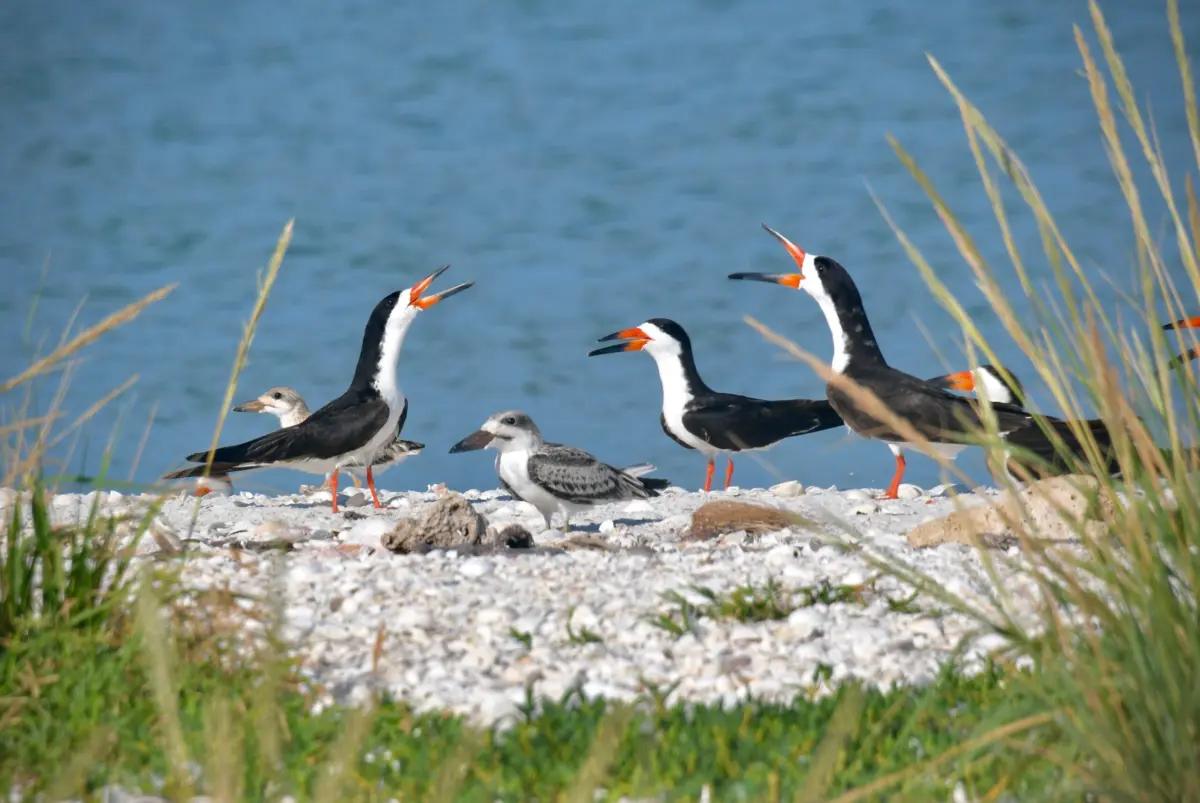
Along the sun-drenched, high-traffic coastlines of Southwest Florida, a quiet yet fierce evolutionary drama unfolds each spring. For species such as the Black Skimmer (Rynchops niger), the Least Tern (Sternula antillarum), and the Wilson’s Plover (Charadrius wilsonia), the beach is not merely a recreational destination or a scenic backdrop for coastal tourism; it is a maternity ward. It is the ancestral nursery where generations of sea and shorebirds have laid their eggs, incubated their clutches, and taught their fledglings to brave the tides.
To the casual beachgoer, however, these nesting sites look remarkably unremarkable. Unlike songbirds that weave intricate nests of twigs, moss, and spider silk high in the forest canopy, or raptors that construct massive stick fortresses atop towering pines, shorebirds practice a minimalist architecture. Their nests are little more than shallow depressions—scrapes—scratched directly into the open, shifting sands.
Yet, this apparent vulnerability is a masterclass in evolutionary adaptation. For millennia, this strategy allowed coastal birds to thrive in environments where heavy vegetation was sparse and camouflage was the ultimate shield. Today, however, the ecological equation has radically shifted. The pristine, isolated stretches of sand that once accommodated millions of migrating and nesting birds have been compressed, fragmented, and heavily industrialized by human development.
This comprehensive report examines the deep history, contemporary pressures, and conservation imperatives facing Florida’s nesting shorebirds. It explores how ancient survival instincts collide with modern urban realities, details the cascading threats posed by anthropogenic disturbances and burgeoning predator populations, and highlights the tireless coalition work required by Audubon Florida, local municipalities, and dedicated volunteers to ensure these iconic species survive the twenty-first century.
Detailed Chronology: From Ancient Ecosystems to the Anthropocene
To understand the plight of modern shorebirds, one must first look backward through deep time. The behavioral patterns governing how Black Skimmers, Least Terns, and Wilson’s Plovers select and defend nesting grounds were forged over hundreds of thousands, if not millions, of years.
The Pre-Development Era (Pre-19th Century)
Long before the advent of beachfront high-rises, paved causeways, and motorized watercraft, Florida’s coastline was a dynamic, fluid wilderness. Barrier islands shifted continuously under the relentless influence of tropical storms, longshore currents, and seasonal winds. This natural instability was precisely what shorebirds needed.
Without permanent vegetation choking the dunes, vast, open expanses of white sand stretched uninterrupted for hundreds of miles. These wide-open spaces provided shorebirds with a distinct evolutionary advantage: 360-degree visibility. Nesting in the open allowed incubating adults to spot approaching avian or terrestrial predators from great distances, giving them ample time to sound the alarm, launch into defensive displays, or quietly slip away from the nest to lure threats away from their camouflaged eggs.
Furthermore, historical predator dynamics were fundamentally different. While natural predators such as ghost crabs, gulls, and occasional native mammals (like raccoons or bobcats) have always been part of the coastal web of life, generalist suburban predators—such as crows, raccoons sustained by urban refuse, and introduced coyotes—existed in much lower densities, regulated by apex predators and vast, unbroken ecosystems.
The Turning Point: The 20th-Century Coastal Boom
The mid-to-late twentieth century marked a catastrophic compression of shorebird habitat. As Florida’s population skyrocketed, the state’s coastal zones became prime real estate. Dredge-and-fill operations altered hydrology, seawalls replaced dynamic intertidal zones, and beachfront development fragmented the continuous ribbon of sand into isolated pockets of habitat.
Birds that had relied on instinctual site fidelity found themselves returning to ancestral nesting grounds that were now lined with boardwalks, crowded with sunbathers, and crisscrossed by off-leash dogs and motorized vehicles. The sheer volume of human activity transformed what was once a sanctuary into a gauntlet of constant disturbance.
The Modern Nesting Season (Spring and Summer)
Today, the annual shorebird nesting season—typically running from early spring through late summer—is a high-stress endurance test. Modern birds face a compressed timeline where they must secure mates, establish territory, lay eggs, hatch chicks, and rear them to flight capability amidst an unceasing tide of human recreation.
Every single interaction—a running dog, a flying drone, a startled flock flushing from the sand—costs precious metabolic energy and leaves defenseless eggs and chicks exposed to the baking sun or opportunistic predators. The chronology of the season is a race against time, disturbance, and habitat loss.
Supporting Context & Metrics: The Anatomy of a Vulnerable Nest
To appreciate the fragility of shorebird nesting, one must examine the mechanics of their reproductive strategy and the specific environmental and anthropogenic pressures that threaten it.
The Architecture of the "Scrape"
Why do shorebirds choose the open sand when it exposes their young to the elements and predators? The answer lies in camouflage and visibility.
- The Black Skimmer: Nesting in colonies, skimmers rely on social defense. Their eggs are heavily mottled, perfectly mimicking the flecked shell fragments and quartz crystals of the beach.
- The Least Tern: As North America’s smallest tern, they nest in loose colonies on wide, flat sandy beaches or gravel rooftops. Their speckled eggs blend seamlessly into shell beds.
- The Wilson’s Plover: A master of coastal camouflage, the plover lays olive-buff eggs speckled with dark brown and black, making them nearly invisible against the wrack line and shell fragments.
When an adult is incubating, its plumage matches the sand tones. When danger approaches, the bird often crouches flat or runs off the nest, leaving the cryptic eggs to blend into the background. However, this reliance on camouflage assumes that the primary threats are visual, natural predators—not crushing footsteps, all-terrain vehicles, or swarming scavengers.
Quantitative Pressures: Predators and People
Modern ecological studies and field monitoring by organizations like Audubon Florida reveal stark metrics regarding nesting success rates:
- Human Disturbance Index: Studies show that human-induced flushes force adult birds off their nests for extended periods. During peak summer heat, leaving eggs exposed for even 15 to 20 minutes can result in fatal thermal stress or embryonic death.
- The Subsidized Predator Threat: In natural ecosystems, predator populations are self-limiting. In modern landscapes, human waste, unsecured garbage cans, and outdoor pet food create a "predator subsidy." This has led to unnaturally high populations of American Crows, fish crows, and raccoons—all highly efficient predators of shorebird eggs and hatchlings. Furthermore, coyotes, which expanded their range across Florida throughout the late 20th century, pose a severe nocturnal and crepuscular threat to adult colonies and chicks alike.
- Habitat Fragmentation: With hundreds of miles of natural beach converted to arm sea walls and commercial real estate, shorebirds are forced into smaller, highly concentrated nesting zones. This spatial compression means that a single disturbance event (such as a July 4th fireworks display or an unleashed dog running through a colony) can impact a massive percentage of a region’s total annual reproductive output in a matter of minutes.
Official Statements & Expert Analysis
Protecting these avian populations requires a coordinated, science-based approach backed by wildlife professionals, land managers, and community leaders.
"The nesting strategies of shorebirds represent millions of years of evolutionary refinement," explains a senior coastal ecologist with Audubon Florida. "These birds are not making a poor choice by nesting on the beach; rather, the beach has been radically altered around them. When a Least Tern lays its eggs on the sand, it is executing a program designed for a wild, dynamic coastline. It is our collective responsibility to bridge the gap between their ancient instincts and our modern recreational needs."
Collier County wildlife stewards emphasize that education and proactive management are far more effective than reactive enforcement alone.
"People rarely disturb shorebirds out of malice," notes Abby Knepprath, Collier County Anchor Steward. "Most disturbances are entirely accidental. A child running through a flock, a beachgoer flying a drone, or an off-leash dog chasing birds are actions born of unawareness. Once visitors understand that those little birds darting across the sand are trying to protect families, their entire perspective shifts. They become our greatest allies."
Conservation partnerships between local government agencies, the Florida Fish and Wildlife Conservation Commission (FWC), and non-profit conservation groups focus heavily on symbolic fencing. By erecting simple cordons, warning signs, and informational banners around active nesting zones, managers create a psychological and physical boundary that significantly reduces accidental human encroachment.
Future Outlook: A Blueprint for Coexistence
As coastal populations in Florida continue to swell and the pressures of sea-level rise and climate change reshape the shoreline, the future of the state’s sea and shorebirds hangs in the balance. Maintaining the status quo is no longer sufficient to prevent population declines.
Actionable Conservation Strategies for the Future
- Expanded Habitat Buffers and Stewardship Programs: Scaling up volunteer anchor steward networks is critical. Trained volunteers on the ground during peak weekends provide real-time education, answer questions, and monitor nesting colonies for signs of stress or predation.
- Strict Enforcement of Leash Laws: Domestic dogs are perceived by shorebirds as mammalian predators (reminiscent of coyotes or foxes). When dogs run off-leash through nesting areas, birds panic and abandon nests. Strict enforcement of municipal leash laws on coastal beaches is non-negotiable for shorebird survival.
- Waste Management and Urban Predator Control: Municipalities must mandate secure, wildlife-proof trash receptacles near beach access points. Reducing open food waste will naturally suppress the populations of subsidized predators like crows and raccoons that prey on shorebird nests.
- Public-Private Partnerships: Integrating resort owners, beachfront homeowners, and local businesses into conservation frameworks ensures that coastal lighting, beach raking schedules, and tourist traffic are managed in harmony with avian breeding cycles.
Conclusion
The resilience of the Black Skimmer, Least Tern, and Wilson’s Plover is astounding. Despite facing odds that their ancestors never could have imagined—from heavy foot traffic and motorboats to urbanized predators and shrinking shorelines—these birds continue to return to our coasts every spring, scratching their simple nests into the sand in a defiant display of life.
The survival of these species does not require us to abandon our beaches; rather, it calls for a conscious coexistence. By respecting symbolic fencing, keeping pets leashed, properly disposing of waste, and supporting the dedicated conservation efforts of organizations like Audubon Florida, we can ensure that the ancient call of the shorebird remains a vibrant, enduring part of Florida’s natural heritage for generations to come.